
Socks As Accessories Fun And Stylish Ways To Show Them Off
For years, socks were the utilitarian stepchild of the fashion world. We hid them inside boots, chose invisible liners for our flats, and generally treated them as a necessity rather than a statement. But if you have been watching the runways or spotting street style trends in Copenhagen and New York recently, you know that the tide has turned. Socks are no longer just about preventing blisters; they are the architectural bridge between your shoe and your hemline.
I remember styling a fall editorial shoot a few years ago where the entire outfit felt flat. We had great coats, impeccable tailoring, and stunning shoes, but the transition between the trousers and the loafers felt disconnected. I swapped the model’s invisible liners for a pair of sheer, ribbed burgundy socks that scrunched just above the ankle bone. Suddenly, the look sang. It added texture, depth, and a deliberate sense of “I meant to do this.”
That is the power of treating socks as a genuine accessory. Whether you are navigating a chilly office or dressing for a transition-season brunch, the right hosiery can elevate a basic outfit into something high-concept. For a dose of serious inspiration, make sure you scroll all the way down because I have curated a stunning Picture Gallery at the end of the blog post.
The High-Low Balance: Pairing Socks with Loafers
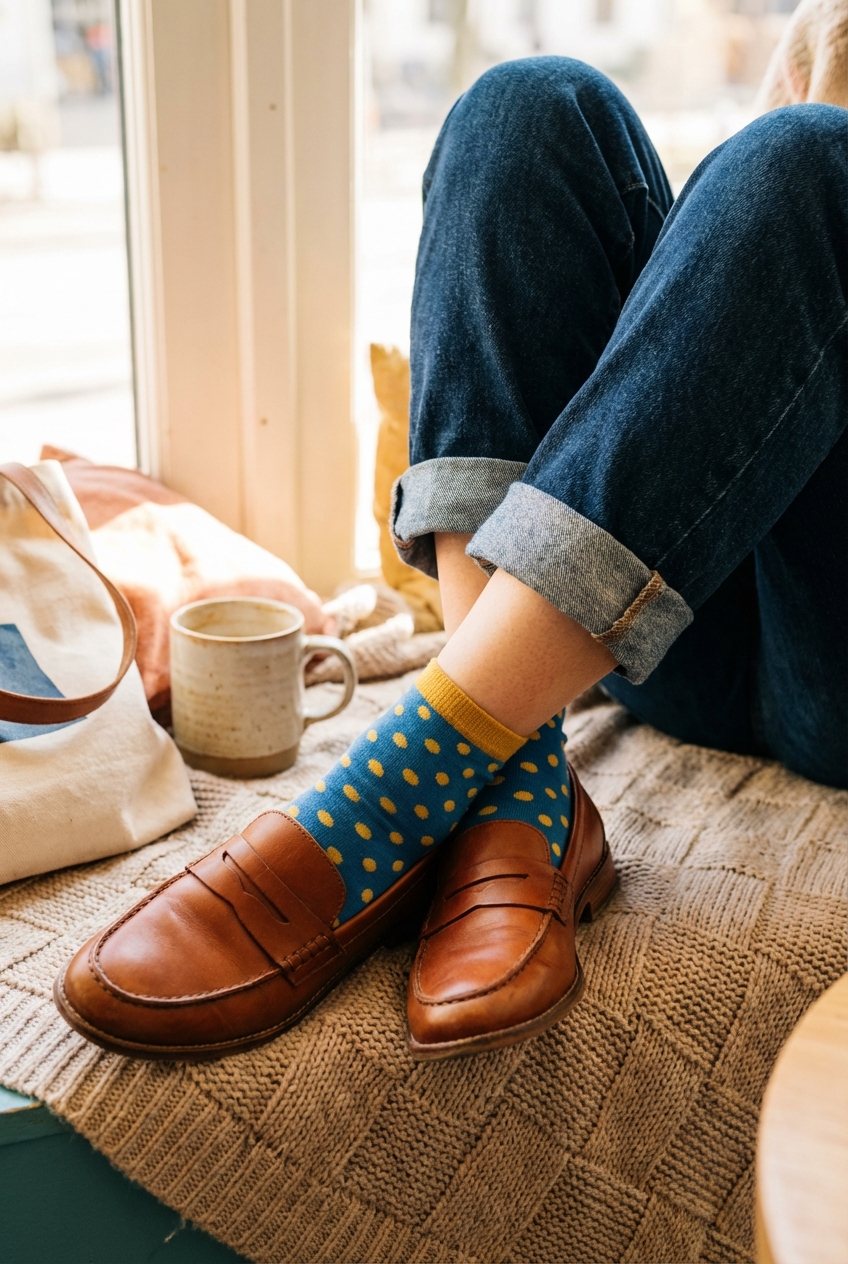
The loafer-and-sock combination is the bread and butter of modern accessory styling. It channels a distinct academic aesthetic while remaining incredibly practical for daily wear. However, throwing on gym socks with your Gucci loafers isn’t going to cut it. You have to be intentional about the fabric weight and the height of the sock to avoid looking like a school child in a uniform.
Material Matters
When styling loafers, I always reach for mercerized cotton or fine-gauge wool. These materials have a slight sheen and a smooth finish that complements the leather of the shoe. Athletic socks often have a ribbed texture that is too chunky and casual for a sleek leather loafer. The contrast in textures should be purposeful, not accidental.
The Height Rule
The ideal height for a sock worn with loafers is roughly 2 to 3 inches above the ankle bone. This length ensures that when you sit down and your pants rise, you aren’t flashing a sliver of bare leg, which breaks the visual line. If you are wearing a skirt or shorts, this height elongates the leg without cutting off the calf at its widest point.
Stylist’s Note: The “Slouch” Factor
- Structured styling: For a clean look, pull the sock taut and fold the cuff over once neatly.
- Relaxed styling: For a more lived-in, effortless vibe, let the sock slouch naturally around the ankle. This works best with softer fabrics like cashmere blends.
The Controversial Combo: Socks with Sandals and Heels
This is the frontier that scares most of my clients. Wearing socks with open-toed shoes or pumps was once considered a major fashion faux pas, but in the high-end styling world, it is a sign of advanced sartorial confidence. The key here is delicacy. You are adding bulk to a shoe that wasn’t designed for it, so the sock must be thin and the shoe must have adjustable straps.
Choosing the Right Shoe
Platform sandals and chunky heels are the easiest entry point for this trend. The visual weight of a chunky heel balances the addition of a sock. Stilettos are harder to master; if you want to try socks with a fine heel, opt for a very sheer, almost invisible tulle sock or a fine denier glitter mesh. Avoid pairing thick wool socks with delicate strappy sandals, as it will distort the fit of the shoe and pinch your feet.
Color Blocking
This is where you can have the most fun with color theory.
- Monochromatic: A red sock with a red sandal creates a boot-like effect that lengthens the leg.
- High Contrast: A crisp white ruffle sock with a black velvet platform heel feels vintage and playful.
- Metallic Accents: Use lurex or glitter socks to make a neutral beige sandal feel festive for an evening event.
Common Mistake: The Toe Seam
Nothing ruins a sock-and-sandal look faster than a thick, bumpy seam running right across your toes. Always look for seamless toes or hand-linked seams when buying socks for open shoes. If you can’t find them, take a moment to adjust the sock so the seam sits slightly under the toes rather than right on the tip.
Mastering the Pant Break: Showing Skin vs. Showing Sock
When wearing trousers, the interplay between the hem of your pants and the top of your shoe is crucial. In menswear, this is obsessively tailored, and in women’s fashion, we should be just as precise. The “break” is where the fabric folds or hits the shoe. Socks fill the negative space when that break is high (cropped pants) or when you are in motion.
The Cropped Wide-Leg
This silhouette is ubiquitous right now. If your pants hit above the ankle bone, your sock game is on full display. I love using this gap to introduce pattern. If you are wearing neutral trousers and a simple sweater, a plaid or polka-dot sock in a coordinating color family adds a “peekaboo” element of interest.
The “Sit Test”
When I fit clients, I always make them sit down in a chair. Most trousers rise about 2 to 4 inches when you sit.
- The Goal: You generally want the sock to cover the skin entirely in professional settings.
- The Fix: Ensure your socks are crew length (mid-calf) rather than ankle length. Ankle socks will slide down and leave you with a drafty, awkward gap of skin.
Matching Tones
If you are petite, matching your sock color to your pants (not your shoes) can make your legs look miles longer. If you wear black trousers with black socks and black boots, you create an unbroken vertical line. If you wear black trousers with white socks and black boots, you visually chop your ankles, which can make you look shorter.
Texture and Dimension: Sheer, Glitter, and Tulle
For evening wear or holiday parties, standard cotton blends just feel too pedestrian. This is where we move into specialty hosiery. Sheer socks, tulle overlays, and glitter-infused knits are accessories that act like jewelry for your feet. They offer no warmth, but they offer maximum style.
Sheer and Patterned
Sheer socks with polka dots or lace motifs look incredible with a classic black pump. They add a vintage, feminine touch without the commitment of full pantyhose. Because they are thin, they won’t alter the fit of your heels, making them a practical choice for tight shoes.
Styling Tulle
Tulle socks are voluminous and usually don’t have elasticity at the ankle. They are meant to look loose and ethereal. I love pairing these with a structured menswear-inspired brogue. The contrast between the hard, masculine leather shoe and the soft, romantic tulle is the kind of tension that makes an outfit interesting.
Care Instructions
Designer’s Note: These are delicate. Never throw sheer or tulle socks in the washing machine with your jeans.
- Hand wash in cool water with a gentle detergent.
- Do not wring them out; press them between towels to remove water.
- Lay flat to dry. Jewelry and untrimmed toenails are the enemies of sheer socks—put them on carefully.
The Sneaker Game: Beyond the Basic Gym Sock
Athleisure is here to stay, but the “invisible sock” trend is dying out. We are seeing a return to the visible white crew sock, often styled with a nod to 90s nostalgia (think Princess Diana leaving the gym). This look relies on pristine condition and specific branding placement.
The Scrunched Look
To nail the casual, sporty vibe with leggings or bike shorts, you need a classic white ribbed crew sock. Pull it all the way up, then push it down evenly until it creates a soft, accordion-like stack around the ankle. This adds volume to the lower leg, which can actually make the rest of the leg look slimmer by comparison.
Logo Placement
If you are wearing branded socks (like Nike or Adidas), ensure the logo is sitting straight on the side of the ankle. It sounds minor, but twisted socks look messy. Styling is about precision. If the socks have stripes at the top, ensure the stripes are parallel to the ground, not pulled crookedly.
Color Coordination
While white is classic, I love swapping in a color that ties into the sneaker. If you have a pair of retro New Balance sneakers with navy accents, a navy sock creates a cohesive, thoughtful look. It signals that you didn’t just grab the first clean pair from the drawer.
Investing in Luxury: Cashmere and Silk Blends
If you are going to show off your socks, the quality of the material becomes visible. Cheap polyester blends pill quickly, lose their elasticity, and fade after a few washes. As a stylist, I always encourage clients to buy fewer, better things. A $40 pair of cashmere socks is a luxury you can feel all day long.
Why Cashmere?
Cashmere provides incredible warmth without bulk. If you are wearing a sleek leather bootie and have cold feet, a thick wool sock might make the boot too tight. Cashmere is finer but insulates better than cotton. It also has a soft, fuzzy “halo” texture that looks expensive peeking out from a trouser hem.
Silk Blends for Shine
Silk is strong and has a natural luster. Socks with a silk blend are fantastic for dressier office environments. They glide against the skin and don’t create friction inside dress shoes. They also hold dye beautifully, resulting in richer, deeper colors than you typically get with cotton.
Maintenance Checklist
- Pilling: Use a fabric shaver (not a razor) to gently remove pills from wool and cashmere socks at the end of the season.
- Storage: Don’t ball them up tightly, as this stretches the elastic. Fold them in half or roll them gently.
- Cedar: Store natural fibers with cedar blocks to prevent moth damage.
Finish & Styling Checklist
Before you walk out the door, run through this quick mental checklist to ensure your sock styling is on point.
1. The Elasticity Check
Are your socks staying up? There is nothing worse than having to stop on the sidewalk to pull up a sagging sock. If the elastic is shot, toss them or relegate them to home-only wear.
2. The Shoe Fit
Does the added thickness of the sock compromise the shoe? If your toes are scrunched or your heel is slipping, the pairing doesn’t work. Comfort is the foundation of style.
3. The Texture Mix
Do you have too many competing textures? If you are wearing corduroy pants and a cable knit sweater, a ribbed wool sock might be overkill. Try a smooth cotton sock to give the eye a place to rest.
4. The Color Bridge
Does the sock color connect two parts of your outfit? For example, matching your socks to your scarf or your handbag is a classic styling trick that pulls a look together instantly.
5. The Condition
Check the heels and toes. If there is visible thinning or a hole beginning to form, do not wear them as a visible accessory. Visible wear suggests neglect rather than style.
FAQs
How do I keep socks from sliding down inside boots?
This is usually a sizing or elastic issue. Look for socks with a wider ribbed cuff at the top, as they distribute pressure better and stay in place. Also, ensure you are buying the correct size; “one size fits all” often creates slippage for petite feet. You can also look for “boot socks” specifically designed with tighter arch support to prevent shifting.
Can I wear patterned socks with patterned pants?
Absolutely, but stick to the scale rule. If your pants have a large, bold print (like a wide plaid), choose a sock with a small, micro-print (like tiny dots). If the patterns are the same size, they will fight for attention. Alternatively, ensure they share a dominant color to anchor the look.
What is the best sock height for ankle boots?
Ideally, the sock should peek out about 1 to 2 inches above the top of the boot. This creates a layered cuff effect. If the sock is lower than the boot, it might slip off your heel. If it is too high (like a knee sock styling), it can cut off the line of your leg unless you are wearing a short skirt.
Are white socks acceptable in a formal office?
Generally, no. Bright white athletic socks read as gym-wear. For a professional setting, stick to neutrals like charcoal, navy, black, or camel. If you want a lighter color, opt for a cream or oatmeal wool blend, which looks intentional and high-end rather than sporty.
How do I style socks if I have wide ankles?
Avoid socks that cut right across the widest part of your ankle with a tight band, as this creates a “muffin top” effect. Instead, opt for a slouchy style that sits loosely, or go for a slightly higher crew sock that hits the slimmer part of the calf. Monochrome styling (sock matching shoe) is also very flattering.
Conclusion
Treating socks as a key accessory rather than a hidden necessity opens up a completely new layer of styling possibilities. It allows you to extend the life of your wardrobe—transitioning summer sandals into fall, or adding warmth to cropped trousers in winter. It is a low-stakes, high-reward way to experiment with color, texture, and trends.
Start small. Buy a pair of sheer glitter socks for your holiday heels, or upgrade your white gym socks to a high-quality ribbed pair for your weekend errand runs. Pay attention to the break of your pants and the material of your shoes. When you start focusing on these small architectural details, your entire personal style becomes sharper and more refined. Fashion is in the details, and sometimes, the smallest accessory makes the loudest statement.
Picture Gallery


