
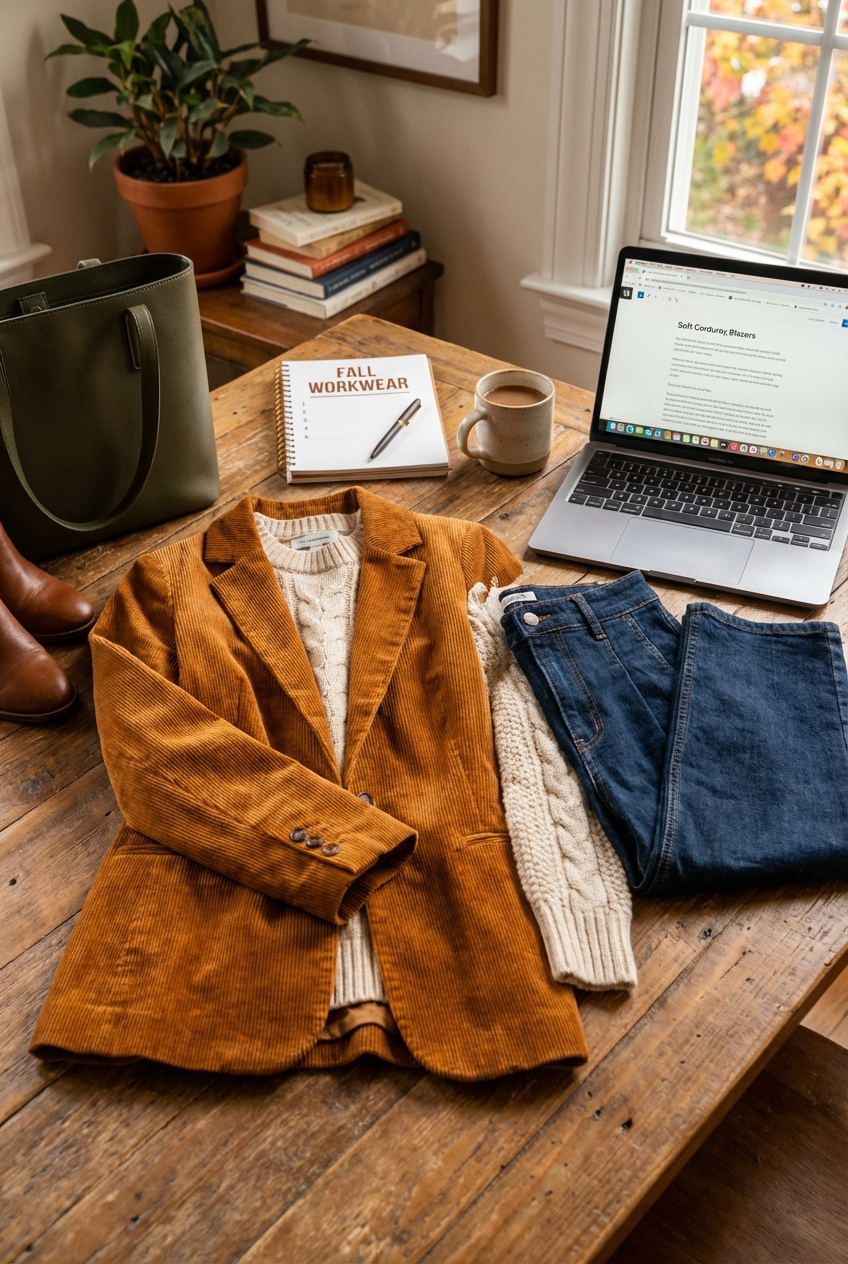
Soft Corduroy Blazers For Fall Workwear
1) Introduction
There is a distinct shift in the air when October hits. The humidity breaks, the light turns golden, and our wardrobes require a pivot from linen to something with more substance. For years, I avoided corduroy because I associated it with stiff, noisy fabric that felt constricting during a long day at the design studio. However, modern textile blends have completely reinvented this material.
Soft corduroy blazers have become my secret weapon for fall workwear. They offer the structured authority of a wool suit jacket but bring a tactile warmth that wool often lacks. The key is finding a blend that includes a touch of elastane or utilizes a finer wale (the width of the cord), which allows the garment to drape rather than box you in. It’s the perfect bridge between professional polish and seasonal comfort.
In this guide, I am going to break down exactly how to style these pieces for a high-end office environment. We will look at fit, color theory, and the mechanics of layering textures. If you are looking for visual inspiration, keep in mind that the Picture Gallery is at the end of the blog post.
Understanding the Fabric: Wale Count and Texture
To choose the right blazer, you have to speak the language of the fabric. In the fashion industry, corduroy is measured by “wales,” which refers to the number of ridges per inch. This is the most technical aspect of the garment and dictates how formal it looks.
For a professional work environment, I almost always recommend a higher wale count, often called “pincord” or “needlecord.” A standard corduroy might have 8 to 10 wales per inch, which looks chunky and casual. A pincord has 14 to 18 wales per inch. This finer texture reads almost like velvet from a distance. It absorbs light beautifully and looks significantly more expensive.
When shopping, pay attention to the material blend. A 100% cotton corduroy can be stiff and prone to wrinkling. Look for a blend that is roughly 98% cotton and 2% elastane or spandex. That tiny percentage of stretch is crucial for “softness.” It allows you to reach across your desk or drive to a client meeting without the jacket cutting into your shoulders.
Silhouette and Scale: Getting the Fit Right
Just as scale is the golden rule in interior design, proportion is the golden rule in styling. Because corduroy adds physical volume to your frame due to its texture, the cut of the blazer must be precise. You cannot hide poor tailoring with this fabric.
I prefer a slightly longer, “boyfriend” cut for fall workwear. It should hit just below the hips. This length elongates the torso and balances out the visual weight of the fabric. However, the shoulders must fit perfectly. The seam should sit exactly at the corner of your shoulder bone. If it droops, you look sloppy; if it pulls, the ridges of the corduroy will distort.
Designer’s Note: The Sleeve Length Rule
One of the most common mistakes I see in professional styling is incorrect sleeve length.
- The Mistake: Sleeves that cover the knuckles. This makes you look like you are wearing a hand-me-down.
- The Fix: The blazer sleeve should end at your wrist bone.
- The Detail: Ideally, you want to show about 1/4 to 1/2 inch of your blouse cuff underneath. This adds a layer of polish and breaks up the heavy texture of the corduroy.
Color Theory: Moving Beyond Basic Brown
When people think of corduroy, they immediately picture a muddy, 1970s brown. While camel and chocolate tones are classic, a high-end wardrobe requires a more sophisticated palette. For fall workwear, we want colors that command respect but feel seasonal.
I frequently style clients in deep jewel tones. A midnight navy corduroy blazer is a fantastic alternative to a standard black suit jacket. It pairs effortlessly with white crisp shirts but adds depth. Forest green or a deep sage is another “neutral” that works with denim, black trousers, or cream silk.
Monochromatic styling is a powerful tool here. Imagine a burgundy corduroy blazer paired with a lighter maroon blouse and trousers. This creates a vertical line of color that is incredibly slimming and chic. It takes the “professor” vibe out of the fabric and replaces it with high-fashion intentionality.
Layering Logistics: Managing Friction and Bulk
Functionality is just as important as aesthetics. Corduroy has a high “friction coefficient.” This means it grabs onto other fabrics. If you try to wear a coarse wool sweater under a corduroy blazer, you will feel stuck. Your arms won’t move freely, and the sleeves will bunch up.
To combat this, you need “slip.” The base layer you wear underneath needs to have a smooth finish. Silk, satin, rayon, or mercerized cotton are your best friends here. These fabrics allow the heavy blazer to glide over your body as you move.
What I’d Do in a Real Project (Outfit Formula)
If I were styling a CEO for a casual Friday, here is the exact formula I would use to ensure comfort and style:
- Base Layer: A silk camisole or a lightweight Tencel turtleneck (smooth surface).
- The Blazer: A soft, unstructured corduroy blazer in burnt orange or slate grey.
- The Bottoms: High-waisted wide-leg trousers in a smooth wool gabardine.
- The Why: The smooth wool trousers and silk top contrast against the ribbed texture of the blazer, preventing the outfit from looking heavy.
Styling Bottoms: Balancing the Visual Weight
Because a corduroy blazer is visually heavy and textured, your bottom half needs to provide balance. If you wear chunky corduroy pants with a chunky corduroy blazer, you risk looking like a furniture upholstery swatch. Unless it is a specifically tailored suit sold as a set, avoid matching textures.
For a modern work look, contrast is key. I love pairing the matte, fuzzy texture of corduroy with something sleek. Leather or faux leather trousers are an incredible pairing. The shine of the leather plays off the light-absorbing quality of the corduroy.
If your office is more conservative, opt for a sleek pencil skirt or tailored ankle trousers. The slim silhouette on the bottom helps manage the volume of the blazer. If you are petite, keep the trousers tonal (same color family as the blazer) to avoid cutting your body in half visually.
Maintenance and Durability: Keeping it High-End
High-end style falls apart if the garment isn’t maintained. Corduroy is durable, but it has a “pile” (the raised surface) that can get crushed. This is similar to how a velvet sofa might show seat marks over time.
Never iron a corduroy blazer directly. The heat and pressure of the iron will crush the ridges, leaving shiny, flat spots that are permanent. Instead, invest in a good handheld steamer. Steaming lifts the pile and refreshes the texture.
If you must press it, turn the jacket inside out and iron the lining only. Or, place a thick towel on your ironing board, place the blazer face down on the towel, and iron the back. The towel prevents the ridges from being flattened against the hard board.
Common Mistakes + Fixes
- Mistake: Worn-out elbows. Corduroy wears down faster at friction points like elbows, turning bald.
- The Fix: Prevention is best. Rotate your blazers so you aren’t wearing the same one three days in a row. If it happens, add suede elbow patches in a coordinating color. It looks intentional and academic-chic.
- Mistake: Lint magnet. The ridges trap dust and lint easily.
- The Fix: Keep a lint roller in your desk drawer. It is non-negotiable with this fabric.
Finish & Styling Checklist
Before you head out the door, run through this mental checklist to ensure the look is polished and professional.
- Check the Shoulders: Is the seam sitting flat on your bone? No hanging divots.
- Verify the Texture: Are you wearing a smooth layer underneath to prevent bunching?
- Expose the Cuff: Is 1/4 inch of your shirt cuff visible?
- Balance the Bulk: Are your trousers or skirt streamlined enough to offset the jacket?
- Check the Pile: Did you steam out any “seatbelt marks” or crushed areas from the commute?
- Color Harmony: If the blazer is a bold color, is the rest of the outfit neutral or monochromatic?
FAQs
Can I wear a corduroy blazer to a formal client meeting?
Yes, but choose a “pincord” (fine wale) in a dark color like navy, charcoal, or black. Pair it with a crisp white button-down and tailored wool trousers. Avoid wide-wale (chunky) corduroy for high-stakes formal meetings, as it reads too casual.
Is corduroy okay for warmer fall days?
It depends on the lining. Look for “unstructured” or “unlined” soft corduroy blazers. These lack the heavy satin lining and shoulder pads, making them breathable enough for 65-degree days.
Can I wear denim with a corduroy blazer?
Absolutely. This is a classic “smart casual” look. To keep it work-appropriate, choose dark-wash denim with no distressing or holes. A medium-wash jean can work if the office is creative, but dark wash is safer and looks more elevated.
How do I clean my corduroy blazer?
Always check the care label. Most structured blazers are “Dry Clean Only” to maintain the internal interfacing (the stuff that gives the collar its shape). If it is an unstructured, casual cotton jacket, you might be able to wash it on cold and hang dry, but dry cleaning is safer to preserve the texture.
Conclusion
Embracing soft corduroy blazers for fall is about celebrating texture. In a world of flat polyester blends and smooth wools, corduroy brings a human, tactile element to the workplace. It signals that you understand seasonality and aren’t afraid of a little personality in your professional attire.
By focusing on the right wale count, ensuring a tailored fit, and mastering the art of layering smooth fabrics underneath, you can elevate this classic material from “academic” to “executive.” It is a piece that works hard for you, offering warmth, comfort, and undeniable style.
Picture Gallery


