
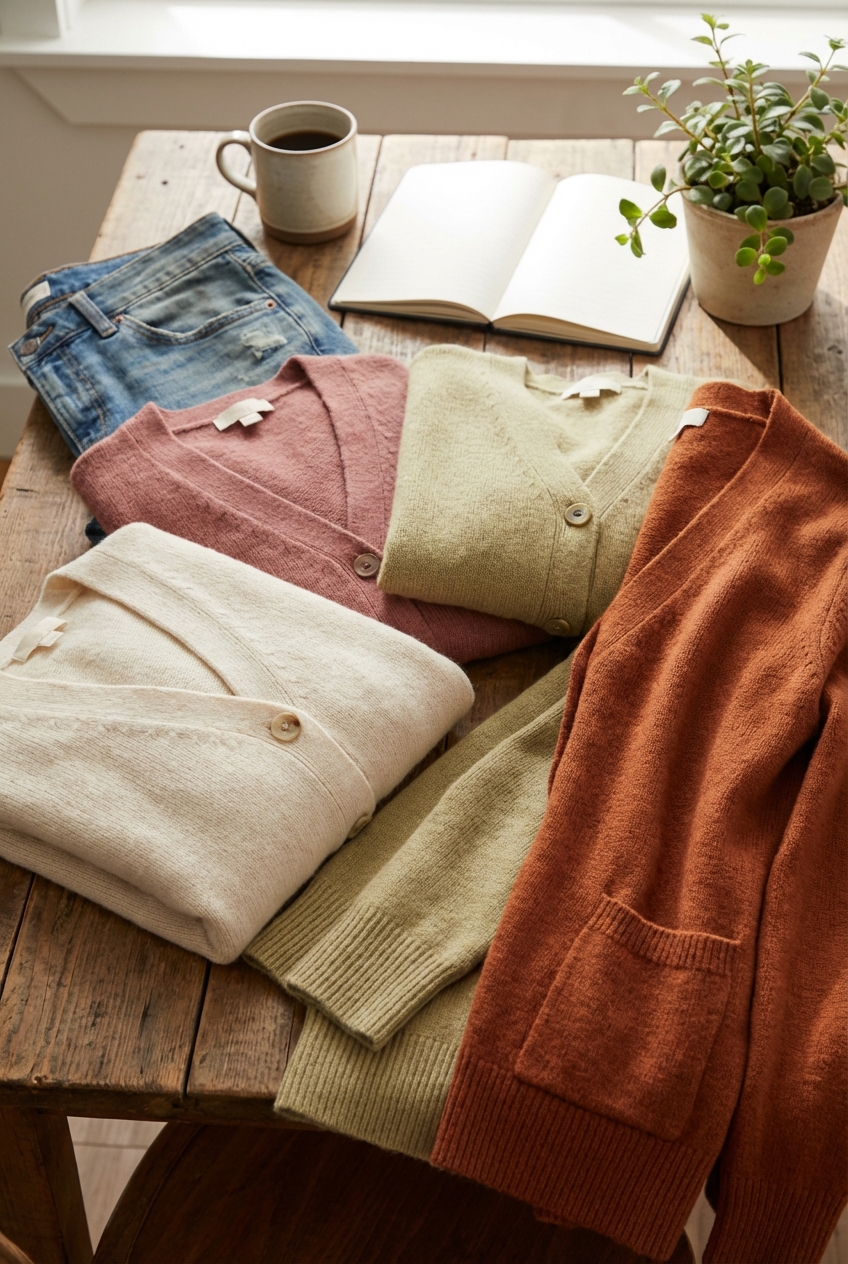
Soft Knit Cardigans For All Seasons
I distinctly remember a client consultation in a chilly Parisian showroom a few years ago. My client, accustomed to rigid blazers and structured coats, felt restricted and uncomfortable in her daily wardrobe. We swapped her stiff outerwear for a high-ply, 4-ply cashmere cardigan, and her entire demeanor changed; she looked polished yet felt incredibly at ease.
The cardigan has graduated from being a mere practical layer to a centerpiece of high-end fashion. Whether it is a chunky cable knit for winter or a whisper-thin linen blend for a summer evening, this garment offers a versatility that few other pieces can match. It bridges the gap between loungewear comfort and boardroom authority.
In this guide, I will walk you through how to select, style, and care for cardigans year-round, treating them as investment pieces rather than afterthoughts. For visual inspiration on how to style these looks, be sure to check out the Picture Gallery at the end of the blog post.
Understanding Fiber and Gauge
As a fashion expert, the first thing I look at isn’t the color or the cut; it is the fiber content. The material dictates how the cardigan hangs, how long it lasts, and which season it belongs to. If you ignore the label, you risk buying a sweater that pills after two wears or feels suffocating in mild weather.
For colder months, cashmere and merino wool are the gold standards. Cashmere offers thermal regulation, meaning it keeps you warm without overheating, while merino is durable and moisture-wicking. I recommend looking for “two-ply” cashmere at a minimum, which means two threads are twisted together for strength before knitting.
For warmer seasons, look for plant-based fibers like cotton, linen, or silk blends. Cotton is breathable and easy to wash, making it perfect for everyday wear. Linen adds a beautiful texture and crispness, though it lacks elasticity, so it often works best in loose, draped silhouettes.
Designer’s Note: The Synthetic Trap
A common mistake I see is clients buying expensive-looking cardigans that are 100% acrylic. While they feel soft initially, acrylic is a plastic fiber that traps heat and sweat, leading to odors. It also pills aggressively. Always aim for natural fibers, or blends where synthetics make up less than 30% of the fabric for stability.
The Silhouette Guide: Scale and Proportion
In interior design, we talk about scale relative to the room; in fashion, we talk about scale relative to the body. The length and volume of your cardigan must complement your base outfit. A mismatch here can make you look shorter or wider than you actually are.
The Cropped Cardigan
This style should hit exactly at your natural waist, which is usually the narrowest part of your torso. This silhouette creates a defined waistline and pairs beautifully with high-waisted trousers or A-line skirts. If you are petite, this is your best friend as it elongates the leg line.
The Hip-Length (Standard) Cardigan
This is the most traditional cut, hitting at the hip bone. While classic, it can sometimes cut the body in half visually. To keep this modern, I usually leave the bottom two buttons undone to allow for movement and to showcase the belt or waistband underneath.
The Longline or Duster
These should hit anywhere from mid-thigh to mid-calf. They create a long, vertical line that is universally slimming. However, ensure the fabric is lightweight enough to move with you. A heavy, stiff duster can look like a bathrobe if not styled correctly.
Common Mistakes + Fixes
- Mistake: Wearing a chunky, oversized cardigan over a full skirt or wide-leg pant.
- Fix: Balance the volume. If the top is loose and chunky, keep the bottom fitted (like slim jeans or a pencil skirt).
- Mistake: Sleeves that are too long and bunch at the wrist.
- Fix: Tailoring knits is difficult but possible. A quicker fix is to cuff the sleeve once cleanly, or push the sleeves up to the elbow to expose the forearm, which instantly makes the look more intentional.
Spring and Summer Styling
Many people pack their knits away in April, which is a missed opportunity. Summer cardigans serve as chic cover-ups for air-conditioned offices or breezy coastal evenings. The key here is an “open weave” or pointelle stitch that allows air to circulate.
For spring, I love a monochrome look. Pair a cream cotton cardigan with white linen trousers. The mix of textures keeps the all-white outfit from looking flat. Look for details like mother-of-pearl buttons, which reflect the light and feel appropriate for the season.
In the height of summer, treat a lightweight cardigan as a blouse. Button it all the way up and wear it directly against the skin, tucked into denim shorts. This “cardigan-as-top” trend is incredibly chic and offers a softer alternative to a t-shirt.
What I’d Do in a Real Styling Session
- Shoulder Drape: Instead of wearing the cardigan, knot the sleeves loosely over your shoulders. It adds color near the face without the warmth.
- Belt It: If styling a loose linen cardigan over a summer dress, I often add a thin leather belt over the cardigan to reclaim the waist.
- Texture Play: I always pair smooth silk slip dresses with matte cotton knits. The contrast makes the outfit look expensive.
Fall and Winter Transition
As the temperature drops, the “gauge” (thickness of the yarn) should increase. This is the season for cable knits, ribbed textures, and heavyweight wools. The goal is layering without looking bulky.
The “coatigan” (a hybrid between a coat and a cardigan) is a staple for fall transition. It acts as outerwear on crisp days but can fit under a roomy trench coat when winter hits. Look for dense, boiled wool which offers wind resistance similar to a jacket.
For winter layering, use the “sandwich” rule. Wear a fitted turtleneck (layer 1), add a V-neck cardigan (layer 2), and finish with a blazer or wool coat (layer 3). The V-neck is crucial here because it exposes the turtleneck underneath, creating visual depth.
Fit Check: The Armhole
When buying chunky knits, check the armhole depth. Deep armholes are comfortable but make it impossible to layer a tailored coat on top. If you plan to wear a jacket over your cardigan, choose a set-in sleeve rather than a drop-shoulder style.
Care and Maintenance Rituals
High-quality knits are delicate. If you treat a cashmere cardigan like a pair of jeans, it will be ruined within a month. Proper maintenance is not just about cleaning; it is about preserving the structure of the fiber.
Washing Logic
Never dry clean cashmere unless absolutely necessary; the harsh chemicals strip the natural oils that keep the fiber soft. Hand wash in tepid water with a pH-neutral wool wash. Do not wring or twist the fabric. Gently squeeze the water out, roll it in a clean towel like a sleeping bag to absorb moisture, and lay it flat to dry.
The Storage Rule
Gravity is the enemy of knitwear. Never hang a cardigan on a hanger. The weight of the garment will stretch the shoulders and lengthen the body over time, ruining the fit. Fold them neatly and stack them in a drawer or on a shelf.
Dealing with Pilling
Pilling is not necessarily a sign of bad quality; it is simply loose fibers migrating to the surface. Buy a battery-operated fabric shaver or a cashmere comb. De-pill your sweaters at the start and end of every season to keep them looking fresh.
Investment Strategy: High vs. Low
You do not need to spend a fortune on every single item, but you should spend strategically. I advise my clients to invest heavily in neutrals and save on trend-focused colors.
Where to Splurge
Spend the money on your “workhorse” cardigan—likely a black, camel, or gray cashmere piece. You want this to hold its shape for years. Look for heritage brands that specialize in knitwear, typically from Scotland or Italy.
Where to Save
Save on trendy silhouettes, like cropped bold colors or cardigans with embellished buttons that might be out of style next year. Cotton and synthetic blends are fine here, as these pieces aren’t meant to last a decade.
Finish & Styling Checklist
Before you walk out the door, run through this quick mental checklist to ensure the look is polished.
- The French Tuck: Have you tried tucking just the front hem into your waistband? This defines the leg line while maintaining the relaxed vibe of the knit.
- Button Alignment: Check that the placket lies flat. If the buttons are pulling or creating gaps (the “x” shape), the cardigan is too small. Size up.
- Cuff Check: Are the sleeves swallowing your hands? Roll or push them up to expose the wrist bone. It makes a massive difference in looking groomed.
- Shoulder Seam: Ensure the shoulder seam hits at the corner of your shoulder (unless it is intentionally oversized). If it slips down too far on a fitted style, it looks ill-fitting.
- Hardware Polish: If the cardigan has metal buttons, are they scratched or dull? Swapping cheap plastic buttons for vintage metal or horn buttons can upgrade a $50 sweater to look like a $300 one.
FAQs
How do I stop my wool cardigan from itching?
Itchiness usually comes from the scales on the wool fiber rubbing against the skin. If you are sensitive, stick to cashmere or merino, which have finer scales. You can also try soaking the garment in water mixed with hair conditioner for 15 minutes to soften the fibers, though this is a temporary fix.
Can I wear a cardigan with a blazer?
Absolutely. This is a classic menswear-inspired look. The key is to use a thin-gauge merino or cashmere cardigan so you don’t add bulk. A chunky cable knit will not fit comfortably under a structured blazer.
What is the best length for a petite frame?
Cropped styles that hit the high hip or natural waist are best. Avoid mid-length cardigans that end at the widest part of the thigh, as this draws the eye down and shortens the silhouette.
How do I fix a snag?
Never cut the thread! Take a crochet hook or a snag-repair needle (which has a textured end), insert it from the inside of the garment, and pull the loose thread through to the interior. Knot it gently on the inside if necessary.
Conclusion
The soft knit cardigan is far more than a backup layer for a cold day. It is a styling tool that adds texture, softness, and dimension to any outfit, regardless of the season. By understanding the technical aspects of fiber and fit, you can curate a collection that serves you for years.
Remember that the most stylish women aren’t just wearing clothes; they are styling them. Whether you are draping a cotton knit over your shoulders in July or layering a heavy wool duster in January, let the cardigan be an intentional part of your fashion narrative. Invest in natural fibers, care for them properly, and don’t be afraid to play with proportions.
Picture Gallery


