
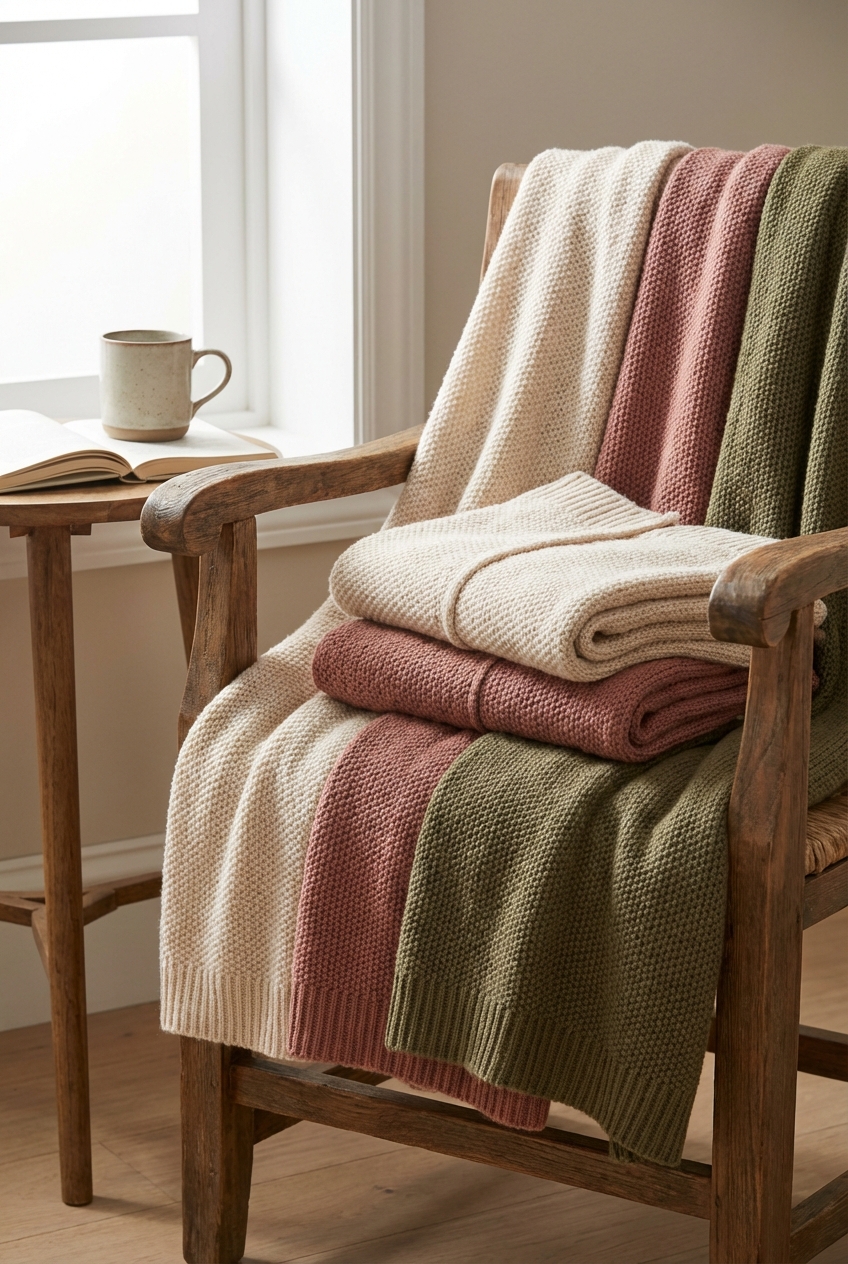
Soft Knit Wraps For Warm Yet Light Coverage
There is a specific moment in every transition season that sends my clients into a minor panic. It is that time when the air conditioning in the office is blasting, or the sun has set at an outdoor wedding, but a structured coat feels too heavy and a cardigan feels too casual. This is exactly where a high-quality soft knit wrap becomes the most valuable player in your wardrobe.
I recall styling a client for a weekend in Paris last autumn. She packed three heavy coats, fearing the chill, only to find they were cumbersome for museums and overheated in cafes. We switched her strategy to fine-gauge cashmere wraps. The result was not just functional warmth; it elevated her entire silhouette, adding texture and movement that a coat simply cannot achieve.
A great wrap is not just a rectangle of fabric; it is a tool for manipulating proportion and adding a layer of sophistication. Whether you are navigating drafty airports or looking for the perfect evening cover-up, the right knit offers warmth without the weight. If you are looking for visual inspiration on how to drape and style these pieces, please scroll down to the Picture Gallery at the end of the blog post.
The Fiber Edit: Choosing the Right Material
The difference between a wrap that drapes elegantly and one that adds bulk lies entirely in the fiber. As a stylist, I am rigorous about checking labels. You want fibers that trap heat but remain breathable.
Cashmere
This is the gold standard for a reason. Cashmere fibers are hollow, which allows them to provide insulation that is up to three times warmer than sheep’s wool, yet significantly lighter.
Look for: 2-ply or 4-ply yarns. Single ply often holes easily and lacks the loft needed for warmth.
The Touch Test: Good cashmere should not feel overly slippery (which indicates chemical treatment) or overly fluffy immediately (which suggests short fibers that will pill). It should feel dense and soft.
Merino Wool
For everyday wear, Merino is exceptional. It comes from the Merino sheep and has very fine fibers, measured in microns.
The Rule: Look for “ultrafine” or “superfine” Merino, usually under 17 microns. This ensures the wrap won’t itch against your neck.
Performance: It is naturally moisture-wicking and resists odors, making it the perfect choice for travel.
Alpaca
Alpaca is warmer than wool and almost as soft as cashmere, but it has a different texture. It has a slight “halo” or fuzziness.
Baby Alpaca: This does not mean it comes from a baby animal; it refers to the finest fibers from the first shearing. Stick to this grade for wraps that touch the skin directly.
Designer’s Note:
I often see clients buying acrylic or polyester blends because they feel soft in the store. Be cautious. Synthetics trap heat but do not breathe, meaning you will go from freezing to sweating in minutes. Always aim for at least 80% natural fiber content.
Understanding Scale and Dimensions
In interior design, we talk about rug scaling; in fashion, we talk about wrap dimensions. A wrap that is too small looks like a scarf; one that is too large looks like a blanket.
The Golden Ratio for Wraps
For the average height (5’4″ to 5’7″), the ideal wrap size is roughly 28 inches wide by 78 inches long. This length allows you to wrap it around your shoulders and still have the ends hang to your hip bone, which elongates the torso.
Petite Considerations
If you are under 5’4″, a 78-inch wrap might overwhelm your frame.
The Fix: Look for shorter lengths (around 70 inches) or narrower widths (20-24 inches).
Styling trick: Do not let the ends hang straight down. Toss one end over the shoulder to break up the vertical line and reduce visual bulk.
Oversized and Ruanas
A ruana is a poncho-style wrap with an open front. These are generally 45 to 55 inches square.
When to use: These replace jackets entirely. They are excellent for belting but can drown a figure if worn loose over wide-leg trousers. Keep the bottom half of your outfit fitted (leggings, slim denim) to balance the volume on top.
Draping Techniques for Every Silhouette
The versatility of a knit wrap lies in how you manipulate the fabric. I teach my clients three core drapes that work for almost any social setting.
1. The Classic Waterfall
This creates a vertical line down the front of the body, which is slimming and effortless.
Step 1: Place the wrap evenly around your neck.
Step 2: Let it hang loose over your shoulders.
Step 3: Take the inner edge of the fabric near your collarbone and fold it outward slightly. This creates a lapel effect that looks more tailored than messy.
2. The Belted Cape
This transforms a soft accessory into a structured garment. It is perfect for the office or when you need your hands free.
Step 1: Drape the wrap evenly over your shoulders so it covers your back and chest.
Step 2: Ensure the ends are even at the bottom.
Step 3: Place a skinny or medium-width belt over the wrap at your natural waist.
Step 4: Gently tug the fabric above the belt to create a slight blouson effect. This defines the waist while keeping your back warm.
3. The One-Shoulder Toss
This is the “Old Hollywood” method. It provides excellent coverage for evening gowns or sleeveless tops.
Step 1: Drape the wrap asymmetrically, with one end hanging down to your knee and the other at your waist.
Step 2: Take the long end and toss it across the opposite shoulder.
Step 3: Let it drape casually down the back.
Common Mistake: Tying it too tight. This wrap relies on gravity and friction. If it feels insecure, use a small hidden safety pin or a decorative brooch to anchor it at the shoulder.
Styling for Occasions: A Strategic Approach
Context is everything. The wrap you wear on a red-eye flight should not be the same one you wear to a cocktail party, even if they are the same color.
The Travel Wrap
Material: Heavy-gauge cashmere or a cashmere-cotton blend.
Function: It acts as a blanket on the plane, a scarf on the bus, and a shawl at dinner.
What I’d do in a real project: I advise clients to choose a darker neutral (charcoal, navy, espresso) for travel. Light colors show coffee spills and airport grime too easily.
The Event Wrap
Material: Gossamer cashmere, silk-wool blend, or fine-gauge alpaca.
Texture: Look for a tighter weave with a slight sheen.
Rule of Thumb: If your dress has a complex neckline or heavy embellishment, the wrap must be simple and solid. If the dress is minimal, you can afford a wrap with a subtle texture or lace-knit pattern.
The Office Wrap
Material: Merino wool or a sturdy modal blend.
Styling: Keep it structured. The “Belted Cape” style mentioned above works best here because it looks like a vest.
Designer’s Note: Avoid wraps with fringe for the office. Fringe can get caught in office chairs and drawers, and it tends to look a bit too “boho” for conservative corporate environments. A clean, hemmed edge is more professional.
Color Coordination and Visual Weight
Choosing the color of your wrap is about more than just matching your outfit. It is about where you want to draw the eye.
Monochromatic Dressing
Wearing a camel wrap over a camel sweater and trousers is the ultimate high-end fashion move.
Why it works: It creates an unbroken vertical line, making you look taller and more expensive.
The Trick: Ensure the textures are different. Pair a chunky knit wrap with a smooth silk blouse or a fine-gauge turtleneck. The difference in texture prevents the outfit from looking flat.
High Contrast
A cream wrap over an all-black outfit draws attention exclusively to your face and shoulders.
Use caution: If you have broad shoulders and want to minimize them, avoid high-contrast wraps draped horizontally. Instead, wear a wrap in a similar tone to your top to blend the silhouette.
Prints and Patterns
Scale Rule: If you are wearing a printed dress, your wrap must be solid. If you are wearing a solid outfit, you can introduce a patterned wrap (like a plaid or geometric print).
Expert Advice: I generally steer clients toward solids or very subtle herringbones. Prints date faster than solids. A high-quality solid cashmere wrap is an investment that will look relevant ten years from now.
Care and Maintenance
The most common complaint I hear is, “My cashmere was ruined after one wash.” Knitwear is durable, but it requires specific handling.
Washing Rules
Never Dry Clean: Contrary to popular belief, dry cleaning chemicals can strip the natural oils from wool and cashmere, making them brittle over time.
Hand Wash Only: Use tepid water (never hot) and a dedicated wool shampoo.
The Soak: Let it soak for 15 minutes. Do not agitate or wring.
Drying: Roll the wet wrap in a clean white towel to press out excess water. Unroll and lay flat on a drying rack. Never hang wet knitwear; the weight of the water will stretch the shape permanently.
Depilling
All natural fibers pill. It is not a sign of poor quality; it is a sign of friction.
The Fix: Use a battery-operated fabric shaver or a cashmere comb.
Frequency: De-pill your wraps once at the start of the season and once at the end before storage.
Storage
Clean First: Moths are attracted to body oils and food residue, not just the wool itself. Never store a wrap without washing it first.
Breathable Bags: Store in cotton canvas bags, not plastic. Wool needs to breathe.
Cedar: Use cedar blocks, but sand them down every season to release the fresh oils that repel pests.
Common Mistakes + Fixes
Mistake 1: The “Neck Brace” Effect
Many people bunch the wrap tightly around their neck like a winter scarf.
The Fix: Pull the fabric away from your throat. Show some skin (or the collar of your shirt) to let the look breathe.
Mistake 2: Ignoring Texture Clash
Wearing a chunky cable-knit wrap over a chunky cable-knit sweater.
The Fix: Balance is key. Chunky knits go over smooth fabrics (silk, denim, fine jersey). Fine knits can layer over thicker textures.
Mistake 3: The Static Cling
In winter, dry air makes soft knits cling to your legs or skirt.
* The Fix: Run a metal hanger over the inside of the wrap before putting it on, or mist the air (not the fabric) with a little water. You can also pin a small safety pin to the inside seam of the wrap; the metal helps discharge the static electricity.
Finish & Styling Checklist
Before you head out the door, run through this mental checklist to ensure your wrap looks intentional, not accidental.
1. Check the Length: Is the wrap hitting you at a flattering point? (Ideally mid-thigh or knee).
2. Secure the Drape: If you are going to be active, have you secured the wrap with a belt or brooch?
3. Fabric Audit: Is the material appropriate for the temperature? (Cashmere for cold, cotton/modal for breeze).
4. Grooming Check: Have you removed any pilling from previous wears?
5. Shoulder Check: Is the wrap sitting symmetrically (if that’s the look) or intentionally asymmetrical? Avoid the “it’s falling off” middle ground.
FAQs
Q: Can I wear a knit wrap to a black-tie wedding?
Yes, but the material must be exquisite. Choose a gossamer-weight cashmere or a silk-cashmere blend. Avoid chunky knits, cables, or fringe. A pashmina style in a solid jewel tone or black is appropriate.
Q: My wrap keeps slipping off my shoulders. What do I do?
This is common with silky fibers. You can use “fashion tape” on your shoulders to create friction. Alternatively, tie the two ends in a small knot behind your back (bolero style) to keep the wrap permanently in place on your arms.
Q: Is it worth buying a 100% cashmere wrap over a blend?
For warmth-to-weight ratio, yes. However, if you are hard on your clothes or have young children/pets, a blend (like Merino and Nylon or Cashmere and Cotton) will be more durable and resistant to pilling.
Q: How do I fix a snag in a knit wrap?
Do not cut it! Take a “snag repair tool” (a needle with a rough edge) or a crochet hook, insert it from the back of the fabric, and pull the snag through to the inside. Massage the surrounding fabric to ease the tension back into place.
Conclusion
A soft knit wrap is one of the few items in a wardrobe that bridges the gap between comfort and elegance so seamlessly. It solves the practical problem of unpredictable temperatures while offering endless styling potential. By investing in natural fibers like cashmere or merino, and mastering a few key draping techniques, you ensure that your coverage is never just about staying warm—it is about refining your personal style.
Whether you are looking for a travel companion or a finishing touch for an evening gown, prioritize the hand-feel and the drape. When you treat your wrap as a garment rather than just an accessory, it transforms your entire look.
Picture Gallery


