
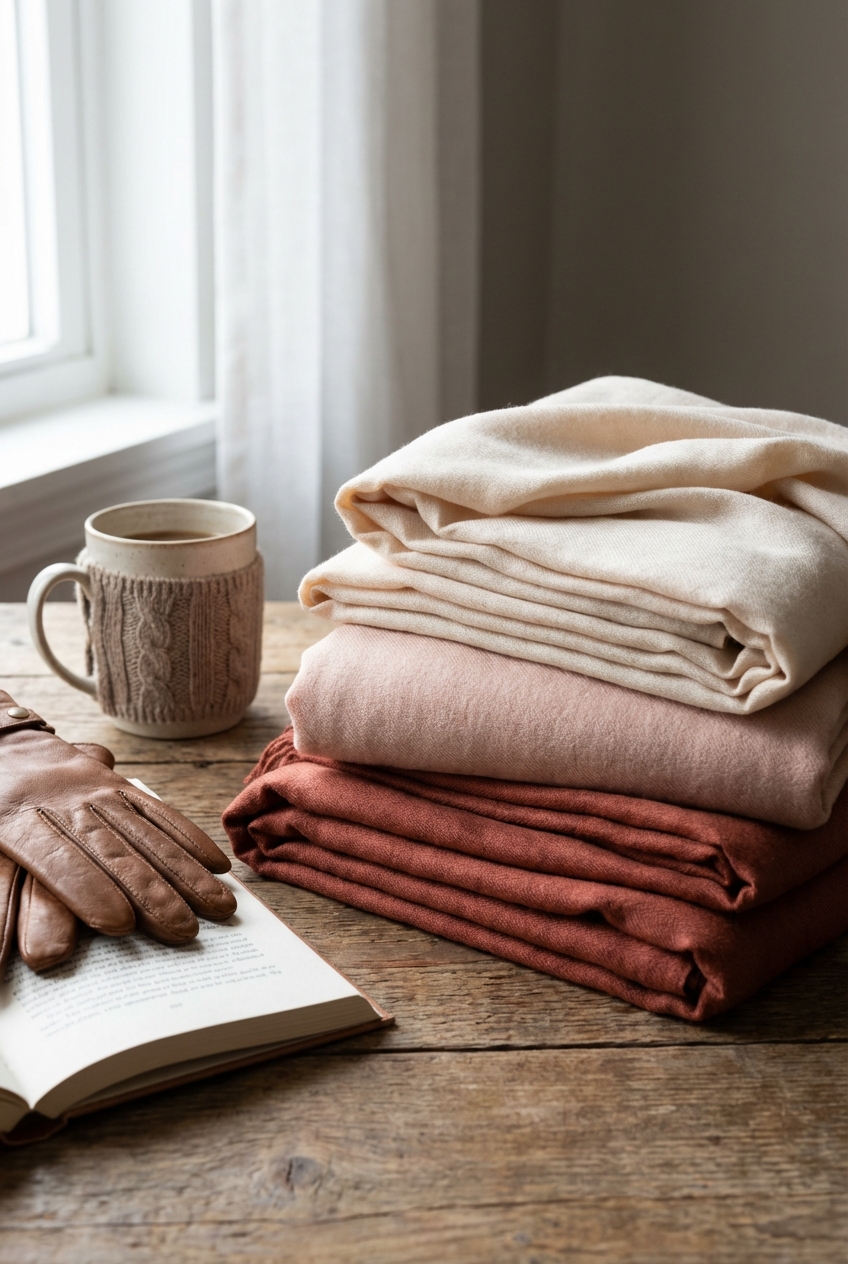
Soft Pashmina Shawls For Layering Warmth
There is distinct magic in a wardrobe piece that serves strictly utilitarian purposes while simultaneously elevating an outfit to an entirely new level of elegance. The pashmina shawl is exactly that item. In my years styling clients for everything from high-stakes boardroom meetings to drafty autumn weddings, the pashmina remains the ultimate secret weapon for mastering the art of layering.
I recall a specific fitting for a client attending a gala in late November. She had a stunning sleeveless silk gown but was terrified of freezing during the cocktail hour. We didn’t want to hide the dress under a heavy wool coat. The solution was a 4-ply, pure cashmere pashmina in a soft dove grey. It provided the necessary insulation without adding visual bulk, draping beautifully over her shoulders while reflecting light onto her face.
This guide is designed to help you navigate the often-confusing world of pashminas, from distinguishing authentic fibers to mastering the drape. Be sure to scroll all the way to the bottom, where I have curated a dedicated Picture Gallery featuring my favorite ways to style these shawls for the season.
Understanding True Pashmina Quality
The term “pashmina” has unfortunately become a catch-all word for any wide scarf, but in the high-end fashion world, accuracy matters. True pashmina is a specific type of fine cashmere wool derived from the Changthangi goat found in the high-altitude regions of the Himalayas.
When selecting a shawl for warmth and longevity, you must look at the fiber diameter. The finest pashmina fibers are between 12 and 15 microns. For context, a human hair is about 75 microns. This fineness is what traps air so effectively, creating a layer of warmth that defies the thinness of the fabric.
The “Ring Test” Reality
You may have heard of the “ring test,” where a genuine pashmina can be pulled through a wedding ring. While this is a fun party trick, it usually only applies to “Ring Shawls” (Shahtoosh), which are often illegal or highly regulated due to animal welfare. For a functional, daily-wear luxury shawl, you actually want something slightly more substantial.
Designer’s Note: The Synthetic Trap
In my studio, I frequently see clients bring in “pashminas” they bought on vacation that feel slippery or excessively shiny. This is usually viscose or acrylic. Real pashmina and high-grade cashmere have a matte finish and a slightly uneven texture due to hand-looming. If it shines like plastic under the light, it will not breathe, and you will find yourself sweating rather than staying comfortably warm.
Choosing the Right Ply and Weave
Warmth is determined by the “ply” of the yarn. Ply refers to how many threads are twisted together to make a single piece of yarn. Understanding this helps you buy the right shawl for the right climate.
1-Ply to 2-Ply: The Trans-Seasonal Layer
These are gossamer-thin. I use these primarily for clients attending summer events or for those who run hot but need arm coverage. They offer a sheer aesthetic but provide minimal insulation against a real chill.
3-Ply to 4-Ply: The Winter Standard
For genuine layering warmth, look for 3-ply or 4-ply. This weight has a beautiful, heavy drape that hangs straight down rather than fluttering away. It is substantial enough to replace a light cardigan.
My rules for weave selection:
- Diamond Weave: The classic “chashm-e-bulbul” (eye of the bulbul) pattern. It is durable and traps air pockets efficiently.
- Twill Weave: Creates a diagonal rib. This is denser and generally warmer, making it perfect for travel or commuting.
- Basket Weave: Looser and more casual. Great for a bohemian look, but more prone to snagging on jewelry.
Sizing and Proportions
One of the biggest mistakes I see is buying a scarf when you actually need a stole or a shawl. In interior design, scale determines the success of a room; in fashion, scale determines the success of a silhouette.
If the fabric is too small, it looks like an afterthought. If it is too large, it swallows your frame.
Standard Measurements
- The Scarf (28″ x 80″): Best for wrapping around the neck under a coat. It is not wide enough to cover shoulders effectively as a wrap.
- The Stole (28″ x 80″ – often wider): A versatile middle ground, usually around 28 to 36 inches wide. This is the standard “evening wear” size.
- The Full Shawl (40″ x 80″): This is the luxury size. It is large enough to fold in half for double warmth or to use as a blanket during long flights.
Proportion Rules
If you are petite (under 5’4″), a full 40-inch wide shawl can be overwhelming if not styled correctly. I recommend petite clients stick to the 28-inch width or choose a very lightweight 1-ply fabric that compresses easily. Tall clients should always opt for the full shawl size to ensure the fringe hits at a flattering point on the thigh rather than cutting the torso in half.
Styling Techniques for Structure and Warmth
Throwing a shawl over your shoulders is easy, but keeping it there—and looking chic while doing it—requires technique. We want to avoid the “grandmother in a rocking chair” look and aim for “off-duty editor.”
The Belted Drape
This is my go-to for defining the waist while utilizing the shawl as a vest.
- Drape the full-width shawl over your neck so it hangs evenly down your front.
- Flatten the fabric over your bust so it covers your torso like a cardigan.
- Place a structured leather belt over the shawl at your natural waist.
- Pull the fabric slightly upward above the belt to create a “blouse” effect.
This keeps the heat centered on your core and allows you to use your hands freely without constantly adjusting the fabric.
The European Loop
This provides maximum neck warmth and fills the gap of an open coat.
- Fold the shawl in half lengthwise (reducing width) and then in half widthwise (reducing length).
- Place it behind your neck. You will have a loop on one side and two tail ends on the other.
- Pull the loose ends through the loop.
- Crucial Step: Fluff the loop so it sits softly under the chin rather than choking you.
Common Mistakes + Fixes
Mistake: The “fidget factor.” The shawl keeps sliding off one shoulder.
Fix: Use a discreet brooch or a hat pin. Pin the shawl to your garment (if the fabric allows) or pin the two sides of the shawl together at the shoulder. Alternatively, wear a fabric with a slight texture (like wool/cashmere blend) which grips better than 100% silk.
Color Theory and Wardrobe Coordination
A pashmina is a significant block of color near your face. It has the power to brighten your complexion or wash you out completely. Unlike a handbag which sits away from the face, the shawl reflects light directly onto your skin.
The “Illuminator” Effect
For winter styling, I always recommend lighter, creamier tones to counteract the often dull, grey lighting of the season. A soft oatmeal, champagne, or blush pink pashmina acts like a reflector board used in photography.
Monochromatic Texture Mixing
A look I frequently style for high-end catalogs is the “monochromatic column.”
- The Base: Camel wool trousers and a camel cashmere sweater.
- The Layer: A camel pashmina shawl in a slightly different texture (perhaps a herringbone weave).
This elongates the body. The slight variation in shade and texture adds depth without breaking the vertical line.
Pattern vs. Solid
If you are investing in your first high-quality pashmina, buy a solid neutral. Patterns, specifically paisleys, can be stunning but limit versatility. A solid navy, charcoal, or black shawl can transition from a flight to a funeral to a black-tie dinner seamlessly.
Care and Maintenance for Longevity
A high-quality pashmina is an investment that should last a decade or more. However, natural fibers are delicate. They are susceptible to friction, moisture, and pests.
Washing Protocol
Never dry clean a pashmina unless it has significant structure or lining. Dry cleaning chemicals can strip the natural oils from the cashmere, leaving it brittle over time.
My Hand-Wash Method:
- Fill a clean basin with lukewarm water (never hot).
- Add a capful of specialized wool wash or a gentle, pH-neutral baby shampoo.
- Submerge the shawl and gently swirl. Do not rub or agitate aggressively.
- Let it soak for 15 minutes.
- Rinse with cool water until no suds remain.
- Drying: Lay the shawl flat on a clean white towel. Roll the towel up like a sleeping bag to press out excess water. Unroll and reshape the shawl on a drying rack away from direct sunlight or heat sources.
Storage and Moth Prevention
The biggest enemy of the pashmina is the clothes moth. They are attracted to body oils and skin cells left on the fiber.
- Rule 1: Never store a shawl for the season without washing it first.
- Rule 2: Use breathable cotton storage bags, not plastic. Cashmere needs to breathe.
- Rule 3: Cedar blocks are helpful, but lavender sachets are also effective and smell better. Refresh them every season.
Finish & Styling Checklist
Before you head out the door, run through this quick checklist. This is the exact mental process I use when giving a client a final look-over.
- Check the Label: Did you remove the white tag? Nothing ruins a luxury look faster than a dangling care label. Carefully snip it off, keeping the care instructions in a drawer if needed.
- Check the Pilling: High-friction areas (where your bag strap hits or under the arms) may pill. Use a cashmere comb to gently remove them. Never pull pills off by hand.
- The “Fluff” Test: Is the knot too tight? Loosen it to allow air to circulate. Warmth comes from trapped air, not strangulation.
- Static Control: In dry winter months, static cling can make the shawl stick to your legs. A quick mist of anti-static spray on the inside of the shawl (test a patch first) solves this.
- Jewelry Check: Are you wearing pronged rings or a bracelet with clasps? Turn the clasps inward or switch to smooth jewelry to prevent catastrophic snags.
FAQs
Why are some pashminas $50 and others $500?
The price difference lies in the fiber purity, origin, and craftsmanship. A $500 shawl is likely 100% cashmere from high-altitude goats, hand-spun and hand-woven. A $50 shawl is likely a blend of wool and silk, or uses shorter, coarser cashmere fibers that will pill quickly and feel less soft.
Can I wear a pashmina with a puffer coat?
Yes, but balance is key. Since puffer coats are bulky, opt for a “neck scarf” tie rather than a bulky drape. Tuck the ends inside the coat to seal in heat, letting just the color show at the top.
Is a silk-cashmere blend better than 100% cashmere?
It depends on the use case. A blend (usually 70% cashmere, 30% silk) has a subtle sheen and a stronger tensile strength, making it more durable and dressier for evening wear. 100% cashmere is matte, softer, and warmer, making it better for daily wear and travel.
How do I fix a pulled thread?
Do not cut it! If you cut a pulled thread, you create a hole. Grasp the fabric on either side of the pull and gently stretch it diagonally, vertically, and horizontally to ease the thread back into the weave. If a loop remains, use a snag-repair needle (or a regular needle) to pull the loop through to the wrong side of the fabric.
Conclusion
Embracing the pashmina shawl is about more than just staying warm; it is about embracing a philosophy of flexible, comfortable elegance. Whether you are layering it over a trench coat for a city commute or wrapping it around your shoulders in a drafty restaurant, the tactile luxury of the fabric provides a sense of security and sophistication that few other accessories can match.
Invest in the best quality your budget allows, care for it with a gentle hand, and it will serve as your most reliable companion through the coldest months of the year.
Picture Gallery


