
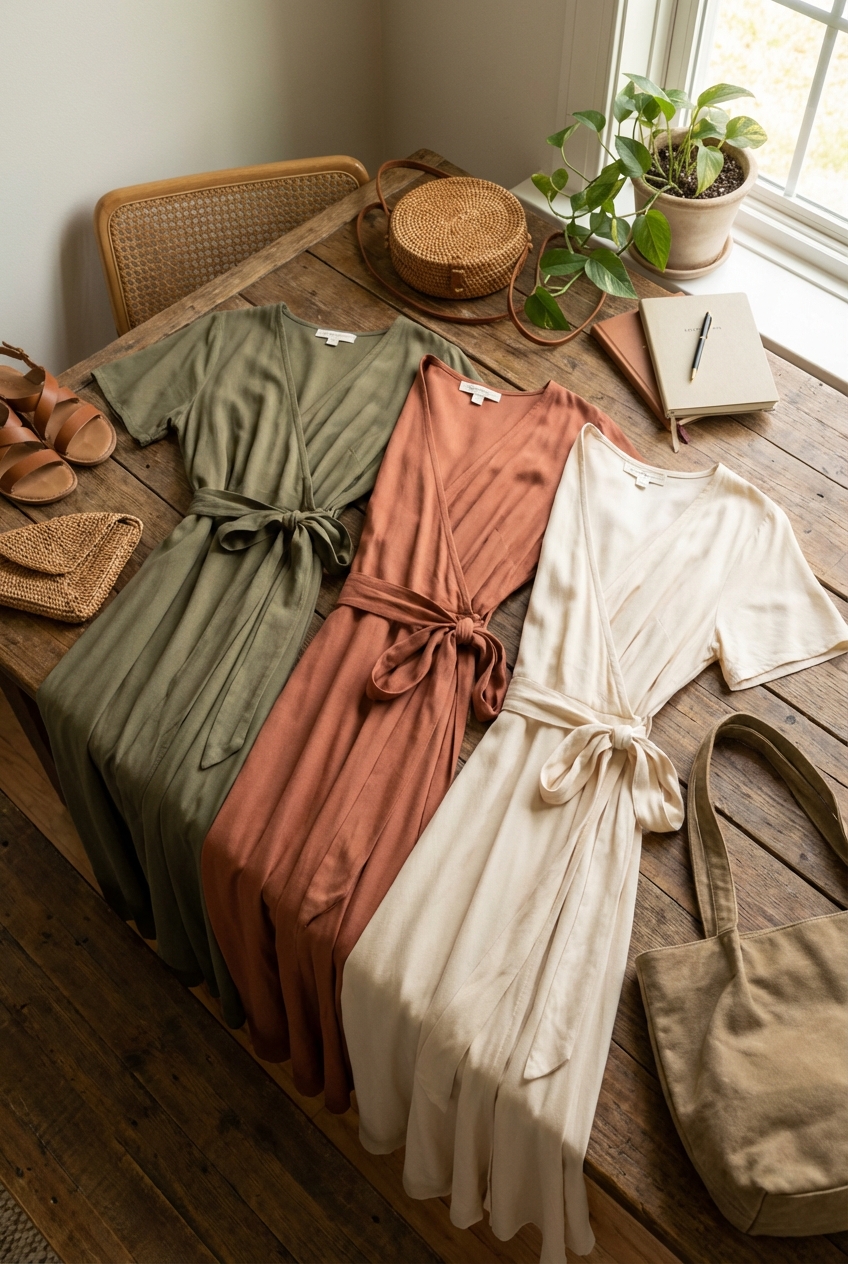
Soft Wrap Dresses For Versatile Wardrobes
There are very few garments that can claim the title of “universally flattering,” but the wrap dress holds that crown securely. I recall styling my first high-profile client who felt unsure about her changing silhouette after having a baby. We tried tailored suits and shift dresses, but nothing felt right until we landed on a soft, high-quality jersey wrap dress.
The transformation was immediate, not just in how she looked, but in how she carried herself. The wrap silhouette allows for a customized fit that rigid zippers and buttons simply cannot provide. It honors the body’s natural lines while offering comfort that rivals your favorite loungewear.
Whether you are building a capsule collection or looking for that one “do-it-all” piece, a soft wrap dress is non-negotiable. If you are looking for visual inspiration, check out the Picture Gallery at the end of this blog post.
The Anatomy of the Perfect Wrap Silhouette
Understanding why the wrap dress works is the first step to selecting the right one. It relies on an adjustable closure that typically cinches at the natural waist. This creates an hourglass visual regardless of your actual body shape.
The “V” neckline created by the crossover elongates the neck and draws the eye vertically. This is a classic styling trick to balance proportions. However, not all V-necks are created equal, and the depth matters significantly.
For a versatile wardrobe, look for a neckline that sits high enough to conceal a standard bra. If the V plunges too deeply, you lose the ability to wear the dress in corporate settings without a camisole. A versatile piece should not require extra layers just to make it modest.
Designer’s Note: The “Sit Test”
In the fitting room, never just stand in front of the mirror. You must sit down. A wrap dress that looks perfect while standing may pull apart at the thighs or gape at the chest when you sit. If the fabric pulls tightly across your lap, size up. It is easier to tailor the waist in than to create fabric where there is none.
Fabric Selection: Defining “Softness” and Drape
The title of this guide specifies “soft” wrap dresses because fabric stiffness kills the versatility of this shape. A stiff cotton poplin wrap dress can look sculptural, but it won’t drape over curves or move with you comfortably. You want materials that have “liquid” movement.
Silk Jersey
This is the gold standard for high-end wrap dresses. It combines the luxe sheen of silk with the stretch and durability of a knit. It regulates temperature, keeping you cool in summer and warm in winter. It travels exceptionally well as wrinkles tend to fall out after hanging for an hour.
Modal and Bamboo Blends
For everyday wear, modal is superior to standard cotton. It is resistant to pilling and shrinking, and it feels incredibly cool against the skin. Look for a blend with at least 5% Elastane or Spandex. This ensures the elbows don’t bag out after a day of typing at your desk.
Merino Wool
For cooler climates, a fine-gauge merino wool wrap dress is indispensable. Unlike chunky knits, fine merino drapes elegantly without adding bulk to the waistline. It is naturally odor-resistant, meaning you can wash it less frequently.
Common Mistakes + Fixes
- Mistake: Buying 100% polyester that mimics satin.
- Why it fails: Cheap polyester traps heat and retains body odors. It also tends to generate static cling, causing the skirt to stick to your legs uncomfortably.
- The Fix: Always check the care label. If you must buy synthetic, look for Cupro or Viscose, which are semi-synthetics derived from plant fibers and breathe much better.
Mastering the Fit: Key Measurements
As a fashion expert, I see many women wearing wrap dresses that are technically the wrong size. Because the dress is adjustable, people assume they can just tie it tighter. However, structural seams must align correctly for the dress to look polished.
Shoulder Alignment
The shoulder seam should sit exactly at the corner of your shoulder bone. If it slips down the arm, the dress looks sloppy and ill-fitting. Because the rest of the dress is unstructured, a sharp shoulder fit is crucial for maintaining a professional appearance.
The Overlap Calculation
This is the most critical measurement for wearability. The front panel of the skirt must overlap the underneath panel by at least 6 to 8 inches. Anything less than this puts you at risk of a “wardrobe malfunction” when walking in the wind or crossing your legs.
Sleeve Length Proportions
For maximum versatility, opt for a three-quarter sleeve. It hits at the narrowest part of the waist, reinforcing the hourglass silhouette. Full-length sleeves can sometimes look heavy, while cap sleeves may limit layering options in cooler months.
What I’d Do in a Real Project (Client Fitting):
- Step 1: Check the back view. The bra band should not be visible or creating ridges through the fabric.
- Step 2: Check the hemline. I prefer the hem to hit right below the kneecap or at the mid-calf (midi). An above-the-knee wrap dress can often become too short when you sit down due to the fabric rising.
- Step 3: Test the tie. The belt should lay flat without twisting. If the belt is too thin, it can cut into the waist uncomfortably. I often look for sashes that are at least 1.5 inches wide.
Securing the Wrap: Preventing the Gape
The most common complaint I hear about wrap dresses is the neckline gaping open. This usually happens because the bust measurement is slightly larger than the dress pattern allows, or the fabric is too slippery. You do not have to accept this annoyance.
The Hidden Snap Button
High-end garments often come with a tiny, clear snap button sewn at the crossover point of the neckline. If your dress doesn’t have one, a tailor can add it for a nominal fee. This is a permanent solution that creates security without altering the look.
Fashion Tape
For special occasions, double-sided fashion tape is your best friend. Place a strip along the edge of the neckline and press it to your skin. Do not apply lotion to your chest area before doing this, or the adhesive will fail.
The Safety Pin Trick
In a pinch, you can use a safety pin, but do not pin it from the outside. Pin the layers together from the inside of the dress. Catch only the inner facing of the top layer so the metal pin is invisible to the outside world.
Styling for Different Occasions
The true value of a soft wrap dress lies in its ability to transition from a boardroom meeting to a dinner date. The base garment remains the same; the accessories dictate the tone.
The Professional Setting
When styling for work, structure is your ally. Soft jersey dresses can sometimes read as “too casual” if not anchored correctly. Pair the dress with a structured blazer draped over the shoulders.
Footwear should be closed-toe. A pointed-toe pump or a sleek leather loafer works best. Avoid wedges or espadrilles in the office, as they lean too resort-casual. If the neckline feels too exposed, layer a lace-trim camisole underneath in a matching color.
Weekend Branding
For a Saturday brunch or market run, dress the wrap down. Swap heels for clean white leather sneakers. This creates a modern, sporty contrast with the feminine dress silhouette.
Layer a denim jacket over the top. The roughness of the denim contrasts beautifully with the softness of the jersey or silk. Roll the sleeves of the jacket to show off your wrist stack.
Evening Elegance
To take a wrap dress into the evening, focus on texture and shine. If your dress is a matte jersey, add patent leather heels to introduce light reflection. Statement earrings are essential here since the V-neck leaves the décolletage open.
Seasonal Transitions and Layering
A soft wrap dress is not just for spring and summer. With the right layering techniques, it becomes a four-season staple. This maximizes your “cost per wear,” a metric I always encourage clients to consider.
Winterizing the Wrap
Layer a thin, fitted turtleneck underneath your wrap dress. This 70s-inspired look is incredibly chic and practical. Choose a turtleneck in a contrasting color for a bold look, or tonal for a streamlined effect.
Tights and Boots
Opaque black tights pair perfectly with wrap dresses. However, be mindful of static electricity. Friction between tights and a jersey dress can cause clinging. A quick spray of anti-static spray or even hairspray on your tights can prevent this.
Boots Selection
Knee-high leather boots are the best choice for midi-length wrap dresses. Ideally, the hem of the dress should cover the top of the boot. This creates a continuous line of color that elongates the leg.
Checklist: The Quality & Styling Audit
Before you commit to purchasing or styling your wrap dress, run through this final checklist. These are the standards I use when shopping for private clients.
- Fabric Recovery: Stretch the fabric slightly with your fingers. Does it snap back immediately? If it stays stretched out, put it back. It will lose its shape by noon.
- Hem Weight: Does the hem have a substantial finish? A weighted hem helps the dress hang straight and prevents it from flying up in the wind.
- Pattern Matching: If the dress has a print (florals, stripes), look at the side seams. Do the patterns match up reasonably well? Mismatched patterns are a sign of fast-fashion construction.
- Facing Width: Check the flap of fabric inside the neckline. It should be at least 2 inches wide. If it’s too narrow, it will flip out and show the unfinished side of the fabric.
- Belt Loops: Are the belt loops flimsy threads? I recommend cutting those off. They often sit at the wrong height for your specific waist. Rely on the wrap tension to hold the belt, or have a tailor move the loops to your natural waist.
- Undergarment Check: Ensure you have a seamless, nude-colored thong or boy short. Panty lines are very visible under soft jersey fabrics.
Frequently Asked Questions
How do I wash a silk jersey wrap dress?
Always read the label, but generally, hand washing is safest. Use cool water and a pH-neutral detergent designed for silk. Never wring out the water; roll the dress in a clean towel to absorb moisture, then lay it flat to dry. Hanging wet jersey will stretch the fibers and distort the length.
Can I wear a wrap dress if I have a large bust?
Absolutely. It is one of the most flattering shapes for larger busts because it separates and defines the chest rather than compressing it (uniboob effect). Just ensure you buy the size that fits your bust comfortably, even if the waist is loose. You can tighten the waist with the sash.
My wrap dress blows open when I walk. What can I do?
This is a common issue with skirts that lack sufficient overlap. The easiest fix is to wear a slip skirt underneath. A bias-cut silk slip is ideal because it won’t add bulk. Alternatively, you can have a tailor sew the skirt shut from the waist down to the mid-thigh, turning it into a faux-wrap from the waist down.
Is a wrap dress appropriate for a formal wedding?
It depends on the fabric. A cotton or matte jersey wrap dress is too casual for black tie. However, a floor-length wrap dress in silk satin, velvet, or a metallic knit is perfectly appropriate. Accessories play a huge role here; opt for embellished heels and a clutch.
What is the best length for a petite frame?
If you are under 5’4″, avoid mid-calf lengths that can cut your leg line in an unflattering spot. Aim for a hem that hits just above the knee or go for a full maxi length. If you love a midi dress, ensure it has a slit or wear it with a nude-colored heel to extend the leg line.
Conclusion
The soft wrap dress is more than just a piece of clothing; it is a reliable tool in your style arsenal. It solves the “I have nothing to wear” dilemma instantly by offering a polished look with the comfort of pajamas.
By focusing on high-quality fabrics like silk jersey or modal blends, and paying close attention to fit details like shoulder seams and overlap width, you ensure that this garment will serve you for years, not just a season. It respects the reality of a woman’s body, adapting to fluctuations in weight and shape with grace.
Invest in the best quality you can afford, take the time to find the right fit, and don’t be afraid to use a tailor to perfect the details. A well-chosen wrap dress is a hallmark of a versatile, mature, and stylish wardrobe.
Picture Gallery


