
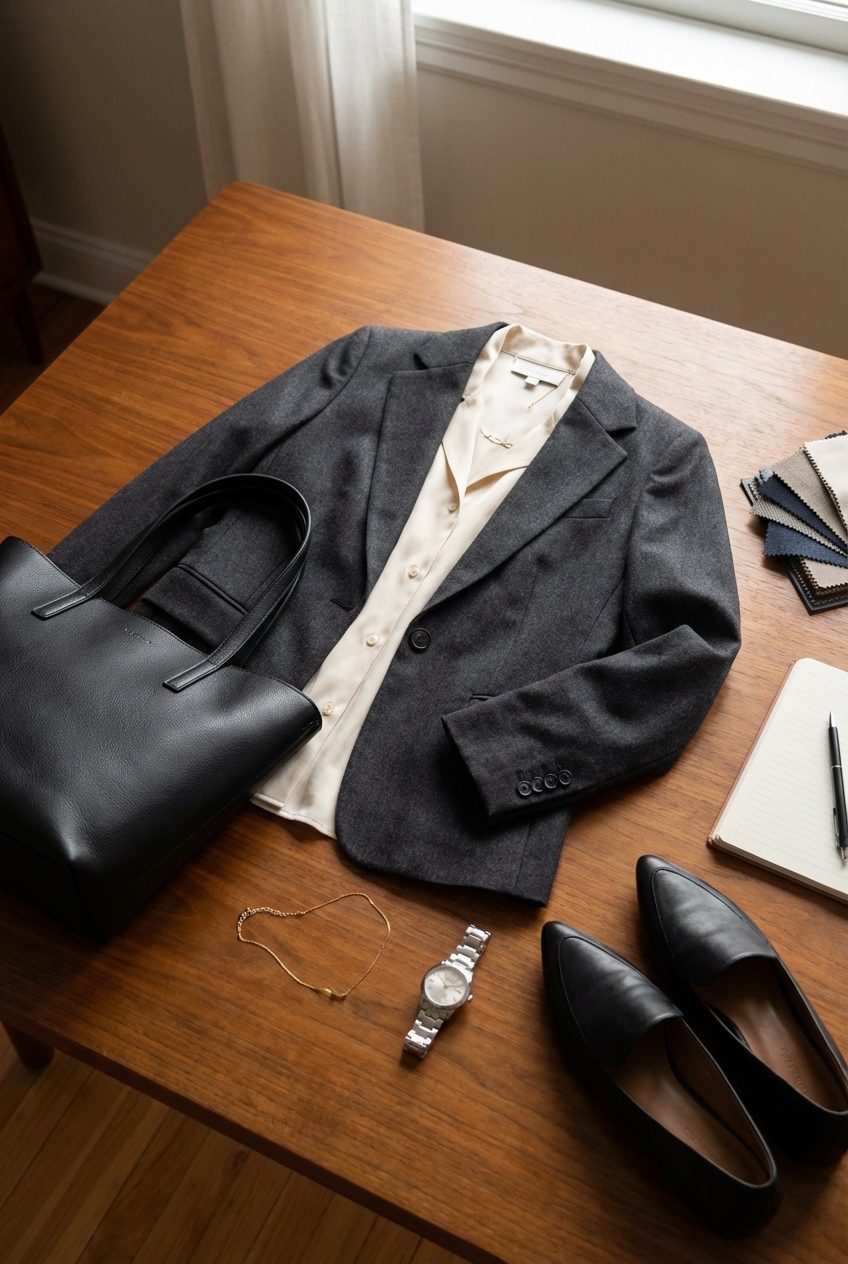
Sophisticated Boardroom Meeting Looks With Tailored Suits
There is a distinct energy shift when you walk into a high-stakes meeting wearing a suit that fits perfectly. It acts as a form of modern armor, projecting competence before you even speak a word. In my years styling executive clients, I have seen posture change and confidence soar simply by swapping an ill-fitting separate for a razor-sharp tailored suit.
I remember a specific client, a VP at a tech firm, who felt she wasn’t being taken seriously during budget negotiations. We overhauled her wardrobe, moving away from soft cardigans to structured Italian wool suits with architectural shoulders. The feedback she received wasn’t just about her clothes; her colleagues noted she seemed more “authoritative” and “decisive,” proving that fashion is a functional tool in business.
While trends come and go, the rules of boardroom dressing rely on timeless principles of fit, fabric, and proportion. If you are looking for specific outfit inspiration, don’t miss the curated Picture Gallery at the end of the blog post.
The Foundation of Power: Selecting the Right Silhouette
The first step in building a boardroom wardrobe is understanding which silhouette serves your body type and professional environment. A suit is not one-size-fits-all, and the cut dictates the formality.
For a modern yet authoritative look, I often recommend a single-breasted jacket with a slightly nipped waist. This cut is universally flattering and lengthens the torso. Avoid boxy cuts unless they are intentionally oversized and styled with slim trousers to balance the volume.
Designer’s Note:
One thing that often goes wrong is buying a suit based on your current size rather than your shape. A jacket that buttons comfortably but pulls at the shoulders looks cheaper than a jacket that fits the shoulders perfectly but needs the waist taken in. Always buy for your shoulders; a tailor can fix the waist, but reshaping shoulders is costly and difficult.
Common Silhouette Mistakes + Fixes:
- Mistake: Jacket sleeves that swallow your hands.
- Fix: Your jacket sleeve should end right at the wrist bone. If you are wearing a long-sleeve shirt underneath, exactly 1/4 to 1/2 inch of the shirt cuff should be visible.
- Mistake: Trousers that drag on the floor.
- Fix: For wide-leg trousers, the hem should sit 1/4 inch off the ground when wearing your intended heels. For cigarette pants, the hem should hit right at the ankle bone.
Fabric Matters: Texture, Weight, and Breathability
In high-end fashion, the hand-feel and drape of the fabric are just as important as the cut. A suit made from cheap synthetic blends will trap heat and shine under fluorescent office lighting.
For year-round versatility, look for “four-season” wool, typically categorized as Super 100s to Super 120s. This terminology refers to the fineness of the wool fiber. These weights breathe well, resist wrinkling during long meetings, and drape beautifully against the body.
If you travel frequently for business, look for high-twist wools. The yarn is twisted tighter during the weaving process, which creates a natural spring-back effect, making the fabric highly resistant to creases. You can step off a plane and head straight to a meeting without looking disheveled.
Material Rules of Thumb:
- Avoid: 100% linen for high-stakes meetings. It wrinkles the moment you sit down, which can look messy in a formal boardroom.
- Embrace: Wool-silk blends. A small percentage of silk (5-10%) adds a subtle luster that looks expensive without being shiny.
- Check: The lining. A high-quality suit should be lined in cupro or viscose, not polyester. Natural fibers breathe; polyester linings will make you sweat.
The Art of Tailoring: Metrics That Make or Break the Look
Off-the-rack suits are almost never ready to wear immediately. They are essentially templates that need to be finalized by a tailor. When I work with private clients, we allocate about 20% of the total budget specifically for alterations.
The most critical measurement is the “break” of the pant. The break is where the fabric folds or creases where the pant leg meets your shoe. In a modern, sophisticated boardroom look, you generally want a “no break” or “slight break” look.
A “full break” (where fabric pools at the ankle) can look dated and sloppy on women’s suiting. It visually shortens the leg. A clean line from hip to hem creates a taller, leaner column.
Tailoring Checklist for the Tailor:
- Sleeve Pitch: Ensure the sleeve follows the natural curve of your arm when relaxed. It should not ripple or twist.
- Collar Gap: The jacket collar should hug your neck tightly. If there is a gap between the jacket and your shirt collar, the fit is off.
- Button Stance: The top button of a blazer should sit at the narrowest part of your waist to create an hourglass shape.
Color Theory for the C-Suite
While color expresses personality, the boardroom usually calls for a restrained palette that commands respect without causing distraction. This doesn’t mean you are limited to black.
Navy is widely considered the most professional color. It is less harsh than black and looks flattering on almost every skin tone. Charcoal grey is another power player that pairs exceptionally well with silver jewelry and crisp white shirts.
If you want to introduce color, do so through deep jewel tones. A deep aubergine, forest green, or burgundy suit reads as a neutral but adds a layer of sophistication. These shades are particularly effective in creative industries or during the autumn and winter months.
What I’d Do in a Real Styling Session:
If a client loves color but works in a conservative field, I style a monochromatic look. I would pair a camel suit with a silk blouse in the exact same shade of camel. Monochromatic dressing is incredibly chic and elongates the frame, appearing intentional and high-fashion.
Layering Strategy: Blouses, Camisoles, and Button-Downs
The piece you wear under your jacket is critical for both comfort and modesty. Boardroom tables are often at chest height, meaning your top half is the focal point for the duration of the meeting.
Avoid low-cut camisoles that might require you to constantly adjust your neckline. A high-neck silk shell or a bow-tie blouse adds texture and softness to the angular lines of a suit.
For button-down shirts, the fit across the bust is paramount. There is nothing more distracting than a button gaping open mid-meeting.
The “Sit Down” Test:
Always test your outfit sitting down. A shirt that fits while standing might pull tight across the chest or stomach when seated. If there is any pulling, size up and have the torso taken in by a tailor.
Layering Fabric Logic:
- Heavy Suit: Pair with light silk or chiffon to avoid bulk.
- Lightweight Suit: Can handle a crisp cotton poplin shirt or a fine-gauge cashmere sweater.
- Sleeve Length: If your jacket sleeves are slim, wear a sleeveless shell underneath to prevent bunching at the biceps.
Accessorizing Without Distraction
In a boardroom setting, accessories should serve as punctuation, not the headline. The goal is to look polished, not decorated.
Jewelry should be quiet. Large bangles that clank against the table every time you move your hands are a major faux pas. Stick to a classic watch, stud earrings, or a single statement necklace that sits high on the collarbone.
Your bag needs to be structured. A slouchy hobo bag ruins the sharp lines of a suit. Opt for a structured leather tote or a top-handle bag that can stand up on its own when placed on the floor or table.
Shoe Selection for 12-Hour Days:
- Heel Height: Stick to 3 inches or lower. You cannot command a room if you are wobbling or in pain.
- Shape: Pointed toes elongate the leg and look sharper peeking out from trousers than round toes.
- Material: Suede is softer on the foot but less durable in rain. Patent leather is durable but less breathable. Classic calfskin is the best middle ground.
Finish & Styling Checklist
Before you head out the door, run through this final check to ensure your look is cohesive and professional.
- Shoulders: Is the seam sitting exactly at the edge of your shoulder bone?
- Wrinkles: Have you steamed the back of the jacket and the back of the knees?
- Lint: Did you use a lint roller, especially if wearing navy or black?
- Shoes: Are the heels free of scuffs and polished?
- Hardware: Does the metal on your bag match the metal of your jewelry and belt buckle?
- Undergarments: Are you wearing a skin-tone bra that doesn’t show through your white blouse?
FAQs
Can I wear separates to a formal boardroom meeting?
Yes, but the contrast must be high to look intentional. Pair a navy blazer with camel trousers, or a black blazer with grey trousers. Avoid trying to match two black items from different brands; the blacks will never match, and it will look like a mistake.
How often should I dry clean my suit?
Ideally, as little as possible. Dry cleaning chemicals degrade the natural fibers of wool. If you rotate your suits and let them air out for 24 hours between wears, you should only need to dry clean them once or twice a season, unless there is a stain. Steam them regularly to kill bacteria and refresh the fabric.
Is it acceptable to take my jacket off during the meeting?
Read the room. Generally, in a formal boardroom setting, the jacket stays on. It completes the “armor.” If the highest-ranking person in the room removes their jacket, you may follow suit, but keeping it on maintains the most professional visual.
Conclusion
Mastering the boardroom look is about more than just buying expensive clothes. It is about understanding the geometry of your body and using tailoring to enhance your presence. A well-tailored suit signals attention to detail, discipline, and respect for the occasion.
When you eliminate the distraction of uncomfortable or ill-fitting clothes, you free up your mental energy to focus entirely on the business at hand. Invest in quality fabrics, prioritize the fit of the shoulders, and keep your accessories refined. With these elements in place, you will walk into any meeting ready to lead.
Picture Gallery


