
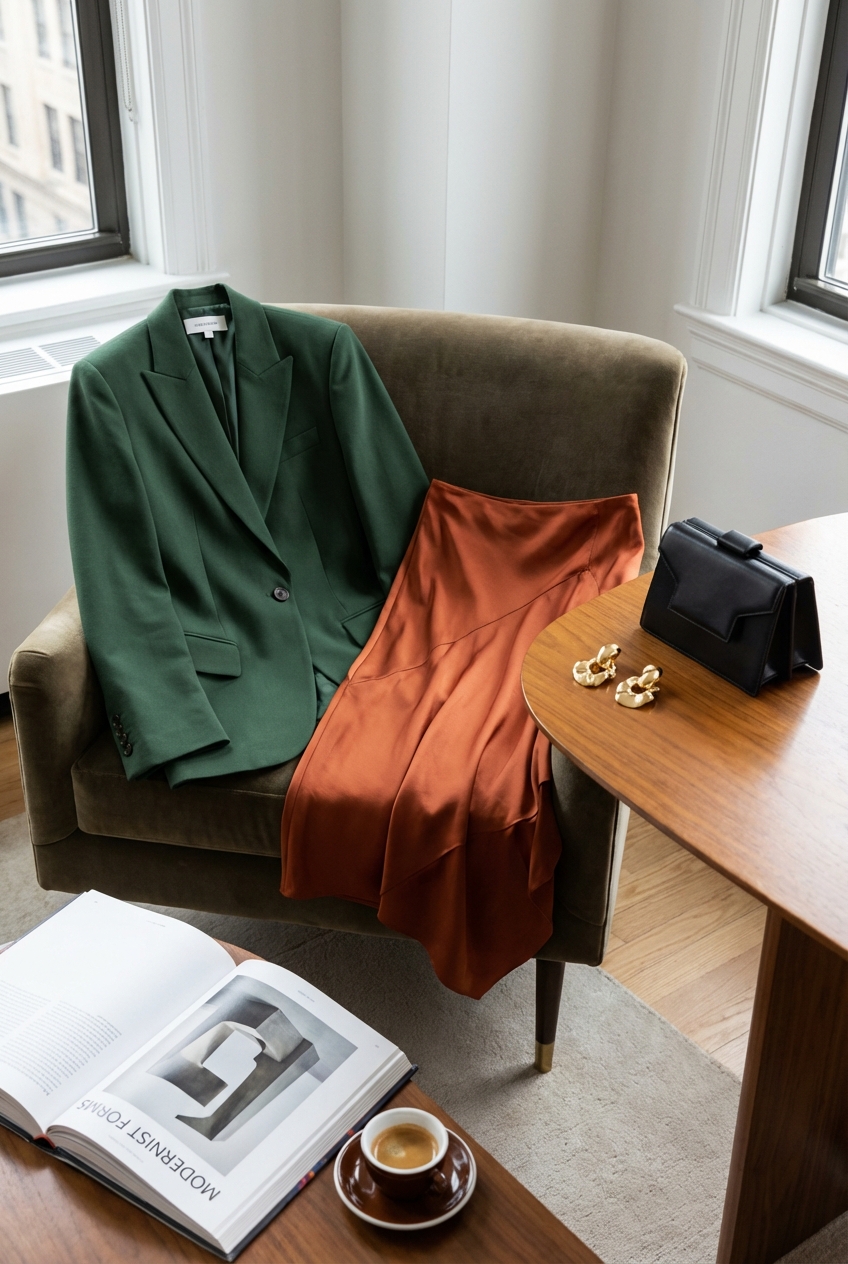
Sophisticated Gallery Opening Looks With Modern Silhouettes Dressing For Art And Elegance
There is a distinct electricity in the air at a gallery opening that you rarely find at other social events. The room is usually a clean slate—often white walls, concrete floors, and stark lighting—designed specifically to let the work speak. However, the attendees are just as much a part of the visual landscape as the pieces hanging on the walls.
As a stylist who has dressed clients for everything from massive Art Basel parties to intimate showings in Chelsea, I have learned that the goal is not to compete with the art, but to be in conversation with it. You want an ensemble that suggests you understand composition, balance, and texture. It is about looking curated, not costumed.
I have curated a stunning picture gallery at the end of this post to spark your imagination for your next art event.
Understanding the Venue and Atmosphere
Before you even touch a hanger in your closet, you must assess the “architectural context” of the event. Just as an interior designer reads a room before placing furniture, you must read the venue to determine your silhouette.
A blue-chip gallery in a historic uptown building requires a different approach than a gritty, experimental warehouse show downtown. The former often calls for polished, sleek refinement, while the latter invites deconstruction and avant-garde shapes.
If you ignore the context, you risk looking disjointed. A floor-length sequin gown in a raw industrial space feels out of touch, just as distressed denim feels disrespectful in a curated museum gala setting.
Designer’s Note: The “White Cube” Rule
In the fashion and art world, we often talk about the “White Cube” effect. Most galleries are stark white boxes. This means your silhouette will be outlined sharply against the background.
I once had a client wear a dress with excessive, wispy tulle layers to a minimalist sculpture opening. Against the stark white wall, the fabric looked messy and undefined rather than ethereal. We learned that sharp lines and solid structures read much better in these high-contrast environments.
What I’d Do in a Real Project (Client Consultation)
- Check the Invite: Look for clues in the typography and the featured artist. Is the art chaotic and colorful? Go neutral. Is the art minimal? You can play with structure.
- Assess the Floor: Concrete floors are standard in galleries. I always check if a client can stand for three hours in their chosen heel height.
- Temperature Check: Large open gallery spaces are notoriously drafty near the doors but hot in the center of the crowd. Breathable layers are non-negotiable.
The Art of the Silhouette: Architectural Shapes
The title of this post focuses on “Modern Silhouettes” because shape is the most effective way to signal sophistication. When dressing for an art event, think of your clothing as architecture.
We are moving away from body-con tightness and leaning into structural volume. This doesn’t mean wearing a sack; it means playing with proportion. A wide-leg trouser with a nipped waist creates a strong, triangular base that feels grounded and artistic.
Consider asymmetry. An asymmetrical neckline or hemline draws the eye in a way that feels intentional and dynamic. It mimics the movement found in modern art, making you feel like part of the installation.
Pro-Level Rules of Thumb for Silhouettes
- The Rule of Thirds: Just like in photography, avoid cutting your body exactly in half. A high-waisted pant should take up two-thirds of your visual line, with the top taking up one-third.
- Volume Balance: If you wear a volumetric, sculptural skirt, keep the top fitted or streamlined. If you wear an oversized, structural blazer, keep the bottom silhouette narrow.
- Negative Space: Skin is negative space. An off-the-shoulder cut creates breathing room that balances heavy fabrics like wool or leather.
Fabric Choice and Lighting Dynamics
Gallery lighting is unforgiving. It is designed to highlight the texture of oil paint and the grain of marble, which means it will also highlight every detail of your clothing. This is where fabric selection becomes technical.
Avoid cheap synthetics. Under high-lumen track lighting, low-quality polyester develops a plastic-like sheen that looks inexpensive. Instead, opt for fabrics that absorb light or reflect it softly.
Matte crepe, heavy silk, wool gabardine, and buttery leather are excellent choices. They have a depth of color that holds up under intense scrutiny.
Common Mistakes + Fixes: The Fabric Edition
Mistake: Wearing high-shine sequins or mirrors to a gallery.
Fix: While festive, highly reflective materials can actually cast light reflections onto the art pieces, which is a major faux pas. If you want shine, choose a silk satin or a metallic thread that glows rather than sparkles.
Mistake: Wearing sheer fabrics without checking transparency.
Fix: Gallery lights are bright enough to x-ray through thin fabrics. Always do a “bright light test” at home with your phone flashlight before leaving.
Color Theory: Complementing vs. Competing
Color is emotional, and in an art setting, it is the primary language. The biggest error I see is people trying to match the art. If you are going to a show featuring vibrant pop art, do not wear a loud, multi-colored print. You will camouflage into the wall.
The most sophisticated approach is usually monochromatic or neutral with a single “pop.” Black is the art world uniform for a reason—it frames the face and recedes visually, allowing the art to be the focus. However, it is not your only option.
Deep jewel tones like emerald, navy, or charcoal gray offer the same sophistication as black but with more depth. If you choose white or cream, ensure the tone doesn’t clash with the gallery walls (which are often a cool, sterile white).
Palette Rules for Art Events
- The 60-30-10 Rule: 60% of your outfit should be a base neutral, 30% a secondary texture (like a leather bag), and 10% an accent color (lipstick or shoes).
- Visual Weight: Darker colors appear “heavier.” If you are top-heavy, wear the darker tone on top to visually balance your frame.
- Print scaling: If you must wear a print, ensure the scale is vastly different from the art. If the art is detailed and small, wear a large, abstract print. If the art is large-scale abstract, wear a solid color.
Footwear for Standing and Socializing
Unlike a gala where you sit for dinner, a gallery opening is a standing event. You will be standing on concrete, hardwood, or terrazzo for two to four hours. Mobility is essential because you need to move around the room to view the pieces.
This is not the time for a 5-inch stiletto with a precarious pitch. You will look uncomfortable, and pain shows on your face. Instead, look for sculptural heels that offer surface area.
Wedges, block heels, and flatforms are incredibly stylish right now and fit the “modern silhouette” brief perfectly. A shoe with an architectural heel (like a sphere or a curved block) serves as a conversation starter and fits the theme.
Measurements and Practicalities
- Heel Height Cap: For standing events, I advise clients to cap heel height at 3 inches unless the shoe has a platform.
- Hemline Clearance: If wearing trousers, the hem should sit 0.25 to 0.5 inches off the ground when wearing your shoes. You do not want your expensive trousers dragging on a dirty gallery floor.
- Toe Box Room: Feet swell when you stand. Ensure you have a half-inch of wiggle room in the toe box.
Accessories as Sculpture
Accessories are where you can truly express your personality without overwhelming the outfit. In a gallery setting, treat your jewelry as wearable sculpture.
Avoid “dainty” everyday jewelry that gets lost. Instead, opt for one major statement piece. A large, hammered gold cuff, a pair of asymmetric resin earrings, or a structural necklace can elevate a simple black dress into a “look.”
The Bag Dilemma
This is a logistical rule that every stylist knows: Never bring a large bag to a gallery opening.
Crowded rooms + expensive art + large tote bags = disaster. You do not want to be the person who accidentally bumps into a pedestal and knocks over a ceramic vase because your shoulder bag stuck out too far.
Carry a clutch or a small crossbody bag. It should be kept close to the body. This is also a security measure, as you will be distracted by conversation and art.
What I’d Do in a Real Project (Accessory Edit)
- The Shake Test: Put on all your jewelry and shake your head/hands. If it jingles loudly, remove it. Gallery acoustics are echoey; you don’t want to be noisy.
- The Snag Check: Ensure your rings and bracelets do not have sharp prongs. You might lean against a wall or brush past delicate surfaces.
- Eyewear: If you wear glasses, wear your boldest, most architectural frames. They are the ultimate art-world accessory.
Outerwear: The First Impression
Often, the coat check line is long, or the venue is chilly enough that you keep your coat on. Therefore, your coat is part of the outfit.
A trench coat draped over the shoulders (the “editor drape”) is effortlessly chic. A structured wool coat in a camel or charcoal adds gravitas. Avoid puffy, technical down jackets unless the event is outdoors; they tend to ruin the sleek silhouette we are aiming for.
If you plan to keep the coat on, ensure your outfit underneath doesn’t bunch up. A blazer under a fitted coat is restrictive. Choose a knit or a silk blouse underneath for comfort.
Finish & Styling Checklist
Before you head out the door, run through this final check to ensure your look is polished and practical.
- Silhouette Check: Stand back 10 feet from a mirror. Does the shape of your outfit look balanced? Is there a clear focal point?
- Lint Roll: If you are wearing black, lint roll it twice. Gallery lights highlight dust and pet hair mercilessly.
- Shoe Grip: Check the soles of your shoes. If they are slippery leather, scuff them slightly. Concrete floors can be slick.
- Undergarments: Check for Visible Panty Lines (VPL). Modern silhouettes often involve smooth fabrics where lines show through.
- Bag Size: Is your bag smaller than a sheet of paper? If not, swap it.
- Fragrance: Go light on perfume. In crowded, warm spaces, heavy scent can be overwhelming to others.
FAQs
What does “Creative Cocktail” mean on an invite?
This is the most common dress code for gallery openings. It means you should look dressed up (no jeans or sneakers), but you have the freedom to be experimental. Think a suit with a bold print, a dress with an interesting cut, or a jumpsuit. It is less rigid than traditional cocktail attire.
Can I wear jeans to a gallery opening?
It depends on the gallery. For a small, local art walk, dark, un-distressed denim with a blazer and heels is acceptable. For a major gallery opening or a museum event, avoid denim. It generally reads as too casual for the effort the artist put into the evening.
Is it rude to wear sunglasses inside?
Generally, yes. It creates a barrier between you and the other guests (and the art). Unless they are prescription or part of a very specific high-fashion performance look, take them off upon entry.
What if I am coming straight from work?
The “Desk to Vernissage” pivot is common. The easiest fix is to change your shoes (heels instead of flats), apply a bolder lipstick (red or berry), and add statement earrings. Swap your work tote for a clutch (leave the tote in the car or coat check).
Conclusion
Dressing for a gallery opening is an exercise in restraint and geometry. It is about finding that sweet spot where you feel confident and elegant, yet comfortable enough to stand for hours and engage in conversation.
By focusing on modern silhouettes, high-quality fabrics that handle the light well, and practical footwear, you show respect for the occasion and the artist. You become part of the room’s aesthetic, adding to the atmosphere rather than distracting from it.
Fashion, at its best, is art. When you enter a gallery, you are simply bringing one art form to meet another. Trust your eye, keep your lines clean, and let the evening inspire you.
Picture Gallery


