
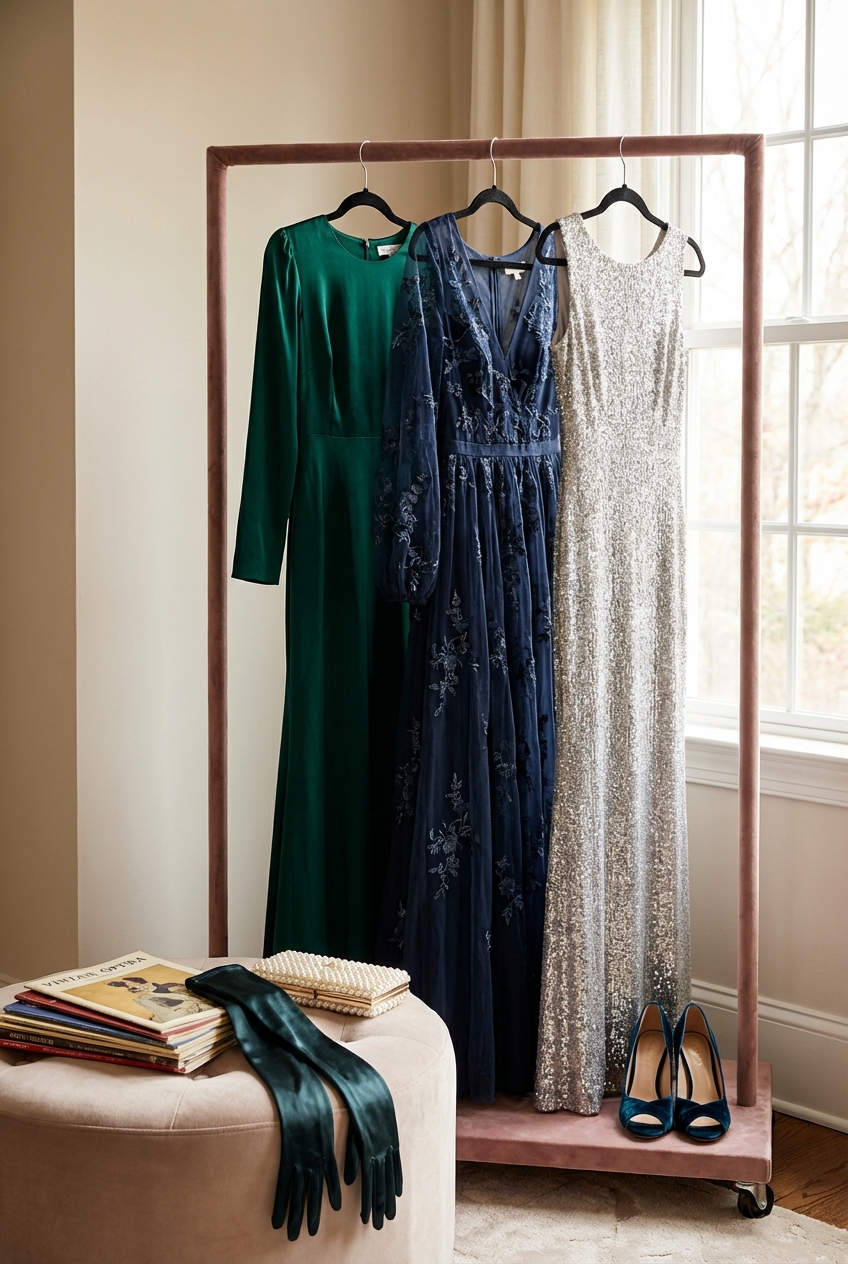
Sophisticated Opera Night Dresses With Long Hemlines Timeless Elegance For A Night To Remember
There are very few occasions left in modern life that demand true sartorial excellence, but the opera remains one of them. Walking into a grand theater with its plush velvet seats and gold-leaf ceilings requires an outfit that commands respect and mirrors the grandeur of the setting. It is not just about looking beautiful; it is about participating in a centuries-old tradition of art and culture.
For many women, the challenge lies in striking the balance between dramatic flair and practical comfort. You want a gown that sweeps the floor with elegance, yet you must be able to navigate narrow theater rows and sit comfortably for three hours. The perfect long-hemlined dress solves these problems while offering a silhouette that elongates the body and captures the light during intermission.
I have styled countless clients for opening nights at the Met and galas across Europe, and I know that confidence comes from the details. From fabric choices that resist wrinkling to the exact hem length required for a safe descent down a grand staircase, this guide covers it all. For those seeking immediate visual inspiration, I have curated a stunning Picture Gallery at the end of the blog post with specific examples of the styles discussed below.
Understanding The Venue And Dress Code Etiquette
The opera is one of the last bastions of formal dress, yet the rules have softened slightly over the decades. However, aiming for “Black Tie” or “White Tie” is always the safest and most respectful bet for evening performances.
When we talk about long hemlines, we are referencing floor-length gowns or “maxi” styles that graze the instep. This length is universally flattering and creates a continuous vertical line that elongates your figure. Short cocktail dresses often feel out of place against the dramatic architecture of an opera house.
The Rule of Volume
You must consider the physical space you will occupy. Opera seats are notoriously compact, often designed in the late 19th or early 20th century when people were generally smaller. A massive ballgown with ten layers of tulle may look incredible in photos, but it will encroach on your neighbor’s space.
I always advise clients to choose a column, trumpet, or A-line silhouette. These styles offer drama without excessive horizontal volume. If you love volume, limit it to the back of the dress via a train that can be tucked under your seat, rather than rigid side panniers.
Designer’s Note: The Noise Factor
Real-world lesson: I once styled a client in a stunning beaded gown for a premiere. It looked gorgeous standing still. However, every time she shifted in her seat, the heavy glass beads clacked against the wooden armrests. She spent the entire second act terrified to move.
The Fix: Avoid heavy, loose beadwork on the hips or sleeves if you are attending a quiet performance. Opt for sequins, embroidery, or fabric manipulation like ruching, which are silent.
Fabric Selection: The Science of Sitting
The most overlooked aspect of evening wear is how the fabric behaves after ninety minutes of compression. You will be sitting for long acts, often in warm temperatures.
The fabric you choose determines whether you stand up at intermission looking pristine or disheveled. Natural fibers breathe better, but synthetics often hold their shape better against creasing.
The “Wrinkle Test” Materials
Avoid: Pure silk taffeta or thin silk satin. These fabrics have “memory.” If you fold them (by sitting), they stay folded. Standing up to reveal deep horizontal creases across the lap ruins the illusion of elegance.
Choose:
- Silk Velvet: The pile hides minor crushing, and it looks incredibly rich under dim theater lights.
- Heavy Crepe: This material has a beautiful drape and springs back into shape almost instantly.
- Brocade: The busy pattern and stiff weave disguise any wrinkles that might form.
- Tulle/Mesh: These fabrics naturally bounce back and resist creasing entirely.
Common Mistakes + Fixes
Mistake: Wearing unlined jersey or thin bias-cut silk.
Why it fails: These fabrics cling to every line of your undergarments and show sweat marks easily if the theater is warm.
The Fix: Always ensure your gown has a substantial lining. If buying vintage or off-the-rack, pay a tailor to add a lining of silk habotai or breathable viscose.
The Mechanics of Hemlines and Tailoring
A long hemline is sophisticated, but it presents tripping hazards if not measured precisely. The length of your dress must be dictated by the exact shoes you plan to wear.
Never guess your heel height at the tailor. A difference of half an inch changes how the dress breaks over the shoe.
The Golden Ratio for Hemming
For an opera gown, the hem should skim the top of the toe box of your shoe while standing still. This usually means the fabric hovers about 0.5 to 1 inch off the ground.
If the dress touches the floor completely, you will step on it when walking up stairs (which are plentiful in theaters). You also risk collecting dust and grime from the theater lobby.
Designer’s Checklist: What I’d Do in a Real Project
- Bring the Shoes: I never conduct a fitting without the actual event shoes.
- The Stair Test: I ask the client to simulate walking up a step. If the front hem catches the shoe, we take it up 0.25 inches.
- The Sit Test: We sit down in a chair. If the dress has a slit, does it migrate too high? If the dress is tight, does the zipper strain?
Color Theory Under Theater Lighting
Opera houses are designed with warm, ambient lighting—think gold sconces, red velvet curtains, and yellow-toned chandeliers. This environment changes how colors appear compared to daylight or harsh retail fluorescent lighting.
You want a color that holds its own against the opulence of the surroundings. Washed-out pastels can often look gray or sickly in this lighting unless they are heavily embellished.
Jewel Tones and Saturation
Deep, saturated colors are your best friend. They absorb the ambient light and reflect a rich glow.
- Emerald Green: Looks expensive and timeless.
- Sapphire Blue: Universally flattering and photographs beautifully.
- Ruby Red: A classic choice that matches the drama of the stage curtains.
- Midnight Navy: A softer alternative to black that shows more detail in photos.
Handling Black
Black is the most common choice for formal wear, and for good reason—it is slimming and chic. However, in a sea of tuxedos, a plain black matte dress can disappear.
If you choose black, play with texture. Look for black velvet, black lace over a nude lining, or black sequins. The texture catches the light and separates you from the background.
Structural Support and Undergarments
The foundation of a gown is more important than the exterior. Because you are sitting for hours, your undergarments must be comfortable. Nothing ruins an opera faster than a corset digging into your ribs during a three-hour Wagner performance.
Built-in Structure
I highly recommend gowns with built-in bustiers or boning. When the structure is sewn into the dress, the weight of the garment hangs from your waist and hips rather than dragging down on your shoulders.
This also eliminates the need for a separate strapless bra, which often slips and requires constant adjusting. A gown with internal structure allows you to sit with perfect posture effortlessly.
The “Tech” of Shapewear
If your dress requires separate shapewear, size up. It sounds counterintuitive, but shapewear should smooth you out, not compress your organs.
Pro Tip: Look for high-waisted shorts rather than a bodysuit. Navigating a tiny theater bathroom stall in a full bodysuit and a floor-length gown is a logistical nightmare you want to avoid.
Outerwear and Accessories
The journey to the opera and the temperature inside the hall are factors you must style around. It is often chilly during the performance, yet coat checks can have long lines at the end of the night.
The Third Piece
Do not ruin a sophisticated gown by throwing a nylon puffer jacket over it. Your outerwear is part of the outfit.
- The Opera Coat: A dedicated evening coat, usually made of wool, velvet, or cashmere, that hits at the knee or mid-calf.
- The Cape: A dramatic and practical choice. It sits over the shoulders without crushing sleeves and keeps you warm while seated if the AC is blasting.
- The Pashmina/Stole: A high-quality cashmere or faux fur stole is essential. You can keep it on your lap during the show and wrap it around your shoulders if you get cold.
Bag Selection
Leave the tote bag at home. Security at major venues like Lincoln Center or the Kennedy Center will check large bags, and you have nowhere to put them at your seat.
Carry a hard-shell clutch or a small satin pouch. It needs to hold only a phone (on silent!), ticket, lipstick, and perhaps reading glasses. Dimensions should ideally be under 6×4 inches to fit comfortably in your lap or beside you.
Finish & Styling Checklist
Before you head out the door, run through this final check to ensure your evening is flawless.
The “Opera Ready” Audit:
- Hemline Clearance: Put on your shoes. Can you walk three steps backward without stepping on your dress?
- Undergarment Comfort: Sit in a dining chair for 10 minutes. If anything pinches or rolls, change it now.
- Jewelry Noise: Shake your head and move your arms. If your earrings or bracelets jingle, swap them for silent pieces.
- Fabric Prep: Steam the dress thoroughly. Even “wrinkle-resistant” fabrics look better when freshly steamed.
- Bag Check: Do you have lozenges (unwrapped to avoid noise)? A credit card? Your ID?
- Grooming: Since opera lights are dim, you can afford a slightly bolder lip or a more defined eye. Ensure your manicure is fresh, as your hands will be visible holding your program.
FAQs
Q: Can I wear a dress with a slit to the opera?
A: Yes, but keep it tasteful. A slit helps with movement, especially walking up stairs. However, ensure the slit doesn’t rise too high when you sit down. A good rule of thumb is that the slit should not reveal anything above the mid-thigh when seated.
Q: Is it acceptable to wear open-toed shoes?
A: In modern dress codes, yes. A refined strappy sandal is perfectly acceptable with a formal gown. However, ensure your pedicure is impeccable. Closed-toe pumps are generally more traditional and offer protection if someone steps on your foot in a crowded lobby.
Q: Do I have to wear gloves?
A: Gloves are no longer mandatory, even for white-tie events. However, they are a fabulous accessory if you want to lean into the vintage glamour of the occasion. If you wear them, remember to remove the right glove (or both) before drinking champagne or eating during intermission.
Q: What if I am on a budget but want a high-end look?
A: Focus on fit and fabric color. A simple, black polyester crepe dress that fits you perfectly looks more expensive than a poorly fitted silk dress. Buy a simple gown and spend your budget on a professional tailor to hem it and take in the waist. Add statement jewelry to elevate the look.
Conclusion
Dressing for the opera is an exercise in romance and respect. It is an opportunity to step out of the mundane and into a world of heightened emotion and beauty. By choosing a gown with a long hemline, you are embracing the elegance that the art form demands.
Remember that the most sophisticated women in the room are comfortable. They have chosen fabrics that move with them, shoes they can stand in, and silhouettes that flatter their form without restriction. When you aren’t worried about your dress, you are free to lose yourself in the music. That is the true luxury of a well-chosen wardrobe.
Picture Gallery


