
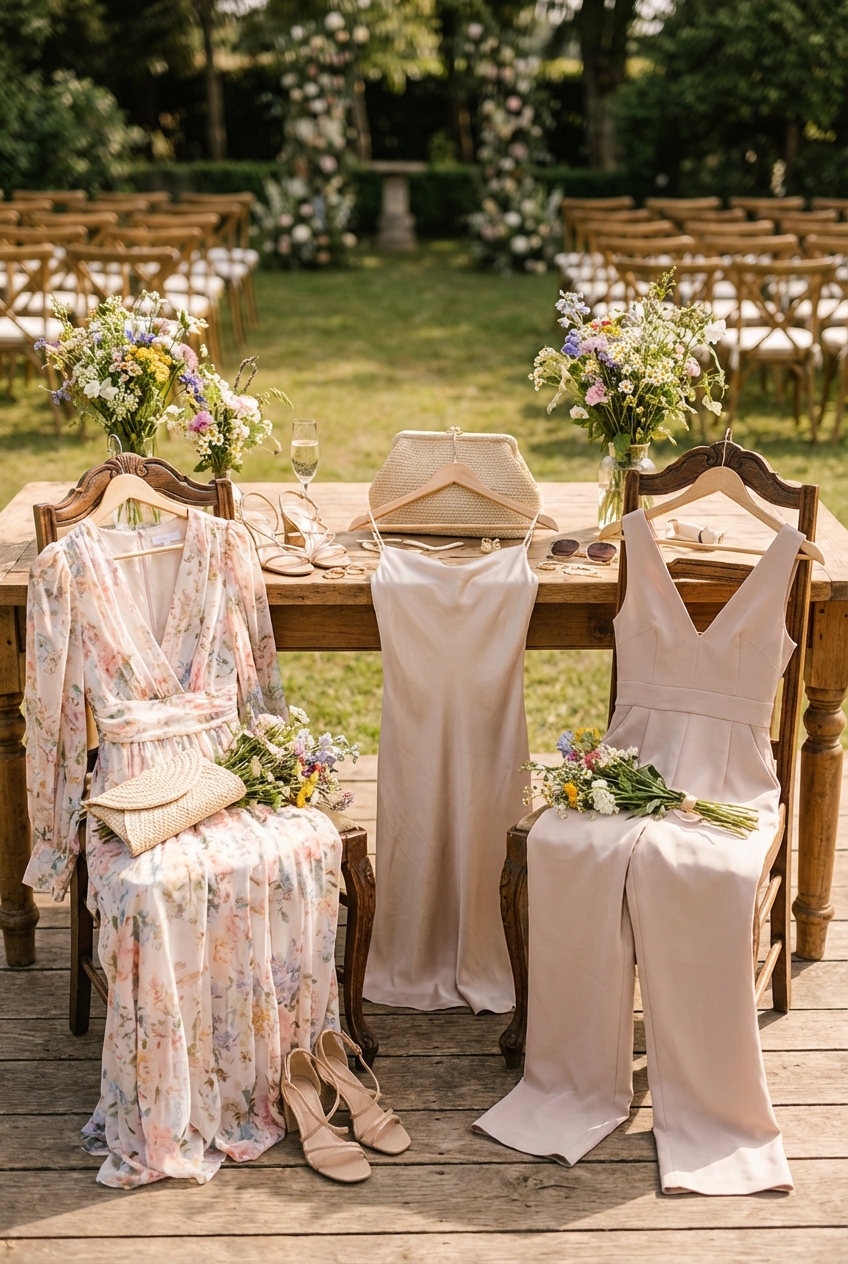
Sophisticated Wedding Guest Dresses For Summer Ceremonies
Introduction
There is a distinct thrill that arrives with a heavy, cream-colored envelope in the mail. A summer wedding is the epitome of romance—golden hour toasts, alfresco dining, and dancing under the stars. However, as a stylist who has dressed hundreds of clients for high-season nuptials, I know the immediate panic that follows the excitement. The challenge isn’t just looking chic; it is maintaining that elegance while battling ninety-degree humidity, grass lawns that threaten your heels, and dress codes that seem increasingly cryptic.
I vividly remember my own rookie mistake years ago attending a July ceremony in Tuscany. I chose a stunning, heavy architectural satin gown that looked incredible in the air-conditioned hotel room. By the time the vows were exchanged in the midday sun, the fabric had become a personal sauna, and I spent the reception trying to discreetly dab away moisture while longing for a linen blend. That experience fundamentally changed how I style clients for warm-weather events. It is not enough for the dress to be beautiful; it must perform under pressure.
In this guide, I am breaking down exactly how to navigate summer wedding guest attire with sophistication and practicality. We will cover the specific fabrics that breathe without looking casual, the silhouettes that forgive a champagne toast, and the tailoring secrets that elevate an off-the-rack piece to couture status. If you are looking for visual inspiration, please note that a curated Picture Gallery is available for you at the end of this blog post.
Decoding The Summer Dress Code
The first step in selecting a sophisticated ensemble is deciphering the invitation. Summer dress codes often carry subtle nuances compared to their winter counterparts. “Black Tie” in July does not necessarily mean heavy velvet or stiff brocade. It requires a delicate balance of formality and climate appropriateness.
Summer Black Tie
For the most formal summer events, floor-length gowns remain the standard. However, you should look for lighter construction. A silk chiffon gown with a full lining offers the requisite volume and drama without the weight of heavy satin or taffeta.
Key Silhouette: A column dress in crepe or a flowing A-line in georgette.
Expert Tip: Avoid high necklines if the event is outdoors. An elegant off-the-shoulder or halter neckline exposes the décolletage, keeping you cooler while maintaining formality.
Formal or Black Tie Optional
This category offers slightly more flexibility. You can opt for a floor-length gown, but a sophisticated midi dress is also acceptable if the fabrication is luxurious. Think structured lace, beaded embellishments, or high-quality silk.
The Rule of Thumb: If you choose a shorter hemline (midi), the details must be elevated. A simple cotton midi is too casual; a silk slip dress with a cowl neck and statement jewelry fits perfectly.
Cocktail Attire
This is the most common summer wedding request. It is the sweet spot between daywear and evening wear. The hemline should generally fall around the knee or mid-calf.
Fabric Choice: This is where you can play with playful textures like organza or lighter jacquards.
Color Palette: While black is chic, summer cocktail attire is an invitation to embrace color. Jewel tones like emerald, sapphire, and amethyst read very expensive and photograph beautifully against green landscapes.
Designer’s Note: The “Third Piece” Rule
In styling, we often talk about the “third piece” (like a jacket or blazer) completing a look. In summer, you can’t wear layers. Therefore, your “third piece” must be a statement accessory or a structural detail on the dress itself, such as an oversized bow, a capelet sleeve, or an intricate back design. This adds the necessary complexity to your outfit without adding heat-trapping layers.
Fabric Analysis: Luxury Meets Breathability
The biggest differentiator between a dress that looks expensive and one that looks cheap—and between a comfortable guest and a miserable one—is fabric. Synthetic fibers like polyester are essentially plastic; they trap heat and moisture against the skin. For a sophisticated summer look, you must prioritize natural fibers or high-end blends.
Silk and Silk Blends
Silk is the gold standard for luxury. It regulates body temperature, keeping you cool when it’s hot.
Charmeuse: Has a high shine and liquid drape. It is unforgiving on texture, so proper undergarments are essential.
Crepe de Chine: Has a matte finish and a slight texture. It is more durable and less prone to snagging than charmeuse.
Georgette: Sheer and lightweight, usually layered. It creates beautiful movement for dancing.
Linen (With Caution)
Pure linen wrinkles the moment you look at it, which can read as “disheveled” at a formal wedding. However, a linen-silk or linen-viscose blend offers the cooling properties of linen with the drape and sheen of silk.
When to wear it: Perfect for “Beach Formal” or “Garden Party” dress codes. Avoid for Black Tie.
Cotton Sateen
High-quality cotton sateen has a subtle sheen and enough structure to hold a shape. It is breathable and crisp.
Styling Tip: Look for dresses with bustier tops or pleated skirts in this fabric. The structure makes it look intentional and polished, distinct from a casual cotton sundress.
Common Mistakes + Fixes
Mistake: Ignoring the lining composition.
The Reality: You buy a stunning 100% silk dress, but the lining is 100% polyester. You will still overheat because the layer closest to your skin isn’t breathing.
The Fix: Always check the care tag for the lining material. If it is polyester, bring it to a tailor. We can often remove a heavy lining and replace it with a breathable cotton voile or silk habotai. It is an investment that transforms the wearability of the garment.
Silhouettes That Flatter and Function
When the temperature rises, the fit of your dress becomes a functional tool. A dress that is too tight will be uncomfortable in the heat, while a dress with too much volume can feel heavy. The goal is “air flow” without sacrificing shape.
The Bias Cut
A bias-cut dress is cut diagonally across the grain of the fabric. This allows the fabric to glide over curves without clinging tightly.
Why it works: It offers a sexy, body-skimming silhouette that doesn’t constrict your movement or air circulation.
Styling: Requires seamless undergarments, as the fabric touches the skin closely.
The Empire Waist
This silhouette cinches just under the bust and flows loosely over the waist and hips.
Why it works: It prevents fabric from sticking to your midsection, which is often the first place to feel uncomfortable in humidity. It is inherently romantic and nods to Regency-core aesthetics.
Structural Cut-Outs
Tasteful cut-outs are a major trend in high-end fashion. I am not referring to excessive exposure, but rather strategic slices at the ribs or back.
Why it works: They provide built-in ventilation. A small keyhole back or side cut-outs can lower your body temperature significantly while adding a modern edge.
Color Theory For The Season
Summer weddings are the time to step away from the safety net of the Little Black Dress (LBD). While black is never technically wrong (unless culturally inappropriate for specific ceremonies), it can feel heavy and somber under the bright summer sun.
The “No-Go” Zone
Let’s get the obvious out of the way: White, ivory, cream, and champagne are off-limits.
New Rule: Be careful with very pale pastels (blush, ice blue) that might photograph as white in bright sunlight. If you choose a pastel, ensure it has enough saturation to clearly read as a color.
Trend Alert: Sunset Hues
This season, we are seeing a surge in warm, vibrant tones.
Colors: Burnt orange, terracotta, marigold, and fuschia.
Why they work: These colors complement a summer tan and look vibrant in golden-hour lighting. They feel festive and energetic.
Cool Tones for Evening
If you prefer cooler colors, look to the sea and sky.
Colors: Cerulean, teal, periwinkle, and sage green.
Why they work: These tones have a calming visual effect and pair beautifully with silver or platinum accessories.
What I’d Do In A Real Project
If I were styling a client for a 4:00 PM garden ceremony followed by a tented reception:
1. Base: A midi-length silk dress in emerald green with a halter neckline.
2. Shoes: Gold block-heeled sandals (to avoid sinking in grass).
3. Jewelry: Baroque pearl drop earrings to catch the light.
4. Bag: A structured rattan or metallic clutch.
5. Hair: A sleek low bun to keep hair off the neck and prevent frizz.
Navigating Venues: Practical Glamour
The venue dictates the logistics of your outfit. A sophisticated guest anticipates the terrain. Nothing ruins a look faster than stumbling over cobblestones or having your hem turn green from grass stains.
The Garden or Vineyard Wedding
The Challenge: Soft ground, potential for mud, uneven paths.
The Solution: Avoid stilettos at all costs. Opt for a wedge or a chunky block heel. If you love a thin heel, use plastic heel protectors, but know they are visible.
Hemline Note: A maxi dress that drags on the floor will pick up twigs, bugs, and stains. Hem your dress so it hovers one inch off the ground even when you are wearing shoes.
The Beach Wedding
The Challenge: Wind, sand, and intense sun.
The Solution: Avoid short, flared skirts that might blow up in a breeze. A maxi dress or a fitted midi is safer.
Footwear: Flat, embellished sandals are acceptable for the ceremony on the sand. You can switch to wedges for the reception if it’s on a deck.
The Church Ceremony
The Challenge: Modesty requirements vs. outdoor heat.
The Solution: If your dress is strapless or has a deep V-neck, bring a lightweight shawl, a pashmina, or a detached silk blazer. You can wear it for the ceremony and remove it for the party.
The Foundation: Undergarments
We cannot discuss sophistication without discussing what lies beneath. The wrong bra or shapewear will ruin the line of even the most expensive designer gown.
Seamless Solutions
For silk and thin fabrics, lace underwear is visible. You need laser-cut, seamless edges in a tone that matches your skin.
Pro Tip: Buy shapewear one size up. It will still smooth your lines, but it won’t cut into your circulation or make you sweat excessively.
Tape and Cups
For backless or plunge dresses, do not rely on standard strapless bras, which often slide down in the heat.
Boob Tape: High-quality styling tape is sweat-resistant and customizable. Practice applying it before the day of the event.
Sewn-in Cups: As a stylist, I almost always have cups sewn directly into the dress for my clients. It eliminates the need for a bra entirely and ensures the bust line sits exactly where it should.
Finish & Styling Checklist
Before you head out the door, run through this final checklist to ensure your look is polished and proofed for the elements.
Steaming: Have you steamed your dress? Wrinkles make even a $2,000 dress look cheap. Let the dress hang for at least an hour after steaming to set the fabric.
The Sit Test: Sit down in your dress for 5 minutes. Does it dig in? Does it ride up too high? Adjust accordingly.
Sweat Prevention: Apply anti-chafing balm to your inner thighs and underarms. It is invisible and a lifesaver.
Emergency Kit: Does your clutch have safety pins, a blister plaster, and blotting papers?
* Jewelry Balance: If the dress has a busy print or heavy ruffles, keep jewelry minimal (studs or a delicate bracelet). If the dress is solid and simple, go bold with statement earrings.
FAQs
Can I wear a floral print to a Black Tie wedding?
Yes, but the print matters. Avoid small, ditsy florals that look like daywear. Opt for large-scale, painterly, or abstract floral prints. The fabric must be formal (silk, chiffon, organza), and the length should be floor-length.
Is it acceptable to wear a jumpsuit?
Absolutely. A tailored jumpsuit in a luxe fabric like crepe or silk is incredibly chic. Look for wide-leg silhouettes that mimic a gown. Pair it with high heels and statement earrings to ensure it reads as formal evening wear, not office wear.
What is the best way to handle sweat stains on silk?
Prevention is key. Use dress shields (adhesive absorbent pads) inside the underarms of the dress. If a stain happens, do not rub it with water, as this can leave a water ring on silk. Blot gently with a dry cloth and leave it alone; it will likely dry and fade as the night goes on.
How early should I buy my dress?
Ideally, 4 to 6 weeks before the wedding. This allows time for alterations. Do not buy a dress 3 months in advance if you plan on losing weight or if your measurements fluctuate, but don’t leave it to the week of, or you will be limited to what is in stock.
Conclusion
Dressing for a summer wedding is an exercise in balancing aesthetics with physics. You want the romance of the occasion to be reflected in your attire, but you also need to respect the reality of the season. By choosing natural fibers, intelligent silhouettes, and venue-appropriate accessories, you elevate your presence from merely “dressed” to truly sophisticated.
Remember that the most stylish guests are those who look comfortable in their skin. When you aren’t tugging at a hemline, wiping sweat from a polyester bodice, or wincing in sinking heels, you are free to focus on what matters: celebrating the couple and enjoying the magic of the evening. Use these principles as your framework, but always infuse your personal style into the final look.
Picture Gallery


