
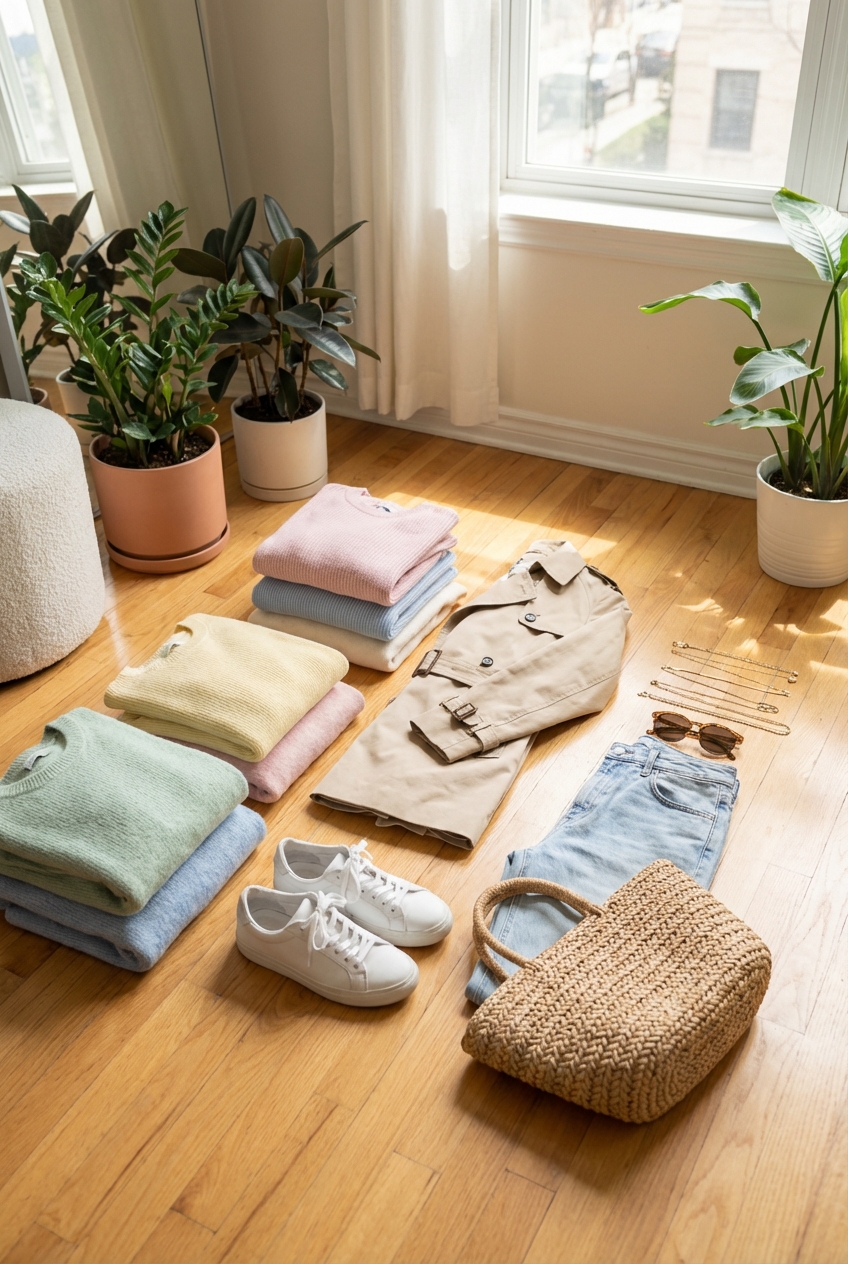
Spring Capsule Wardrobe Essentials Simplify Your Style This Season
Every spring, I see the same panic in my clients’ eyes. The weather is unpredictable, shifting from chilly mornings to humid afternoons, and their winter wools feel too heavy while their summer linens feel premature. The result is a closet full of clothes but absolutely nothing to wear.
We often mistake having options for having style. In reality, having too many disparate pieces leads to decision fatigue and disjointed outfits. A capsule wardrobe isn’t about limiting your creativity; it is about refining your palette so that getting dressed becomes effortless, intuitive, and consistently chic.
Over my years working in high-end fashion styling, I have developed a formula that prioritizes fabric quality and silhouette over fleeting trends. By focusing on a few hardworking essentials, you can build a framework that supports your lifestyle rather than complicating it. For a visual guide on how these pieces come together, be sure to check out the Picture Gallery at the end of the blog post.
The Architectural Trench Coat
The trench coat is the non-negotiable anchor of a spring wardrobe. It serves as the bridge between the heavy parkas of winter and the light denim jackets of summer. However, not all trenches are created equal. When I am sourcing for a client, I look for weight and drape before I even check the price tag.
You want a cotton gabardine fabric. This tightly woven fabric was invented specifically to repel water while remaining breathable. Avoid 100% polyester trenches; they do not breathe, and you will find yourself sweating the moment you step onto the subway or into a heated office.
Pay close attention to the length. For the most modern and versatile silhouette, the hem should hit below the knee, ideally mid-calf. A trench that stops at the hip or mid-thigh cuts the body in half and looks dated. A longer length elongates your frame and offers better protection against spring showers.
Designer’s Note:
The most common issue I see is clients buying trench coats that fit perfectly over a t-shirt but are too tight over a blazer or chunky knit. Always fit your trench coat while wearing a light sweater. You need enough room in the shoulders and armholes to move your arms freely. If the fabric pulls across the back when you hug yourself, size up.
Common Mistakes + Fixes:
- Mistake: Relying on the buckle to fasten the belt.
- Fix: For a more effortless, “fashion-insider” look, knot the belt at the waist. If wearing the coat open, tie the belt in a loose knot behind your back. This cinches the coat slightly, giving it shape even when unbuttoned.
The Perfect Straight-Leg Denim
Skinny jeans had their decade, but for a timeless spring capsule, we look to the straight-leg jean. This silhouette is universally flattering because it balances the hips and elongates the leg line without clinging to the calf. It feels relaxed yet polished enough for a casual Friday or a brunch date.
When selecting denim for spring, I advise clients to look for a rigid or semi-rigid composition. Aim for 98% to 100% cotton with a maximum of 2% elastane. High elastane content makes jeans lose their shape by noon. Real denim should hold you in and mold to your body over time, not stretch out immediately.
Wash is equally important. For spring, move away from the stark indigo or black of winter. A vintage mid-blue wash or an ecru (off-white) denim feels fresh. Ecru is particularly sophisticated; it pairs beautifully with camels, navies, and greys, and it doesn’t have the harshness of a stark optic white.
What I’d Do in a Real Project:
I always measure the rise relative to the client’s natural waist. For most women, a rise of 11 to 12 inches hits the sweet spot, covering the navel and eliminating any “muffin top” issues. I then take the jeans to a tailor to have the hem cut just above the ankle bone. This specific length works with loafers, sneakers, and ankle boots without bunching.
The Oversized Poplin Shirt
A crisp button-down is the ultimate multitasker. In spring, we swap heavy flannels for cotton poplin. Poplin has a smooth texture and a slight stiffness that looks crisp and professional. It holds a collar well and doesn’t cling to the body, allowing for airflow on warmer days.
The key to making this look modern is the fit. You are looking for an “intentionally oversized” fit, not a “borrowed from my husband” fit. The shoulder seams should drop slightly off your natural shoulder, and the length should cover your bum. This allows you to wear it tucked in, tied at the waist, or open as a light jacket over a tank top.
Color-wise, you need two variations: a classic white and a blue stripe. These two options can cover 90% of your styling needs. The blue stripe hides wrinkles better than white, making it a better choice for travel or long days.
Designer’s Note:
Styling a button-down requires “zhooshing.” Never just put it on and leave it. Roll the sleeves twice to expose the wrist (the thinnest part of the arm), pop the collar slightly, and do a “French tuck” (tuck only the front hem) into your jeans. These small adjustments transform the garment from stiff corporate wear to chic effortless style.
Common Mistakes + Fixes:
- Mistake: Buying shirts that gap at the bust.
- Fix: Ignore the size on the tag and buy to fit your bust. If the waist is too loose, a tailor can add darts to the back for $20. Alternatively, look for brands that offer “size-specific” fits or use double-sided fashion tape between buttons for security.
The Mid-Weight Knit Sweater
Spring styling is synonymous with layering. You need a knit that provides warmth when the sun goes down but fits comfortably under your trench coat. I recommend a Breton stripe sweater or a solid cashmere crewneck in a neutral tone like oatmeal or gray.
Material is critical here. Merino wool and cashmere are temperature-regulating. They wick moisture away from the body if you get too warm, unlike synthetic acrylics which trap heat and moisture. A cotton-cashmere blend is also a fantastic option for spring, offering the softness of cashmere with the durability and coolness of cotton.
Look for a “relaxed fit” rather than “oversized.” You want the sweater to skim the body. If it is too bulky, you will struggle to layer it under jackets. If it is too tight, it won’t drape elegantly over your button-down shirts.
What I’d Do in a Real Project:
I check the tension of the knit. I stretch the fabric slightly; if it snaps back immediately, it’s good quality. If it stays stretched out, I put it back. I also look for “fully fashioned” marks at the armhole seams—little knit dots that show the piece was shaped on the machine rather than cut and sewn together. This indicates higher durability.
The Tailored Blazer
A blazer is the third piece that pulls a look together. In fashion styling, we often use the “Third Piece Rule”: pants and a top are clothes; add a third piece (jacket, blazer, cardigan) and it becomes an outfit. For spring, a wool-blend or linen-blend blazer in a check pattern or navy blue is essential.
Avoid heavy tweeds that feel too wintery. Instead, look for “tropical wool” or hopsack weaves. These are open weaves that allow air to pass through. The lining is also crucial. High-end blazers are lined in Cupro or Viscose, which are breathable natural fibers. Acetate or polyester linings will make you overheat.
The silhouette should be slightly boxy. A nipped-in waist can look dated and is harder to layer. A straighter cut feels contemporary and pairs better with the straight-leg jeans we discussed earlier.
Designer’s Note:
Pay attention to the button stance (where the top button sits). A lower button stance creates a deeper V-shape, which elongates the torso. If you have a larger bust, a lower button stance is generally more flattering as it prevents the fabric from pulling across the chest.
Common Mistakes + Fixes:
- Mistake: Sleeves that are too long and cover the hands.
- Fix: Your blazer sleeve should hit at the wrist bone, allowing about half an inch of your shirt cuff to peek through. This adds dimension to the look. Tailoring sleeves is one of the easiest and most impactful alterations you can make.
Footwear: The Loafer and The Sneaker
Spring ground conditions are tricky—it might be wet, muddy, or dry. Suede is risky; leather is your friend. Your capsule needs two workhorses: a classic leather loafer and a clean white sneaker.
The Loafer: Look for a style with a slightly thicker sole. We aren’t talking about a massive platform, but a substantial sole protects the leather upper from puddles and provides better shock absorption for city walking. A horsebit detail or a penny slot adds a classic touch. Black is standard, but a deep oxblood or chocolate brown can be softer and more versatile for spring.
The White Sneaker: This is the modern woman’s commuter shoe. It pairs with everything from dresses to suits. You want a low-profile leather sneaker. Avoid athletic running shoes with mesh; they look too technical for a capsule wardrobe. Leather is easier to wipe clean if you get caught in the rain.
What I’d Do in a Real Project:
I advise clients to break in their loafers wearing thick socks around the house for three days before wearing them out. I also immediately spray white sneakers with a leather protectant and waterproofer. Keeping white sneakers pristine is the difference between looking “careless” and looking “styled.”
Finish & Styling Checklist
Once you have acquired the essentials, the magic is in the combination. When I am doing a final wardrobe edit for a client, I run their capsule through this checklist to ensure maximum versatility.
The 3-3-3 Rule
Can you create three distinct outfits using just three items from the capsule? For example:
- Jeans + Tee + Blazer + Loafers (Work)
- Jeans + Tee + Trench + Sneakers (Weekend)
- Jeans + Button-down + Sweater (draped over shoulders) + Loafers (Brunch)
The Texture Check
Does your outfit have mixed textures? An outfit made entirely of cotton can look flat.
- Mix rigid denim (rough) with cashmere (soft).
- Mix poplin (crisp) with leather (smooth).
- Mix gabardine (matte) with silk accessories (shiny).
The Proportion Balance
Are you balancing volume?
- If wearing the oversized blazer, keep the bottom half streamlined (straight-leg jeans, not wide-leg palazzo pants).
- If wearing a voluminous midi skirt, keep the top fitted (tucked-in tee or bodysuit).
The Hardware Match
Check your metals. While mixing metals is acceptable in jewelry, I prefer to match the hardware on accessories for a cohesive look. If your loafer has a gold horsebit, try to use a bag with gold hardware and a belt with a gold buckle. It subtly signals that the outfit was planned.
FAQs
How do I start a capsule wardrobe on a budget?
Start with the shoes and the coat. These are the items you wear every single day and take the most beating. Spend your money there. You can find excellent 100% cotton t-shirts and straight-leg jeans at high-street retailers, but cheap footwear and outerwear often look cheap and wear out quickly.
How do I add color to a neutral capsule?
Use the “pop of color” theory with accessories first. A silk scarf tied to your bag, a bright red lip, or a colorful knit sweater are low-risk ways to introduce color. If you love it, you can invest in a colorful trench or blazer later. For spring, pastel blues, sage greens, and butter yellows are excellent entry points that act almost like neutrals.
How do I care for these natural fibers?
Wash less. This is the secret to garment longevity. Wool and cashmere are self-cleaning to a degree; air them out overnight rather than washing after every wear. Denim should rarely be washed—spot clean stains and freeze them to kill bacteria if necessary. When you do wash, use cold water and air dry. Never put your investment pieces in the dryer.
What if I am not a “jeans” person?
Swap the denim for a pair of tailored cotton-twill trousers or a midi slip skirt. The function remains the same: a versatile bottom that pairs with knits and shirts. The slip skirt offers a more feminine silhouette while still being practical for day-to-day wear when paired with sneakers.
Conclusion
Building a spring capsule wardrobe is an exercise in intentionality. It requires you to stop impulse buying for the “fantasy self” and start investing in the “reality self.” The woman who has a closet full of high-quality essentials is the woman who is ready in ten minutes and looks impeccable all day.
By focusing on fabrics like cotton gabardine, cashmere, and rigid denim, and nailing the fit on your trench and blazer, you create a foundation that serves you. Style is not about the volume of clothes you own; it is about the confidence you feel in the clothes you wear. Simplify your choices, upgrade your quality, and enjoy the freedom of a wardrobe that truly works.
Picture Gallery


