Spring Dresses for Every Occasion, Casual to Formal
- Words by
- Julio Arco
- Published
- Reading
- 5 min
The easiest way to dress for spring is to pick the occasion first, then the length and fabric. A breathable cotton or linen dress covers daytime, a midi in a fluid fabric covers most weddings and dinners, and a light layer handles the cool mornings.
Below you'll find the dress shapes worth knowing, how to choose a length, and outfit formulas from casual to formal.
What makes a dress a spring dress?
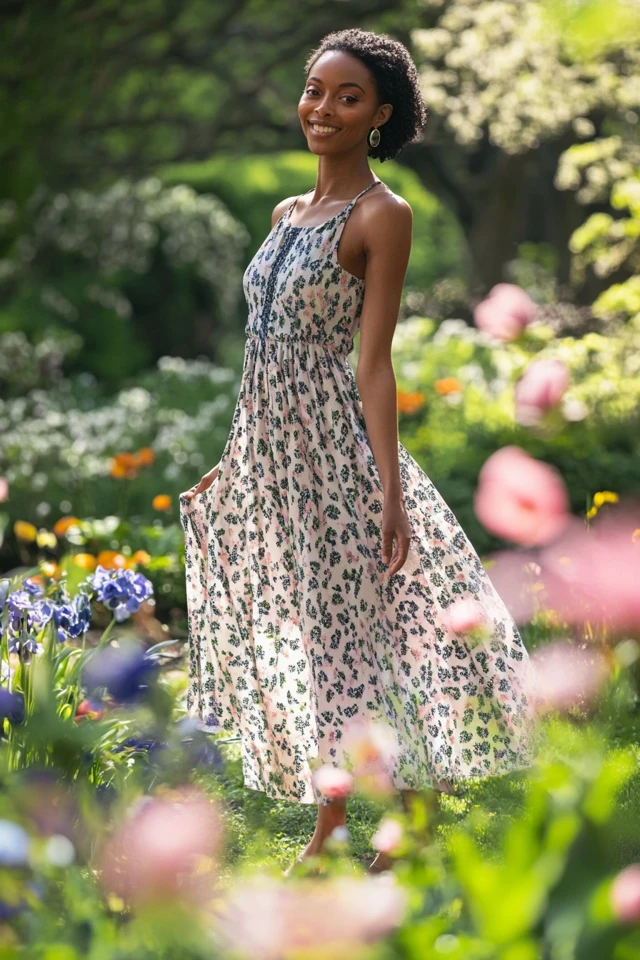
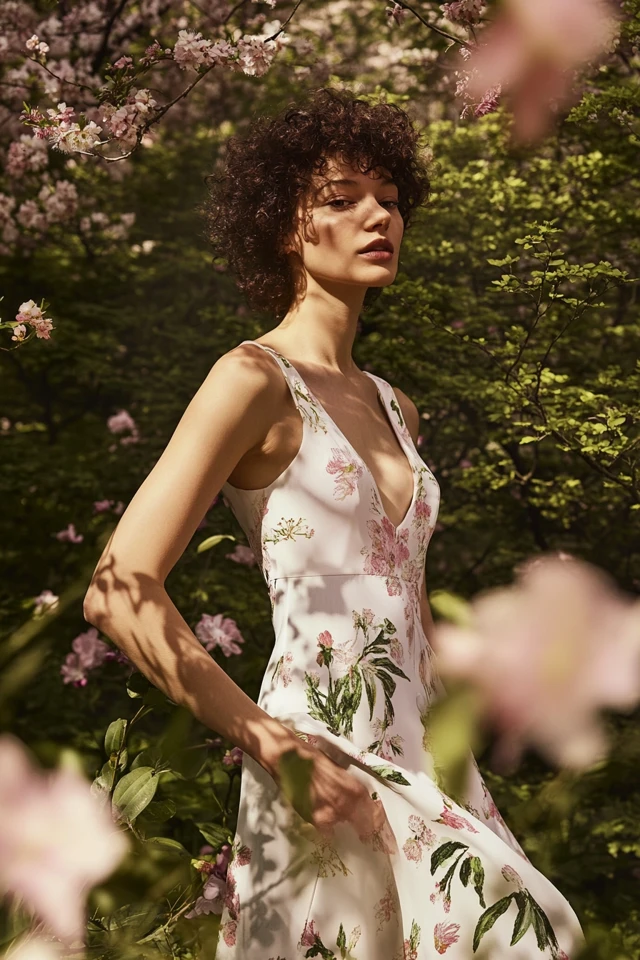
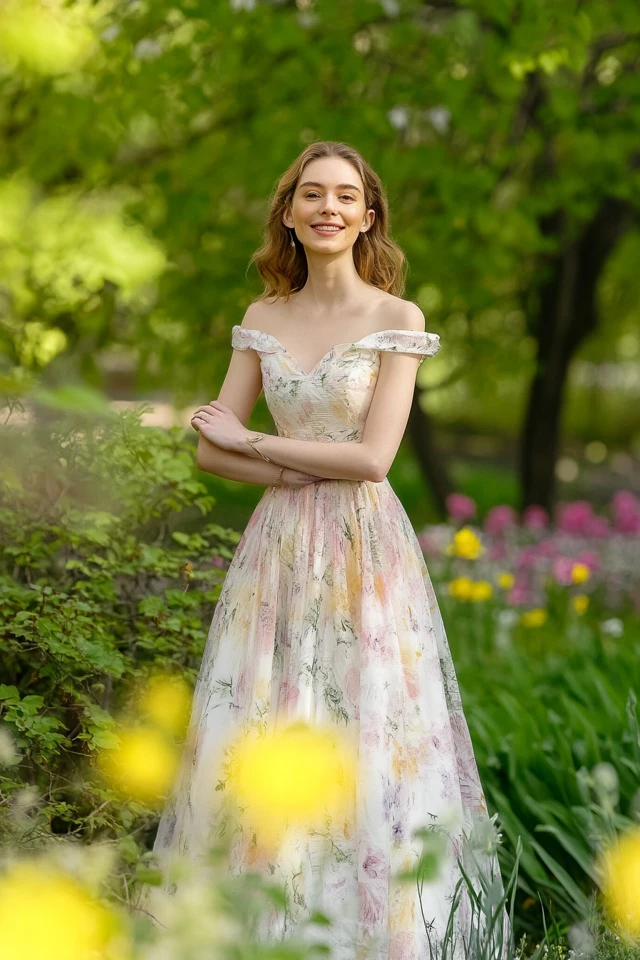
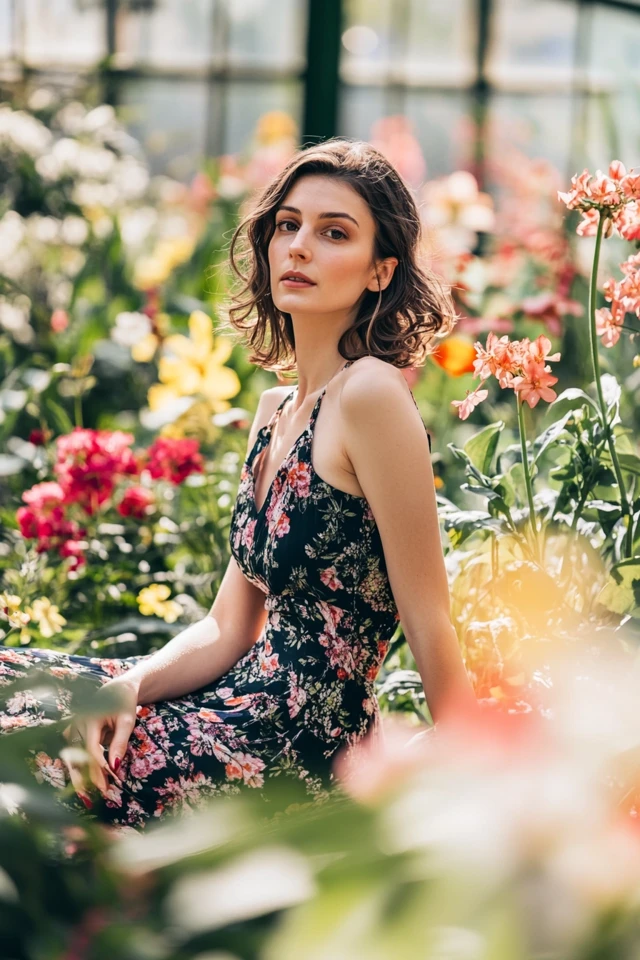
Mostly fabric and color. Spring dresses lean on lighter materials such as cotton, linen, viscose and chiffon, and on softer or brighter shades than winter pieces. Prints are common: florals, stripes, polka dots.
Through the lens of evidence-based design, I'd look at the surface first. A matte cotton and a shiny satin in the same pastel do not read as the same color, because the surface changes how light reaches the eye. Matte weaves feel casual, and a slight sheen reads dressier.
Which dress shapes work best in spring?
Sundresses and shifts
Sundresses are the simplest casual option: light, often sleeveless or short-sleeved, and easy with sandals or clean sneakers. A shift hangs straight from the shoulders, so a thin belt is a quick way to add a waist if you want one.
Wrap dresses
A wrap adjusts at the waist, which makes fit more forgiving from day to day. Flats and a tote keep it casual; heeled sandals and bigger earrings move it into the evening. If you like this shape, see our wrap dresses for dinner dates.
A-line and empire waist
An A-line is fitted at the top and widens toward the hem, so it skims the hips instead of clinging. It works for the office and for semi-formal events. More ideas are in our guide to A-line dresses and flowy empire waist dresses.
How do you choose between mini, midi and maxi spring dresses?
Length changes both the formality and how the outfit moves. Use this as a starting point.
| Length | Best for | Pairs with |
|---|---|---|
| Mini or short | Casual days, active plans, warm afternoons | Sneakers, flat sandals, a denim jacket |
| Midi | Office, dinners, many weddings | Block heels, flats, a blazer |
| Maxi or long | Garden parties, evening events, travel | Wedges, strappy sandals, a light wrap |
Short spring dresses suit movement and heat. Long spring dresses give more coverage and feel more formal, but check the hem with the shoes you plan to wear. If you want one length to start with, a midi is the most flexible, and midi dresses for casual and formal looks shows how far it stretches.
How do you wear casual spring dresses for women?
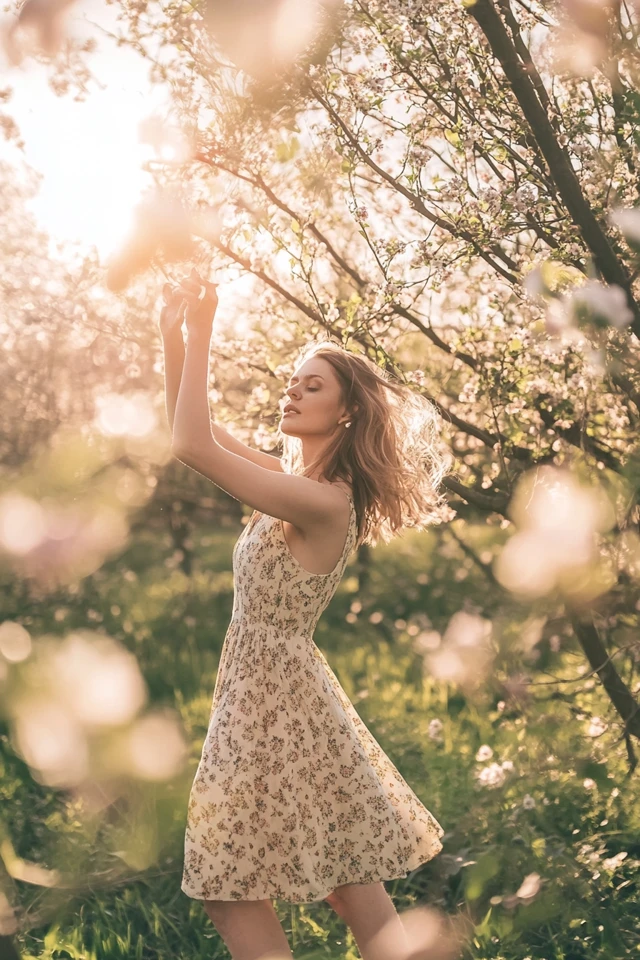
Keep the formula short: a simple dress, one layer, one comfortable shoe. A striped sundress, denim jacket and white sneakers works for most errands and lunches. A cotton shift with an open oversized denim shirt and espadrilles suits a weekend.
For the office, choose a solid midi A-line, add a tailored blazer and flats, and keep jewelry small.
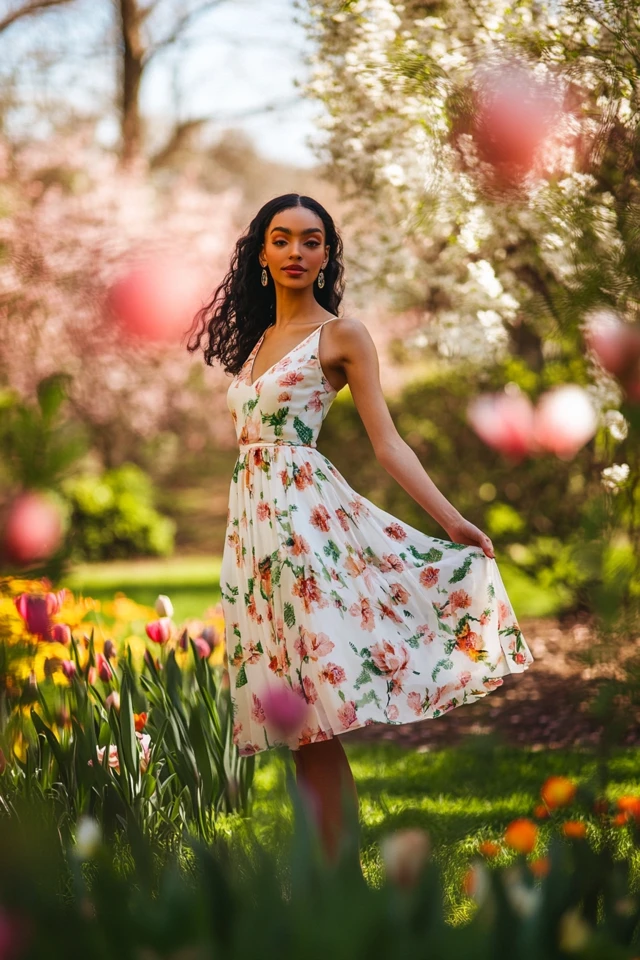
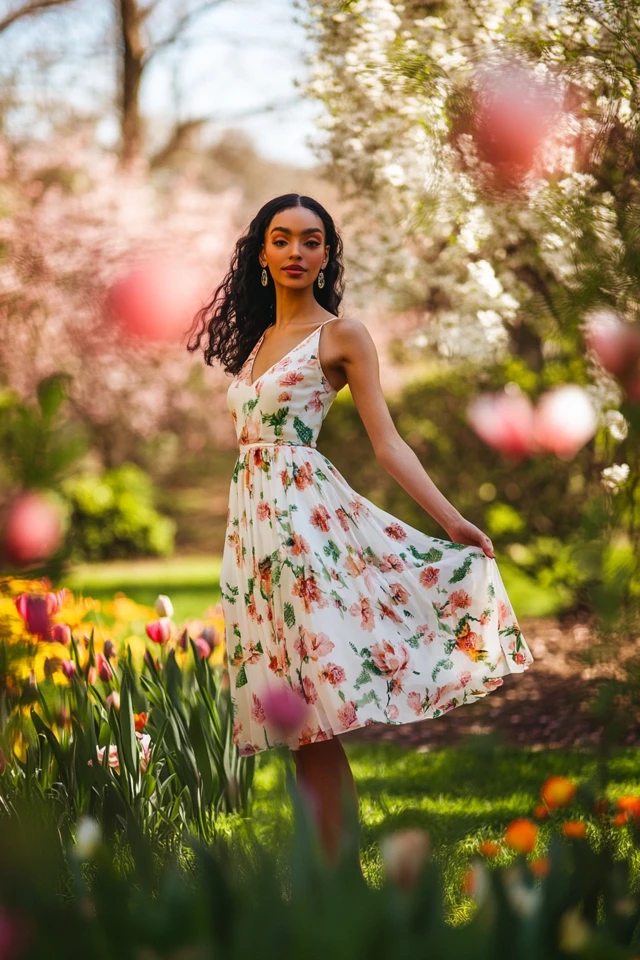
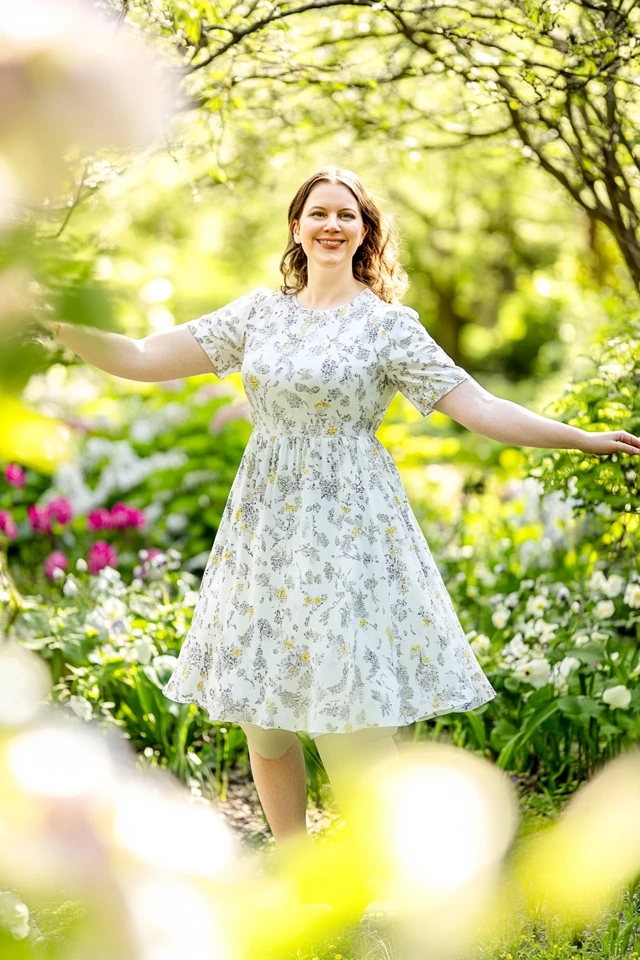
Floral spring dresses are the classic choice here. If you want the print to stay the focus, keep shoes and bag in one plain color. If you prefer mixing, pair a floral with something striped in a small amount, such as a scarf, and keep the colors related.

What should you wear to a spring wedding?
Spring dresses for a wedding are usually midi or maxi, in a fluid fabric like chiffon or crepe. Soft florals, pastels and mid-tone colors fit the season. Check the invitation for dress code and venue: an outdoor ceremony favors block heels over stilettos, which sink into grass.
Avoid white and anything close to it unless the couple says otherwise. A lightweight shawl is useful, since evenings often cool down.
Spring dresses with sleeves
Sleeves help at ceremonies with dress expectations, in cooler weather, or if you want sun coverage. Flutter sleeves, elbow-length sleeves and sheer long sleeves stay light. A sleeve that pulls across the upper arm is a sizing issue, so go up a size or choose a looser cut rather than forcing it.
How do you dress up for spring cocktail dresses?
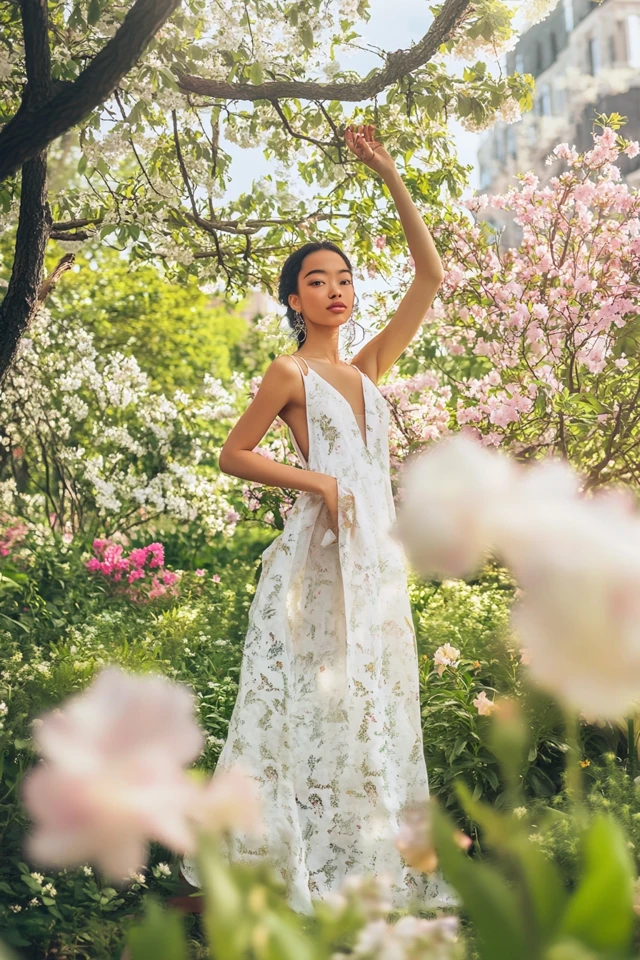
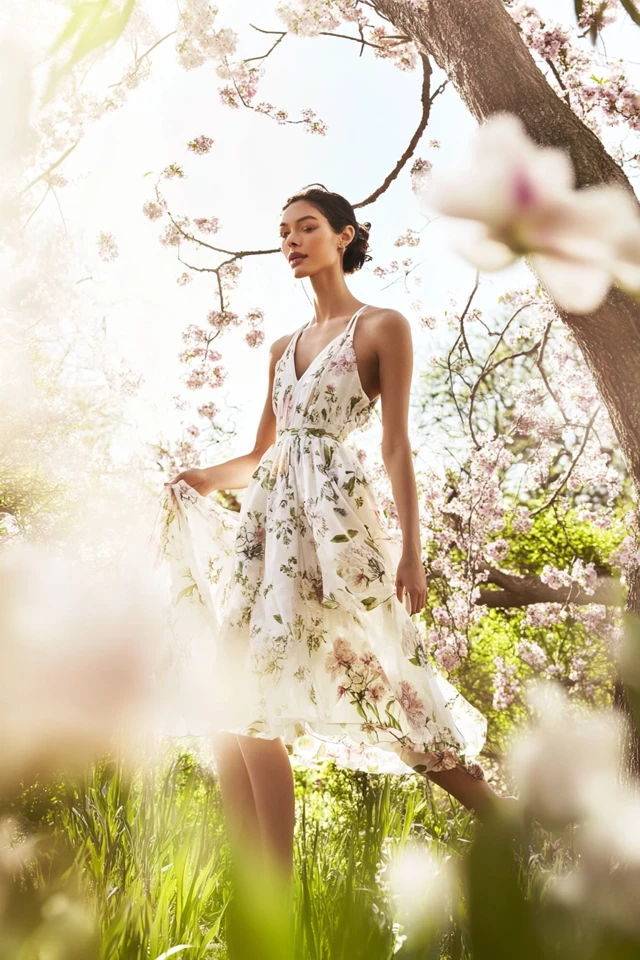
Spring cocktail dresses sit between casual and black tie: knee-length or midi, often with a fitted bodice and a fuller skirt. A lace midi with strappy sandals and a small beaded clutch suits a garden party. A floral wrap with metallic heels suits dinner.
As an architect trained in evidence-based design, I'd treat the neckline as the first thing the eye reads, so let the dress carry the detail and keep earrings or a necklace, not both, at full volume. For a more classic option, see the little black dress.
Which fabrics and layers keep you comfortable?
Cotton, linen and viscose breathe well in warm weather. Cotton does hold moisture, though. If you are heading to a walk or outdoor event on a cool day, note that Texas A&M's Howdy Health guidance on cold-weather exercise advises avoiding cotton because it absorbs moisture and can keep it next to your skin, making you cold. For a chilly spring day outdoors, a layer in a lighter synthetic or blend may be more comfortable than a damp cotton one.
For cooler mornings, carry a cardigan, denim jacket or kimono-style cover-up that comes off easily. Check care labels, wash light colors separately, and store dresses out of direct sun to limit fading.
Frequently asked questions
Are spring dresses suitable for formal occasions?
Yes. Midi and wrap styles in silk, satin or chiffon can be dressed up with heels, statement earrings and a small clutch.
How do I choose the right length for a spring dress?
Start with the occasion: short for casual and active days, midi for the widest range, maxi for evening events and garden parties. Then check the hem with the shoes you plan to wear.
How can I wear a spring dress in cooler weather?
Add a denim jacket, blazer or cardigan, and swap sandals for ankle boots or closed flats. A scarf or opaque tights adds warmth without changing the dress.
How do I accessorize a spring dress without overdoing it?
Pick one focal point, such as earrings or a hat. If the dress is patterned, keep accessories solid, and if it is plain, you can add a print.
Filed under Seasonal Trends