
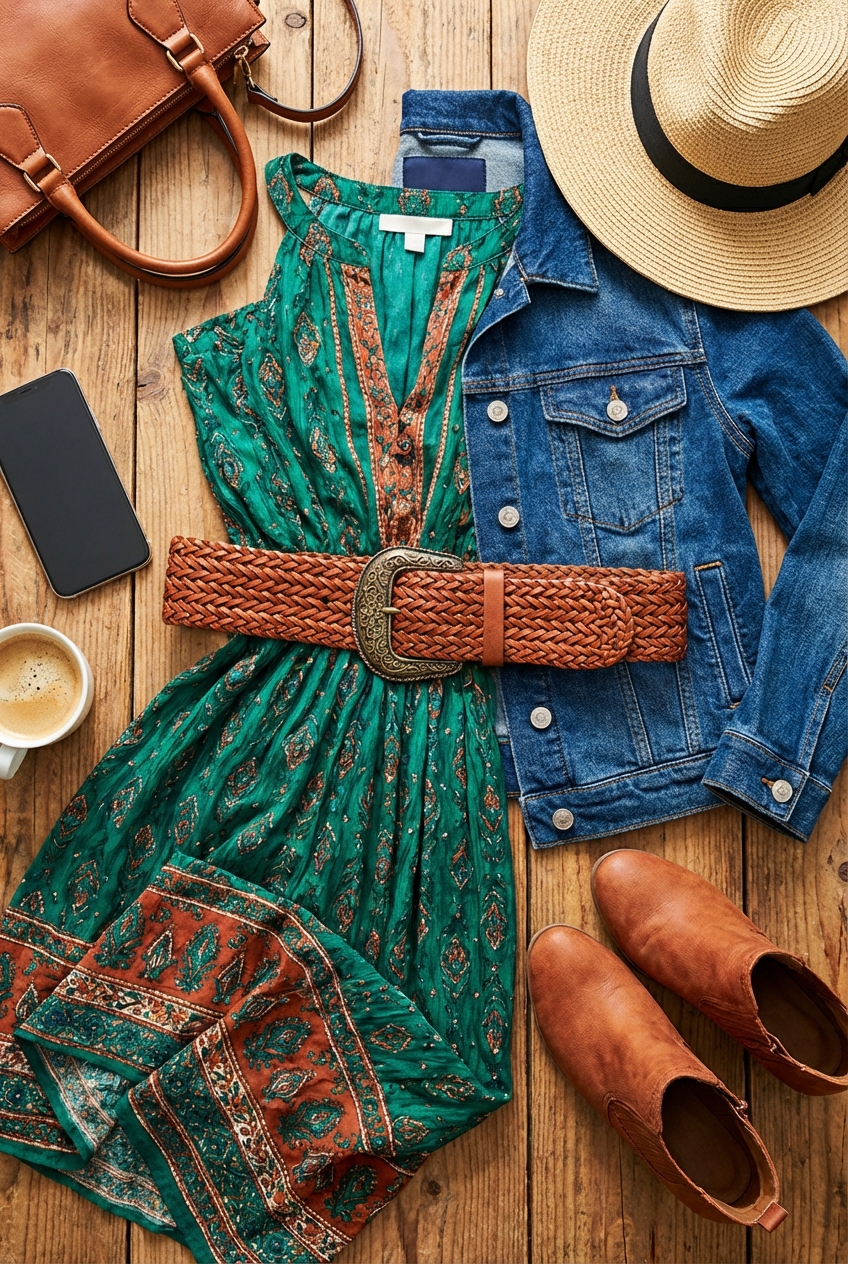
Statement Belts Cinch Your Waist In Style
I still remember the first time I realized the architectural power of a simple accessory. I was styling a campaign shoot in Milan, and the model was wearing an oversized, shapeless tunic that looked stunning on the hanger but completely swallowed her frame in front of the camera.
We didn’t have time to tailor the garment, so I grabbed a three-inch leather corset belt from the accessory table and cinched it tight around her natural waist. The silhouette instantly transformed from a sack into a structured, hourglass masterpiece that defined the entire collection.
That moment solidified a rule I live by: a belt is never just a utility item for holding up trousers. It is a tool for manipulating proportion, correcting fit, and elevating a basic outfit into a high-fashion statement. For visual inspiration on how to execute these looks, be sure to check out the Picture Gallery at the end of the blog post.
The Physics of Proportion: Selecting the Right Width
In high-end styling, everything comes down to scale and proportion. When you choose a statement belt, you are essentially drawing a horizontal line across your body. The width of that line dictates how the eye perceives your torso length and leg length.
For clients with a shorter torso, I always recommend sticking to narrow or medium-width belts. A belt that is too wide—say, anything over 2.5 inches—will consume the entire space between your ribcage and your hips. This visually shortens your upper body and can make you look boxy rather than cinched.
Conversely, if you have a long torso or a tall frame, you have the luxury of real estate. You can handle wide corset belts, double-buckle designs, or sash styles that range from 3 to 5 inches in width. These wider styles act almost like a garment themselves, breaking up the vertical line of a dress or coat effectively.
Designer’s Note: When testing belt width, use the “hand rule.” Place your hand horizontally on your stomach between your bust and your hips. If the belt is wider than your hand’s available space, it is likely too overpowering for your frame.
Common Width Standards
- Skinny (0.5 – 1 inch): Best for delicate fabrics, cardigans, and petite frames.
- Standard (1.25 – 1.75 inches): The workhorse width; fits most denim loops and suits most body types.
- Wide/Statement (2.5 – 4 inches): Best for over coats, dresses, and creating a dramatic hourglass effect.
Locating Your Natural Waist vs. Your Visual Waist
One of the most frequent mistakes I correct in fittings is the placement of the belt. Many women habitually place belts on their hips because of the low-rise jean trends of the early 2000s. However, to truly “cinch” your style, you must locate your natural waist.
Your natural waist is the narrowest point of your torso. It is typically located about one to two inches above your belly button and right below your ribcage. Placing a statement belt here creates the classic “fit-and-flare” silhouette that is universally flattering.
However, there is also the concept of the “visual waist.” This is where you want your waist to appear. If you are styling a drop-waist dress or a slouchy sweater, you might place the belt lower, resting on the top of the hip bones. This creates a relaxed, bohemian vibe that is less about structure and more about attitude.
What I’d do in a real project:
- For structured blazers: I cinch exactly at the natural waist to mimic a peplum cut.
- For maxi dresses: I often place the belt slightly higher than the natural waist to elongate the legs.
- For trousers: I stick to the garment’s waistband, provided the rise hits at a flattering point.
Material Matters: Investing in Longevity
In the world of luxury fashion, materials are non-negotiable. A statement belt is a high-tension item; it is constantly being pulled, bent, and strained. If you buy low-quality synthetic materials, they will crack and peel within a few wears, instantly cheapening your entire outfit.
I always advise my clients to invest in full-grain or top-grain leather. Full-grain leather includes the entire thickness of the hide and is incredibly durable. It develops a patina over time rather than wearing out. “Genuine leather” is actually an industry term for lower-quality layered scraps and should generally be avoided for daily wear belts.
For vegan clients, the market has improved significantly. Look for high-grade microfiber leathers or plant-based leathers (like cactus or mushroom leather) that mimic the tensile strength of animal hide. Avoid PVC or basic vinyl, as these do not breathe and can become uncomfortable against the skin.
Hardware Quality Check
The buckle is the jewelry of the belt. When shopping, check the weight of the hardware. Solid brass or stainless steel hardware will have a noticeable weight to it. If the buckle feels like lightweight plastic or hollow tin, the plating will likely chip off within months.
Common Mistake: Ignoring the backing of the belt.
The Fix: Check the reverse side. It should be lined with a smooth nubuck or untreated leather to prevent dye transfer onto your light-colored clothing.
Styling Techniques: The Art of the Knot
Wearing a belt isn’t always as simple as buckling it and tucking it into the loop. In editorial styling, we often use specific knotting techniques to manage excess strap length and add visual interest. This is particularly useful for “one-size” belts or when you are wearing a hip belt at your waist.
The “Loop Down” knot is a classic. Once you buckle the belt, take the tail end and pass it behind the belt from the bottom up. Then, slip the tail down through the loop you just created. This allows the tail to hang vertically, creating a lengthening line.
For softer leather or fabric sash belts, I prefer a “Half-Bow.” Instead of a full shoelace bow, which can look bulky and childish, tie a standard knot and then create just one loop. Let the other end hang straight. This looks effortless and chic.
Designer’s Note: Never use a rubber band or a safety pin to hold a flapping belt tail in place. It always looks messy. If a belt is too long, take it to a cobbler to be shortened, or use the knotting technique to make the length intentional.
Statement Belts Over Outerwear
One of the hallmarks of a seasoned fashion enthusiast is the ability to style outerwear. A coat is not just a cover-up; it is part of the ensemble. Belting a coat is one of the easiest ways to look pulled together during the colder months.
When belting a trench coat or a wool overcoat, ditch the fabric sash that came with it. Those sashes often loosen as you walk and can look like a bathrobe tie. Swap it for a structured leather belt in a contrasting color.
For example, a camel trench coat looks incredibly expensive when paired with a wide, black croc-embossed belt. A grey wool coat gains instant warmth and personality from a cognac or oxblood leather belt. The contrast defines your waist even through thick layers of fabric.
The Volume Rule:
When belting outerwear, you must manage the bulk. Ensure the coat is smoothed down underneath the belt. You may need to overlap the front panels of the coat more than usual to prevent bunching at the hips.
Troubleshooting Fit and Comfort
Comfort is the foundation of confidence. A belt that digs into your ribs or restricts your breathing will show on your face. You should be able to slip two fingers comfortably between the belt and your body while standing.
Remember that your body expands slightly when you sit down. If you are dressing for a dinner party or a desk job, choose a belt with some elasticity or an adjustable sliding buckle. Alternatively, wear the belt slightly looser than you would for a standing event.
If you find a vintage belt you love, but the holes are in the wrong place, do not try to pierce a new hole with a knife or scissors. This ruins the structural integrity of the leather. Buy a rotary leather punch tool (they are inexpensive) to create a clean, professional hole.
Common Mistake: Buying a belt based on pants size.
The Fix: Waist belts require different sizing than hip belts. Measure your natural waist with a tape measure and buy a belt where the middle hole matches that measurement. This gives you room to go tighter or looser depending on fabric thickness.
Mixing Metals and Finishes
A common question I receive is whether your belt buckle must match your jewelry and bag hardware. The old-school rule says yes, everything must match. The modern, high-fashion perspective is much more fluid.
Mixing metals can look sophisticated if done intentionally. If you wear a gold belt buckle, you can absolutely wear silver earrings. The key is to have a bridging element or to ensure the styles are cohesive. For example, a distressed silver buckle looks fine with brushed gold jewelry because both have a matte, textured finish.
However, avoid clashing styles of hardware. A sleek, modern, polished chrome buckle often looks strange paired with ornate, antique gold filigree jewelry. Match the “vibe” (modern vs. vintage, polished vs. matte) rather than strictly matching the color.
Finish & Styling Checklist
Before you walk out the door, run through this quick mental checklist that I use on set to ensure the look is polished.
- The Breath Test: Can you take a deep breath comfortably? If not, loosen it by one notch.
- The Tail Check: Is the end of the belt flapping loose? Tuck it into a loop or knot it securely.
- The Loop Alignment: If you are wearing trousers, is the buckle centered with the zipper line? Misalignment looks sloppy.
- The Fabric Smooth: Have you pulled the fabric taut above and below the belt to avoid unsightly bunching?
- The Rise Review: If wearing a waist belt over a dress, does it sit at your narrowest point?
- The Hardware Inspection: Is the buckle clean and free of fingerprints or tarnish?
FAQs
How wide should a belt be for a short torso?
If you have a short torso, stick to belts that are 1.5 inches wide or thinner. Alternatively, match the belt color to your top. This avoids cutting your torso in half visually and maintains a longer line.
Can I wear a brown belt with black shoes?
Absolutely. The “no brown with black” rule is outdated. A cognac or tobacco-colored belt looks chic against an all-black outfit. It adds warmth and dimension. Just ensure the brown leather looks high-quality and intentional.
How do I store my statement belts?
Never roll high-quality leather belts tightly, as this can cause the leather to crack and the lining to wrinkle. The best method is to hang them by the buckle on a specialized belt rack. If you must use a drawer, coil them loosely and place them in dust bags.
What is the most versatile belt color?
Aside from black, a “greige” (grey-beige) or taupe belt is incredibly versatile. It works with pastels in the spring and deeper neutrals in the autumn. Animal print, like a classic leopard pony hair, also functions as a neutral in many wardrobes.
Conclusion
A statement belt is arguably the most transformative accessory in your wardrobe. It possesses the unique ability to alter the fit of your clothes and the proportions of your body simultaneously. By understanding the rules of scale, investing in quality materials, and mastering the placement, you can elevate even the simplest jeans-and-tee combination into a thoughtful look.
Remember that personal style is about experimentation. Don’t be afraid to try a wide belt over a blazer or a delicate chain belt over a heavy knit sweater. Use these tools to highlight your shape and express your creativity. Cinch your waist, own your silhouette, and walk out the door with confidence.
Picture Gallery


