
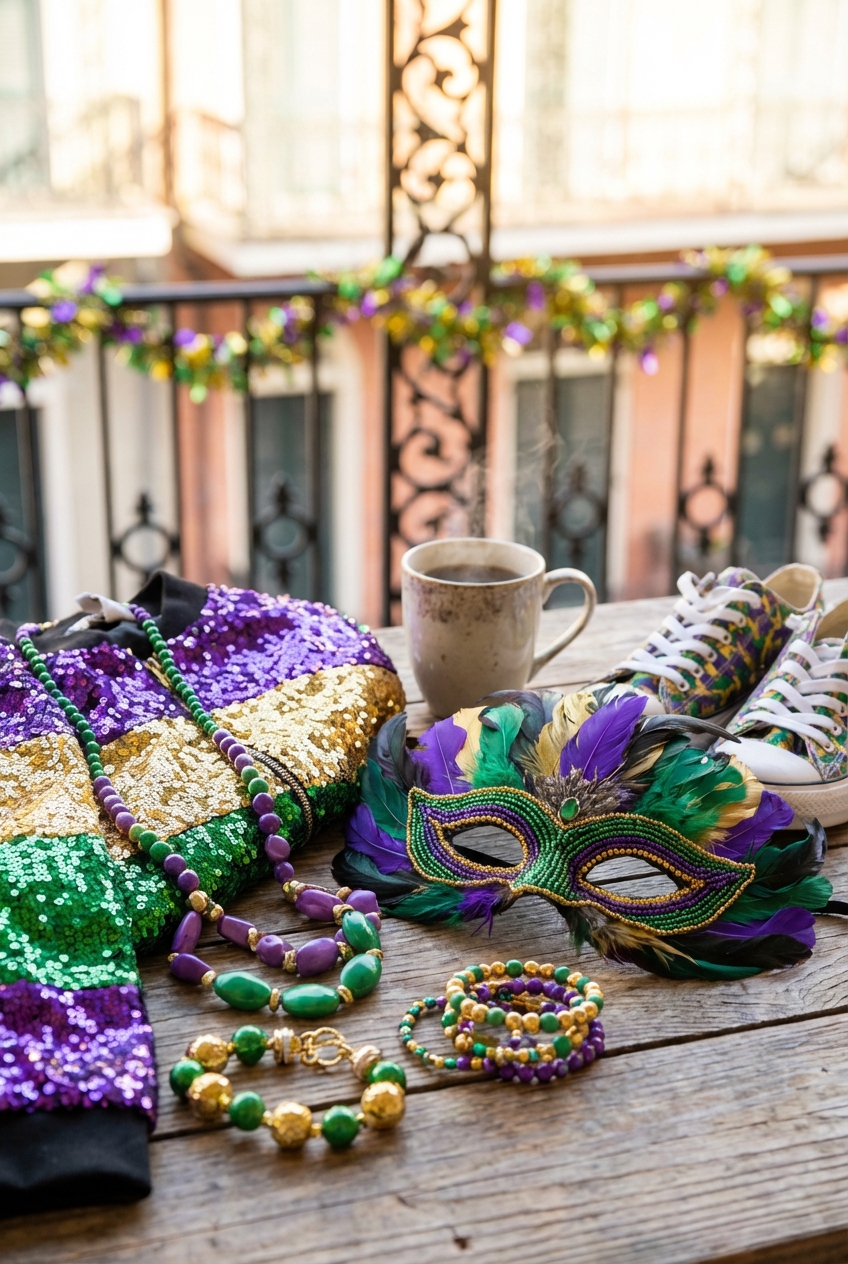
Statement Outfits For Mardi Gras Parades Celebrate In Bold Vibrant Style
The energy of New Orleans during carnival season is unlike anything else in the world. It is a time when the streets transform into a living, breathing tapestry of color, texture, and uninhibited joy. As a fashion stylist, I view Mardi Gras not merely as a festival, but as the ultimate open-air runway where personal expression reigns supreme and the concept of “too much” simply does not exist.
Navigating the parade route requires a delicate balance between high-octane glamour and extreme practicality. You are often standing for six to eight hours, navigating crowded sidewalks, and dodging flying beads, all while needing to look impeccable for photos. I have learned through years of styling clients for these events that your outfit must be as durable as it is dazzling.
In this guide, we are going to break down exactly how to construct a statement look that honors the traditions of purple, green, and gold while elevating the aesthetic to a high-fashion standard. If you are looking for specific visual inspiration to spark your creativity, make sure to check out our exclusive Picture Gallery at the end of this blog post.
Mastering the Trinity: Purple, Green, and Gold
The traditional colors of Mardi Gras—purple for justice, green for faith, and gold for power—are non-negotiable for most attendees, but how you interpret them defines your style. The biggest mistake I see is wearing all three colors in equal amounts, which often results in a costume-like appearance rather than a chic ensemble.
To elevate your look, I recommend choosing one dominant color and using the other two as accents. For example, a deep amethyst velvet jumpsuit serves as a luxurious base. You can then layer gold jewelry and a structured emerald green handbag to complete the trinity without looking like a court jester.
Monochromatic looks are also incredibly powerful during carnival. a head-to-toe gold ensemble, utilizing different textures like metallic leather, sequins, and silk, creates a sophisticated and cohesive statement. It feels intentional and high-end, allowing the quality of the garments to shine through the festive palette.
Stylist’s Note: The 60-30-10 Rule
When mixing these bold colors, apply the classic design ratio. Let 60% of your outfit be one color (your dress or jumpsuit), 30% be the secondary color (a coat or jacket), and 10% be the accent color (shoes, bag, or headpiece). This keeps the visual weight balanced and prevents the outfit from looking chaotic.
The Art of Sequins and Textures
Mardi Gras is synonymous with sparkle, but not all sequins are created equal. In high-end fashion, we look for density and movement. A quality sequin garment should feel heavy; the embellishments should be sewn close together so that the base fabric is barely visible. This ensures that when you catch the light, the reflection is fluid rather than patchy.
Beyond sequins, texture is your best friend for adding depth to a parade outfit. Feathers, fringe, and velvet offer tactile elements that photograph beautifully. A fringed jacket is particularly effective for parades because the movement of the fringe mimics the energy of the crowds and the floats. It adds a dynamic element to your silhouette as you reach for throws or dance to the marching bands.
However, you must consider the “snag factor.” In a crowd, loose knits or delicate lace are liable to get caught on other people’s costumes, beads, or barriers. Smooth surfaces like leather, vinyl, and high-quality sequins are far more durable for the contact sport of parade watching.
Common Mistakes + Fixes
Mistake: Wearing unlined sequin pants or tops.
Fix: Sequins are notoriously scratchy and can cause serious skin irritation after hours of wear. Always ensure your garment is fully lined with a soft jersey or silk blend. If you are buying off the rack and it is unlined, wear a thin, skin-tone base layer underneath to create a barrier.
Footwear: The Foundation of Parade Survival
I cannot stress this enough: your choice of footwear will make or break your Mardi Gras experience. You will be walking miles, standing on uneven pavement, and potentially stepping in puddles or spilled drinks. This is not the time for stilettos or open-toed sandals.
The high-fashion solution to this problem is the statement boot or the luxury sneaker. A metallic western boot is my top recommendation. It protects your toes from getting stepped on, provides ankle support for navigating potholes, and fits perfectly with the festive aesthetic. Look for boots with a low, block heel—never higher than two inches.
Platform sneakers are another excellent option. They give you a height boost, which is helpful for seeing over the crowds, but they offer the stability and cushioning of an athletic shoe. You can find options embellished with glitter or studs that rival any dress shoe in terms of style.
What I’d Do in a Real Project
If I were styling a client for a full day of parades (St. Charles Avenue route), I would pull a pair of gold or silver Golden Goose sneakers or a broken-in pair of metallic cowboy boots. I would pair them with gel insoles specifically designed for arch support. Fashion should never demand physical suffering, especially during a marathon event like Mardi Gras.
Outerwear as the Main Event
In February, New Orleans weather is famously unpredictable. It might be 70 degrees and sunny at noon, but drop to a damp 45 degrees once the sun sets. Because parades often roll well into the night, your coat is not just an accessory; it is often the entire outfit.
Treat your outerwear as the centerpiece. A faux fur coat in a vibrant shade of violet or emerald green is a classic Mardi Gras staple that exudes glamour. It keeps you warm without sacrificing style. For a edgier vibe, a custom-painted denim jacket or a leather moto jacket covered in patches and pins tells a story and adds a layer of personalization.
The length of your coat matters. I generally advise against floor-length coats for parades because the hems will inevitably drag through the grime of the street. A midi-length or knee-length coat offers the best balance of warmth and cleanliness.
Practical Constraints: The “Drink Spill” Test
When selecting outerwear materials, consider stain resistance. A white wool coat is a risk I would rarely take on a parade route. Darker velvets, faux furs, and wipeable leather are much safer bets when surrounded by crowds holding “go-cups” and sticky daiquiris.
The Logistics of Accessories and Bags
Carrying a purse at a parade requires strategic thinking. You need your hands free to catch beads, hold a drink, and take photos. Clutches and shoulder bags that slip off are impractical and annoying.
The high-fashion belt bag (or fanny pack) is the ultimate Mardi Gras accessory. Worn across the chest, it keeps your valuables secure and directly in your line of sight, which is crucial in dense crowds. Look for options in metallic leather or embellished with studs to keep it looking chic rather than utilitarian.
Jewelry should be bold but secure. Oversized stud earrings are safer than heavy hoops that could get snagged on a passing float rider’s throw. If you opt for necklaces, remember that you will likely be accumulating dozens of bead strands throughout the day. I usually skip fine jewelry necklaces entirely and let the Mardi Gras beads become the statement neckwear.
Designer’s Note: The Sunglass Strategy
Do not forget eyewear. The glare from the sun reflecting off thousands of metallic floats can be intense. Oversized, colorful frames add a fun, retro element to your look and protect your eyes. However, bring a hard case. When the sun goes down, you need a safe place to stash them in your bag so they don’t get crushed.
Hairstyling and Headwear for Endurance
Your hair needs to withstand humidity, wind, and the physical act of taking necklaces on and off. Wearing your hair completely down can lead to tangles as beads get caught in the strands.
A sleek high pony or a structured top knot is a “power look” for Mardi Gras. It keeps your hair off your neck and provides a clear anchor for headpieces. And speaking of headpieces—this is the time to wear them. Whether it is a custom fascinator, a rhinestone headband, or a floral crown, headwear signals that you are fully committed to the celebration.
If you choose a wig—a very popular choice for Mardi Gras—ensure it is properly secured with a wig grip and bobby pins. The last thing you want is your colorful bob shifting sideways when you jump for a pair of coveted shoes from the Muses parade.
Common Mistakes + Fixes
Mistake: Heavy headpieces that haven’t been road-tested.
Fix: Before the parade, wear your headpiece around the house for 30 minutes. If it pinches or feels heavy, it will be unbearable after six hours. Add felt padding to the inside of headbands or use combs to distribute the weight more evenly.
Finish & Styling Checklist
Before you head out to the parade route, run through this final checklist to ensure your outfit is parade-proof.
- The Squat Test: Can you squat down to pick something up off the ground without your pants splitting or your skirt riding up too high? You will be bending down constantly.
- The Layering Logic: Do you have a plan for when the temperature drops 15 degrees? Ensure your base layer looks good on its own, but your coat is warm enough for the night.
- Bag Security: Are your ID, cash, and phone in a zipped compartment close to your body?
- Footwear Check: Are your shoes broken in? Do not wear brand new boots for the first time on parade day.
- Fabric Safety: Are you wearing expensive silk or suede that water will ruin? If rain is in the forecast, swap for synthetics or treated leather.
- Tech Power: Do you have a portable charger in your belt bag? Taking photos and videos drains battery life rapidly.
FAQs
What is the best fabric for Mardi Gras outfits?
I recommend synthetic blends, sequins on mesh, leather, and denim. These materials are durable, hold vibrant colors well, and are generally easier to clean if they get dirty. Avoid heavy wools that hold moisture or delicate silks that snag easily.
Can I wear black to a Mardi Gras parade?
Absolutely. While the traditional colors are purple, green, and gold, a chic all-black outfit can serve as a perfect canvas for colorful accessories. A black leather look with piles of metallic beads is very rock-and-roll and appropriate for night parades.
How do I protect my outfit from rain?
New Orleans weather is wet. I recommend investing in a clear, high-quality rain poncho that you can keep in your bag. It allows your outfit to be seen while keeping you dry. Alternatively, a metallic trench coat serves as both a fashion statement and a rain shield.
Is it okay to wear a costume if I am not in the parade?
Yes! Costuming is a huge part of the culture, especially on Mardi Gras Day (Fat Tuesday). However, for the weeks of parades leading up to the main event, most people opt for “festive fashion”—sequins, bright colors, and bold patterns—rather than full theatrical costumes.
Conclusion
Dressing for Mardi Gras is a liberating experience that invites you to step outside your daily sartorial boundaries. It is one of the few times where “more is more” is the only rule that matters. However, true style lies in the intersection of aesthetics and intelligence. By choosing the right fabrics, prioritizing footwear that allows you to move, and layering strategically, you ensure that you are not just a spectator, but a vibrant part of the celebration.
Approach your look with confidence. Mix those patterns, wear the metallic boots, and pile on the texture. When you feel comfortable and radiant, you embody the true spirit of the season.
Picture Gallery


