
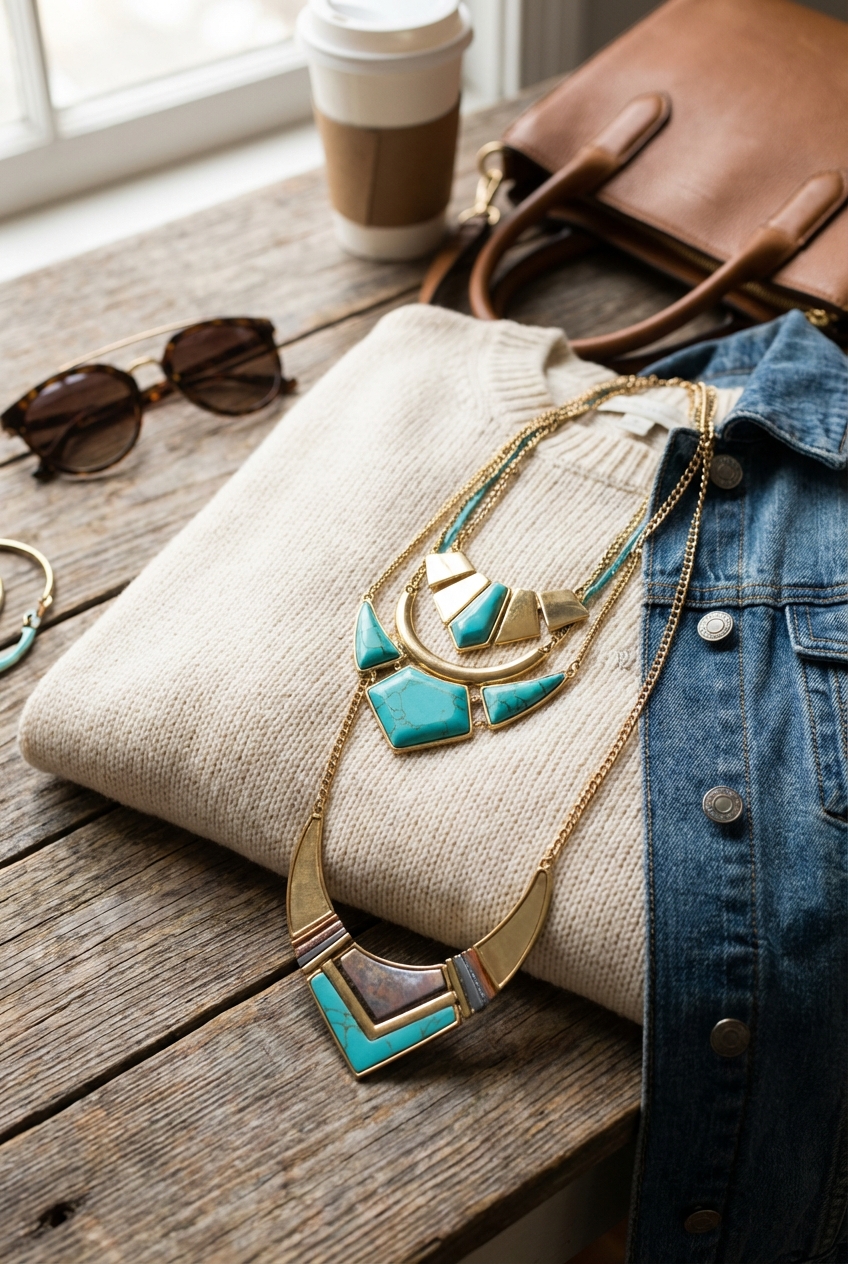
Statement Pendants How To Style Bold Necklaces
Introduction
There is a specific moment of transformation that happens when a client looks in the mirror and realizes their outfit is finally complete. Often, the clothes themselves are simple basics—a crisp white button-down, a cashmere sweater, or a tailored blazer. The magic element that pulls the entire look together is almost always the accessory. specifically, a bold statement pendant.
I vividly remember a styling session with a client who felt her wardrobe had become too “corporate” and lifeless. We didn’t buy her a single new piece of clothing. Instead, we invested in three high-quality, architectural necklaces. Suddenly, her Tuesday morning suit looked editorial, and her weekend denim felt intentional rather than accidental. This is the power of a focal point; it directs the eye and sets the tone for your entire silhouette.
However, navigating the world of bold jewelry can be intimidating. Questions of scale, neckline compatibility, and metal mixing often cause people to leave their best pieces gathering dust in a drawer. For plenty of visual inspiration on how to execute these looks, be sure to check out the Picture Gallery at the end of the blog post.
Understanding Scale and Body Architecture
The first rule of styling statement jewelry is understanding the canvas you are working with. Just as a large chandelier requires a room with high ceilings, a massive pendant requires the right body placement to look balanced. This isn’t about size in terms of weight, but rather visual proportion.
If you have a petite frame (under 5’4″), a massive, solid metal plate necklace might overwhelm your torso. It can make you look shorter by cluttering your vertical line. For petite clients, I recommend “open work” pendants—pieces with negative space or filigree that allow the fabric underneath to show through. This maintains the bold impact without the visual heaviness.
Conversely, if you are tall or have a broader shoulder line, you can handle significant volume. A substantial, solid geometric shape or a large raw stone helps ground your look. It provides a center of gravity that balances a taller silhouette.
Designer’s Note: The Length Rule
The most common issue I see is the pendant hitting the wrong spot on the torso.
- 16 to 18 inches (Princess Length): This hits the collarbone or just below. It is great for crew necks but tricky for larger pendants as it can shorten the neck.
- 20 to 24 inches (Matinee Length): This is the sweet spot for most statement pendants. It sits at the center of the chest, elongating the torso.
- 30+ inches (Opera Length): This creates a dramatic vertical line. However, be careful—if the pendant is too heavy, it will swing aggressively as you walk, which can be annoying and practical for a busy day.
The Neckline Navigation Guide
The interaction between your necklace and your neckline is the make-or-break factor of your outfit. Think of this as the architectural relationship between a window and its frame. If the lines fight each other, the visual is chaotic. If they harmonize, the result is effortless chic.
The V-Neck
This is the most universally flattering neckline for a pendant. The V-shape creates a natural arrow pointing to your face, and the pendant acts as the anchor. The rule of thumb here is spacing. You want the pendant to sit on your skin, with at least one inch of space between the jewelry and the fabric of the neckline. If the pendant overlaps the hem of a V-neck, it looks accidental.
The Turtleneck
Winter styling is where statement pendants truly shine. A solid black or cream turtleneck is essentially a blank gallery wall. Here, you should opt for longer chains (28 to 32 inches). The goal is to break up the solid block of fabric. Avoid chokers or short chains with turtlenecks, as they can make you look like you are being strangled by your jewelry.
The Crew Neck
This is the trickiest neckline to navigate. You generally have two options. First, you can wear a short “bib” style statement piece that sits completely inside the neckline (on the skin). Alternatively, and my preferred method, is to wear a longer, heavier pendant that sits clearly on top of the fabric.
Common Mistakes + Fixes
- Mistake: Wearing a delicate chain pendant over a busy print. The jewelry gets lost in the pattern.
- Fix: If you are wearing a loud print, the jewelry must be solid, large, and architectural to stand out. Think thick gold discs or chunky silver bars.
- Mistake: The “clashing hem” where the pendant hits exactly at the neckline edge.
- Fix: Use a necklace extender to drop the length by two inches, or a chain shortener to raise it. Never let the pendant rest on the seam.
Materials, Metals, and Finishes
The finish of your statement pendant dictates the formality and the “temperature” of your outfit. In high-end styling, we used to adhere to strict rules about not mixing metals, but those days are gone. However, there is still a right way and a wrong way to mix.
Gold Tones
Gold is inherently warming. It pairs beautifully with warm neutrals like camel, cream, rust, and olive. A bold gold pendant is the quickest way to elevate a simple white tee and jeans. If you are mixing metals (e.g., wearing a silver watch), ensure the statement pendant is large enough to dominate. It should be clear that the gold is the “hero” piece.
Silver and Cool Tones
Silver, platinum, and white gold offer a modern, architectural, and sometimes industrial vibe. They look sharpest against cool tones like navy, black, charcoal, and crisp white. A large silver sculptural pendant on a black dress is a classic “gallery owner” aesthetic that projects confidence and intellect.
Natural Materials vs. Bling
Be mindful of the vibe you are projecting. Pendants made of wood, leather, or raw stones read as “daytime” or “resort.” They are relaxed and approachable. Pendants featuring faceted crystals, diamonds, or high-shine polished enamel read as “evening” or “corporate power dressing.”
What I’d Do in a Real Project:
If I am styling a client for a high-stakes presentation:
- I choose a matte finish metal (brushed gold or silver). High-shine can reflect studio lights or catch the eye distractingly during a meeting.
- I avoid anything that makes noise. If the pendant has multiple charms that clink together, it stays at home. “noisy” jewelry distracts from your voice.
Styling for Occasions and Constraints
Context is everything. A necklace that looks stunning at a gallery opening might look ridiculous at a parent-teacher conference. Styling is about appropriateness as much as aesthetics.
The Office Environment
For professional settings, stability is key. You do not want a pendant that swings wildly every time you turn to write on a whiteboard. Opt for pieces with a flat back that lay flush against the body. I also recommend sticking to geometric shapes—circles, bars, triangles. These shapes subconsciously project order and logic.
Evening and Events
This is where you can play with dimension. Pendants with movement, tassels, or three-dimensional cages catch the low light of a restaurant or event space beautifully. You can also go larger with the scale. In a dimly lit room, jewelry needs to be about 30% larger to have the same visual impact it has in daylight.
Weekend and Travel
For travel, I always pack one “hero” pendant on a sturdy chain. It transforms a capsule wardrobe. If you pack a black dress and a jeans-and-tee outfit, the same gold medallion necklace works for both. However, consider the weight. Heavy pendants can become uncomfortable after 8 hours of sightseeing. Test the weight in your hand; if it feels like a paperweight, it’s a “dinner only” piece, not an “all day” piece.
Realistic Constraints: The “Desk Clunk”
If you work at a computer, long pendants (30 inches+) are hazardous. They will repeatedly clang against the edge of your desk or get caught on your keyboard tray. For desk jobs, keep the length above the bust line (20 inches or shorter) to save your sanity and your jewelry.
The Art of Layering (Without the Tangle)
One of the most requested tutorials from my clients is how to layer necklaces without looking messy. When you are working with a statement pendant, the rules change. The statement piece is the star; everything else is the supporting cast.
The Spacing Rule
You need approximately two inches of vertical space between chains. If you have a statement pendant on a 20-inch chain, your layering piece should be a simple chain or choker at 16 inches. If they are too close, they look like a mistake.
Weight Distribution
Visually, the heaviest piece should usually be at the bottom. It creates a pyramid effect that grounds the look. You can place a delicate diamond solitaire at the throat, a medium-weight gold snake chain in the middle, and your heavy coin pendant at the bottom. This draws the eye down and elongates the neck.
Texture Mixing
If your statement pendant is on a simple cable chain, try layering it with a different texture, like a herringbone or a beaded chain. This adds depth. If all the chains are identical, they tend to blend into a visual blur.
Designer’s Note: Tangling
It is an unfortunate reality of physics that necklaces will tangle.
- Prevention: Buying a “necklace detangler” clasp (a multi-strand clasp mechanism) is a game changer. It keeps the chains separated at the back of the neck.
- The Fix: If you don’t have a separator, mix chain weights. A heavy chain and a light chain tangle less than two light chains.
Investment, Care, and Maintenance
High-quality fashion jewelry requires care to maintain its finish. Nothing ruins a look faster than a tarnished chain or a chipped stone.
Cleaning Protocols
For gold vermeil or plated jewelry (which most high-end fashion jewelry is), never use harsh chemical dips. These will strip the plating. Instead, use a soft microfiber cloth and warm water with a tiny drop of mild dish soap. Dry it immediately and thoroughly. Moisture is the enemy of plating.
Storage Solutions
Statement pendants often come on longer chains, which are prone to knotting.
- Hanging: This is the best method. Install small hooks inside your closet door. Gravity keeps the chains straight.
- Trays: If you must use a drawer, lay the piece flat. Do not coil it. I recommend velvet-lined trays which provide friction so the pieces don’t slide around when you open the drawer.
Check the Hardware
The jump ring (the little ring connecting the clasp to the chain) is the weak point. Heavy pendants put stress on this component. Every few months, take a close look at that ring. Is it starting to pull open? If so, use small pliers to close it or take it to a jeweler. Losing an investment piece because of a 50-cent jump ring is a heartbreak I want you to avoid.
Finish & Styling Checklist
Before you walk out the door, run through this quick mental checklist to ensure your look is polished and secure.
- The Bend Test: Lean forward. Does the pendant swing out and hit something, or does it stay relatively close to the body? If it swings dangerously, rethink it for active days.
- The Hair Check: If you are wearing your hair down, check the clasp at the back of your neck. Does it have rough edges that will snag your hair? If so, wear your hair up or tape the clasp.
- The Fabric Scan: Is the pendant resting on a delicate fabric like silk or satin? Check for rough edges on the back of the pendant that could cause a snag or a run in the fabric.
- The Balance: Look in a full-length mirror. Does your head look tiny compared to the necklace? If so, add volume to your hair or wear a bolder lipstick to balance the visual weight.
- The Noise Level: Walk around the room. Are you jingling? Ensure this is appropriate for your destination.
FAQs
Can I wear a statement necklace with statement earrings?
Generally, no. In high-end fashion, we follow the “one star” rule. If the necklace is bold, the earrings should be simple studs or small huggies. If you wear huge chandelier earrings and a massive pendant, it looks like a costume, not an outfit. It overwhelms the face.
How do I stop my heavy pendant from sliding the clasp to the front?
This is a classic annoyance. The weight of the pendant usually pulls the chain down, but if the pendant is light and the clasp is heavy, it spins. The best trick is to create a counterweight. You can have a jeweler add a small decorative bead or charm near the clasp at the back. This extra weight helps anchor the clasp behind your neck.
What is the best chain length for a large bust?
If you have a larger bust, avoid chains that end right at the fullest part of the chest (usually 24 inches). The pendant will sit awkwardly on the “shelf” and bounce. Instead, go shorter (18–20 inches) to sit flat on the décolletage, or go longer (30 inches) so it hangs clearly below the bust line.
Is gold or silver more trendy right now?
While mixed metals are very “in,” yellow gold continues to dominate the high-end fashion space, especially for statement vintage-style pieces like coins and medallions. However, sculptural silver is making a huge comeback in avant-garde and minimalist circles. Choose what complements your skin undertone rather than chasing the trend.
Conclusion
Styling a statement pendant is about confidence. It is a declaration that you put thought into your appearance and that you aren’t afraid to take up visual space. Whether you are reviving a simple black dress or adding edge to a corporate suit, a bold necklace is the most versatile tool in your arsenal.
Remember that the jewelry should always feel like an extension of you, not a burden you are carrying. Start with one great piece—perhaps a hammered gold disc or a structured architectural shape—and experiment with different necklines. Once you master the balance of scale and proportion, you will find that these pieces become your signature, transforming the simplest garments into memorable outfits.
Picture Gallery


