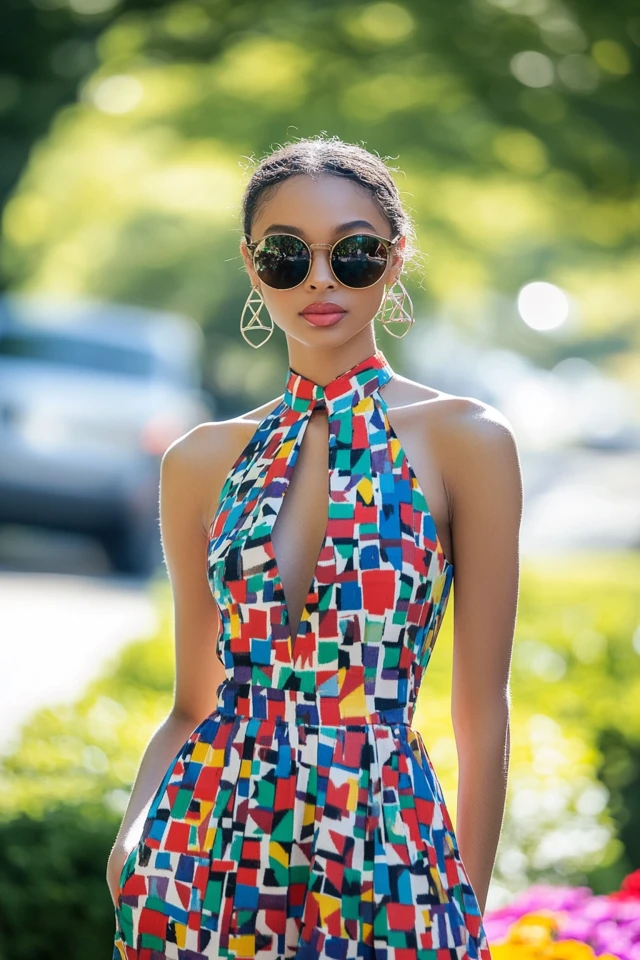
Striking Geometric Prints in Summer Day Dresses
- Words by
- Julio Arco
- Published
- Reading
- 4 min
Yes, you can put two different prints together. The reliable formula: pick prints in different scales, keep one shared color between them, and give the eye a solid piece to rest on. A geometric summer day dress is a good place to practice, because its clean shapes are easy to read.
Below is how to mix patterns without looking like a clown, with examples built around geometric dresses.
How to mix prints and patterns: the basic rules
Think of each print as a voice in a conversation. Two voices at the same volume compete, while one loud and one quiet voice can work together. Most of the rules below come down to that idea.
1. Keep a shared color
A common color ties different prints together. If your dress is navy, coral and white zigzag, a thin navy stripe on a cardigan or scarf will read as part of the same outfit. The prints differ, but the eye keeps landing on the same hues.
You don't need an exact match. Two blues in slightly different depths usually look intentional, as long as the rest of the palette stays small.
2. Mix different scales
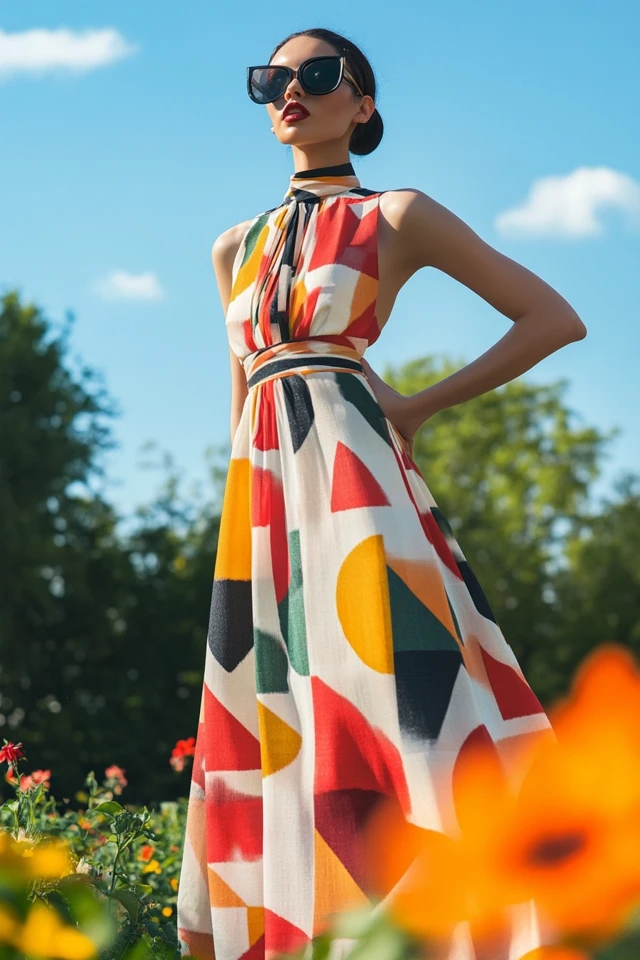
Two prints of the same size fight for attention. Pair a large pattern with a small one instead: a bold chevron dress with a fine pinstripe jacket, or wide color blocks with a tiny dot scarf. A good rule of thumb is that one print should be clearly bigger than the other, about double or more.
Through the lens of evidence-based design, I'd treat scale as the first thing the eye reads. Large shapes register from a distance, fine ones only up close, so they don't compete the way two same-size prints do.

3. Pair a loud print with a quiet one
Let one pattern lead. If the dress has a vivid geometric print, the second pattern should be low contrast: a tone-on-tone stripe, a soft check, or a small texture. When both prints are high contrast, the outfit looks busy fast.
4. Treat stripes and checks as near-neutrals
Thin stripes, small gingham and animal prints in muted tones behave a lot like solids next to a bolder pattern. A narrow navy-and-white stripe under a geometric dress or over it is among the easiest pattern pairings to pull off. Use one such piece at a time.
5. Add a solid to balance
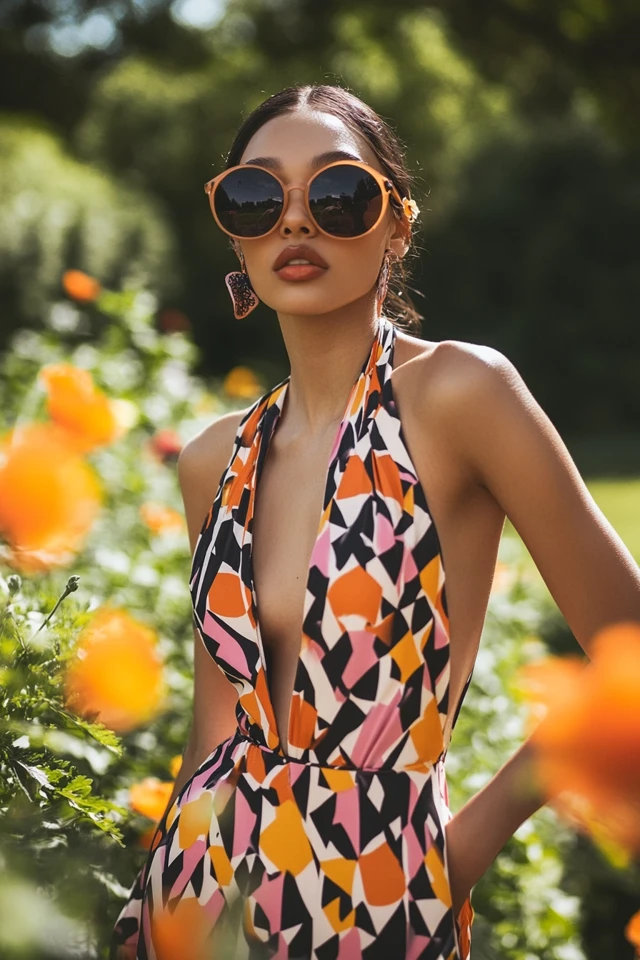
Solids are the pause between patterns. A plain denim jacket, a white cardigan, neutral sandals and a straw bag give the eye somewhere to rest. If you feel unsure, start with one print and add the second only in an accessory.
What patterns do not go together?
There is no law against any pairing, but some combinations are harder to get right:
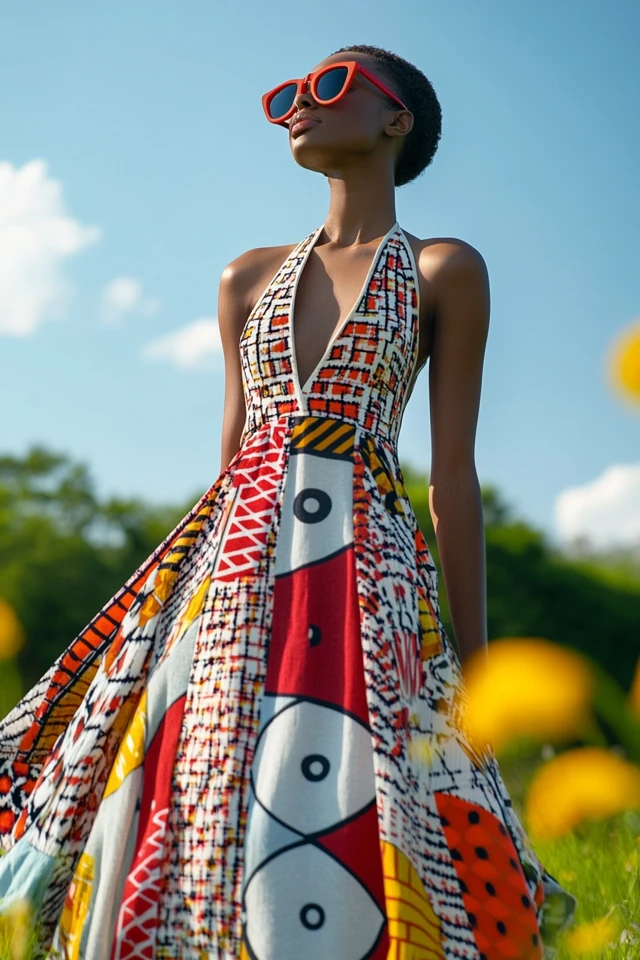
- Two bold prints of similar size, such as large checks with large zigzags.
- Two high-contrast prints with no shared color.
- Dense, busy patterns layered over each other near the face, where the eye lingers.
If you want to try one of these anyway, change one variable: shrink the scale of one print, or mute its colors until it sits in the background.
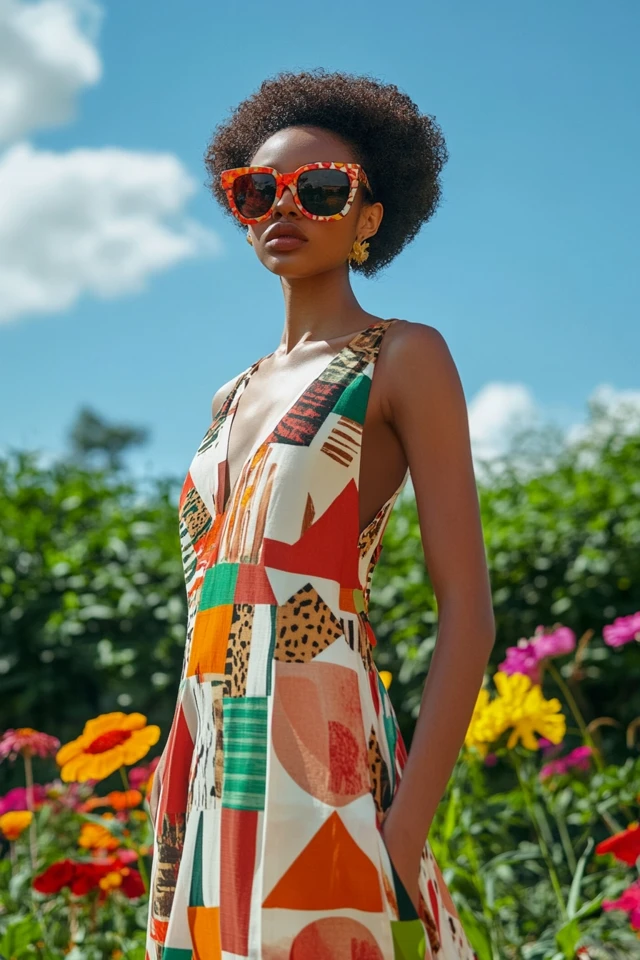
Patterns that go together
These pairings are dependable starting points:
- Geometric and thin stripe, in the same color family.
- Large color-block dress and a small dot or fine check accessory.
- Black-and-white checkerboard with a narrow stripe in one accent color.
- Tropical or floral with a small geometric, if both share a color. See how a floral works in summer sundresses.
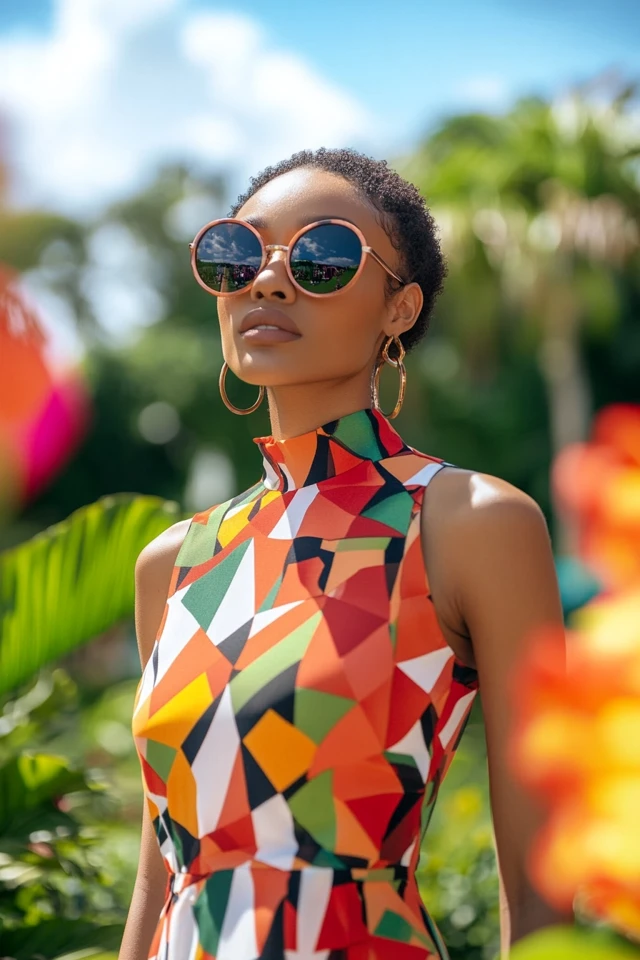
How to mix patterns and colors
Limit the outfit to about three main colors, counting the print's colors. Choose a pattern that has them all, then pull one color into a second piece. Neutrals such as white, tan, navy and black don't count against you and make good bridges.
Texture matters too. A matte linen cardigan and a smooth cotton dress in the same blue will not read quite the same, and that small difference keeps a matching palette from feeling flat. As an architect trained in evidence-based design, I'd pick the softer weave over a shiny one when the dress print is already strong.

Practical styling tips for summer
- Start with the dress as your anchor and add one second pattern only.
- Choose lightweight cotton, linen or rayon so layers stay comfortable in heat.
- Keep shoes and bag solid when the outfit already has two prints.
- Try it on in daylight and in a full-length mirror. If your eye jumps around, remove one piece.
For more geometric ideas, see bold geometric patterns in summer dresses, or compare with tropical prints for vacation and plaid layering, which uses the same scale rules.
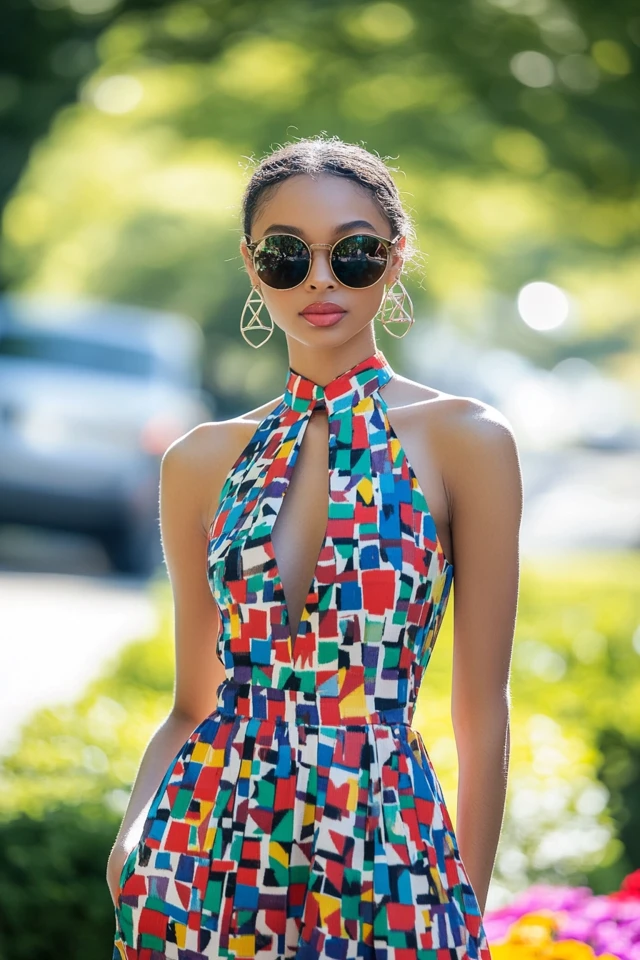
If an outfit feels too much, a solid jacket or a plain belt usually fixes it in a minute. Trust what you like looking at: if the combination makes you smile in the mirror, it is working.
Frequently asked questions
How to mix prints and patterns?
Choose prints in different scales, link them with one shared color, and let one pattern lead while the other stays quieter. Add a solid piece to give the eye a rest.
What is the 3 3 3 rule in fashion?
It usually refers to building an outfit from three tops, three bottoms and three shoes to make many combinations. It is a wardrobe-planning idea, not a rule about patterns.
Can you put two different prints together?
Yes. Make one print larger than the other, keep a shared color, and choose one that is low contrast. Stripes and small checks are the easiest partners.
Filed under Seasonal Trends