
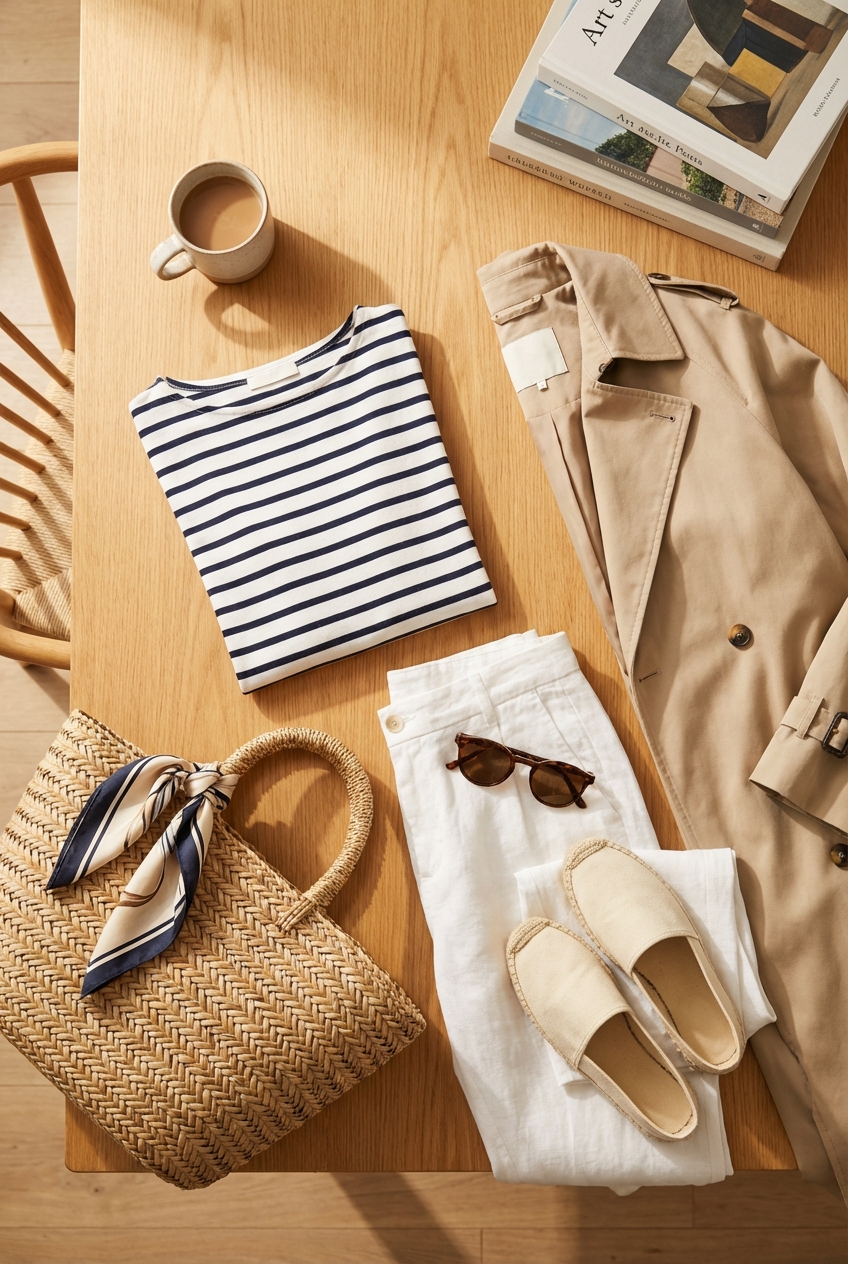
Striped Breton Tops For Classic Chic
Few garments claim the title of “iconic” as legitimately as the Breton top. What began as the official uniform for the French Navy in 1858 has transcended its utilitarian roots to become the ultimate symbol of effortless chic. I remember buying my first authentic heavyweight cotton Breton in a small boutique in Le Marais, and it completely changed my understanding of how a simple shirt can anchor an entire wardrobe.
The magic of the Breton strip lies in its versatility and its refusal to age. It works just as well tucked into a ballgown skirt as it does thrown over a pair of distressed denim shorts. However, achieving that coveted “French girl” aesthetic requires more than just grabbing any striped t-shirt off the rack; it requires attention to neckline, fabric weight, and stripe density.
In this guide, I am going to break down exactly how to select, style, and care for this wardrobe essential. I will share the specific details that separate high-end luxury staples from fast-fashion imitations. For those who want to see these styling concepts in action, we have curated a comprehensive Picture Gallery at the end of this blog post.
The Anatomy of an Authentic Breton
To understand how to style a Breton, you must first understand what makes it authentic. The original design was strictly regulated by French law. It required exactly 21 white stripes (to symbolize Napoleon’s victories) and 20 or 21 indigo blue stripes. While we do not need to adhere strictly to the Napoleonic code today, understanding these proportions helps us spot a balanced design.
The most defining feature of a true Breton is the neckline. It features a bateau, or boat neck, which runs horizontally from shoulder to shoulder. This elongates the neck and highlights the collarbone, offering a subtle femininity that balances the boxy, unisex cut of the torso.
If the neckline is too round or scoops too low, the shirt loses its architectural integrity and looks like a standard tee. When shopping, look for a neckline that sits flat against the clavicle and extends toward the shoulder points without revealing bra straps.
Designer’s Note: The Drop Shoulder
In my years of styling clients, the most common issue with Breton tops is the shoulder seam placement. Traditional Bretons often have a slightly dropped shoulder. If you have narrow shoulders, this can sometimes overwhelm your frame. Look for “set-in” sleeves if you want a sharper, more tailored look for the office.
Fabric Weight and Quality Indicators
The difference between a Breton that looks polished and one that looks sloppy is almost always the fabric weight. An authentic Breton is not made of flimsy, sheer jersey. It is constructed from heavy, carded cotton that has a dry hand feel and significant structure.
This weight serves a functional purpose. It skims over the body rather than clinging to lumps or bumps. When you tuck a heavyweight Breton into high-waisted trousers, it blouses beautifully, creating that relaxed volume synonymous with Parisian style.
Test the fabric by holding it up to the light. You should not be able to see your hand through it. Additionally, check the grain of the fabric. The stripes should run perfectly horizontal. If the side seams twist or the stripes look diagonal near the hem, put it back. That shirt will warp permanently after the first wash.
Common Mistakes + Fixes
Mistake: Buying a Breton with too much elastane or spandex.
Fix: Stick to 100% cotton or a 98% cotton blend. Stretch fabrics tend to cling to the midsection and look more like activewear than tailored sportswear. The natural rigidity of 100% cotton provides a better silhouette.
Mastering the Fit and Proportions
The fit of a Breton top should never be skin-tight. The intended silhouette is “semi-fitted” or “easy.” There should be about one to two inches of fabric allowance at the waist and hips. This allows for movement and ensures the horizontal stripes do not distort across the bust or midsection.
Length is equally critical. The traditional cut hits at the low hip, which is perfect for leaving untucked over slim trousers. However, if you plan to tuck your top into skirts or high-waisted denim, a slightly shorter hem (hitting just below the hip bone) prevents bulk from bunching up around your waist.
Sleeve length is another variable to watch. The classic “Marinière” often features a three-quarter or bracelet-length sleeve. This is intentional. Showing the wrist bone and forearm breaks up the pattern and makes the limbs look longer. If you buy a long-sleeve version, I recommend pushing the sleeves up to the elbow to replicate this effect.
Styling for Professional Environments
Many women assume the Breton is strictly for weekends, but it is a powerhouse in a business casual wardrobe. The key to making it office-appropriate is elevating the surrounding textures. Because the cotton is matte and dry, you need to pair it with fabrics that have sheen or crispness.
Try pairing a navy and cream Breton with a camel-colored wool trench coat and tailored black trousers. The structure of the trench coat frames the stripes, ensuring they act as a neutral rather than a loud print.
Footwear determines the formality. Swap sneakers for a pointed-toe loafer or a block-heel pump. The sharp lines of a pointed toe contrast with the horizontal lines of the shirt, creating a visual balance that looks intentional and professional.
What I’d Do in a Real Project
If I were styling a client for a creative workplace, here is the formula I would use:
- Top: Heavyweight Breton with a cream base and navy stripes.
- Bottom: Wide-leg trousers in a charcoal grey wool or heavy crepe.
- Layer: An oversized black blazer, worn open.
- Accessory: A silk neck scarf tied tightly or a chunky gold chain necklace to break up the neckline.
Navigating Stripe Width and Body Type
A common myth is that horizontal stripes make you look wider. This is not inherently true; it depends entirely on the scale of the stripe. Narrow stripes (often called “pinstripes” or “pencil stripes”) tend to recede visually, creating a solid block of color from a distance.
Wide, blocky stripes (Rugby style) are bolder and draw the eye. If you are busty, you may prefer a Breton where the stripes start below the armpit / yoke area, leaving the chest and shoulders solid white or navy. This is a classic variation known as the “placed stripe” and is incredibly flattering.
For petite women, massive stripes can swallow the frame. Stick to a classic ratio where the white stripe is about double the width of the blue stripe, but keep the overall scale small (under 1 inch per repeat). This maintains the classic look without overwhelming your stature.
Seasonal Transitions and Layering
The Breton is a four-season garment. In the spring and summer, the cotton breathes well. During these months, pair it with white denim or linen shorts. The “all-white” bottom half creates a fresh, nautical vibe that feels expensive.
In autumn and winter, the Breton becomes the ultimate layering piece. It looks exceptional under a leather moto jacket. The toughness of the leather contrasts with the preppy history of the stripes.
You can also layer a Breton under a chunky cable-knit cardigan. However, be careful with pattern mixing. If the knit of the sweater is very textured, keep the stripes thin to avoid a visual clash.
Common Mistakes + Fixes
Mistake: Wearing a Breton with other busy geometric prints.
Fix: Treat the Breton as your “hero” print. If you want to mix patterns, stick to organic prints like florals or leopard spots for your accessories (shoes or bag). Avoid mixing stripes with plaid unless you are highly confident in your maximalist styling skills.
Fabric Care and Longevity
High-quality cotton Bretons are durable, but they are prone to shrinkage. Cotton is a natural fiber, and the heavy weave can shrink up to 5% in length if exposed to high heat.
Always wash your Breton tops in cold water on a gentle cycle. Never put them in the dryer. The heat will not only shrink the fibers but also cause the navy dye to fade or bleed into the cream sections over time.
Reshape the garment while it is damp. Give the sleeves and the hem a firm tug to smooth out the seams, then lay it flat to dry. This preserves the boxy shape and ensures the neckline doesn’t warp.
Finish & Styling Checklist
Before you finalize your outfit or make a purchase, run through this quick checklist to ensure you are hitting the mark on style and quality.
- Check the composition: Is it at least 98% cotton? Avoid high synthetic blends.
- Inspect the neckline: Does the boat neck lay flat without gaping?
- Verify the stripes: Do the stripes match up at the side seams? Mismatched seams look cheap.
- Assess the tuck: Is the fabric heavy enough to blouse over a waistband, or does it cling?
- Sleeve check: Are the sleeves hitting at the wrist bone or bracelet length?
- Pattern placement: If you are concerned about volume, does the shirt have a solid yoke (white space) across the shoulders?
- Color test: Is the navy a true, deep indigo (classic) or a faded blue (casual)?
- Layering logic: Are you pairing it with structured pieces (blazer, trench, leather) to elevate the look?
FAQs
Can I wear a Breton top if I have a large bust?
Absolutely. The key is to look for a “placed stripe” Breton. This style features a solid block of color (usually white or cream) from the shoulders down to the armpits, with the stripes starting across the chest or lower. This draws the eye up to your face and avoids emphasizing the widest part of the bust line.
What is the difference between a Breton and a standard striped tee?
A standard striped tee is often made of lightweight jersey, has a crew or v-neck, and can be any color combination. A Breton specifically refers to the nautical style with a boat neckline, heavyweight cotton (often carded), and a specific rhythmic spacing of horizontal stripes, traditionally in navy and cream/white.
How do I stop my Breton from shrinking?
Authentic heavyweight cotton is notorious for shrinking in length. Always wash on cold (30°C or lower) and never tumble dry. Lay it flat to dry. If you are between sizes, I generally recommend sizing up to account for the slight natural shrinkage that occurs even with careful washing.
Is it okay to wear a Breton with striped pants?
Generally, no. This is known as “double tracking” and can be very disorienting to the eye. It often looks like a costume. If you want to wear patterned pants, choose a floral or a solid texture like corduroy or velvet instead.
What shoes work best with a Breton top?
For a classic French look, ballet flats or loafers are the gold standard. For a modern, cool-girl vibe, white leather sneakers (like Vejas or Common Projects) are perfect. In the winter, a sleek Chelsea boot works well. Avoid chunky running shoes or overly embellished heels, as they clash with the clean, utilitarian lines of the shirt.
Conclusion
The Breton top is more than just a piece of clothing; it is a solution. It solves the problem of “what to wear” on days when you need to look polished but feel comfortable. It bridges the gap between the rigid formality of a blouse and the slouchiness of a gym t-shirt.
By investing in a high-quality, heavyweight cotton piece and paying attention to the nuances of fit and proportion, you gain a garment that will serve you for decades. Whether you are strolling through a farmer’s market or heading into a creative meeting, the Breton signals that you appreciate history, quality, and effortless style. It is the ultimate palette cleanser for a modern wardrobe.
Picture Gallery


