
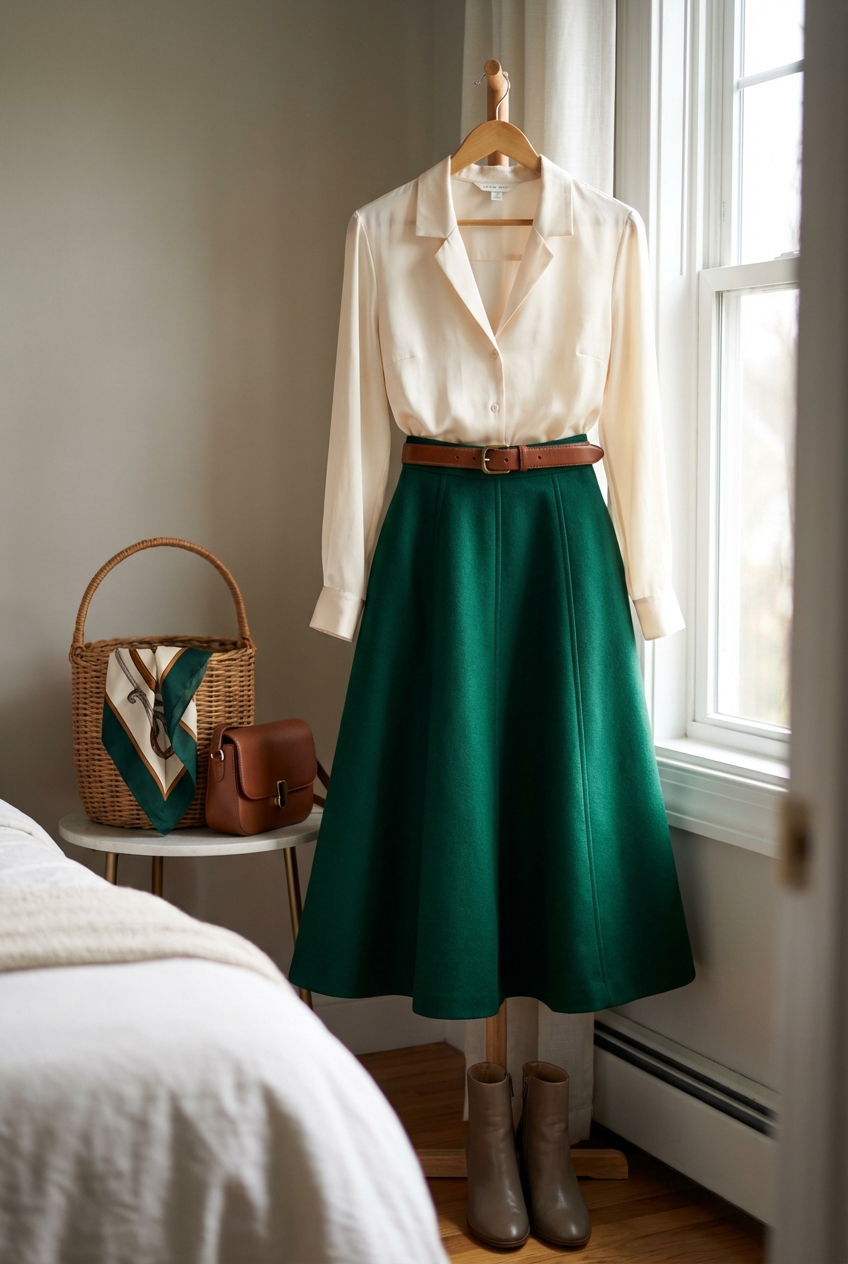
Structured A Line Skirts For Flattering Silhouettes Timeless Elegance With Endless Styling Possibilities
I distinctly remember a styling session with a client who was convinced that skirts were simply “not for her.” She spent years hiding her figure in oversized trousers or shifting entirely to dresses, believing that separates created too much visual chaos at her waistline. The moment we zipped her into a heavyweight, high-waisted, structured A-line skirt, her entire demeanor changed.
The structured A-line is the architectural marvel of the wardrobe. Unlike flimsy bias-cut slips or clinging pencil skirts, a structured A-line does the heavy lifting for you. It defines the waist, glides over the hips without clinging, and creates a deliberate, polished silhouette that commands respect. It is the closest thing to a “universal donor” in the world of fashion silhouettes, balancing proportions for nearly every body type by creating a visual triangle that anchors the look.
In this guide, I am going to break down exactly how to select, fit, and style this essential piece. We will cover the importance of fabric weight, the mathematics of hem lengths, and the specific footwear that elevates the look from dated to modern. If you are looking for visual inspiration, we have curated a comprehensive Picture Gallery at the end of the blog post.
The Physics of Fabric: Why Weight Matters
The secret to a flattering A-line skirt is not actually the cut; it is the fabrication. Many mass-market retailers cut A-line shapes out of thin jersey or unlined rayon. These fabrics collapse against the body, revealing every undergarment line and failing to hold that crisp triangular shape that makes the style so elegant.
In high-end design, we look for fabrics with “guts.” You want materials that stand away from the body slightly on their own accord. This creates a smooth line from waist to hem, regardless of what is happening underneath. The fabric acts as a frame, rather than a wrapper.
Designer’s Note: When shopping, perform the “crumple test.” Grab a handful of the skirt fabric and squeeze tightly, then release. If it springs back immediately and holds a bit of rigidity, it has enough structure to maintain an A-line silhouette. If it puddles or wrinkles instantly, put it back.
The best fabrics for this silhouette include:
- Wool Gabardine: Tightly woven and smooth, perfect for corporate settings.
- Heavy Cotton Twill or Denim: unparalleled for casual, everyday structure.
- Leather or Faux Leather: The ultimate in structure; these fabrics are stiff enough to hold a dramatic flare.
- Double-Face Scuba or Neoprene: A modern option that resists wrinkles and holds a sculptural shape.
- Bouclé or Tweed (Lined): Offers texture and weight, essential for winter styling.
Mastering Scale and Proportion: The Hemline Rules
In interior design, we talk about the scale of furniture relative to the room size. In fashion, we must discuss the scale of the skirt relative to your height and leg shape. A structured A-line creates a horizontal line across your legs where the hem ends. This line draws the eye, so placement is critical.
The most common mistake I see is a hemline that cuts across the widest part of the calf. This visually shortens the legs and makes the outfit feel heavy. To keep the silhouette flattering, you need to aim for the narrowing points of the leg.
Common Mistakes + Fixes:
- Mistake: Buying a “midi” skirt that hits mid-calf without tailoring it.
- Fix: Hem the skirt to hit exactly at the narrowest part of your leg, usually just below the knee or just above the ankle bone.
- Mistake: Wearing a mini A-line that is too wide at the bottom.
- Fix: If the skirt is short (mid-thigh), ensure the A-line flare is subtle. A wide triangle on a short skirt can distort your proportions.
For a standard “knee-length” look, the hem should actually graze the top of the kneecap or fall one inch below it. This maintains the integrity of the A-line shape without overwhelming a petite frame. If you are tall (5’8″ and above), you can pull off a tea-length hem that hits the upper shin, provided the skirt has enough movement.
The Waistline Equation: High vs. Mid-Rise
The magic of a structured A-line is its ability to define the waist. However, “waist” is a relative term. For this silhouette to work, the waistband of the skirt must sit at your natural waist—the narrowest point of your torso, usually an inch or two above the belly button.
Resting the skirt on the hips (mid-rise) disrupts the geometry of the A-line. It shortens the visual length of the skirt and can make the torso appear longer and boxier. By pulling the waistband up to the natural waist, you embrace the “Rule of Thirds,” a golden ratio in design where the torso occupies one-third of the visual space and the legs/skirt occupy two-thirds.
What I’d do in a real project:
- Measure the Rise: I always measure the distance from the client’s natural waist to the crotch line to ensure the skirt yoke sits flat.
- The Sit Test: A structured skirt has no stretch. I ensure there is about 0.5 to 1 inch of ease at the waistband so the client can sit down without the fabric digging in.
- Belting: If a waistband has belt loops, fill them. An empty loop looks unfinished. I use a belt that matches the shoe leather to bookend the outfit.
Balancing Volume: Top Selection
Because a structured A-line skirt adds volume to the lower half of your body, the upper half requires careful calibration. The goal is to avoid looking like a block. If you wear a boxy, oversized sweater over a stiff, flared skirt, you lose your shape entirely.
The most foolproof method is the “slim over full” principle. Pair the voluminous skirt with a fitted turtleneck, a bodysuit, or a tailored button-down shirt tucked in cleanly. This emphasizes the waist definition that the skirt provides.
However, we can play with volume if we are strategic. A “French tuck” (tucking just the front of a sweater) allows you to wear a chunkier knit while still highlighting the waistline. This is particularly effective in fall and winter when you need warmth but don’t want to sacrifice style.
Pro-Level Styling Tips for Tops:
- Crop Tops: For a modern edge, a boxy crop top that ends exactly where the skirt waistband begins is incredibly chic. It creates a waist without the bulk of tucking in fabric.
- Blazers: If wearing a blazer, opt for a cropped style or a jacket that is belted. A long, boyfriend-style blazer worn open over an A-line skirt can sometimes look sloppy unless you are very tall.
- Necklines: Because the skirt is a strong, solid block of color, open necklines (V-neck, scoop, or boat neck) help draw the eye upward and balance the visual weight.
Footwear Architecture: Anchoring the Look
The shoe choice can make or break a structured skirt. Because the fabric is heavy and the shape is distinct, a delicate, strappy sandal often looks too weak to support the outfit visually. You need footwear with some presence.
For a midi-length structured skirt, a knee-high leather boot is my absolute favorite pairing. By having the boot shaft disappear underneath the hem of the skirt, you create a seamless, elongated line. This is ideal for colder months and eliminates the awkward gap of skin that can chop up your leg line.
If you are wearing a knee-length A-line, a pointed-toe pump or a structured loafer works beautifully. The pointed toe extends the leg line, countering the horizontal cut of the hem. Avoid ankle straps with midi lengths if you have shorter legs, as the strap creates a second horizontal line that competes with the skirt hem.
The “Gap” Rule:
- Midi Skirt + Boots: 0 inches of skin showing (boots go under skirt).
- Midi Skirt + Heels: 4+ inches of skin showing (to keep the ankle looking slim).
- Mini Skirt + Boots: Any gap works, but knee-high boots create a very mod, 1960s aesthetic that pairs perfectly with A-line minis.
Seasonal Transitions and Outerwear
One of the reasons I advocate for the structured A-line is its versatility across seasons. In the summer, a heavy cotton or linen blend A-line looks crisp with a silk camisole and slides. The structure keeps the fabric away from your skin, allowing for airflow while maintaining a professional appearance.
In the winter, these skirts are workhorses. You can wear thick, fleece-lined tights underneath without them clinging to the skirt fabric. A wool A-line skirt acts as a windbreak, keeping you warmer than trousers in many instances.
When selecting a coat, length is crucial. You have two main options: a cropped jacket that hits at the waist, or a long coat that fully covers the skirt. A coat that ends right at the middle of the skirt’s flare will create a strange, bell-like silhouette that is unflattering.
Styling Checklist
Before you walk out the door, run through this mental checklist to ensure your structured A-line look is polished and proportional. These are the same checks I perform on set before a photoshoot.
- The Waist Check: Is the skirt sitting at your true natural waist? If it has slid down to your hips, the proportions will be off. Use a belt or tailor the waist if necessary.
- The Tuck Test: If your top is tucked in, is it smooth? Structured skirts often show lumps from bunched-up shirts. Use a bodysuit or tuck into your shapewear for a smooth finish.
- The Volume Balance: If the skirt is very wide/full, is your top relatively fitted? If you feel “wide,” try a more form-fitting top.
- The Shoe Connection: Does your shoe choice make sense with the hem length? Ensure you aren’t cutting your leg line in an unflattering spot.
- The Wrinkle Factor: Structured fabrics like cotton twill can crease at the lap. A quick steam before leaving makes a world of difference in how expensive the garment looks.
- The Hardware Match: If your skirt has a metal zipper or buttons, try to coordinate your jewelry or bag hardware to match (silver with silver, gold with gold) for a cohesive look.
Frequently Asked Questions
How do I clean a structured skirt without losing its shape?
Always check the care label, but generally, dry cleaning is safest for wool, leather, and heavy blends. If it is cotton, wash on a gentle cycle and hang to dry. Never put a structured skirt in the dryer; the heat can destroy the interfacing that gives the skirt its shape.
Can I wear an A-line skirt if I have wide hips?
Absolutely. In fact, it is one of the most flattering cuts for curvy figures. The key is to ensure the skirt fits perfectly at the waist and glides over the hips without pulling. The flare should start gradually. Avoid pleats that open right at the hip bone; look for flat-front A-lines instead.
What is the best length for a petite woman?
For petite frames (under 5’4″), a hemline that hits just above the knee is usually the most elongating. If you prefer a midi length, ensure it is a “petite midi,” which hits just below the knee rather than mid-calf. High-waisted styles are essential for elongating the legs.
Can I wear sneakers with a structured A-line skirt?
Yes, but keep the sneaker streamlined. A chunky “dad shoe” can look heavy against a wide skirt. Opt for a classic, low-profile white leather sneaker or a slip-on style. This creates a “fashion editor on the weekend” vibe that is comfortable yet chic.
Conclusion
The structured A-line skirt is more than just a piece of clothing; it is a tool for building confidence. It offers a level of polish that few other garments can match, providing a reliable, flattering silhouette that works as well in a boardroom as it does at a weekend brunch. By focusing on quality fabrics with weight, tailoring the hem to your specific proportions, and balancing the volume with the right tops and footwear, you unlock endless styling possibilities.
Invest in one or two high-quality versions in neutral tones like black, camel, or navy. These will serve as the anchors of your wardrobe, proving that true elegance lies in structure, simplicity, and the perfect fit.
Picture Gallery


