
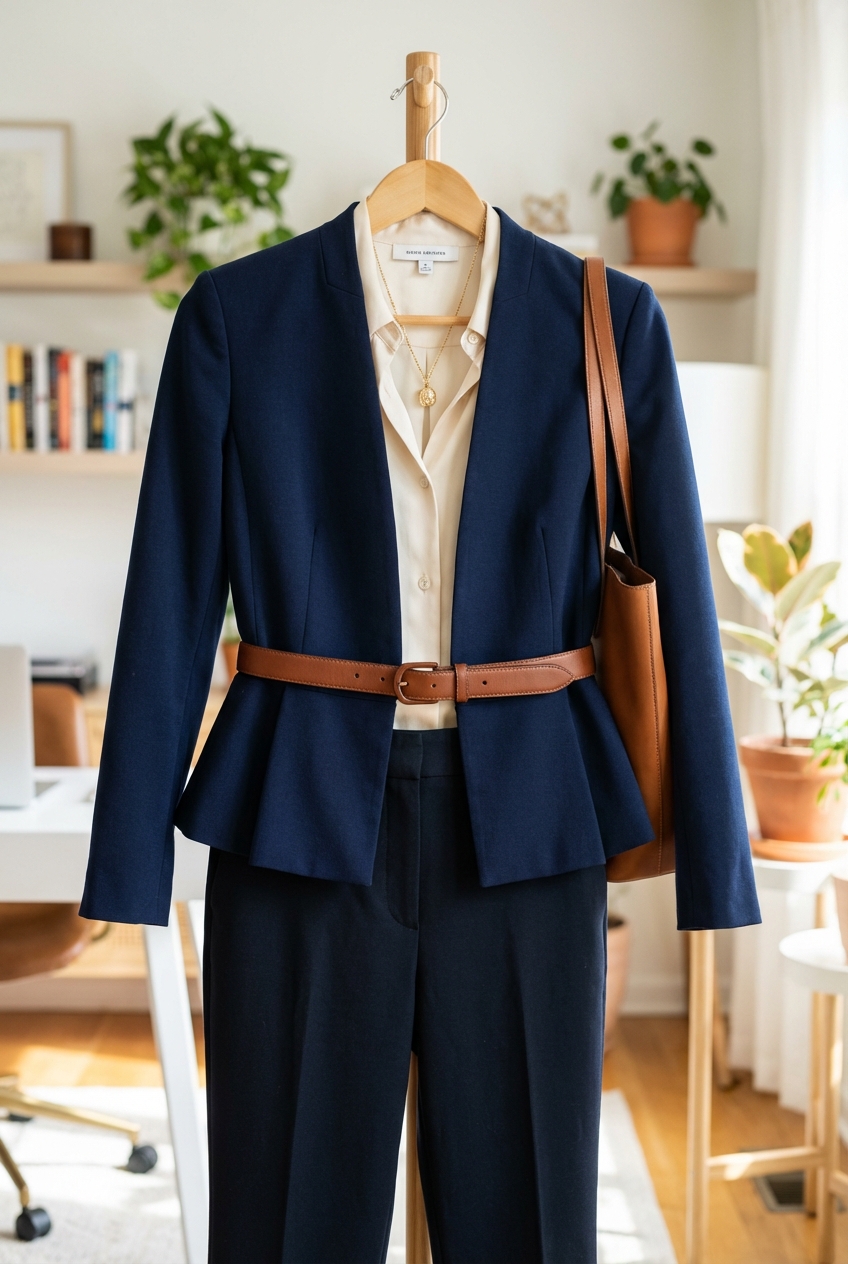
Structured Blazers With A Feminine Peplum Silhouette A Timeless Power Piece
Few items in a woman’s wardrobe command attention quite like a well-tailored blazer. It is the ultimate armor for the modern world, blending authority with sophistication. However, the standard menswear-inspired cut can sometimes feel boxy or hide the natural curves of the body. This is where the peplum silhouette enters the conversation, offering a structural masterpiece that celebrates the waistline while maintaining professional polish.
I remember my first encounter with a truly high-end peplum jacket during a styling session in Milan. My client felt that traditional suits made her look shapeless, yet she needed something commanding for boardroom presentations. When we slipped a structured crepe peplum blazer on her, the transformation was instant; her posture lifted, her waist was defined, and she looked powerful without sacrificing her femininity. It is a garment that understands the architecture of the female form better than almost any other.
In this guide, we are going to dissect exactly how to style, fit, and maintain this complex piece. We will move beyond the basic advice and look at fabric weights, hem ratios, and the visual tricks that high-end stylists use to elongate the torso. If you are looking for visual inspiration to help you visualize these cuts, be sure to check out the curated Picture Gallery at the end of this blog post.
The Architecture of the Peplum: Understanding Fit and Proportion
The magic of a peplum blazer lies entirely in where the “nip” and the “flare” sit on your body. Unlike a straight-cut boyfriend blazer, a peplum requires precise vertical alignment. The narrowest part of the jacket must hit exactly at your natural waist, which is usually an inch or two higher than your belly button.
If the waist seam sits too low, it will visually shorten your legs and drag your figure down. If it sits too high, it can create an empire-waist effect that disrupts the professional line of the suit. When shopping, ignore the tag size and focus entirely on where that horizontal seam lands on your torso.
Designer’s Note:
The most common issue I see is clients buying a peplum that is too tight in the ribcage. A structured blazer should skim the body, not squeeze it. If the fabric pulls or forms “whiskers” (horizontal wrinkle lines) across the stomach, you need to size up and have the shoulders taken in by a tailor.
The Rule of Thirds
In fashion styling, we often use the rule of thirds to create a balanced silhouette. A peplum blazer naturally breaks the body into pleasing proportions.
- The Top Third: The shoulder and bust area provides structure and frames the face.
- The Middle Third: The cinched waist creates a focal point.
- The Bottom Third: The flare of the peplum glides over the hips, softening the transition to the lower body.
Fabric Matters: Choosing Structure vs. Drape
The success of a peplum silhouette depends heavily on the fabric’s ability to hold a shape. A flimsy jersey material will hang limply and fail to provide that crisp, architectural “pop” at the hips. You want materials with inherent stability and recovery.
For a true power piece, look for wool gabardine, heavy crepe, or structured cotton blends. These fabrics have enough density to support the flare of the peplum without collapsing. They also tend to be more forgiving, smoothing over undergarment lines rather than clinging to them.
Seasonal Fabric Guide
- Fall/Winter: Opt for wool blends, tweed, or bouclé. These add texture and warmth while maintaining a rigid shape.
- Spring/Summer: heavy linen (lined), cotton sateen, or tropical wool. Avoid unlined linen as it wrinkles too easily for this sharp cut.
- Year-Round: Tri-acetate or high-quality polyester crepe. These resist wrinkling and offer excellent drape with structure.
Common Mistake + Fix:
Mistake: Buying a velvet or soft silk peplum for corporate wear.
Fix: Reserve soft, draping fabrics for evening wear. For the office, stick to matte, dense weaves that absorb light and hold a sharp crease.
Styling for the Office: The Modern Power Suit
Wearing a peplum blazer to the office requires a strategic approach to your bottom half. Because the jacket has volume at the hips, you generally want to keep the lower silhouette streamlined. This creates a balanced visual weight that looks intentional and sharp.
The classic pairing is a pencil skirt. The peplum flare contrasts beautifully with the narrowing line of a pencil skirt, creating an hourglass shape regardless of your natural measurements. Ensure the skirt hem hits just below the knee to balance the flare of the jacket.
Trouser Talk
If you prefer pants, a slim-cut cigarette trouser is your best friend. It elongates the leg and prevents the outfit from looking bottom-heavy.
- Ankle Length: Ideally, the trouser should end right at the ankle bone to show a sliver of skin or the vamp of your shoe.
- Wide Leg Caution: You can wear wide-leg trousers with a peplum, but the jacket must be shorter. A long peplum over wide pants can make you look rectangular.
- Monochrome Magic: Wearing a peplum blazer and trousers in the exact same shade creates a seamless vertical line, making you appear taller and leaner.
Transitioning to Evening: Textures and Layers
A peplum blazer is surprisingly versatile for evening events, serving as a sophisticated alternative to a cocktail dress. The key here is to play with texture and shine. A satin lapel or a leather finish can instantly take the silhouette from boardroom to bar.
For a dinner date, try wearing the blazer as a top. This requires a jacket with a higher button stance or a hidden internal button to ensure modesty. Pair it with dark, raw denim or a sleek silk slip skirt. The contrast between the rigid jacket and the fluid skirt is very chic.
Jewelry and Accessories
Because the peplum adds detail to the waist and hips, keep your accessories focused on the neckline or ears.
- Statement Earrings: Draw the eye up to your face.
- No Belts: Avoid adding a belt over a peplum blazer unless it was designed with one. The cut already defines the waist; adding bulk there usually ruins the line.
- Clutch Bags: A shoulder bag can crush the shoulder pads or ruin the flare of the peplum. Opt for a clutch or top-handle bag.
The Casual Edit: Denim and Sneakers
Can a structured peplum work on the weekend? Absolutely. The juxtaposition of high-end tailoring with distressed casual wear is a hallmark of modern street style. It says you made an effort without trying too hard.
Pair a navy or black peplum blazer with a white crew-neck t-shirt and straight-leg vintage wash jeans. The t-shirt softens the severity of the jacket’s neckline. Roll the sleeves of the blazer up slightly to expose your wrists, which adds a relaxed vibe.
Shoe Selection
Your choice of footwear dictates the tone of the outfit.
- Sneakers: Clean white leather sneakers make the look approachable and city-ready.
- Loafers: A chunky loafer adds a preppy, academic edge.
- Ankle Boots: Pointed-toe boots maintain the sharp lines of the jacket, perfect for brunch or shopping trips.
Real-World Project Checklist:
When I style a client for a casual look, I always check the “sit test.” Peplum jackets can ride up when you sit down, especially in a car or at a low restaurant table. Unbuttoning the jacket when seated is crucial to preserve the fabric and your comfort.
Tailoring Secrets: How to Get the Custom Fit
Off-the-rack blazers rarely fit perfectly because they assume a standardized ratio between shoulder width and waist circumference. With a peplum, fit is non-negotiable. If the shoulders fit but the waist is loose, you lose the impact of the silhouette.
I always advise clients to buy for their largest measurement. If you have broad shoulders, fit the jacket to your shoulders and have the waist taken in. If you are curvy in the hips, fit the jacket to your hips and have the upper body tailored down.
Key Alterations to Request
- Shortening the Sleeves: Sleeves should hit at the wrist bone. Any longer and the jacket looks like a hand-me-down.
- Nipping the Waist: A tailor can open the back seams to take in the waist, accentuating the peplum flare.
- Adjusting the Vent: If the back flap of the peplum (the vent) is pulling open, it ruins the line. A tailor can sometimes release fabric or suggest a size up to let the vent lie flat.
Common Mistakes + Fixes
Even with a beautiful garment, styling errors can detract from the overall polish. Here are the most frequent missteps I see and how to correct them quickly.
Mistake: Wearing bulky layers underneath.
Because a peplum jacket is fitted through the torso, wearing a chunky cable knit sweater underneath creates lumps.
The Fix: Stick to fine-gauge knits, silk blouses, or bodysuits. Bodysuits are particularly excellent because they remain tucked in and smooth.
Mistake: Ignoring the back view.
We often focus on how we look in the mirror, but the back of a peplum blazer is just as important. If the fabric bunches above your bottom, the torso length is wrong for you.
The Fix: Check your rear view. The peplum should clear your hips and drape cleanly. If it catches on your trousers or skirt, the friction will cause unsightly bunching.
Mistake: Incorrect skirt volume.
Pairing a peplum with an A-line skirt creates a “double flare” effect (flare at the waist, flare at the knees). This usually widens the figure unflatteringly.
The Fix: Choose a straight or tapered skirt to anchor the volume of the jacket.
Finish & Styling Checklist
Before you head out the door, run through this quick stylist checklist to ensure your look is cohesive.
- Shoulder Check: The seam should end exactly at the edge of your shoulder bone. No drooping.
- Sleeve Length: Can you see your watch or a bracelet? If the sleeve covers your knuckles, it is too long.
- Waist Definition: Does the jacket button comfortably without pulling into an ‘X’ shape?
- Bottom Balance: Are you wearing a slim or streamlined bottom to counter the jacket’s volume?
- Lint Roll: Structured fabrics like wool attract dust. Give it a quick roll, especially on the shoulders.
- Hardware Polish: If the blazer has gold or silver buttons, ensure they are secure and not dangling.
FAQs
Can petite women wear peplum blazers?
Yes, absolutely. Petite women should look for “petite peplums,” which have a shorter torso length. The waist nip needs to hit your actual waist, not your hips. Avoid oversized or long-line peplums, as they can swallow a smaller frame.
Are peplum blazers still in style?
The peplum is a classic silhouette that traces back to Dior’s “New Look” in 1947. While trends fluctuate, a structured, well-tailored peplum blazer is a timeless wardrobe staple, distinct from the flimsy jersey peplum tops that were trendy in the early 2010s.
How do I clean a structured blazer?
Always dry clean. These jackets contain internal structuring—interfacing, shoulder pads, and lining—that will warp if washed in water. Spot clean small stains, but send it to a professional for a full refresh.
Can I wear a dress under a peplum blazer?
Yes, a sheath dress is a perfect companion. It acts just like a pencil skirt and top but with smoother lines. Ensure the dress fabric isn’t too thick, or the jacket will feel tight.
Conclusion
The structured peplum blazer is more than just a piece of clothing; it is a tool for confidence. It creates a silhouette that is simultaneously assertive and graceful, solving the age-old dilemma of how to look professional without looking masculine. By paying attention to the fit of the shoulders, the placement of the waist, and the quality of the fabric, you invest in a garment that will serve you for years.
Remember that fashion is about proportion. The peplum does the hard work for you by artificially creating an hourglass shape. Your job is simply to support it with the right bottoms and a confident posture. Whether you are leading a meeting or meeting friends for a drink, this power piece ensures you occupy space with elegance.
Picture Gallery


