
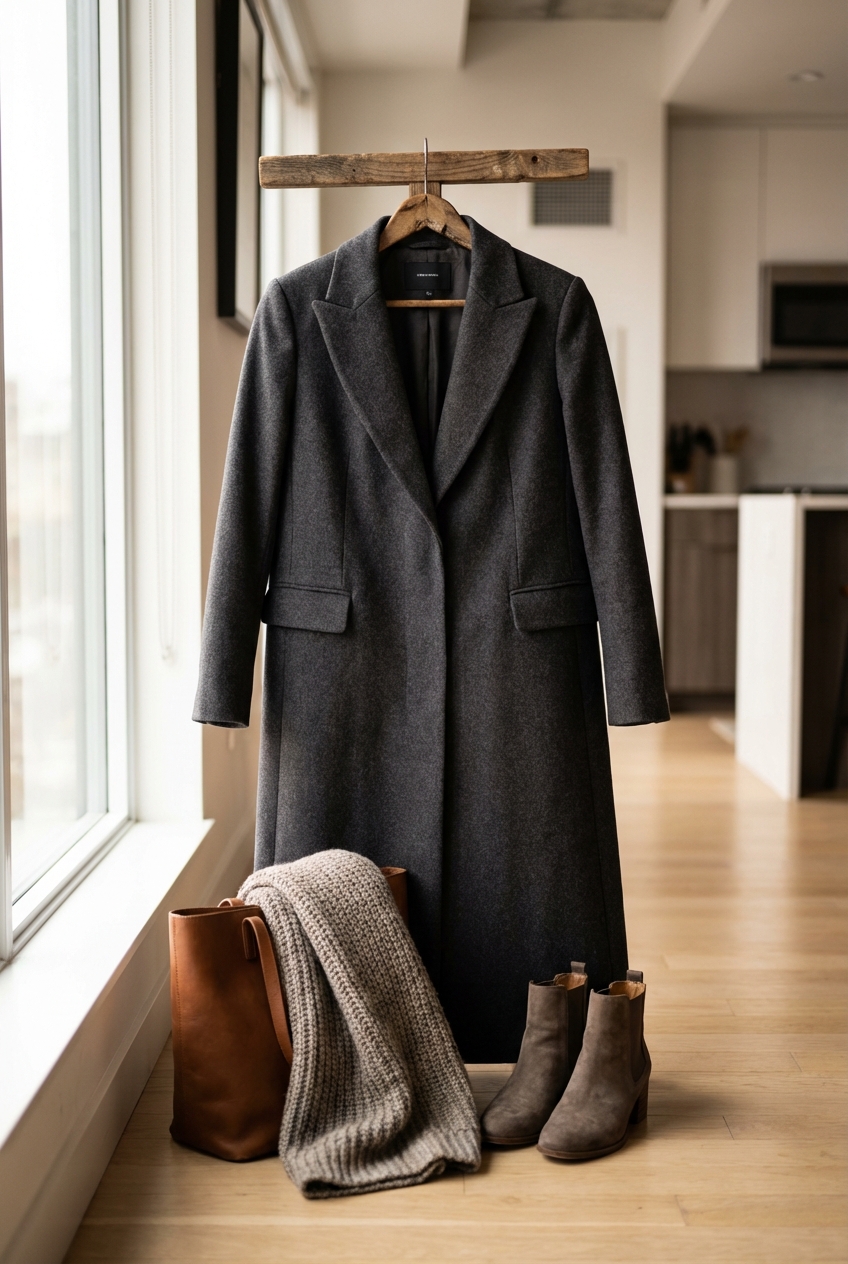
Structured Maxi Coats For Dramatic Outerwear
There is a singular moment of transformation that happens when you slide your arms into a perfectly tailored, floor-grazing coat. I vividly remember my first investment piece—a heavy charcoal wool maxi with sharp, padded shoulders and a nipped waist. I was wearing lackluster sweatpants underneath to run a quick errand, yet a stranger stopped me on the street to ask where I worked in fashion; the coat did all the heavy lifting.
Structured maxi coats are not just garments; they are architectural shields against the elements and the mundane. They provide an immediate silhouette that commands respect and creates a polished look with zero effort required from the outfit underneath. Whether you are draping it over evening wear or using it to elevate denim, the rigid lines and dramatic length create a visual hierarchy that always places you at the top.
In this guide, I will break down exactly how to select, fit, and style these substantial pieces so they don’t overwhelm your frame. If you are looking for visual inspiration on how to pull this look together, check out the Picture Gallery at the end of the blog post.
The Architecture of the Coat: Defining Structure
When I speak about structure in outerwear, I am referring to the garment’s ability to hold its own shape regardless of your body movement. A truly structured maxi coat should look almost the same on a hanger as it does on your body. This relies heavily on the internal construction, specifically the interfacing and the shoulder pads.
The shoulder line is the most critical element of a structured coat. It must extend exactly to the edge of your natural shoulder or slightly beyond for an intentional, boxy look. If the seam sits inward toward your neck, the coat will look too small; if it droops without padding to support it, you lose the dramatic effect immediately.
Look for high-quality interfacing in the lapels and the collar. Test this by gently rolling the lapel between your fingers; you should feel a third layer of material floating between the outer fabric and the lining. This “canvas” is what prevents the collar from flattening out after a week of wear.
Designer’s Note: The Weight Test
In my years of styling, the biggest disappointment usually comes from ordering coats online that look structured in photos but arrive looking like flimsy cardigans. Real structure requires weight. If the package feels light when you pick it up, the coat will likely lack the stiffness required for that dramatic, high-fashion silhouette.
Mastering the Length and Proportions
The term “maxi” is often used loosely, but for a dramatic impact, we are aiming for a specific range. A true maxi coat should hit anywhere from mid-calf to just above the ankle bone. If it is shorter than mid-calf, it cuts the leg line at the widest part of the calf, which is unflattering for most clients.
For petite clients (under 5’4″), the fear is often that a maxi coat will look like a bathrobe or a sleeping bag. The fix is ensuring the coat is fitted impeccably through the torso and waist. If the coat hugs the ribcage before flaring out, it elongates the figure rather than swamping it.
For taller clients, you have the luxury of going for floor-sweeping lengths. However, practicality is a constraint we cannot ignore. I always advise keeping the hem at least two inches off the ground. This prevents the fabric from soaking up slush, street grime, or getting caught in escalators.
Common Mistakes + Fixes
Mistake: Buying a coat that is too long and letting it drag.
Fix: Take the coat to a tailor immediately. Ask for a “blind hem” so the stitching is invisible from the outside. Bring the shoes you wear most often to the fitting to get the clearance right.
Mistake: The “Triangle” Effect where the coat flares too wide at the bottom.
Fix: Look for coats with a back vent (slit). This allows for movement without requiring excessive fabric width at the hem.
Fabric Selection: The Foundation of longevity
Structure dictates fabric choice. You simply cannot achieve a sharp, architectural look with 100% synthetic, lightweight blends. You need natural fibers that have memory and density.
Wool Melton: This is the gold standard for structured coats. The wool fibers are woven and then felted, creating a dense, wind-resistant fabric that does not fray and holds a sharp crease. It is heavy, but that weight is what gives the coat its swing and drama.
Heavyweight Gabardine: For a lighter option that still holds shape (ideal for transitional weather), tight-woven gabardine is excellent. It offers a crisp finish that looks very high-end and resists wrinkling.
Cashmere Blends: While 100% cashmere is luxurious, it is often too soft to hold a rigorous, architectural shape on its own. I prefer a 90% wool, 10% cashmere blend. You get the warmth and softness of cashmere, but the sturdy durability of sheep’s wool to maintain the silhouette.
The Fit Checklist: What to Look For
Fitting a structured coat is different than fitting a dress. You need to account for layering without ruining the clean lines of the garment. I call this the “sweater test.”
When trying on a maxi coat, always wear your chunkiest knit sweater underneath. Button the coat fully. Now, hug yourself. If the fabric pulls tightly across the upper back or the sleeves ride up past your wrists, you need to size up.
Check the armholes. High-end coats feature higher armholes which actually allow for more range of motion. Lower armholes (common in cheaper manufacturing) cause the entire coat to lift up when you raise your arm, disrupting the silhouette.
Sleeve Length Logic:
The sleeves should hit just past the wrist bone, covering the top inch of your hand. This ensures that when you bend your arm or carry a bag, your wrists stay covered and warm. If the sleeves are too long, you look like a child playing dress-up; too short, and the luxury feel is lost.
Styling For Impact: The “Third Piece” Rule
In fashion styling, the “third piece” is the item that completes a look—usually a jacket or coat. With a structured maxi, the coat often is the outfit.
Monochromatic Columns:
The most effective way to style these coats is over a monochromatic base. If you have a camel coat, wear all black or all cream underneath. This creates a vertical column of color that lengthens the body, while the coat frames it like a border.
Texture Contrast:
Because structured coats are often matte wool, introduce conflicting textures underneath. Leather trousers, silk slip skirts, or chunky cable knits create necessary visual friction. This prevents the outfit from looking flat.
Footwear Choices:
The shoe choice defines the vibe.
- Pointed-Toe Boots: These elongate the leg line as it emerges from the coat hem.
- Chunky Loafers: These ground the look and add a masculine edge to the tailoring.
- Sneakers: A risky move, but if you choose a sleek, retro sneaker, it creates a “model off-duty” aesthetic. Avoid gym runners.
Color Theory and Hardware Details
While black is the safe default, a structured maxi coat in a specific color serves as a statement piece.
Camel and Vicuña:
These warm neutrals are synonymous with luxury. They show off the quality of the wool better than black does. However, they also show dirt more easily, so they are better suited for car travel than subway commuting.
Navy and Charcoal:
These are your workhorses. They are softer than black but just as versatile. Navy, in particular, looks incredible with denim and silver jewelry.
Hardware Matters:
The buttons on a coat can cheapen the look instantly. Many high-street brands use shiny, lightweight plastic buttons. One of my favorite designer hacks is to buy a mid-range coat and swap the buttons for genuine horn or heavy brass buttons. It costs about $30 at a dry cleaner and makes the coat look three times more expensive.
Navigating the Maintenance of Heavy Wool
A maxi coat touches more surfaces than a jacket. It brushes against car doors, subway seats, and occasionally the ground. Maintenance is not optional; it is part of ownership.
Invest in a robust clothes brush with natural bristles. After every few wears, brush the coat firmly downwards. This removes surface dust and city grit before it settles into the weave of the wool. It also smooths the fibers, keeping the coat looking new.
Never hang a heavy maxi coat on a thin wire or plastic hanger. The weight of the fabric will pull down, and the narrow hanger will create permanent dents in the shoulder pads. You must use a wide, contoured wooden hanger that supports the full width of the shoulder.
What I’d Do in a Real Project (Styling a Client)
If I were styling a client for a winter season update, here is exactly how I would integrate this piece:
- Step 1: Select a charcoal double-breasted maxi coat with a peak lapel.
- Step 2: Pair it with a fine-gauge black turtleneck and straight-leg vintage denim.
- Step 3: Add a leather belt over the closed coat to cinch the waist and change the silhouette for evening.
- Step 4: Finish with burgundy leather boots to add a rich accent color that peeks out as she walks.
Finish & Styling Checklist
Before you head out the door, run through this quick mental check to ensure the look is polished:
- Check the Vent: Did you cut the “X” stitch on the back vent? That stitch is only for shipping. If you leave it sewn shut, the coat will bunch up awkwardly when you walk.
- Lint Roll: Dark wool is a magnet for lint and hair. A quick roll is essential.
- Collar Check: Is the collar popping up in the back? Smooth it down so it sits flush against your neck.
- Pocket Flaps: Ensure pocket flaps are both out or both tucked in. Asymmetry here looks messy.
- Scarf Placement: If wearing a scarf, tuck it inside the lapels to maintain the clean vertical lines of the coat opening.
FAQs
Can I wear a structured maxi coat if I have a curvy body type?
Absolutely. Look for single-breasted styles with a deep V-neckline (lapels that start lower on the torso). This elongates the neck and chest. A belted waist is also your best friend, as it highlights your shape rather than hiding it. Avoid double-breasted styles that add bulk to the chest area.
How do I sit down in a maxi coat without wrinkling it?
Unbutton the coat completely before sitting. Smooth the back of the coat underneath you so you are sitting on the lining, not crumping the exterior fabric. Ideally, if you are indoors, take it off. These coats are designed for standing and walking, not sitting.
Is a trench coat considered a structured maxi?
Generally, no. Trench coats are typically made of cotton gabardine and are designed to be fluid and belted. While they can be maxi length, they lack the rigid shoulder construction and heavy wool weight of a structured coat. They are a different category of outerwear entirely.
What is the best way to store a maxi coat during summer?
Dry clean it first. Moths are attracted to body oils and perfumes, even if you can’t see stains. Store it in a breathable garment bag (cotton, not plastic) to prevent mildew. Stuff the sleeves with acid-free tissue paper to help them hold their round shape during months of storage.
Can I wear a dress that is longer than the coat?
This is a subject of debate, but my rule is generally no. For a clean, structured look, the coat should be the longest layer. If a maxi dress drags two inches below the coat hem, it disrupts the visual line. The exception is a very wide-leg trouser, which can pool slightly below the coat.
Conclusion
A structured maxi coat is one of the few garments that offers a genuine return on investment. It is a piece that serves you daily, protecting your outfit while simultaneously becoming the outfit. It creates a boundary between you and the chaotic world, offering a sense of composure and armor.
By focusing on the shoulder fit, the density of the fabric, and the precision of the hem length, you can find a piece that lasts for a decade rather than a season. Don’t be afraid of the drama that a floor-sweeping length provides. In a world of fast fashion and casual comfort, choosing structure and tailoring is a radical, stylish act.
Picture Gallery


