
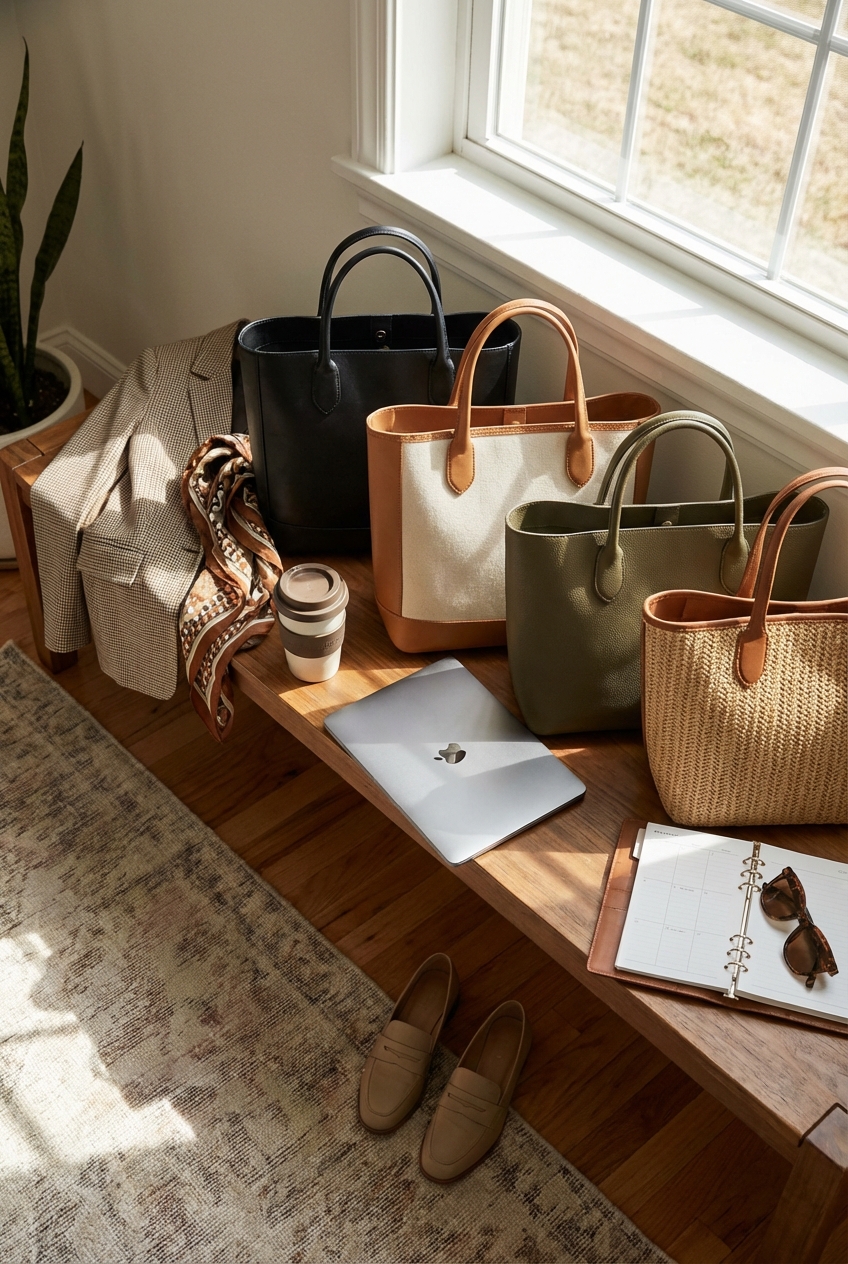
Structured Tote Bags For Work And Play
Finding the perfect bag is arguably harder than finding the perfect pair of jeans. In my years styling clients for executive roles and press tours, the most common wardrobe gap I see is the lack of a proper “power bag.” Too often, women rely on slouchy hobo styles that collapse when set down or canvas shoppers that look too casual for a boardroom.
A structured tote is the architectural solution to a chaotic life. It offers clean lines that polish an outfit instantly, regardless of whether you are wearing a tailored suit or dark denim. It acts as a mobile office, a vanity, and a safety net, all while maintaining a rigid silhouette that commands respect.
In this guide, I am breaking down exactly how to select a tote that works as hard as you do. We will cover the specific measurements for laptop clearance, the leather finishes that resist scratches, and how to transition the bag from 9-to-5 to 5-to-9. For visual inspiration on how to style these pieces, be sure to check out the Picture Gallery at the end of the blog post.
1. The Anatomy of Structure: Construction Matters
When we talk about “structure” in fashion, we are referring to the bag’s ability to stand up on its own. This is not just an aesthetic preference; it is a functional requirement for a work bag. A bag that collapses when placed on a conference table looks messy and makes retrieving documents difficult.
High-end structure relies on reinforcement. You want to look for bags featuring piping along the seams or reinforced gussets (the side panels). These architectural elements act like the framing of a house, keeping the leather taut and upright.
Pay close attention to the bottom panel. A structured tote must have a reinforced base, ideally with a stiffener insert between the lining and the exterior leather. If the bottom sags when you put your laptop inside, the bag lacks the necessary structural integrity for daily use.
Designer’s Note: The “Empty Test”
I always teach my clients the “Empty Test” before purchasing. Place the bag on a flat surface completely empty. If the handles flop over immediately or the sides buckle inward, walk away. A truly structured tote maintains its shape without stuffing paper inside.
2. Sizing and Scale: The Laptop Constraint
The most heartbreaking mistake I see is buying a bag that is one inch too narrow for your technology. Do not rely on the diagonal screen measurement of your laptop (e.g., “13-inch MacBook”) when shopping for bags. You need the actual physical width of the device.
A standard 13-inch laptop is usually about 12 inches wide physically. However, a bag with a 12-inch base will be too tight because the bag tapers or the zipper eats up space. As a rule of thumb, you need at least 1.5 to 2 inches of clearance beyond the width of your laptop.
If your laptop is 12 inches wide, look for a tote with a base width of at least 14 inches. This allows you to slide the computer in and out without scratching the hardware or straining the bag’s zipper. If you carry a 15-inch or 16-inch laptop, you generally need a tote with a 17-inch to 18-inch width.
Common Mistakes + Fixes
- Mistake: Ignoring the zipper opening width.
- Correction: The base of the bag might be 15 inches, but the mouth might only open to 13 inches due to the zipper stops. Always measure the opening, not just the bottom.
3. Strap Drop and Ergonomics
The “strap drop” is the vertical distance from the top of the shoulder strap to the top edge of the bag. This measurement dictates whether the bag is wearable or annoying. In high-end design, we obsess over this number.
For a dedicated work tote, the golden range for strap drop is 9 to 11 inches. A drop of less than 8 inches will pinch your underarm. This becomes a major functional issue the moment you put on a trench coat or a winter wool blazer.
If you live in a climate with heavy winters, lean toward an 11-inch drop. This ensures the bag clears the bulk of a puffer coat without slipping off your shoulder. If you are petite (under 5’3″), stick to a 9-inch drop to prevent the bag from hitting your knees when carried by hand.
4. Material Selection: Durability vs. Luxury
Not all leathers are created equal, especially for a bag that sits on floors, trains, and desks. For a structured tote, avoid soft, untreated lambskin. It is too delicate, scratches easily, and loses its shape quickly.
Saffiano and Textured Leathers
Saffiano leather (a cross-hatch print pressed into the wax coating) is the industry standard for durability. It is water-resistant and virtually scratch-proof. While it can feel a bit rigid or “plasticky” to some, it ensures the bag looks brand new for years.
Pebbled Leather
If you prefer a softer tactile feel, opt for a heavy-grain pebbled leather. The texture hides minor scuffs and scratches well. However, ensure the hide is thick enough to support the bag’s structure, or that the bag is lined with a stiff material.
Coated Canvas
For a lighter weight option, high-quality coated canvas is excellent. It is waterproof and wipes clean. Just be aware that canvas corners can wear down faster than leather if the bag does not have protective feet.
5. Interior Architecture and Organization
A structured exterior means nothing if the interior is a black hole. When reviewing a potential bag, inspect the lining color first. I always advise against black linings in deep tote bags.
A dark lining acts like a cave; you will never find your keys or flash drive without a flashlight. Look for lighter linings—beige, microsuede, or a contrasting pop of color. This reflects light and makes your contents visible at a glance.
Regarding pockets, you want a specific layout. A central padded zip compartment is ideal for separating a laptop from gym clothes or lunch. If the bag is an open “bucket” style, you must factor in the cost and weight of adding a separate bag organizer insert.
6. Protecting the Investment: Hardware and Feet
In interior design, we talk about “touch points.” In handbags, hardware is the equivalent. The quality of the zipper pull, the weight of the buckles, and the finish of the metal rings signal the quality of the bag.
The most critical hardware feature for a work tote is “feet” (metal studs on the bottom). A structured bag is designed to be set down. Without feet, the leather bottom sits directly on dirty floors, rough concrete, or sticky bar surfaces.
Feet protect the leather from abrasions and moisture. If you fall in love with a bag that lacks feet, be prepared to treat the bottom with a leather protector spray monthly. However, for a true workhorse bag, feet are non-negotiable.
7. Styling Transition: From Office to Evening
The beauty of a structured tote is its versatility. However, taking a large bag to dinner requires a styling shift. The goal is to make the bag look like an intentional accessory, not luggage you are lugging around.
If the tote has a long crossbody strap, remove it or tuck it inside for evening events. Carrying the bag by the top handles or in the crook of your arm instantly elevates the look. It shifts the vibe from “commuter” to “editor.”
You can also soften the rigid look of a structured bag by tying a silk scarf around one handle. This adds texture and movement. It breaks up the solid block of color and makes the bag feel more personal and less corporate.
8. Finish & Styling Checklist
Here is the exact checklist I run through when selecting a structured tote for a client project. Use this before you commit to a purchase.
What I’d do in a real wardrobe project:
- Check the Weight: Before putting anything in it, does the bag weigh more than 2.5 lbs? If yes, it will be too heavy once loaded.
- Verify the Drop: Put on your heaviest winter coat and try the bag on. Does it slide up comfortably?
- Laptop Test: Does the laptop slide in horizontally without scraping the zipper teeth?
- Stability Check: Place the bag on a table and nudge it. Does it tip over or stay planted?
- Hardware Match: Does the hardware tone (gold/silver) clash with your daily jewelry or watch?
- Handle Comfort: Are the straps rolled (rounded) or flat? Rolled handles can dig into shoulders if the bag is heavy; flat straps distribute weight better.
FAQs
Can a structured tote work for a petite frame?
Yes, but watch the width. Keep the bag width under 14 inches if possible. A bag wider than your body frame can make you look like you are being carried by the bag. Opt for vertical totes (north-south orientation) rather than horizontal ones to elongate your line.
How do I clean the interior lining if a pen explodes?
For fabric linings, use a mixture of dish soap and warm water with a toothbrush. Blot, do not rub. If the lining is suede, you need a professional cleaner. Always keep pens in a separate pouch to prevent this common disaster.
Is a zipper top mandatory for work?
If you take public transportation or travel for work, yes. A zipper provides security against theft and keeps items contained if the bag tips over on a plane. For driving commuters, an open top with a magnetic closure is often sufficient and offers easier access.
Does vegan leather hold its structure as well as real leather?
High-quality vegan leathers (often PVC or polyurethane blends) actually hold structure better than real leather because they do not soften or stretch over time. However, look for “structured vegan leather” specifically, as thinner varieties can crack at stress points.
Conclusion
A structured tote is more than a vessel for your laptop; it is a foundational piece of your professional wardrobe. It signals organization, competence, and style. By focusing on the architecture of the bag—gussets, feet, and rigid materials—you ensure the bag serves you well past a single season.
Remember that the best bag is the one that fits your real life, not just your fantasy life. Measure your laptop, check the strap drop against your coats, and prioritize durability. When you find that perfect intersection of function and form, the investment pays off every single morning.
Picture Gallery


