
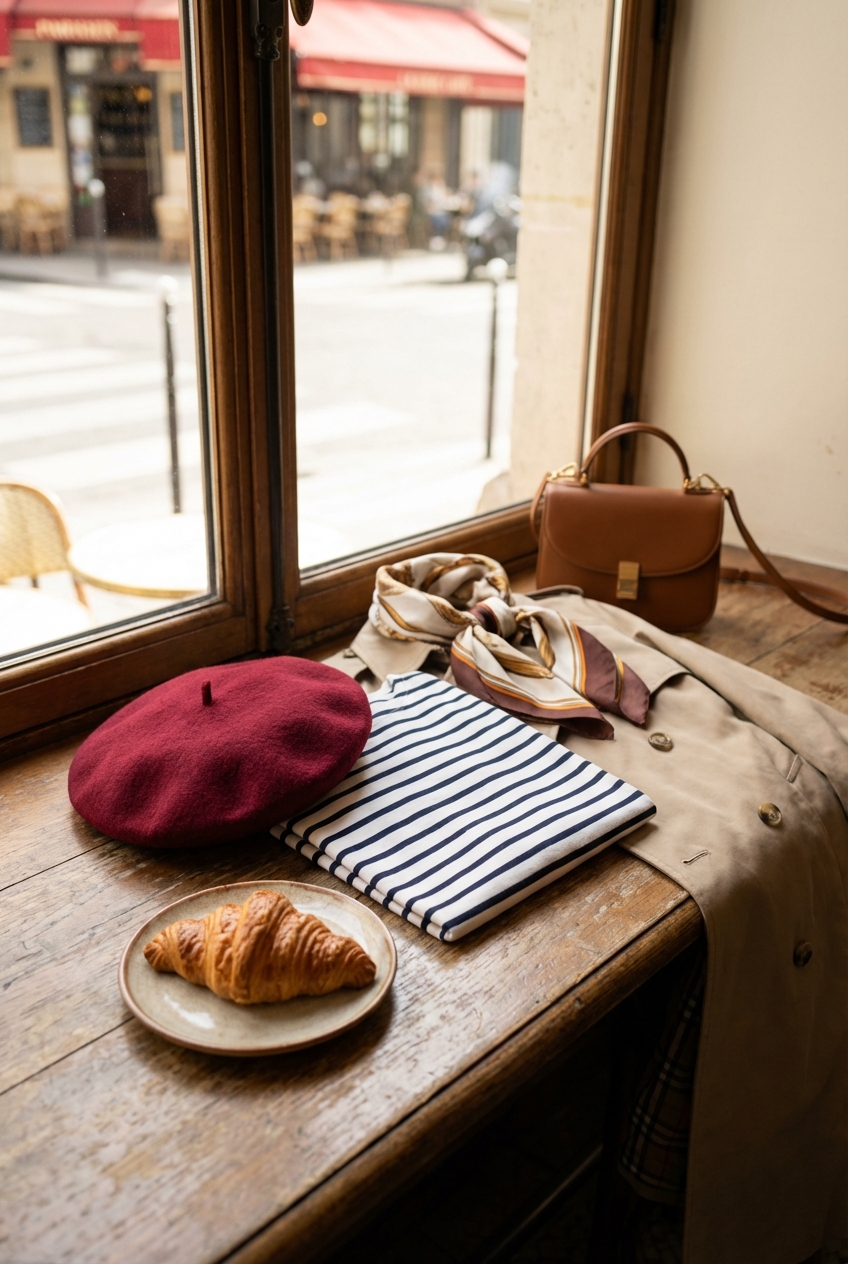
Styling Berets For A Parisian Inspired Wardrobe
Introduction
There is a fine line between authentic Parisian style and a costume. When I first started attending Fashion Week in Paris, I avoided the beret entirely. I was terrified of looking like a cliché tourist rather than a serious industry professional. However, after seasons of observing the locals in Le Marais and Saint-Germain-des-Prés, I realized the beret is actually a functional, architectural staple in a French woman’s rotation.
The secret lies entirely in the tension between the structure of the hat and the ease of the rest of the outfit. It is not about putting on a “French” costume; it is about utilizing a classic accessory to correct the proportions of a silhouette or hide a bad hair day with intention. When styled with precision, it elevates a simple trench coat and jeans into something deliberate and polished.
In this guide, I am breaking down the technical elements of choosing, positioning, and styling a beret so that it feels modern rather than theatrical. We have curated a stunning collection of street style inspiration for you, so please remember that the Picture Gallery is at the end of the blog post.
Selecting the Correct Material and Structure
The biggest mistake I see clients make is buying berets made from flimsy, synthetic materials. In high-end fashion, the fabric is the foundation of the silhouette. If the fabric lacks density, the hat will not hold a shape, and it will slide off your head or lay flat like a pancake.
For a true Parisian aesthetic, you must look for 100% Merino wool felt. Felted wool has a density that allows you to mold the hat. When you pull one side down, it stays there. It has a structural integrity similar to a good wool coat. Avoid loose knits or crocheted berets if you are aiming for a chic, tailored look; those styles read more “bohemian craft fair” than “Avenue Montaigne.”
Pay attention to the “plateau” diameter. This is the flat circle part of the beret. A standard, subtle beret usually has a plateau diameter of about 10 to 11 inches. If you have a larger head or want a more dramatic, avant-garde look, look for a “tart” style which can go up to 12 inches. However, for daily wear, the standard 10-inch diameter is the most universally flattering scale.
Leather Bands vs. Seamless Edges
- The Seamless Edge: This is the most traditional style. It is flexible and comfortable, molding to your head shape over time. It offers a softer transition from forehead to fabric.
- The Leather Band: A beret with a structured leather band offers a military-inspired edge. It is significantly more secure in windy weather and sits higher on the head. This is often the choice for a more rigorous, fashion-forward look.
The Architecture of the Tilt
Wearing a beret straight on top of your head is rarely the goal. It tends to look like a mushroom cap and flattens the facial features. The goal is to create asymmetry. Asymmetry adds dynamism to the face and highlights your cheekbones.
Start by placing the beret on your head about one inch above your eyebrows. You want the band to sit horizontally across your forehead initially. This ensures the hat is anchored properly before you start styling it. If it is too far back on the crown of your head, it will slip off within minutes.
Once anchored, pull the extra fabric to one side. The general rule of thumb is to pull the fabric down toward the ear opposite your part. If you part your hair on the left, pull the beret tilt toward the right. This balances the visual weight of your hair volume against the volume of the hat.
Designer’s Note: The “Mushroom” Effect
The Mistake: Leaving the top of the beret full of air, creating a high, puffy shape.
The Fix: Once the beret is on, use your hand to press the center “stem” (the cabillou) down slightly, collapsing the air pocket. Then, mold the side slope. The silhouette should be streamlined and flat against the side of the head, not puffing outward.
Hair Considerations and Anchoring
Your hair texture dictates how the beret will sit. As a stylist, I have to adjust my approach depending on whether a client has fine, slippery hair or thick, textured curls. The beret relies on friction to stay in place.
For those with bangs (a classic French pairing), position the brim of the beret right at the root of the bangs. Do not tuck the bangs under the hat; let them frame the face. If you have a bob, this look is effortless. Ensure the beret doesn’t flatten the hair at the sides too much by fluffing the ends of your hair outward.
For long hair or slippery textures, you may need mechanical help. I always keep matte bobby pins in my kit. Slide two bobby pins in an “X” formation through the inner band of the beret and catch a section of hair behind the ear. This locks the hat in place, allowing you to move freely without constantly adjusting it.
Working with Curls and Volume
If you have voluminous curls or textured hair, a standard beret might feel too tight or pop off. Look for berets specifically labeled “slouchy” or those with a larger headband circumference. Instead of pulling the beret down over the forehead, place it further back near the hairline to let your curls frame your face. This creates a halo effect that is incredibly chic.
Coordinating Colors and Patterns
Color theory is critical when integrating a beret into a wardrobe. The Parisian approach to color is generally subtractive. They stick to neutrals and allow texture to do the talking.
The Holy Trinity of Berets:
- Black: The absolute essential. It matches leather jackets, wool coats, and disappears slightly into darker hair for a subtle look.
- Camel/Beige: Softens the face. This is ideal for brunettes as it provides contrast, or blondes looking for a monochromatic vibe.
- Navy: A softer alternative to black that pairs beautifully with denim and white shirts.
The Red Beret Warning:
A bright red beret is iconic, but it is also the most dangerous territory for looking costumey. If you choose red, it must be a deep, rich crimson (like a glass of Bordeaux), not a bright fire engine red. Furthermore, if you wear a red beret, keep the rest of the outfit strictly neutral—think a black turtleneck and grey trousers. Do not pair it with a striped shirt and a baguette unless you are going to a costume party.
Common Mistakes + Fixes
- Mistake: Matching the beret color exactly to your coat.
- Correction: Aim for tonal variations or contrast. If you are wearing a camel coat, opt for a black or charcoal beret. If you are wearing a black coat, a grey or camel beret breaks up the visual block.
- Mistake: Wearing a patterned beret with a patterned outfit.
- Correction: Treat the beret as a solid anchor. If your coat is plaid, keep the beret solid. If the beret has a pattern (like houndstooth), keep the coat solid.
Outfit Formulas: Proportions and Layers
A beret adds visual weight to the top of your silhouette. To balance this, you need structure in the shoulders or bulk in the footwear. A beret worn with a flimsy t-shirt and flip-flops looks disjointed. It requires “heavier” fashion counterparts.
Formula 1: The Masculine/Feminine Mix
Pair a black wool beret with an oversized menswear blazer and straight-leg jeans. The sharpness of the blazer shoulders balances the round softness of the hat. Finish this with loafers or ankle boots. This is the uniform of styling editors in Paris.
Formula 2: The Long Line
Use a long trench coat or a wool overcoat. The length of the coat creates a vertical column, and the beret acts as the punctuation mark at the top. This elongates the frame. Ensure your collar is popped or use a scarf to bridge the gap between the chin and the hat.
Formula 3: The Knitwear texture
Chunky cable knit sweaters work beautifully with the smooth texture of a felt beret. The contrast between the fuzzy wool of the sweater and the matte, dense felt of the hat creates a tactile richness that looks expensive.
What I’d Do in a Real Project: A Mini Checklist
If I were styling you for a campaign shoot or a week-long trip to Paris, this is the mental checklist I would run through before sending you out the door.
- Check the Weather: Is it raining? Wool felt smells when wet and can lose shape. If heavy rain is forecast, skip the beret or carry a large umbrella.
- The “Shake” Test: Shake your head vigorously from left to right. Does the beret move? If yes, add two bobby pins behind the ears.
- Lint Check: Black felt is a magnet for dust and pet hair. I never leave the house without running a mini lint roller over a felt beret. A fuzzy beret ruins the polish.
- Makeup Balance: Because the hat draws attention to the eyes and forehead, ensure your brows are groomed. A bold lip also pairs beautifully with a beret as it balances the accessory on the upper head with color on the lower face.
Maintenance and Longevity
A high-quality beret is an investment that can last for decades if treated well. Wool felt is durable, but it is not invincible.
Storage: Never crush your beret in a drawer. Ideally, store it flat. If you must stack it, place tissue paper inside to help it hold its mushroom shape. This prevents hard creases from forming in the felt, which are very difficult to steam out.
Cleaning: Do not put a wool beret in the washing machine. It will shrink to the size of a doll’s hat. Spot clean stains with a damp cloth and a drop of wool detergent. For a full refresh, use a hand-held steamer to kill bacteria and reshape the wool. The steam relaxes the fibers, allowing you to mold it back into a perfect circle.
Resizing: If your beret feels too tight, you can gently stretch it. Steam the band thoroughly until it is warm and damp. Place it over your knee or a rounded object slightly larger than your head and pull gently. Let it cool in the stretched position.
FAQs
Can I wear a beret indoors?
Etiquette dictates that women can wear fashion hats indoors, unlike men who traditionally remove them. However, a beret is outerwear. If you are at a casual lunch or a museum, keep it on. If you are at a formal dinner or a business meeting, take it off. It can look like you are ready to rush out the door if you keep it on during a three-course meal.
Is the beret trendy or timeless?
The beret is timeless, but the styling of it follows trends. Currently, wearing it pulled far back on the head (halo style) or sharply tilted is in vogue. Wearing it pulled straight down over the ears like a beanie is considered dated. Treat it as a classic item, but update how you position it.
Will a beret flatten my hair?
Inevitably, yes, there will be some “hat hair” near the roots. To mitigate this, I recommend flipping your part to the opposite side before putting the hat on. When you take the hat off and flip your hair back to its natural part, you will regain some volume.
Can I wear a beret with a puffer jacket?
This is a difficult mix. Puffer jackets are sporty and utilitarian; berets are tailored and classic. It creates a clash in aesthetics. A beanie is better suited for a puffer. Save the beret for wool coats, trench coats, leather jackets, and blazers.
Conclusion
Embracing the beret is about confidence and geometry. It is a tool that allows you to play with the shape of your face and the silhouette of your outfit. By investing in dense, high-quality wool and mastering the “tilt,” you move away from the tourist caricature and into the realm of the sophisticated traveler.
Start with a classic black felt option. Play with the positioning in the mirror until you find the angle that highlights your best features. Remember, the goal is effortless chic. It shouldn’t look like you spent twenty minutes arranging it, even if you did.
Picture Gallery


