
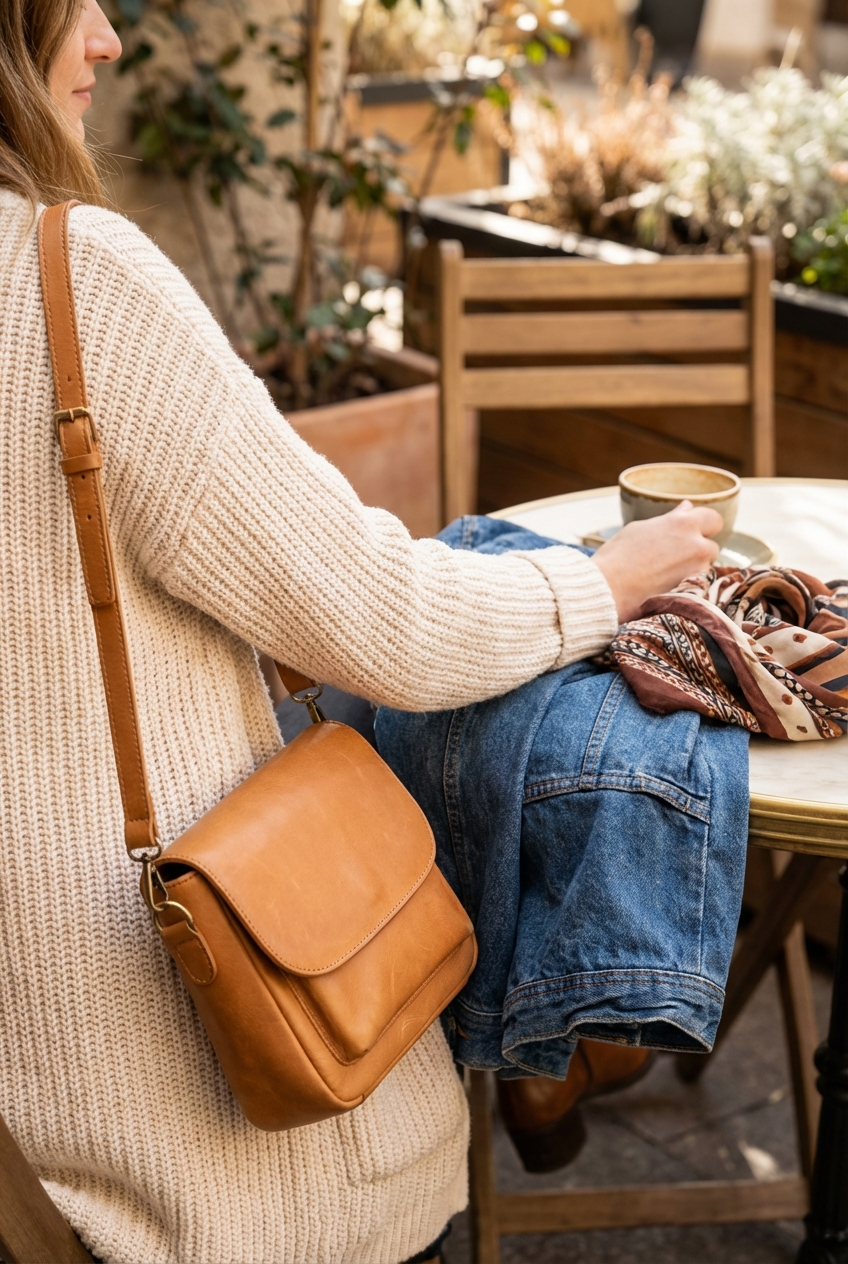
Styling Crossbody Bags For Ultimate Comfort And Style
Introduction
For years, the crossbody bag was considered strictly utilitarian—a practical choice for tourists or students, but rarely the centerpiece of a high-fashion ensemble. That narrative has completely shifted. As a stylist who has dressed clients for everything from gallery openings to fashion week street style, I have watched the crossbody evolve into the ultimate symbol of effortless luxury. It represents the freedom of movement without sacrificing structure or elegance.
However, simply throwing a bag over your head is not enough to achieve a polished look. I remember a specific styling session with a client who insisted that crossbody bags made her look “cluttered” and shorter. We discovered that her issue wasn’t the bag itself, but where it landed on her frame. Once we adjusted the strap just two inches higher and swapped a thin chain for a wide leather strap, her entire silhouette lengthened, and the look clicked into place.
Mastering this accessory requires a blend of physics and aesthetics. You have to consider how the weight distributes across your shoulder, how the texture interacts with your outerwear, and how the scale of the bag relates to your body type. For a visual breakdown of these styling principles, make sure you scroll all the way down because I have curated a comprehensive Picture Gallery at the end of the blog post.
1. The Geometry of Placement: Finding Your Vertical Sweet Spot
The single most common mistake I see on the street is wearing a crossbody bag too low. When a bag hits below the hip or bounces against the thigh, it drags the visual eye downward, making the wearer appear shorter and more sluggish. It also creates a mechanical issue; a low-hanging bag swings with more momentum, which is uncomfortable for walking.
For the most flattering silhouette, the body of the bag should sit at the top of your hip bone or slightly higher, nestling into the natural curve of your waist. This placement highlights the narrowest part of your torso and keeps your legs looking long. From a comfort perspective, keeping the mass of the bag closer to your center of gravity reduces strain on your back and prevents that annoying rhythmic bouncing against your leg.
When I am fitting a client, I always perform a “stride test.” I have them walk briskly across the studio. If the bag requires a hand to steady it with every step, the strap is too long. The bag should move with you, not against you. If you are petite, aim for the bag to sit right at the natural waist. If you have a longer torso or are taller, the top of the hip bone is your ideal anchor point.
2. Scale and Proportion: Balancing the Bag Against Your Frame
In interior design, we talk about the scale of furniture in a room; in fashion, we must apply the same logic to accessories on the body. A bag that is too small on a tall frame looks like a toy, while an oversized satchel on a petite frame can look like luggage that is swallowing the wearer whole.
Designer’s Note: A good rule of thumb is the “hand-span rule.” If the bag is wider than your torso when viewing yourself straight on in the mirror, it is too large for crossbody wear. It will obscure your shape and add unnecessary bulk to your midsection.
For petite frames (under 5’4″), I recommend sticking to compact, structured shapes that are no wider than 9 or 10 inches. Vertical, rectangular shapes (camera bags or phone slings) are excellent because they draw the eye up and down rather than cutting you in half horizontally. Avoid slouchy, shapeless hobos that add volume.
For taller or curvier frames, you have the luxury of carrying more volume, but structure remains key. A medium-sized saddle bag or a structured half-moon shape works beautifully. If you are curvy, avoid bags that end exactly at the widest part of your hip; adjust the strap so the bag sits slightly above that point in the hollow of the waist to accentuate your shape rather than broaden it.
3. Strap Science: Width, Material, and Weight Distribution
Comfort is largely dictated by the strap. No matter how beautiful the leather is, if the strap is a thin metal chain and you are carrying a water bottle and a wallet, it will dig into your trapezius muscle within an hour. Metal chains look chic and dressy, but they offer zero friction and zero cushioning.
If you plan to wear a bag for more than two hours, or if you commute, opt for a strap that is at least 1.5 inches wide. The wider surface area distributes the weight of the bag across a larger section of your shoulder, preventing nerve pinching. If you love a bag with a thin strap, consider buying a separate, wide “guitar strap” in a complementary pattern. This is a massive trend right now and allows you to customize your look while saving your shoulder.
Common Mistakes + Fixes:
- The Slip: Silky blouses or nylon coats often cause straps to slide off.
Fix: Look for straps with a suede underside or a textured fabric backing. This provides grip against slippery fabrics. - The Dig: Heavy hardware causing pain.
Fix: Use a strap pad or switch to a canvas webbing strap for day wear, saving the chain strap for evening dinners where the bag stays mostly on the chair.
4. Navigating Layers: Styling Over Coats and Knits
Fall and winter styling presents a unique challenge for crossbody lovers. Heavy wool coats, trench coats, and puffer jackets add bulk that can make a crossbody strap feel constricting, almost like a seatbelt that is too tight.
When wearing a structured coat like a blazer or a trench, you have two options. The first is wearing the bag under the coat. This is a very editorial, high-fashion approach. It keeps your silhouette clean and secures the bag against theft. However, it means you must keep your coat open to access your belongings.
The second, more practical option is wearing it over the outerwear. To do this successfully, you must lengthen the strap significantly—usually by 3 to 5 inches—to account for the added circumference of the fabric. The bag should sit slightly further back, more towards the kidney area than the front hip, to avoid interfering with coat pockets or buttons.
Avoid wearing crossbody bags over massive puffer jackets if possible. The compression of the strap against the down filling creates a bulging, “tied roast” effect that is rarely flattering. For puffers, a shoulder carry or a handheld top-handle bag is usually a more elegant choice.
5. Material Selection: Structure vs. Slouch
The rigidity of your bag changes the vibe of your outfit instantly. Structured bags—those made of box leather, stiff canvas, or reinforced synthetics—read as more formal, polished, and professional. They are easier to style because they maintain their shape regardless of what is inside them.
Slouchy, soft leather bags suggest a bohemian, relaxed, or “off-duty model” aesthetic. However, they can be tricky. If a soft bag is empty, it looks sad and deflated. If it is too full, it looks lumpy and misshapen.
What I’d do in a real project:
If I am building a capsule wardrobe for a client, I always start with a structured, semi-rigid leather camera bag or box bag. It transitions seamlessly from a business lunch to a casual weekend brunch. I advise saving soft, unstructured bags for beach days or travel totes, where the casual vibe is intentional.
Also, consider the friction factor. Suede bags are beautiful, but darker dyed suede can transfer color onto light-colored coats or denim jeans through constant rubbing as you walk. Conversely, a rough canvas bag can pill the side of a delicate cashmere sweater. always test the texture of the bag against the fabric you intend to wear it with.
6. The Art of the “Uniboob” and How to Avoid It
We have to address the elephant in the room. A crossbody strap runs directly diagonally across the chest, which can create an unflattering division of the bust line, often jokingly referred to as the “uniboob.” This is a major concern for many of my clients with larger busts.
The solution lies in strap placement and bag position. Never let the strap settle directly in the center valley of the chest. Instead, adjust the strap so it runs closer to the neck on one side and under the armpit on the other, keeping the line high.
Furthermore, do not let the bag hang strictly on your side. Shift the bag slightly to the front of your hip. This brings the strap angle forward, reducing the pressure across the chest. Alternatively, wearing a scarf under the strap can diffuse the pressure and break up the harsh diagonal line, softening the visual impact on your torso.
Finish & Styling Checklist
Before you head out the door, run through this quick mental checklist. It is exactly what I do before sending a model onto a set or a client out to an event.
- The Sit Test: Sit down in a chair. Does the bag hit the chair seat and push your shoulder up? If so, the strap is too long. Shorten it so the bag floats just above your lap.
- The Hardware Match: Does the metal on your bag clash with your jewelry? While mixing metals is acceptable, matching them (gold to gold, silver to silver) creates a more expensive, cohesive look.
- The Coat Check: If wearing a coat, did you loosen the strap? If the strap pulls your lapel open or bunches your shoulder pad, it needs more slack.
- The Weight Check: Lift the bag with one finger. If you struggle, edit your contents. A heavy bag ruins your posture and your walk, no matter how stylish it looks.
- The Color Bridge: Does the bag connect to another element of your outfit? Matching your bag to your shoes or your belt is a classic technique that instantly makes an outfit look intentional.
FAQs
Q: Can I wear a crossbody bag to a formal event?
A: Yes, but keep it delicate. A “Wallet on Chain” (WOC) is the standard for formal crossbody wear. The strap should be a fine metal chain or very thin leather. Avoid wide canvas straps or large logos. Clutch the bag in your hand for photos, letting the chain dangle, to elevate the look.
Q: Will wearing a crossbody bag ruin my posture?
A: It is actually better for you than a heavy shoulder tote because it allows you to swing your arms freely. However, you must switch shoulders periodically. Wearing weight on the same side every day can lead to muscle imbalances. Swap sides every few hours if you are walking all day.
Q: How do I stop my jeans from staining my light-colored leather bag?
A: Denim dye transfer is a bag killer. Treat your leather bag with a high-quality leather protectant spray before you ever wear it. If the bag sits at your hip, be wary of dark raw denim. I advise wearing light bags with light bottoms, or adjusting the strap so the bag hits a jacket or shirt rather than the jeans.
Q: What is the best material for a travel crossbody?
A: High-density nylon or coated canvas. These materials are lightweight, water-resistant, and can be wiped clean. Leather is heavy and prone to scratching in tight airplane aisles or crowded trains.
Conclusion
Styling a crossbody bag is about more than just utility; it is about respecting your body’s lines and ensuring your accessories work in harmony with your life. When you get the proportions right—the strap length, the bag scale, and the placement—the bag becomes an extension of your outfit rather than an appendage you are lugging around.
Remember that comfort and style are not mutually exclusive; they are deeply interconnected. When you are comfortable, you stand taller and move with more confidence. By paying attention to details like strap width and material texture, you elevate a simple daily necessity into a defining element of your personal style.
Picture Gallery


