
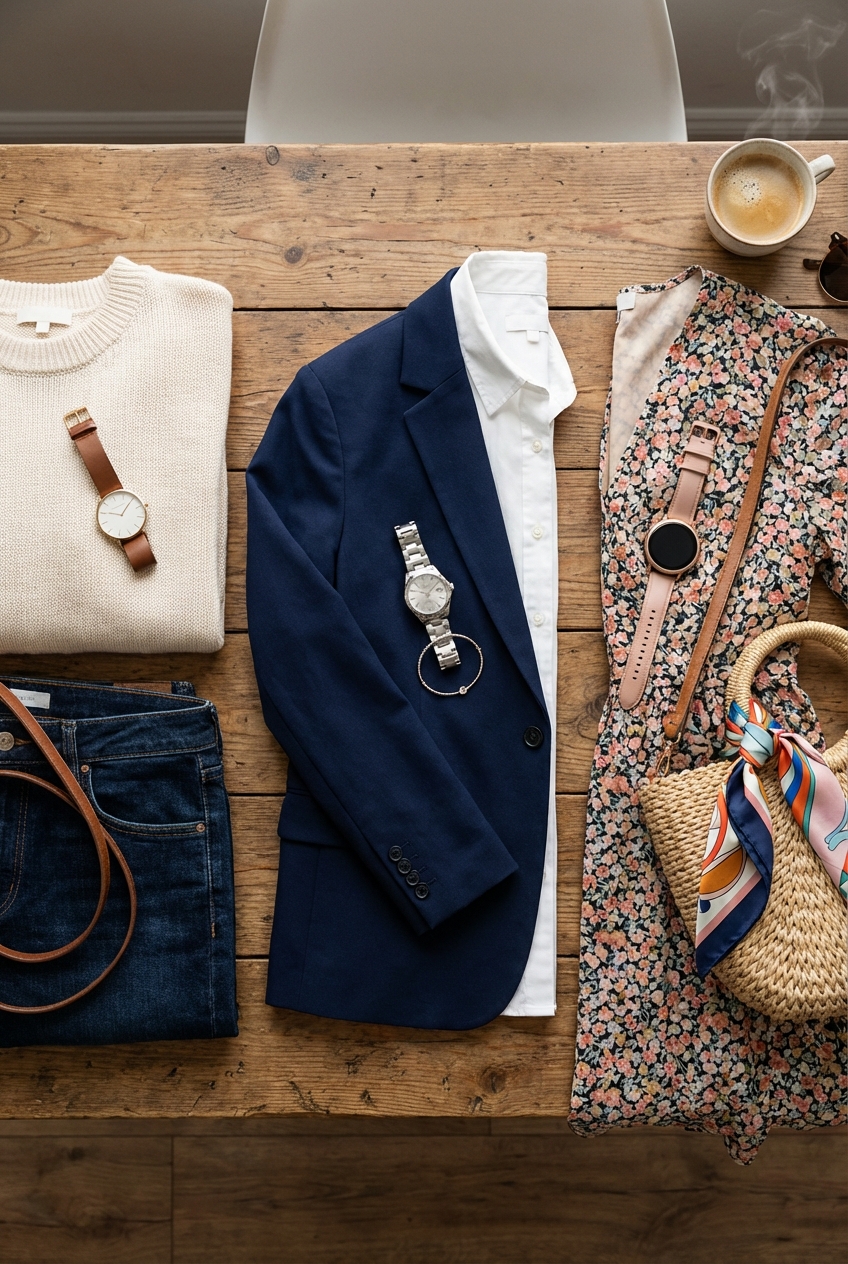
Styling Watches How To Choose The Right Timepiece For Every Outfit
I clearly remember my first high-stakes styling job for a editorial shoot in Milan. We had the gowns perfectly pinned and the shoes selected, but the model’s wrist felt distractingly bare. I made a rookie mistake and grabbed a chunky, oversized chronograph to pair with a delicate silk slip dress. It threw off the entire silhouette, drawing the eye away from the garment’s fluidity and anchoring the look in a way that felt clumsy rather than intentional.
That moment taught me that a watch is never just a functional tool for telling time; it is a critical piece of jewelry that dictates the tone of your outfit. Whether you are dressing for a boardroom presentation or a casual Sunday brunch, the timepiece you choose speaks volumes about your attention to detail. It bridges the gap between functional accessory and personal statement.
In this guide, I am going to walk you through the precise rules of proportion, material coordination, and occasion-based styling that I use with my private clients. Be sure to check out the Picture Gallery at the end of the blog post to see these styling principles in action.
Understanding Watch Formality Levels
Just like shoes, watches have a distinct hierarchy of formality. You wouldn’t wear hiking boots with a cocktail dress, and you shouldn’t wear a bulky field watch with evening wear. Understanding this hierarchy is the first step to effortless styling.
The Dress Watch
The dress watch is the pinnacle of elegance. These timepieces typically feature a slim case that slides easily under a shirt cuff or blazer. They usually have a clean, minimalist dial with no complications (extra dials or buttons).
For women, a dress watch often features a black or brown leather strap, though fine metal mesh is also acceptable. This is your go-to for formal business meetings, weddings, and black-tie optional events. The key here is subtlety; the watch should whisper, not shout.
The Diver and Sport Watch
These are the “sneakers” of the watch world, but high-end versions are more like luxury designer sneakers. They are robust, usually water-resistant, and feature a rotating bezel. They are generally thicker and heavier than dress watches.
While originally designed for utility, stainless steel dive watches have become acceptable in “business casual” settings. However, be careful with scale. A heavy dive watch on a petite wrist can look overpowering if not balanced with structure elsewhere in your outfit, like a tailored blazer.
The Fashion or Jewelry Watch
This category blurs the line between timekeeping and bracelet. Think varying metals, diamond accents, or unique case shapes like the Cartier Crash or Bulgari Serpenti.
These are statement pieces intended to be the focal point of your wrist game. When wearing a jewelry watch, I recommend minimizing other rings or bracelets on that arm to let the timepiece shine.
The Art of Matching Metals and Leathers
One of the most frequent questions I get from clients involves mixing metals. The old-school rule was strict: if your wedding band is gold, your watch must be gold. Fortunately, modern fashion is much more fluid, but there are still guidelines to ensure cohesion.
Coordinating Leathers
If your watch has a leather strap, it needs to talk to your other leather accessories. In a formal outfit, your watch strap should match your shoes and belt relatively closely. Black leather shoes demand a black leather strap.
In casual settings, you have more leeway. A cognac leather strap pairs beautifully with white sneakers or suede boots. However, avoid clashing undertones; a cool-toned grey leather strap rarely looks good with warm, reddish-brown boots.
Mixing Metals with Intention
You can mix metals, but it must look deliberate. If you wear a stainless steel (silver tone) watch, you can wear gold rings if there is a bridging element. A two-tone watch (steel and gold) is the ultimate bridge piece that allows you to wear silver and gold jewelry simultaneously.
Designer’s Note:
If you are strictly mixing distinct metals (like a steel watch and gold bracelets), vary the textures. A polished steel watch looks sophisticated next to a brushed or hammered gold bangle. If everything is high-polish, it can look messy.
Sizing and Scale: Proportion is Key
In interior design, we talk about furniture scale in a room; in fashion styling, we talk about case size on a wrist. A watch that is too large makes your hand look childish, while one that is too small can look dated if the proportions aren’t right.
Measuring Your Wrist
To get the fit right, you need to know your wrist size. Use a soft measuring tape just below the wrist bone.
- Petite Wrists (under 6 inches): Look for case sizes between 26mm and 34mm.
- Average Wrists (6 to 7 inches): You can comfortably wear 34mm to 38mm.
- Large Wrists (over 7 inches): You can pull off 38mm to 42mm easily.
The Lug-to-Lug Rule
The most critical measurement isn’t actually the diameter of the case, but the “lug-to-lug” distance. The lugs are the metal arms that hold the strap.
Stylist Tip:
The lugs should never extend beyond the width of your wrist. If the lugs hang over the air on the sides of your arm, the watch is too big. This creates a gap under the strap that ruins the silhouette and causes the watch to slide around uncomfortably.
Styling for Professional Environments
In a corporate setting, your watch is a signal of reliability and professionalism. It suggests you value time. However, the specific vibe of your office dictates the watch choice.
Corporate and Legal
If you work in a conservative field, stick to the classics. A stainless steel bracelet watch or a simple leather strap watch is best. Avoid skeleton dials (where you can see the gears) or brightly colored rubber straps, as they can be distracting during negotiations.
A rectangular case, often associated with the Cartier Tank style, conveys a very specific type of refined authority. It says you appreciate history and structure.
Creative and Tech
In creative fields, your watch can be a conversation starter. This is the place to wear vintage pieces with patina or colorful dials. A vintage gold watch on a worn leather strap suggests a unique aesthetic sensibility that fits well in design firms or art galleries.
Smartwatches are ubiquitous in tech, but for a high-end look, upgrade the band. Swap the standard silicone sport band for a Milanese loop or a high-quality leather strap. This small tweak elevates a piece of tech into a piece of fashion.
Casual and Weekend Wear
Weekend styling is where you can have the most fun. This is the time to experiment with “high-low” dressing, pairing luxury items with basic staples.
The Field Watch Aesthetic
Field watches usually feature canvas or nylon straps (NATO straps) and easy-to-read numbers. They look incredible with denim, trench coats, and chunky knitwear. The texture of the canvas strap adds a rugged element that contrasts well with soft cashmere.
Elevating Athleisure
If you are running errands in leggings and a hoodie, a nice watch prevents the look from feeling sloppy. A classic steel sports watch adds a touch of shine and intentionality. It shows that you got dressed with purpose, even if the outfit is comfortable.
Common Mistake:
Wearing a formal dress watch with gym clothes. A dainty gold watch with a diamond bezel looks out of place with yoga pants. Match the durability of the watch to the activity level of the outfit.
Evening and Black Tie Etiquette
Evening wear is the most restrictive category for timepieces. Traditionally, it was considered rude to wear a watch to a black-tie event, as checking the time implied you were bored or had somewhere better to be.
The Cocktail Rule
For cocktail parties, a jewelry watch is appropriate. It should feel like a bracelet first and a clock second. Small dials, gold mesh, or satin straps are perfect here.
Gowns and Formal Events
If you are wearing a floor-length gown, I generally recommend skipping the watch entirely. Let your bracelets or bare wrists complement the dress. If you must wear a watch, it should be incredibly discreet—think a vintage cocktail watch with a case size under 20mm.
Designer’s Note:
Never, under any circumstances, wear a large smartwatch with a formal gown. The glowing screen and plastic casing clash aggressively with fine fabrics like silk and velvet. If you need to count your steps, put the tracker in your clutch.
Finish & Styling Checklist
Before you walk out the door, run through this quick mental checklist to ensure your timepiece is working for you, not against you.
What I’d do in a real project:
- Check the Hardware: Did I match the metal of my watch buckle to the metal of my handbag hardware? (It doesn’t have to match perfectly, but it shouldn’t clash).
- Strap Condition: Is the leather strap worn out or smelling of sweat? A frayed strap cheapens an expensive outfit immediately. Replace straps annually if you wear them daily.
- The Cuff Test: If wearing long sleeves, does the watch slide smoothly under the cuff? If it gets stuck and bunches up the fabric, the watch is too thick for that shirt.
- Occasion Match: Am I wearing a dive watch to a wedding? (Swap it for a dress watch). Am I wearing a dress watch to the beach? (Swap it for a diver or leave it at home).
- Fit Check: Is the watch spinning on my wrist? Remove a link or tighten the strap. It should stay centered on the top of your wrist bone.
FAQs
Can I wear a gold watch with a silver wedding ring?
Absolutely. The mixed-metal look is very chic right now. To make it look intentional, try to add one other accessory that combines both metals, or ensure the styles of the ring and watch are similar (e.g., both vintage or both modern).
Which wrist should I wear my watch on?
Traditionally, you wear your watch on your non-dominant hand. If you are right-handed, wear it on your left. This prevents the watch from getting scratched as you write or open doors. However, in fashion, comfort rules. Wear it where it feels most natural to you.
Is it okay to wear a smartwatch to a wedding?
I advise against it for the ceremony and formal photos. The black screen is a visual void that distracts from the elegance of formal wear. If you rely on it for health reasons, try to hide it under a sleeve or swap the band for a metal bracelet that mimics jewelry.
How tight should my watch strap be?
You should be able to fit one pinky finger comfortably between the strap and your wrist. If it leaves a deep imprint on your skin, it is too tight. If it slides more than two inches up your arm, it is too loose.
Conclusion
Styling a watch is about more than just telling time; it is about respecting the balance of your overall silhouette. When you choose the right timepiece, you add a layer of sophistication and polish that completes your look.
Start by investing in one versatile piece—likely a steel or two-tone model with a moderate case size—and build your collection from there. Pay attention to the leather, the scale, and the formality of the event. When you treat your watch with the same styling consideration as your shoes or handbag, you elevate your personal style instantly.
Picture Gallery


