
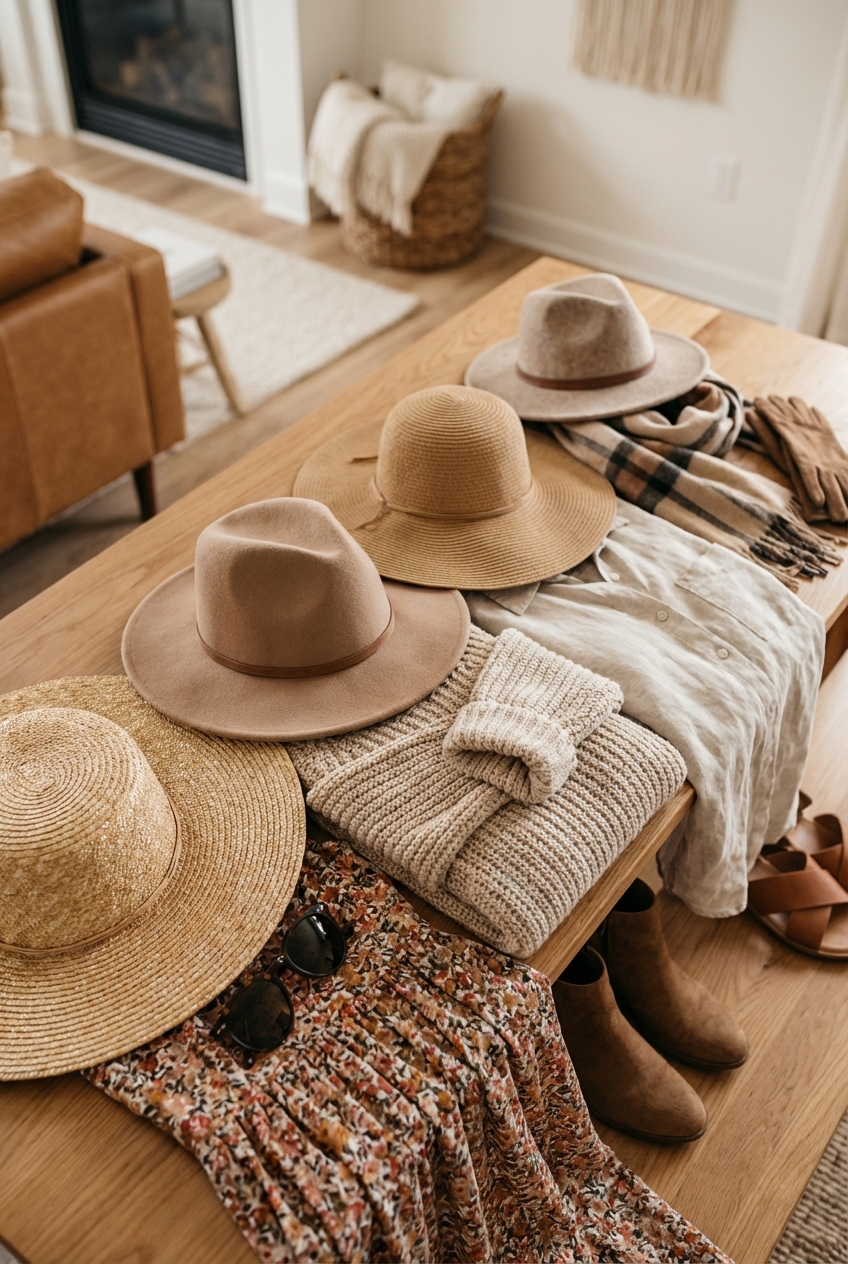
Styling Wide Brim Hats For Every Season
There is a precise moment when an outfit transitions from simply “wearing clothes” to “making a statement,” and it usually happens the moment you place a wide brim hat on your head. In my years of styling high-end editorials and private clients, I have found that the wide brim is the most intimidating yet rewarding accessory in a wardrobe. It acts as an architectural element for the body, balancing proportions and adding an immediate sense of intention to your look.
However, many women hesitate to commit to the look because they feel like an imposter. I remember my first investment piece—a stiff-brimmed wool fedora in charcoal grey. I spent the first hour adjusting it nervously, worried it was “too much.” Once I stopped fidgeting and owned the silhouette, the energy in the room shifted. A hat requires confidence, but it also creates it.
The secret to pulling this off year-round lies in understanding that a hat is not just a summer accessory. It is a seasonal tool that changes in weight, texture, and scale depending on the weather and your outerwear. If you are looking for visual inspiration on how to execute these looks, please scroll down to the Picture Gallery at the end of the blog post.
The Golden Rules of Hat Proportion and Scale
Before we dive into seasonal specifics, we must establish the ground rules of architecture and anatomy. Just as you wouldn’t put a tiny rug in a massive living room, you cannot ignore scale when choosing a brim. The most common mistake I see is a disconnect between the hat size and the wearer’s shoulder width.
The Shoulder Rule:
In high-end styling, we use a strict visual boundary. The brim of your hat should generally not extend past the width of your shoulders. If the brim is wider than your shoulders, the hat begins to wear you, creating a “mushroom” effect that dwarfs your frame. For most women, a brim width between 3 and 4.5 inches is the sweet spot that provides drama without overwhelming the silhouette.
Height Considerations:
Your height dictates how much visual weight you can carry at the top of your frame.
- Petite (Under 5’4″): Avoid massive, floppy brims that drag the eye downward. Opt for a structured brim that turns up slightly at the edges (like a Breton or a structured fedora). This draws the eye up and elongates the frame. Keep the brim under 3.5 inches.
- Tall (5’8″ and above): You can handle wider, flatter brims. A stiff, flat 4-inch brim creates a stunning horizontal line that balances a long vertical line.
Designer’s Note: The Crown Connection
It isn’t just about the brim; it is about the crown (the top part of the hat). If you have a narrow face, a crown that is slightly tapered will look more harmonious than a wide, blocky crown. Conversely, if you have a rounder face, a high, structured crown adds necessary verticality. Always check your profile in a three-way mirror to ensure the crown height doesn’t look disproportionate to your neck length.
Spring: Transitioning Textures and Palettes
Spring styling is about navigating the awkward gap between winter chill and summer humidity. This is the season for “transitional weights.” You want to move away from heavy, dense beaver felts and toward lighter wools or heavier straws.
Material Selection:
Look for light-colored wool felt or high-quality rabbit fur felt. These materials are breathable enough for a 65-degree day but sturdy enough to withstand a spring breeze. The texture should look soft, not fuzzy. We are moving away from the heavy knits of winter.
Color Theory:
Abandon the black and charcoal. Spring requires lifting the palette to harmonize with the changing light.
- Neutrals: Oatmeal, biscuit, soft taupe, and dove grey.
- Accents: Dusty sage, blush pink, or a pale cornflower blue.
Styling the Silhouette:
The classic spring pairing is the wide brim fedora with a structured trench coat. This works because the sharpness of the hat brim mimics the sharp lapels of the trench.
- The Outfit: A light beige wool hat paired with a white button-down, straight-leg denim, and loafers.
- The Adjustment: If you are wearing a trench, ensure the hat sits firmly on the head. A common annoyance in spring is wind; you may need to use a hat pin or hat filler to ensure a snug fit so you aren’t holding onto the brim constantly.
What I’d Do in a Real Project:
For a client attending a spring garden party, I would style a structured “Boater” style hat (flat crown, flat brim) in a natural straw with a grosgrain ribbon. The boater is less floppy than a beach hat, making it appropriate for cocktail attire.
Summer: Function Meets High Fashion
Summer is the natural habitat of the wide brim, but it is also where things can go wrong quickly. There is a massive difference between a floppy, shapeless beach hat and a structured, high-fashion summer piece. We want to avoid looking like we are wearing a costume.
The Importance of Weave:
In interior design, we look at thread count; in millinery, we look at the weave grade. For summer, you want Panama straw (Toquilla straw) or Raffia.
- Panama Hats: These are graded by the fineness of the weave. A tighter weave provides better sun protection and a more polished, porcelain-like finish.
- Raffia: This is more durable and flexible, perfect for travel.
Styling for Heat:
The goal is breathability. A felt hat in July is a fashion faux pas because it looks visually heavy and physically uncomfortable.
- Beach to Brunch: Pair a raw-edge straw hat (approx. 4-inch brim) with a linen maxi dress. The raw edge adds texture that complements the natural wrinkling of linen.
- City Summer: Opt for a “Cuenca” weave Panama hat with a black band. Pair this with a black silk slip dress and sandals. The structure of the Panama hat elevates the slip dress from sleepwear to streetwear.
Common Mistakes + Fixes:
Mistake: Wearing a massive floppy hat to a seated dinner.
Fix: The etiquette of hats dictates that wide brims should be removed at the table if they obscure sightlines. For evening events, switch to a smaller brim or a fascinator. If you are dining outdoors, a structured boater is acceptable as long as it doesn’t hit the waiter.
Autumn: Rich Tones and Structural Felts
As the light turns golden and the air crisps, we return to structure. Autumn is arguably the most stylish season for hats because you can layer textures. This is where we introduce leather bands, feathers, and heavier wools.
The “Rancher” Silhouette:
The most popular shape for autumn in recent years is the “Rancher.” This features a stiff, flat brim and a teardrop crown. It is incredibly versatile and adds an edge to softer fall fabrics like cashmere and suede.
Color Palette:
You want to ground your look with earth tones.
- The Colors: Rust, olive green, camel, chocolate brown, and burnt orange.
- The Coordination: Match the undertone of your hat to your boots. If you are wearing cool-toned taupe boots, wear a cool-toned grey or taupe hat. If you are wearing cognac leather boots, opt for a warm camel or brown hat.
Managing Bulk:
Fall fashion involves scarves and collars. A wide brim can physically collide with a chunky scarf.
- The Rule of Thumb: If you are wearing a massive blanket scarf, choose a hat with a slightly higher crown and a medium brim (3 inches). This elongates the head and prevents you from looking like a turtle retreating into a shell.
- Placement: Wear the hat slightly further back on the head (the “halo” position) to open up the face and create space between the brim and your collar.
Designer’s Note:
Avoid matching your hat perfectly to your sweater. It looks too contrived. Instead, go for a monochromatic look with varying shades. A cream sweater looks expensive with a tan hat; a burgundy sweater looks rich with a chocolate hat.
Winter: Structure, Warmth, and Drama
Winter styling requires a hat that can stand up to the elements. A flimsy wool hat will lose its shape in snow or high humidity. You need density and stiffness.
Material Matters:
Invest in fur felt (beaver or rabbit) rather than standard wool. Fur felt is naturally water-resistant and holds its shape much better. It has a velvety sheen that looks luxurious against winter coats.
Coat Coordination:
The biggest challenge in winter is the collision between the hat brim and the coat collar.
- High Collars: If you are wearing a coat with a popped collar or a thick fur trim, a very wide floppy brim will not work. It will push the hat forward over your eyes.
- The Solution: Choose a stiff, flat brim fedora. The stiffness prevents the back of the hat from flopping down onto your collar. Alternatively, angle the hat. A jaunty side tilt can clear the collar and add personality.
The Monochromatic Statement:
Winter is the time for drama. An all-black outfit—black wool coat, black leather gloves, black boots—topped with a black wide-brimmed hat is the epitome of chic. It focuses the attention entirely on the silhouette and the face.
Common Mistakes + Fixes:
Mistake: Ignoring static electricity.
Fix: Hat hair is real in winter due to dry air. Carry a small dryer sheet in your purse to smooth down flyaways when you take the hat off, or spray the inside of the hat band (not the felt!) with a tiny bit of anti-static spray.
Care, Storage, and Maintenance
A quality hat is an investment, similar to a good handbag. If you treat it poorly, it will lose its symmetry, and a distinctive feature of a high-end hat is perfect symmetry.
Storage Logic:
Never rest a hat on its brim. This puts pressure on the curve and will flatten it out over time.
- Proper Method: Store the hat upside down on its crown.
- Best Method: Keep it in a hat box with a cardboard ring that supports the crown, allowing the brim to float.
- Wall Storage: Hanging hats on a wall is a popular interior design trend. If you do this, ensure the hook is not sharp, or it will distort the weave or felt.
Cleaning and Shaping:
- Lint: Use a sticky roller or a dedicated hat brush for felt hats. Brush counter-clockwise (with the nap of the fabric).
- Reshaping: If your brim gets wonky, use a garment steamer. Hold the steam about 6 inches away until the felt or straw becomes pliable, then mold it with your hands on a flat surface. Let it cool completely before wearing.
Traveling with Hats:
This is the number one question I get. For stiff brim hats, you generally have two options: wear it on the plane (or use a hat clip on your carry-on), or pack it in a suitcase by stuffing the crown tight with socks and underwear, creating a “nest” for the crown to sit in, and packing clothes around the brim to keep it flat.
Finish & Styling Checklist
Before you walk out the door, run through this quick mental checklist to ensure your look is polished and proportional.
Check the Tilt: The hat should rarely sit perfectly horizontal. A slight tilt to the side or back adds dimension.
The Two-Finger Rule: The hat should rest roughly two fingers above your eyebrows. Too low, and you look like you’re hiding; too high, and it looks like a toy.
Hair Management: If wearing a wide brim, keep hair close to the head or in a low bun. Excessive volume in the hair plus a wide brim can widen the face unflatteringly.
Hardware Match: If your hat has a gold pin or buckle, coordinate it with your jewelry (earrings/necklace).
* The Shoulders: Glance in the mirror—does the brim extend past your shoulders? If yes, ensure you are wearing heels to add vertical height to compensate.
FAQs
How do I keep my hat on in the wind without holding it?
This is a practical necessity. You can buy “hat size reducers” (foam tape) to put inside the sweatband for a tighter fit. For a more secure options, use a hat pin if the material allows, or sew a small comb into the front of the inner band to grip your hair.
Can I wear a wide brim hat indoors?
The old-school etiquette says women can wear fashion hats indoors, unlike men. However, modern manners are about consideration. If you are in a theater, cinema, or crowded seated dinner, take it off. At a cocktail party, art gallery, or standing event, keep it on—it’s part of the outfit.
What if my head is too big for “One Size Fits Most”?
“One Size” usually fits a 57cm head. If you are a 59cm or 60cm, do not force a small hat on; it will cause headaches and look perched. Look for brands that offer specific sizing (S, M, L, XL). High-end milliners always offer sized hats. It is worth the extra money for the comfort.
Can I wear a straw hat in the fall?
generally, no. Once September hits (or the temperature drops below 60 degrees), straw looks out of place. There are exceptions for darker, heavier straws in transitional climates, but as a rule of thumb, switch to felt when you switch from sandals to boots.
Conclusion
Embracing the wide brim hat is about more than just sun protection or warmth; it is about claiming space. It signals that you have taken the time to curate your appearance and that you understand the power of silhouette.
Whether you are starting with a breezy Panama for your summer vacation or investing in a structured rabbit felt fedora for winter city living, the key is proper fit and proportion. Don’t let the accessory intimidate you. Start with neutral tones, measure your head correctly, and remember that the hat is the punctuation mark of your personal style—make sure it’s an exclamation point.
Picture Gallery


