
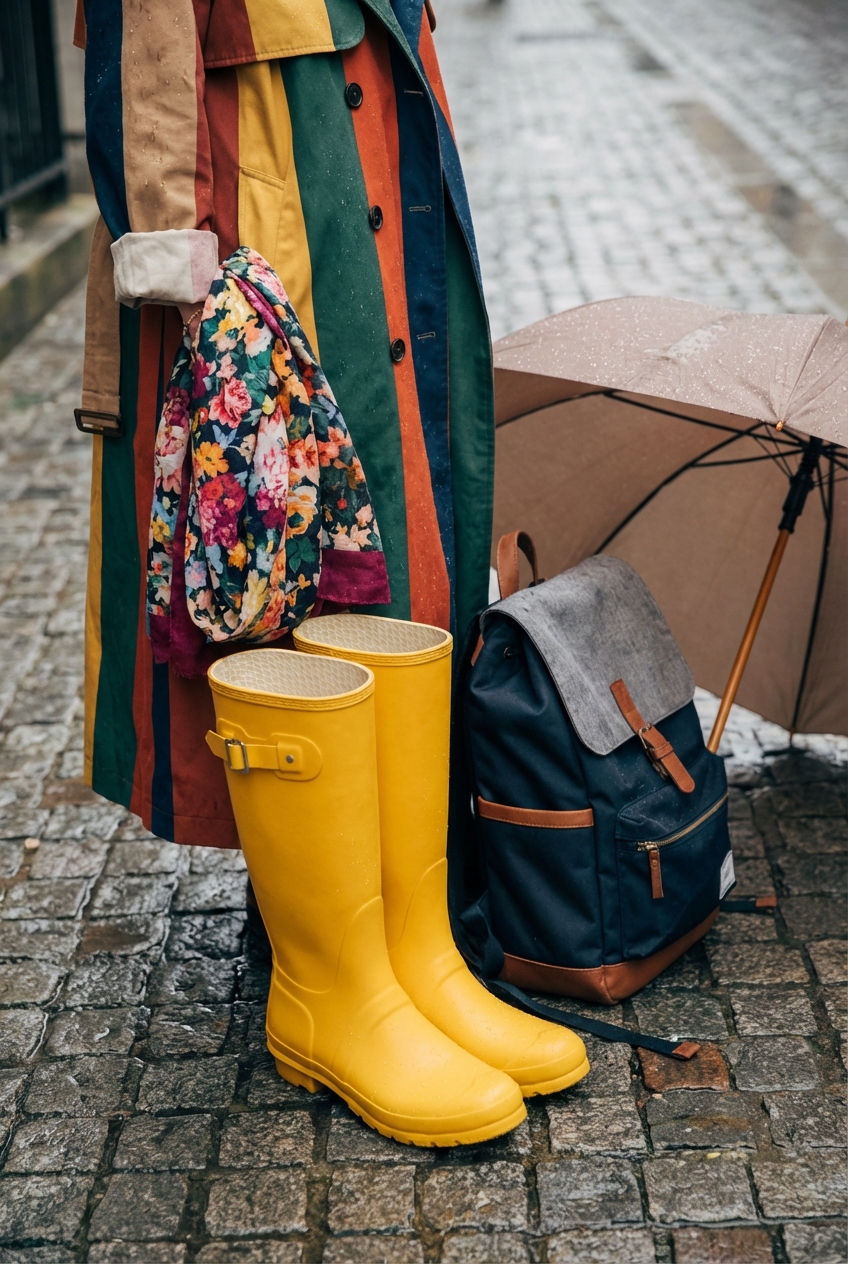
Stylish Raincoats For Wet Spring Commutes
Introduction
There is nothing quite as humbling as arriving at a 9:00 AM client presentation looking like you just swam there. I learned this lesson early in my career while sprinting through a downpour in Manhattan, wearing a beautiful wool coat that soaked up water like a sponge. By the time I reached the showroom, the coat smelled like wet dog, and my silk blouse was ruined.
Spring weather is notoriously fickle. You might leave your apartment in brilliant sunshine only to be caught in a torrential downpour between the subway station and your office. The key to mastering the spring commute isn’t just carrying an umbrella; it is investing in outerwear that bridges the gap between high-performance gear and high-end tailoring.
Finding that balance is difficult because technical gear often looks too sporty, while fashionable trench coats often lack actual water resistance. If you are looking for specific visual inspiration, don’t miss the curated Picture Gallery at the end of this blog post.
1. The Modern Trench: Updating the Classic Silhouette
The trench coat is the undisputed hero of transitional weather. However, many traditional trenches are made of heavy cotton drill that absorbs water rather than repelling it. For a functional spring commute, you need a modernized version that utilizes treated gabardine or technical blends.
When selecting a trench for wet weather, pay close attention to the storm flap (the extra piece of fabric on the back/shoulder). In a high-quality coat, this isn’t just decorative. It acts as a shield, directing water to run off your shoulders rather than soaking into the seam where your sleeve meets the body.
The belt is your primary tool for silhouette control. A common mistake I see is women tying the belt too tightly, which causes the fabric to bunch unflatteringly. Instead, tie a loose knot rather than using the buckle. This creates an effortless “cinch” that defines the waist without looking constricted.
Designer’s Note: The Length Rule
The most critical aspect of a trench coat is the hemline. For maximum versatility, aim for a length that hits mid-calf. This length ensures your trousers or midi-skirts are fully covered against splashing puddles. If your coat is shorter than your skirt, the exposed fabric will act as a wick, drawing moisture upward.
Common Mistakes + Fixes
- Mistake: Buying a “fashion” trench with no water-repellent coating.
- Fix: Check the label for “DWR” (Durable Water Repellent) or waxed cotton. If water doesn’t bead up on the surface, it’s not for commuting.
- Mistake: Sleeves that are too long or short.
- Fix: Tailoring sleeves is easy. They should hit right at the thumb knuckle to protect your watch and cuffs.
2. The Elevated Anorak: Sport Meets Luxury
Gone are the days when anoraks were reserved for hiking trails. Luxury designers have reclaimed the utilitarian jacket, rendering it in silk blends, high-gloss nylons, and matte technical fabrics. This style is perfect for the commuter who prefers trousers or jeans over skirts.
The defining feature of a stylish anorak is adjustable hardware. Look for gold or gunmetal toggles, sturdy zippers, and substantial snap buttons. These metallic accents elevate the piece from “gym gear” to “office appropriate.”
Volume plays a huge role here. Anoraks tend to be boxy, which is great for layering over chunky spring knits or blazers. However, to avoid looking shapeless, ensure the coat has an internal drawstring at the waist. This allows you to create an hourglass shape even with layers underneath.
Real-Project Checklist: Fabric Choice
- Nylon: Lightweight and packs down small. Great for “just in case” days.
- Gore-Tex: The gold standard for waterproofing, but can be stiff. Look for “Gore-Tex Paclite” for a softer drape.
- Rubberized Cotton: Extremely waterproof but lacks breathability. Best for short commutes, not long walks.
3. The Rubberized Raincoat: Scandi-Chic Minimalism
If you live in a city with heavy, relentless rain (like Seattle or London), a classic fabric trench might not cut it. Enter the rubberized raincoat. Popularized by Scandinavian brands, these coats offer 100% waterproofing because the material itself is impermeable.
The aesthetic here is clean lines, matte finishes, and zero fuss. Because the material is stiff, these coats hold their architectural shape beautifully. They look incredibly chic worn over a monochromatic outfit, such as all-black or all-cream.
However, the “greenhouse effect” is a real concern. Rubber doesn’t breathe. If you have a high-stress commute involving a hot subway car, you will overheat. I recommend these coats specifically for walking commutes or days when you are mostly above ground.
Designer’s Note: Color Strategy
Spring rain can be dreary. While black is practical, I often encourage clients to choose a “mood-lifting” color for their rubberized coat. A soft sage green, a dusty rose, or a classic maritime yellow can completely change your mindset on a gray morning. Because the coat has such a simple shape, bold colors feel sophisticated, not childish.
Common Mistakes + Fixes
- Mistake: Sizing down for a fitted look.
- Fix: Rubberized fabric has zero stretch. Always buy your true size or one size up to accommodate blazer shoulders.
- Mistake: Ignoring the lining.
- Fix: Ensure the coat has a cotton or bonded lining. Unlined rubber against bare arms is clammy and uncomfortable.
4. The Statement Cape: Volume and Drama
For the fashion-forward commuter, a rain cape or poncho is an underutilized power move. This is my go-to recommendation for clients who wear bulky suit jackets or puff sleeves that simply won’t fit inside a standard coat sleeve.
A cape drapes over everything without crushing the structure of your outfit underneath. It allows for incredible freedom of movement and airflow, which solves the humidity problem typical of spring storms.
Styling a cape requires balancing proportions. Since you have massive volume on top, you must keep the bottom half of your silhouette streamlined. Pair rain capes with slim-leg trousers, pencil skirts, or skinny jeans. Wide-leg pants combined with a cape will make you look wider than you are.
What I’d Do In A Real Wardrobe
If I were building a capsule wardrobe for a client, I would choose a camel or olive cape. These neutrals pair seamlessly with navy, black, and white office attire. I would look for a cape with arm slits rather than just an open hem; this keeps the garment secure during windy gusts.
Pro-Tip: The Bag Situation
One logistical challenge with capes is carrying a bag. You cannot wear a shoulder bag over a cape. You must wear a crossbody bag under the cape (which protects the leather) or carry a top-handle bag. Plan your accessories accordingly.
5. Technical Details: Seams, Hoods, and Pockets
As a designer, I look at construction quality before I even look at the price tag. In rainwear, the difference between “water-resistant” and “waterproof” often lies in the seams.
Water always finds the path of least resistance, which is usually the needle holes where fabric is stitched together. High-end raincoats feature “taped” or “sealed” seams. This means a waterproof tape is heat-bonded over the stitching on the interior, sealing those needle holes completely.
The hood is another area of frequent failure. A tiny hood is useless. You need a deep hood that extends past your hairline to protect your face and makeup. Look for a hood with a drawstring adjustment; without it, the wind will blow the hood off your head the moment you step outside.
Designer’s Note: The Pocket Audit
Never buy a raincoat with shallow pockets. On a wet commute, your hands need a sanctuary.
- Flap Pockets: Best for keeping rain out. The flap acts as a roof.
- Slash Pockets: Easier to put hands in, but ensure they have a zipper closure to keep your phone dry.
- Lining: Fleece-lined pockets are a luxury detail that makes a cold, wet morning bearable.
6. Footwear Coordination: The Boot Transition
You cannot discuss a stylish commute without addressing the interaction between your coat and your boots. The “gap” between the top of your boot and the bottom of your hem is a danger zone for splashes.
For a seamless look, try to eliminate the skin gap. If you are wearing ankle boots, pair them with opaque tights or trousers. If you are wearing a midi-skirt, consider a knee-high rain boot. The goal is to create a continuous vertical line, which elongates your figure.
We are seeing a massive trend in “chelsea boot” style rain boots. These are matte, streamlined, and look exactly like leather boots. They are professional enough to wear straight into a meeting if you don’t have time to change shoes.
Common Mistakes + Fixes
- Mistake: Wearing suede boots on a “drizzle” day.
- Fix: Just don’t. Even treated suede spots easily. Stick to polished leather or quality rubber.
- Mistake: Bulky snow boots in April.
- Fix: Switch to a Wellington style or a lug-sole loafer. Heavy winter boots ruin the lightness of spring outfits.
Finish & Styling Checklist
Before you invest in a new piece for the season, run through this mental checklist. I use this exact criteria when shopping for private clients.
The “Sit Test”
Button or zip the coat fully. Sit down on a bench. Does the bottom button pop open? Does the fabric pull uncomfortably across the hips? Commuting involves sitting on trains and buses. If the coat is too tight to sit in, it is useless.
The “Blazer Test”
Bring your bulkiest blazer or chunky sweater to the store. Try the raincoat on over it. You should be able to cross your arms and hug yourself without feeling like the Michelin Man. If the armholes cut into your armpits, size up.
The “Rustle Factor”
Walk briskly around the store. Does the fabric make a loud “swish-swish” noise? In a quiet office elevator or a meeting room, a noisy coat can be distracting and feels less luxurious. Soft-touch fabrics are superior.
The Breathability Check
Check the fabric composition. If it is 100% polyester with no vents, you will sweat. Look for “underarm eyelets” (small holes under the armpit) or a “vented back yoke” (a flap on the back that allows air to escape).
FAQs
Q: Can I wash my raincoat in the washing machine?
A: It depends on the fabric. Technical fabrics often need washing to reactivate their waterproofing, but you must use a specific tech-wash detergent, not standard Tide. Standard detergents leave residues that attract water. Rubberized coats should usually be wiped down, not machine washed. Always check the care label.
Q: How do I stop my trench coat belt from falling out?
A: This is a classic annoyance. I recommend tying a small, tight knot with the belt strap around the belt loop at the back of the coat. This anchors the belt to the coat so you never lose it, even when the coat is unbuttoned.
Q: Is a beige trench coat the only professional option?
A: Absolutely not. While beige is classic, Navy is often more practical for commuting because it hides dirt and splash marks from city streets. Olive green, charcoal grey, and even deep burgundy are excellent, versatile neutrals that look professional.
Q: My water-resistant coat isn’t repelling water anymore. Is it ruined?
A: Likely not. The DWR (Durable Water Repellent) coating wears off over time due to friction. You can buy a “re-proofing” spray at most outdoor stores. Wash the coat, spray it while damp, and tumble dry on low heat to reactivate the barrier.
Conclusion
Navigating a wet spring commute doesn’t mean sacrificing your personal style. By viewing your raincoat as an integral part of your outfit rather than just a protective wrapper, you elevate your entire presence.
Focus on the architecture of the coat—the shoulder fit, the hood depth, and the hem length. Look for fabrics that work for your specific climate, whether that is a breathable tech fabric for humid days or a heavy rubberized cotton for coastal storms.
When you invest in quality outerwear that fits your lifestyle, the rain becomes less of an obstacle and more of an opportunity to layer, accessorize, and show off a sophisticated silhouette. Stay dry, and commute with confidence.
Picture Gallery


