
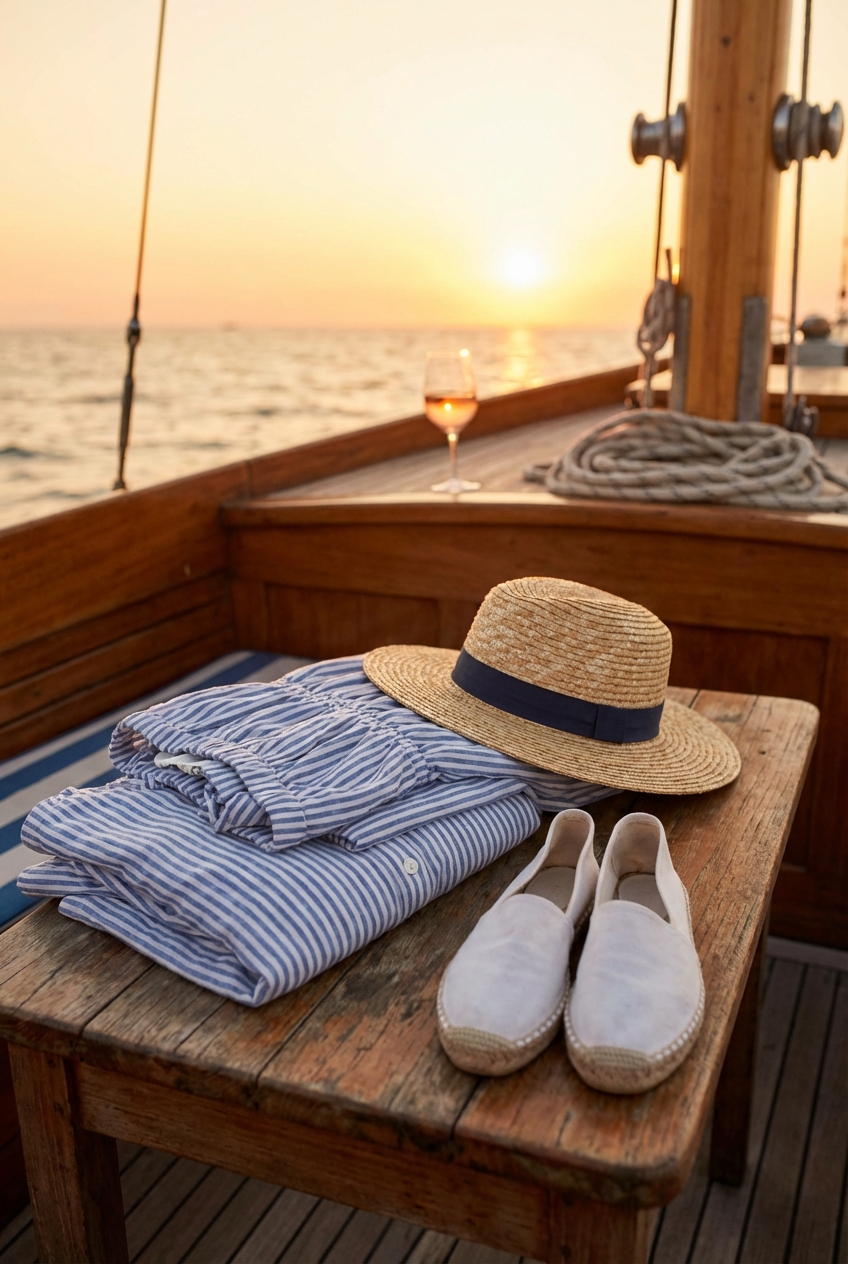
Stylish Sunset Cruise Dresses With Nautical Stripes Effortlessly Elegant For Sea Breezes
The allure of a sunset cruise is undeniable. There is something profoundly romantic about the way the light hits the water during the golden hour, turning the waves into liquid amber while you sip champagne on the deck. However, as a stylist who has dressed clients for everything from yacht charters in the Mediterranean to casual sailboat outings in Newport, I know that the maritime environment presents specific sartorial challenges.
Years ago, I learned a hard lesson during a client event on a catamaran. I wore a stunning, lightweight silk wrap dress that looked incredible in the showroom. The moment we left the harbor, the sea breeze turned that dress into a chaotic parachute, and I spent the entire evening holding my hem down rather than holding a conversation. It was a functional failure that taught me the importance of structure and weight when dressing for the sea.
Nautical stripes are the quintessential choice for this setting, offering a timeless aesthetic that feels both sporty and sophisticated. But choosing the right dress goes beyond just picking a pattern; it requires understanding fabric physics, silhouette stability, and thermal regulation. For visual inspiration on how to execute these looks, you will find a curated collection of real-world examples in the Picture Gallery located at the end of this blog post.
The Physics of Sea Breezes: Fabric Weight and Structure
When selecting a dress for a boat, the wind is your primary design constraint. A standard ocean breeze can range from 10 to 15 knots, which is enough to lift lightweight fabrics like chiffon, silk, or thin rayon. You need materials that have enough “guts” to stay vertical.
I always recommend natural fibers with a denser weave. A high-quality cotton poplin or a linen-viscose blend is ideal. The cotton provides structure, while the linen offers breathability. The addition of viscose adds a bit of weight and drape, preventing the linen from looking like a wrinkled mess after you have been sitting for twenty minutes.
Another excellent option is a ponte knit. This double-knit fabric is stable, stretchy, and heavy enough to resist wind lift. It creates a smooth silhouette that is incredibly flattering and forgiving, which is key if you plan on enjoying the onboard catering.
Designer’s Note: The “Hem Test”
In my studio, we use a simple rule of thumb called the “Hem Test.” Hold the skirt of the dress and drop it. If it floats slowly to the ground, it is too light for a boat deck. If it drops instantly and retains its shape, it is safe for sea breezes.
Decoding Stripe Scale and Directionality
Not all stripes are created equal. In the world of high-end design, we manipulate stripe width and direction to alter the perception of proportion. The classic Breton stripe—horizontal and evenly spaced—is iconic, but it can be tricky to wear if the scale is off.
For a sunset cruise, look for “engineered stripes.” This is where the pattern changes direction or width to flatter specific parts of the body. A dress featuring diagonal stripes at the waist and vertical stripes along the skirt creates an immediate hourglass illusion. This draws the eye inward at the smallest point of your torso and elongates the legs.
If you prefer a classic horizontal stripe, pay attention to the negative space (the white or cream background). A “pinstripe” approach, where the colored line is very thin and the background is wide, reads as a solid color from a distance and is generally softer on the eye. Conversely, wide “awning stripes” make a bold statement but require a simpler silhouette to avoid looking costume-like.
Common Mistakes and Fixes
- Mistake: Wearing wide horizontal stripes across the hips in a body-con fit.
- Fix: Opt for a dress with a solid navy or black side panel. This design technique shavings inches off the silhouette visually while keeping the nautical theme front and center.
Silhouette Selection for Stability and Movement
Navigating a boat requires a certain level of agility. You might need to step over a cleat, climb down a ladder to a lower deck, or board a tender to get back to shore. Your dress needs to accommodate this movement without compromising your modesty or comfort.
The midi length is the gold standard for nautical fashion. A skirt that ends mid-calf provides enough coverage to handle a sudden gust of wind but is short enough that you won’t trip over it while walking on a moving deck. Maxi dresses can be hazardous on stairs, and mini dresses are simply too risky in the wind.
I often style clients in a structured A-line or a shirt-dress silhouette. A shirt-dress with a functional belt allows you to adjust the fit as the evening progresses. Ensure the skirt has enough volume to allow for a wide stance (essential for balance on a rocking boat) but not so much volume that it becomes unmanageable.
What I’d Do in a Real Project
If I were styling a client for a high-end charter, I would choose a midi-length shirt dress in a heavy cotton blend. I would ensure the buttons go at least three inches below the knee to prevent the skirt from flying open, or I would have a tailor sew the bottom placket shut for security.
The “Golden Hour” Color Palette
While navy and white are the traditional heavyweights of nautical style, the sunset setting calls for a slightly warmer, more elevated approach. Pure white can sometimes look stark or clinical in the softening light of the evening.
Instead of stark white, look for stripes in “ecru,” “oyster,” or “creme.” These warmer tones reflect the sunset beautifully and are much softer on the complexion than bright optical white. Pair these neutrals with classic navy, but consider stripes in faded Nantucket red, sage green, or a deep marigold.
When the sun sets, the light temperature drops from 5500K (daylight) to roughly 3000K (warm white). Gold jewelry and hardware on your dress (buttons, belt buckles) will catch this light spectacularly. A dress with gold shank buttons adds a military-chic element that feels expensive and appropriate for the venue.
Color Coordination Rule of Thumb
- Daytime Cruise: High contrast (Stark White + Navy + Bright Red).
- Sunset/Evening Cruise: Low contrast and rich tones (Cream + Midnight Blue + Gold Accents).
Layering for the Temperature Drop
One of the most overlooked aspects of dressing for the water is the drastic temperature shift. Once the sun dips below the horizon, the temperature on the water can drop by 15 to 20 degrees Fahrenheit almost instantly. The humidity in the air amplifies this chill.
Your dress must work in tandem with layers. A sleeveless striped dress is lovely for the first hour, but you need a plan for the second hour. I always advise against cardigans that lack structure, as they can look frumpy over a crisp dress.
Instead, opt for a structured blazer in white linen or a classic denim jacket for a more casual vibe. However, the ultimate chic accessory is a large cashmere wrap in a solid color that matches the darkest stripe in your dress. It can be worn as a shawl or wrapped tightly like a scarf, offering versatility and luxury.
Pro-Tip: The “Anchor” Layer
If you are wearing a wrap dress, wear a smooth, laser-cut slip underneath. This acts as a friction anchor, helping the dress cling slightly to your body rather than the wind, and provides an safety net against gusts.
Footwear and Accessories on Teak Decks
There is a cardinal rule in yachting that should never be broken: no stilettos. The pressure of a thin heel can dent the soft teak wood of a deck, causing thousands of dollars in damage. Beyond the damage, heels are unstable and dangerous on a moving surface.
This does not mean you are relegated to flip-flops. Espadrilles with a rubber sole are a fantastic option; the wedge heel gives you height and elongates the leg, but the flat surface area is stable and boat-safe. Look for wedges with ankle straps for security.
For a flatter option, metallic leather slide sandals or classic leather boat shoes (updated in a sleek, feminine profile) are perfect. When accessorizing, avoid long, dangling necklaces that can swing around in the wind. Opt for statement studs or a heavy chain bracelet. A wide-brimmed hat is romantic, but unless it has a secure chin ribbon, leave it at the dock—it will end up in the ocean.
Finish & Styling Checklist
Before you head out to the marina, run through this final stylist check to ensure your look is seaworthy and chic.
- Check Fabric Density: Hold the dress up to a window. If you can see the outline of your hand clearly through two layers, it is too thin for the wind.
- Secure the Wrap: If wearing a wrap dress, use a small safety pin or fashion tape to secure the neckline and the thigh opening.
- Hat Hardware: If you bring a hat, ensure it has a Hat Clip (a decorative chain that clips the brim to your dress collar) to prevent loss.
- Sole Check: Check the soles of your shoes. They must be non-marking rubber. Black soles that leave scuffs are a major faux pas.
- Hair Prep: The wind will wreck a loose blowout. Plan for a low chignon or a sleek ponytail with a silk scarf tied around it.
FAQs
Can I wear vertical stripes if I am petite?
Absolutely. Vertical stripes are actually the best choice for petite frames. They create a continuous visual line that draws the eye up and down, elongating the silhouette. Look for thinner pinstripes rather than wide block stripes, as wide stripes can overwhelm a smaller frame.
Is it acceptable to wear black on a sunset cruise?
Yes, but with caveats. Black can feel a bit heavy for a nautical setting. If you love black, look for a “black and sand” stripe combination rather than black and white. Pair it with woven accessories like a raffia bag to soften the look and bridge the gap between urban chic and resort wear.
What is the best underwear for a striped dress?
Nude, seamless underwear is non-negotiable. White underwear will show through white stripes. The tone should match your skin specifically. High-waisted shaping briefs are excellent for boat trips as they provide core support and ensure your dress fabric glides over your body rather than getting stuck on skin in the humidity.
How do I mix prints with nautical stripes?
Proceed with caution. The easiest way to mix prints is to keep them in the same color family. A navy and white striped dress looks sophisticated with a floral scarf, provided the floral print also features navy and white. Vary the scale: if the dress stripes are large, the floral print should be small and intricate.
Conclusion
Dressing for a sunset cruise is an exercise in balancing romance with reality. The goal is to look effortlessly elegant, which requires front-loading the effort into selecting the right materials and cuts. A striped dress is a powerful ally in this setting; it nods to the maritime tradition while offering endless possibilities for personal expression.
By focusing on weighted fabrics, secure lengths, and smart layering, you ensure that you are not just a passenger, but a part of the beautiful aesthetic of the evening. When you aren’t fighting your clothing, you are free to focus on the salt air, the company, and the horizon.
Picture Gallery


