Summer Style Guide: Sporty Looks That Stay Cool
- Words by
- Julio Arco
- Published
- Reading
- 5 min
If you are wondering what to wear in summer when you want to look put together but still move comfortably, go sporty. Pick breathable fabrics, one relaxed layer, one fitted piece for balance, and a clean pair of sneakers. That formula covers errands, brunch and a walk in the park.
Below: how to choose fabrics, which colors work together, how fit changes the look, and a short list of pieces for a summer capsule wardrobe.
Start with fabric, because heat decides everything
In hot weather, the way a fabric handles sweat matters more than the cut. Texas A&M's Howdy Health notes that the layer closest to your skin should be made of moisture-wicking materials that draw sweat away from your skin. That advice is written for cold-weather exercise, but the same logic applies when you are active on a humid day: sweat that stays on the skin is what makes you uncomfortable.
The same page adds a caution about cotton: it absorbs moisture and can keep it next to your skin. For a workout, a synthetic wicking tee is the safer pick. For a slow walk or a coffee run, a light cotton or linen top is fine, and it often looks better.
Fabric cheat sheet
- Technical knits and mesh panels: best for running, cycling and anything sweaty.
- Lightweight cotton jersey: good for everyday wear and low activity.
- Linen or linen blends: airy and relaxed, but they wrinkle, so lean into that.
- Nylon shell windbreakers: pack small and handle a surprise breeze or shower.
If sun protection matters to you, look for a UPF rating on the label, and check with a dermatologist about skin care.
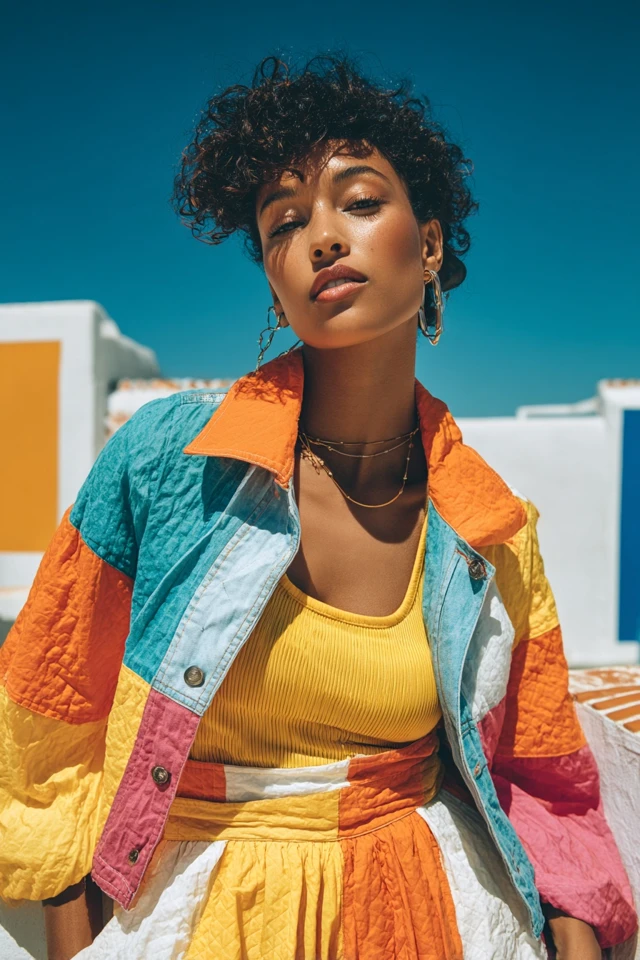
How should loose fit summer clothes sit?
Loose does not mean shapeless. Air needs room to move, so a looser top or wide-leg short helps you stay cooler. The trick is to keep one part of the outfit closer to the body so the shape still reads.
Try a boxy tank with fitted bike shorts, or a slim tee with relaxed joggers or wide shorts. Check the shoulder seam first: it should land where your shoulder ends, even on an oversized piece, otherwise the whole top looks borrowed. For more on that silhouette, see our take on the summer oversized shirt.
A jacket or top that pulls across the back is a fit problem, not a you problem. Go up a size or change the cut.
Which colors go together in summer?
Color reads differently in strong sunlight. Light, saturated shades look brighter outside than they do under store lighting, so check a piece near a window before you commit.
Through the lens of evidence-based design, I'd think about contrast first. High contrast, like white against black or navy, draws the eye to the outfit's edges. Low contrast, like tonal greens or soft grays, reads calmer and longer. Neither is better; pick based on the mood you want.
- White tee, black shorts, white sneakers: sharp and simple.
- Coral top with navy bottoms: warm against cool, easy to balance.
- Blush with slate gray: soft with a bit of edge.
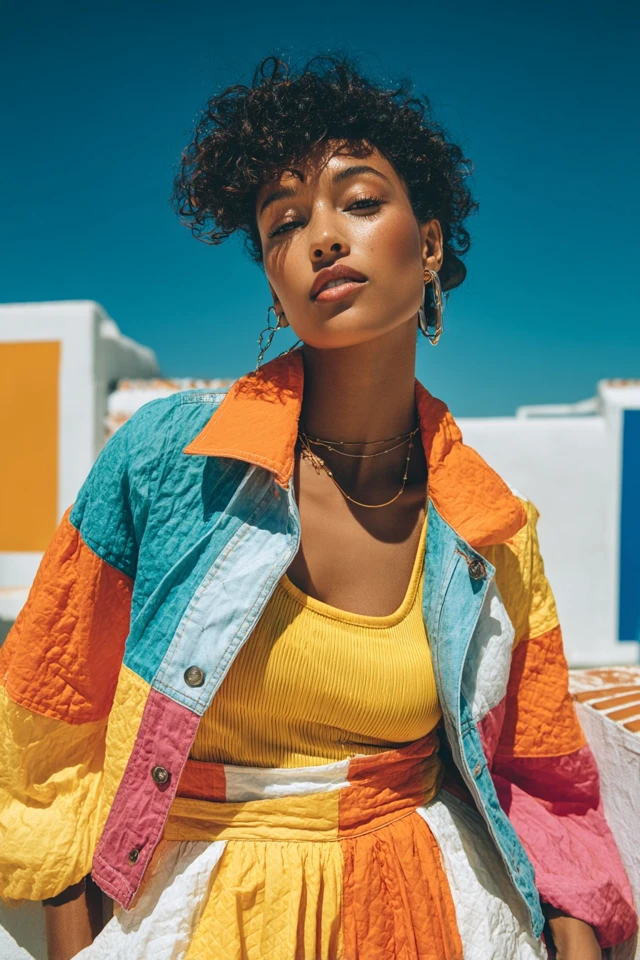
- One color in two or three shades: a tonal look that feels polished with almost no effort. Monochrome summer outfits go deeper on this.
Skin tone can steer what feels flattering, but it is a preference, not a rule. If a color makes you feel good in the mirror, wear it.
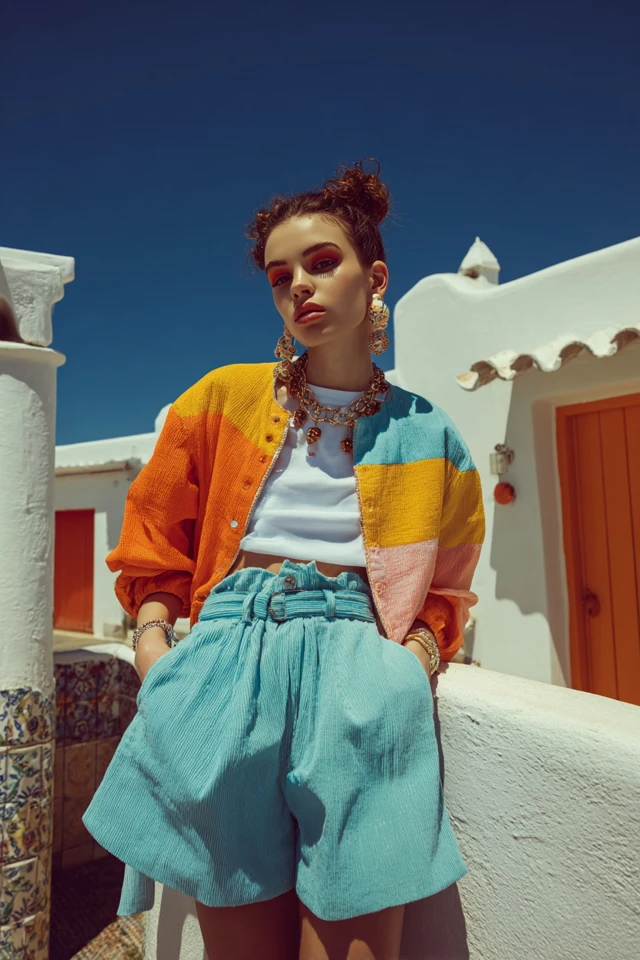
Casual summer outfits you can repeat
Think in formulas, not one-off looks. Once you have a few, swapping a single piece keeps them fresh.
- Fitted tank + wide-leg shorts + white sneakers + cap.
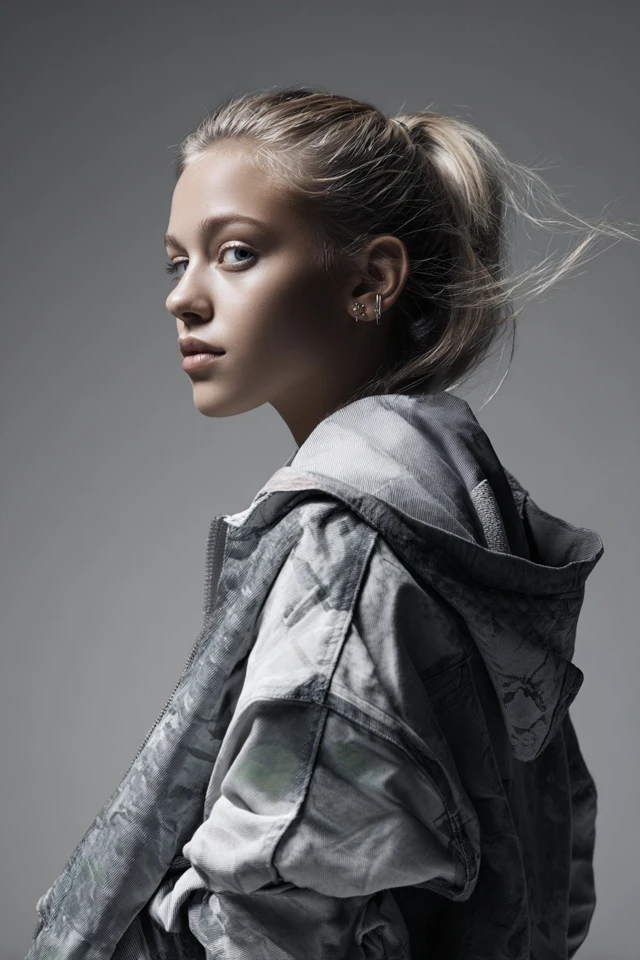
- Oversized tee + bike shorts + lightweight windbreaker tied at the waist.
- Mesh or ribbed long-sleeve over a sports bra + relaxed joggers + slides.
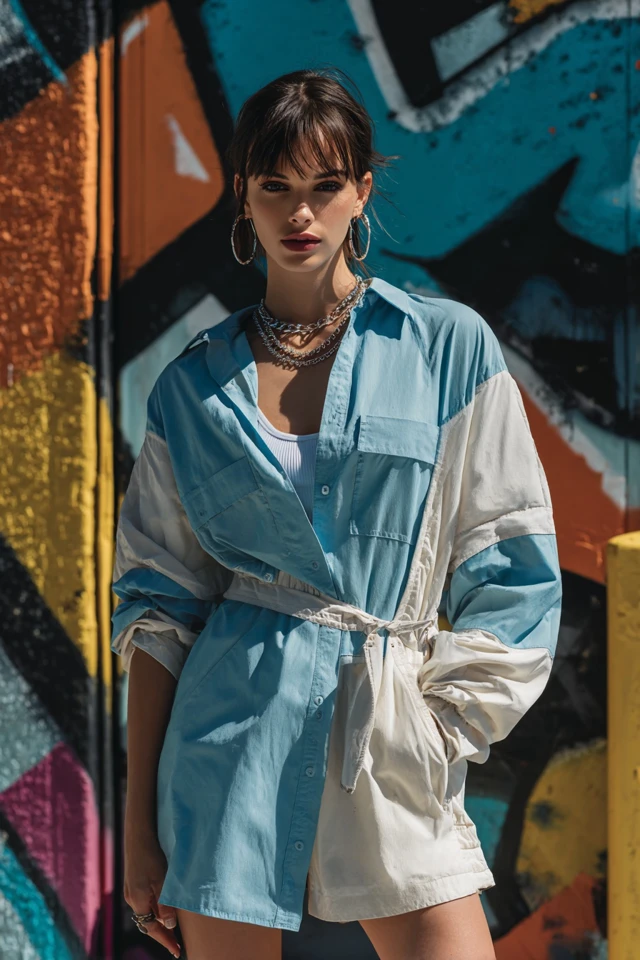
- Linen shirt open over a plain tank + tapered shorts + minimalist sneakers.
For a more athletic angle, the athleisure summer trend has more pairings, and bold summer ideas covers brighter palettes.
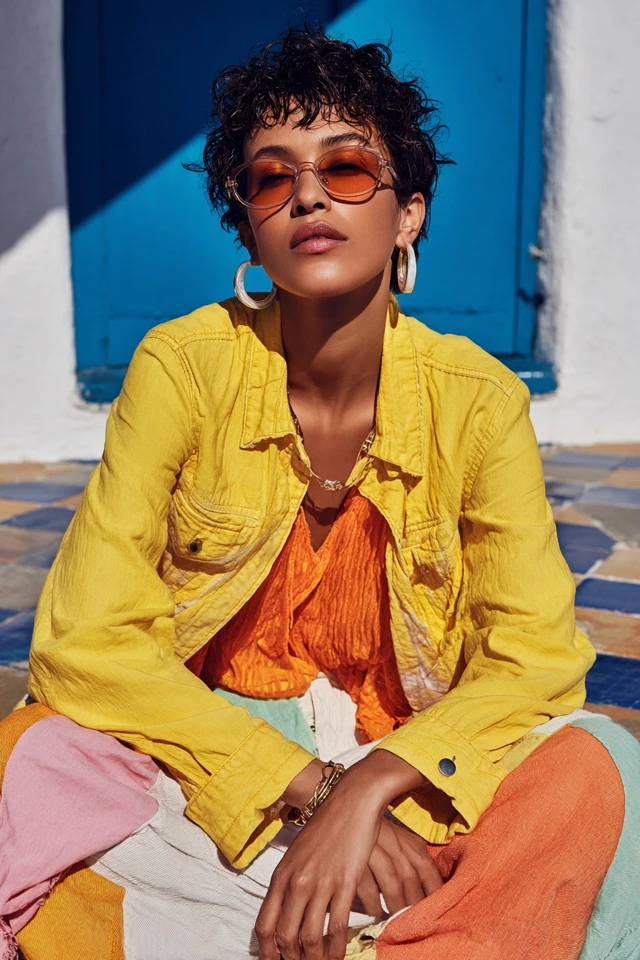
How to build your summer wardrobe without overbuying
Start with an inventory. Lay out what you already wear in heat, note what you reach for, and see which colors repeat. Gaps usually show up fast: maybe plenty of tops and no bottoms that work with them.
A summer capsule wardrobe can be small. Around 10-15 pieces is a workable range, as long as most of them mix with each other:
- 3-4 tops: tanks and tees in two or three coordinating colors.
- 2-3 bottoms: one fitted, one relaxed, one neutral.
- 1 lightweight layer, such as a windbreaker or overshirt.
- 1-2 pairs of shoes: clean sneakers and a sandal or slide.
- A cap or sun hat, and a small bag.
Wash sporty fabrics on a gentle cycle with mild detergent to protect stretch and color.
Add texture so simple outfits do not look flat
Sporty pieces can look one-note when everything is smooth jersey. Mixing surfaces fixes that: ribbed knit with a matte nylon, mesh with cotton, a crisp shell over a soft tee.
As an architect trained in evidence-based design, I'd say texture changes how a color reads. The same coral looks brighter on a smooth, slightly shiny fabric and softer on a matte or ribbed one.
Adjusting the look for different people and ages
The formulas above work across ages, with small shifts. If you prefer more coverage, choose longer shorts, a looser tee or a lightweight overshirt. If you like a sharper look, swap the tee for a polo or a structured tank and keep the sneakers clean.
For other moods in the same season, try summer boho or cottagecore summer when sporty feels too athletic.
Frequently asked questions
What is the 3-3-3 rule for clothing?
It is a capsule-wardrobe shorthand, usually three tops, three bottoms and three pairs of shoes that all mix together. There is no single official version, so adapt the numbers to your climate and routine.
What should a 50 year old woman wear in the summer casual?
The same formulas work: breathable tops, relaxed bottoms, clean sneakers or sandals. Choose the fit and length you feel comfortable in, and keep fabrics light.
How do I make a summer capsule wardrobe on a budget?
Buy versatile basics in colors that coordinate, then add one or two bright pieces. Secondhand shops and end-of-season sales are good places to find them.
Filed under Outfit Ideas