
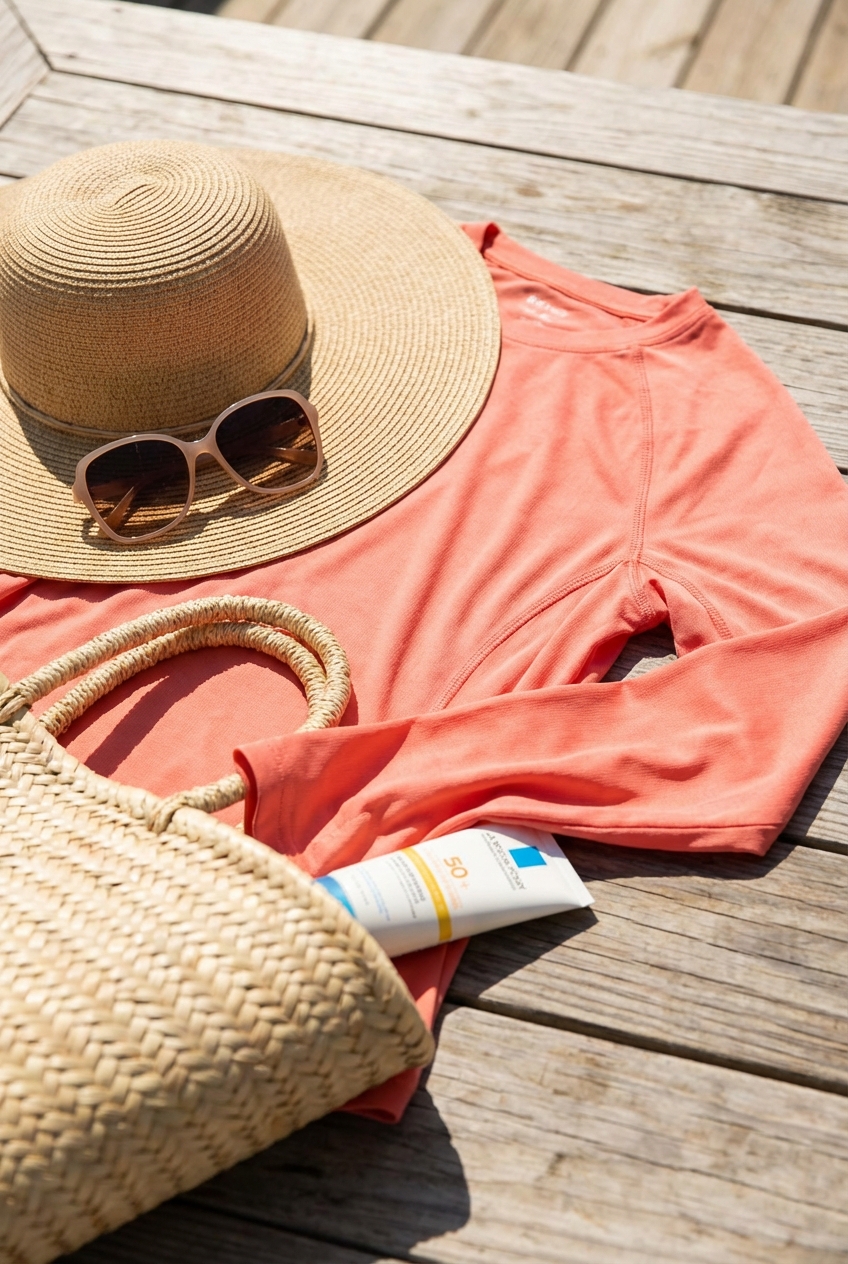
Sunny Day Protection Incorporating Uv Resistant Clothing And Accessories
Introduction
For years, I operated under the misconception that true sun safety meant compromising on style. I would meticulously apply sunscreen but avoid protective clothing because the options felt purely utilitarian or overly sporty. It wasn’t until a photoshoot in the high desert of California that my perspective shifted entirely. I spent eight hours in direct sunlight styling a campaign, wearing a standard linen button-down, only to end the day with significant sun damage on my shoulders and décolletage.
That experience taught me that standard fabrics, no matter how chic, often provide negligible protection against harsh UV rays. Since then, I have overhauled both my personal wardrobe and the advice I give to private clients regarding summer dressing. High-end fashion has finally caught up with textile technology, meaning we no longer have to choose between elegance and health. There is a sophistication in being prepared, and nothing ruins a curated look quite like the visible effects of sun damage.
In this guide, I will walk you through how to build a sun-safe wardrobe that reads as luxury resort wear rather than hiking gear. We will cover the technical aspects of UPF fabrics, the specific proportions required for accessories to be effective, and how to layer these pieces for city living. If you are looking for visual inspiration on how to combine these functional pieces into cohesive outfits, be sure to check out the Picture Gallery at the end of the blog post.
Demystifying UPF: The Fabric Science of Style
Before we discuss silhouettes, we must understand the raw materials. In fashion design, we usually focus on drape and hand-feel, but for sun protection, we must look at the Ultraviolet Protection Factor (UPF). This is the textile equivalent of SPF for lotions.
A standard white cotton t-shirt usually offers a UPF of about 5, which allows 20% of UV radiation to pass through to your skin. This is a shocking statistic for many of my clients who believe they are covered simply because they are clothed. To be considered truly protective, a garment needs a rating of UPF 50+, which blocks 98% of rays.
The Weave and Weight Factor
When sourcing fabrics for summer collections, density is key. Tightly woven synthetic fibers like polyester and nylon are naturally better at blocking sun than natural fibers like cotton or linen, which have open weaves. However, modern textile engineering has allowed for “tech” fabrics that feel like matte jersey or silk but perform like armor.
Fashion Expert’s Note:
When shopping, hold the garment up to a light source. If you can clearly see the light bulb through the fabric, UV rays can penetrate it just as easily. In my studio, we reject any “protective” sample that fails this simple transparency test.
Color Absorption Rules
There is a myth that white is best for summer. While it reflects heat, dark or bright colors actually absorb UV rays rather than allowing them to penetrate your skin. A deep navy UPF top will often offer slightly better protection than a pale pastel one, assuming the fabric weave is identical.
The Architecture of the Sun Hat: Proportions and Scale
A hat is the anchor of any sun-protective look, but not all hats are created equal. In the world of high fashion, we often use hats for drama, but here, the dimensions serve a medical purpose. The effectiveness of a hat is determined strictly by the brim width and the material density.
The 3-Inch Rule
For a hat to provide adequate shade to the nose, cheeks, and neck, the brim must be at least 3 inches (approx. 7.5 cm) wide all the way around. A baseball cap, while popular, leaves the ears and neck completely exposed. I always advise clients to opt for a structured wide-brim fedora or a dramatic lampshade silhouette.
Material Matters
I see this mistake constantly: beautiful, expensive straw hats with a loose, open weave. If the sunlight creates dappled patterns on your face, the hat is failing you. Look for tightly woven raffia, treating it almost like a canvas fabric. Many high-end milliners now line the crown of straw hats with a hidden layer of UPF 50 cotton to ensure total blockage without ruining the aesthetic.
Common Mistakes + Fixes
- Mistake: Relying on visors for full protection.
- Fix: Visors leave the scalp exposed to direct vertical rays, which is a common site for skin issues. Switch to a closed-crown hat or wear a silk scarf under the visor for a retro, protective look.
Elevating the Rash Guard: From Surf to Chic
The term “rash guard” often conjures images of surfers, but the fashion industry has rebranded these as “sun shirts” or “swim skins.” The modern iteration is sleek, form-fitting, and designed to function as a bodysuit.
Styling for Resort Wear
I frequently style long-sleeved, high-neck swim tops with flowing maxi skirts for lunch at the beach club. The key is to treat the top as a piece of ready-to-wear clothing. Look for matte finishes rather than the shiny, athletic sheen often found in cheaper sportswear.
The Fit Factor
Unlike a cotton tee, a sun shirt should fit like a second skin to prevent it from riding up in the water or bunching under layers. When fitting clients, I ensure the sleeves are long enough to cover the wrist bone. If the sleeve is too short, you end up with a burned gap between your shirt and your watch or bracelet stack.
Zipper Placement
Look for functional details that add style. A front zip allows you to adjust coverage as the sun moves or as you transition indoors. I prefer hardware in gold or gunmetal tones, which elevates the garment from activewear to luxury swimwear.
Eyewear as a Shield: Lens Quality and Frame Shape
Sunglasses are non-negotiable accessories. As a stylist, I look for frames that balance the face, but for protection, the surface area is everything. The skin around the eyes is incredibly thin and prone to aging, so your lenses need to work overtime.
The Oversized Advantage
Oversized frames specifically “Jackie O” or shield styles—are superior because they cover the delicate skin of the eye socket and the upper cheekbone. Small, trend-focused micro-frames might look edgy, but they allow unfiltered light to enter from the sides and top.
Checking the Specs
Never buy sunglasses based on brand name alone. You must verify that they are labeled “100% UV Protection” or “UV400.” Polarization is excellent for reducing glare (essential for driving or being on the water), but it does not inherently block UV rays. You need both UV400 filters and polarization for the ultimate experience.
Real Styling Project: The City Commute
For a client who walks 20 minutes to work daily, we selected a pair of oversized, tortoiseshell frames with a gradient lens. The gradient allows for comfortable reading of a smartphone while walking, but the top portion remains dark enough to block overhead sun. We paired this with a retention chain, turning the glasses into a permanent necklace accessory so she never leaves them behind.
Stealth Protection: Incorporating UV Layers in Daily Wear
The biggest gap in most wardrobes is everyday clothing that protects without looking like “gear.” We are now seeing incredible innovations in bamboo blends and treated cottons that offer UPF 50 while draping like luxury loungewear.
The Summer Cardigan
A lightweight, open-front cardigan made from UPF fabric is a staple I recommend for every woman. It can be thrown over a slip dress or a tank top when driving or sitting on a patio. The best versions use moisture-wicking technology, so you don’t overheat despite the extra layer.
The Maxi Dress Solution
Floor-length dresses are the easiest way to protect your legs without applying lotion. However, sheer chiffons offer zero protection. I advise clients to look for unlined dresses in dense weaves or specifically marketed travel fabrics that are wrinkle-resistant and sun-blocking.
Laundry Additives
If you have a favorite cotton dress that you can’t part with, consider using a laundry additive that washes UV protection into the fibers. While this isn’t a permanent fix and typically lasts about 20 washes, it boosts the UPF of a standard garment from a 5 to roughly a 30. It is a practical stopgap for vintage pieces.
The Finishing Touches: Gloves, Scarves, and Parasols
To truly dress with the thoroughness of a fashion expert, we must look at the extremities. The hands and neck are often the first places to show signs of sun damage because they are perpetually exposed.
Driving Gloves
This might feel like a throwback to the 1950s, but driving gloves are having a resurgence. UV rays penetrate car windows effortlessly. A pair of fingerless, nude-colored UV gloves can live in your center console. They protect the back of your hands while gripping the steering wheel, a high-exposure zone.
The Silk Scarf
A square silk scarf is the most versatile tool in your kit. Tie it around your neck to protect the décolletage, or drape it over your shoulders. Silk has natural protein structures that offer some UV resistance, though it is not as high as synthetic UPF fabrics. It is, however, far better than bare skin.
The Modern Parasol
In parts of Asia, the UV umbrella is a standard accessory, and I am pushing for its adoption in the US market. A parasol blocks direct heat, keeping you physically cooler, while creating a portable shadow. Look for umbrellas with a black interior coating; this absorbs UV rays reflecting off the pavement, preventing them from bouncing up into your face.
Finish & Styling Checklist
When I finalize a vacation wardrobe for a client, I run their selection through this specific filter to ensure they are fully covered—literally and figuratively.
The “High-Sun” Capsule Checklist:
- The Broad Hat: Is the brim at least 3 inches wide and stiff enough to withstand a breeze?
- The Second Skin: Do you have a long-sleeve swim option for high-noon water activities?
- The Eye Shield: Do your sunglasses cover your eyebrows and cheekbones?
- The Neck guard: Is there a collared shirt or scarf option for when the sun is behind you?
- The Fabric Test: Have you held your “cover-ups” to the light? If they are sheer, they are for style only, not safety.
- The Hand Plan: Do you have gloves for the car or a plan to reapply SPF to hands every 90 minutes?
FAQs
Q: Does washing UV clothing reduce its effectiveness?
A: Generally, yes. Over time, the tight weave can loosen, or chemical treatments can wash out. Most reputable brands guarantee their UPF rating for 30 to 50 washes. Always wash on a gentle cycle with cold water and air dry to prolong the lifespan of the garment.
Q: Can I get a tan through UPF 50 clothing?
A: It is highly unlikely. UPF 50 blocks 98% of UVB rays (which cause burning) and UVA rays (which cause tanning and aging). If you are tanning through the fabric, the fit is likely too tight (stretching the weave open) or the garment is old.
Q: Is a darker fabric always hotter to wear in the sun?
A: Not necessarily. While dark colors absorb heat, high-quality UPF fabrics are designed to be moisture-wicking and breathable. A black, technical vent-backed shirt can keep you cooler than a thick, white cotton tee because it manages sweat and airflow better.
Q: Do I still need sunscreen underneath UPF clothing?
A: For a UPF 50+ garment, you generally do not need sunscreen underneath, provided the fit is correct. However, dermatologists often recommend applying a light layer as insurance against the fabric shifting or riding up during movement.
Conclusion
Embracing UV-resistant fashion is not about covering up out of fear; it is about curating a wardrobe that allows you to live an active, luxurious life without consequences. The transition from standard clothing to high-performance protective wear is an investment in your future self.
By paying attention to weave density, brim proportions, and fabric technology, you elevate your style quotient while safeguarding your health. The most stylish women I know are those who look comfortable and confident, and nothing destroys confidence faster than a painful sunburn.
Treat your sun protection with the same discernment you would a designer handbag or a pair of Italian shoes. It is an essential component of a polished, thoughtful aesthetic.
Picture Gallery


