
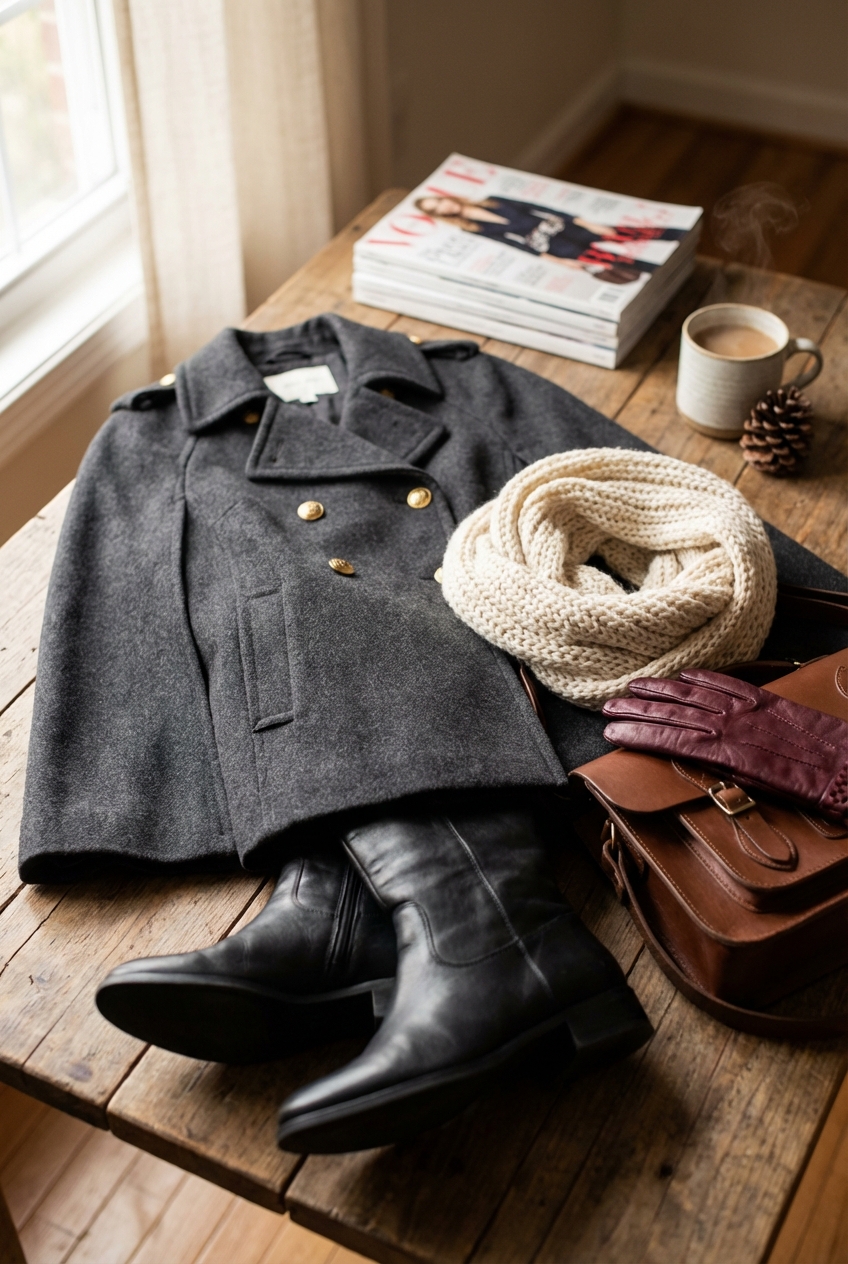
Tailored Cape Coats For Dramatic Winter Looks
Winter fashion often feels like a battle between maintaining your personal style and simply trying to survive the elements. Many of us succumb to the practicality of shapeless puffer coats by January, sacrificing elegance for warmth. However, there is a specific outerwear category that refuses to compromise: the tailored cape coat.
I remember styling a winter editorial shoot in Chicago a few years ago where the wind chill was unforgiving. We tried standard wool trenches, but the layers underneath made the models look stiff and bulky. The moment we switched to heavy, structural capes, everything changed. The silhouette allowed for thick cashmere layers underneath without restricting movement, and the visual impact against the snowy backdrop was stunning. It taught me that drama and practicality can actually coexist if the garment is constructed correctly.
In this guide, I will walk you through the technical aspects of selecting the perfect cape, from shoulder construction to hemline mathematics. We will cover how to balance the volume, what fabrics hold their shape best, and the specific accessories required to make this look functional for daily life. For a curated collection of street style examples and editorial looks, be sure to scroll down to the Picture Gallery at the end of the blog post.
The Architecture of the Shoulder
The success or failure of a cape coat relies almost entirely on the construction of the shoulder. Unlike a standard coat where the fit is distributed across the chest, waist, and arms, a cape hangs from the shoulders. If this anchor point is weak or ill-fitting, the entire garment will look like a blanket rather than a tailored piece of outerwear.
When fitting clients, I always look for a defined shoulder seam. Even if the cape has a raglan style, there needs to be internal structure—usually a thin shoulder pad or high-density interfacing—to ensure the fabric clears the natural curve of the shoulder before draping down. This prevents the fabric from collapsing and looking sloppy.
For petite frames, a sharp, narrow shoulder is non-negotiable. A rounded shoulder on a cape can quickly overwhelm a smaller frame, making you look like you are wearing a costume. For broader shoulders, a softer, sloping line works well, provided the fabric is heavy enough to hang straight down rather than tenting out.
Designer’s Note: The Fit Test
When trying on a cape, perform the “phone test.” Reach your arms through the slits and pretend to text or hold a coffee. If the shoulder of the cape rides up to your ears, the arm slits are positioned too high or the armhole construction is too tight. A well-tailored cape stays seated on your shoulders even when your arms are in motion.
Selecting the Right Fabric Weight
In interior design, we talk about “drape” regarding curtains; in fashion, the concept is identical but applies to your body. The fabric weight of a cape determines its silhouette. A lightweight fabric will flutter and cling, which ruins the dramatic, architectural effect we are aiming for.
For winter wear, you want a fabric weight of at least 350-450 grams per meter (GSM). Boiled wool, melton wool, and double-faced cashmere are the gold standards. These materials have enough density to block the wind and maintain a trapezoidal shape, which is the signature of a tailored cape.
Avoid synthetic blends that exceed 20-30% nylon or polyester unless it is a high-tech technical fabric. High synthetic content often lacks the weight to drape properly, resulting in static cling that causes the cape to stick to your legs as you walk.
Fabric Pros and Cons
- Melton Wool: extremely dense and felt-like. It is weather-resistant and holds a very sharp shape. Ideal for military-style capes.
- Double-Faced Cashmere: Unlined and finished on both sides. It is softer and more fluid, offering luxury and warmth without extreme heaviness.
- Tweed: Adds texture and visual interest, but requires a heavy lining to ensure it doesn’t snag on your knitwear underneath.
Balancing Proportions: The Volume Rule
The most common mistake I see with cape coats is incorrect volume distribution. Because a cape adds significant volume to your upper body, the bottom half of your outfit must follow the law of contrast. If you wear a wide voluminous cape with wide-leg trousers, you risk looking like a block.
The rule of thumb I use for clients is the “inverted triangle” silhouette. Since the cape creates width at the shoulders and hem, your legs need to act as the stem. Skinny jeans, slim-cut trousers, or leggings are the easiest pairings.
If you prefer skirts, the hemline math is critical. Ideally, your skirt should either be significantly shorter than the cape (hidden entirely) or a pencil silhouette that extends below. A midi skirt with a lot of movement (like an A-line or pleated skirt) fighting against the hem of a cape creates a chaotic silhouette.
Common Mistakes + Fixes
- Mistake: Wearing a midi-length A-line dress sticking out 4 inches below a knee-length cape.
- Fix: Switch to a pencil skirt that hugs the legs, creating a streamlined column emerging from the volume of the coat.
- Mistake: Wearing chunky combat boots that compete with the coat’s volume.
- Fix: Opt for sleek riding boots or pointed-toe ankle boots to elongate the leg line.
The Layering Strategy
The primary functional benefit of a cape is the ability to wear chunky knitwear that would never fit inside the sleeves of a trench coat or wool blazer. However, there is a limit to this freedom.
When layering, focus on the texture of your sleeves. Since your forearms are often exposed or just peeking out from the cape’s slits, the sleeve of your sweater becomes part of the outerwear look. A ratty old cuff will ruin the elegance of a $500 cape.
I recommend fitted cashmere turtlenecks or rib-knit sweaters with long, tight cuffs. Avoid dolman sleeves or batwing sweaters under a cape. Even though the cape has room, the friction between the sweater excess and the cape lining will cause the coat to shift around uncomfortably while you walk.
What I’d Do In A Real Project
If I were styling a client for a winter city break who wanted to wear a cape:
- Base Layer: A thermal bodysuit (sleek, no tucking required).
- Mid Layer: A cashmere cable-knit sweater in a monochrome tone matching the cape.
- Bottoms: Leather leggings or coated denim to add texture contrast against the wool.
- Key Detail: I would ensure the sweater sleeves are long enough to cover the knuckles, acting as makeshift fingerless gloves.
Navigating Practical Logistics: Bags and Gloves
One of the main reasons women return cape coats is the “purse problem.” Carrying a shoulder bag with a cape is frustrating and ruins the line of the shoulder. The strap slides off, or you have to wear it underneath the cape, which creates awkward lumps.
The solution is strictly hand-held or crook-of-the-arm bags. Top-handle satchels, oversized clutches, or structured totes are the only way to go. If you must go hands-free, a crossbody bag worn under the cape can work, provided the bag is small and flat, but this makes accessing your belongings difficult.
The Glove Necessity
Because capes often have wide arm openings or slits, cold air can travel up the arm easily. Long leather gloves (opera length or just below the elbow) are not just a style choice; they are an insulation requirement.
When selecting gloves, look for a pair that contrasts with the coat. If you have a camel cape, opt for deep burgundy or chocolate leather gloves. If you have a black cape, grey or cognac leather adds dimension.
Occasion Dressing: From Commute to Cocktail
The versatility of a tailored cape lies in its ability to transition between dress codes. It is one of the few outerwear pieces that looks just as appropriate over a gym outfit (leggings and a hoodie) as it does over a cocktail dress.
For the office, a cape commands authority. It functions like a piece of armor. Look for styles with military details—epaulets, brass buttons, or a standing collar. These details sharpen the look and make it feel more like a blazer substitute than a blanket.
For evening wear, the cape is the ultimate solution for formal gowns. A puffer coat over a silk dress is a fashion tragedy. A cape, however, rests gently on the shoulders without crushing the delicate fabric of a dress. For evening, look for velvet trims or satin linings that catch the light.
Styling Checklist: The Finish
Before you head out the door, run through this quick mental checklist to ensure the look is polished.
- Shoulder Check: Is the shoulder seam sitting squarely on your bone? If it’s drooping, the fit is too big.
- Hemline Audit: If wearing a skirt, is the proportion intentional? (Either hidden or slim pencil).
- Sleeve Status: Are your sweater cuffs in good condition? They are visible!
- Glove Gap: Do your gloves meet your sleeves? No bare skin should be visible on the forearm in deep winter.
- Bag Logic: Are you carrying a top-handle bag? Leave the backpack or shoulder bag at home.
- Lint Roll: Wool capes are magnets for fuzz. A quick roll is essential, especially on dark colors.
Frequently Asked Questions
Can I wear a cape coat if I am petite (under 5’4″)?
Absolutely. The key for petite frames is length and scale. Avoid floor-length capes that will swallow you. Look for a “capelet” or a mid-thigh length cape. Ensure the shoulder width is narrow and precise. Monochromatic outfits (matching your pants/boots to the cape) will also help create a continuous vertical line.
Are cape coats actually warm enough for freezing temperatures?
It depends on the layering. A cape creates a tent of warm air around your body, similar to a mitten vs. a glove. However, the arm openings are the weak point. You must wear heavy knitwear and long leather gloves. For sub-zero temperatures, look for capes lined with “Thinsulate” or similar thermal blocking materials, or layer a thin down vest underneath the cape for invisible core warmth.
How do I drive while wearing a cape?
This is a practical reality! Driving in a long cape can be dangerous if the fabric restricts your arm movement. I recommend unbuttoning the cape or flipping the back of the cape up over the seat back before sitting down, so you aren’t pinned against the upholstery. If it’s a short drive, it’s often safer and more comfortable to take it off.
Can I wear a backpack with a cape?
No. This is a hard rule. A backpack crushes the structure of the cape, restricts your arms completely, and bunches the fabric around your neck. It is functionally fighting against the design of the garment. Stick to handheld bags.
What is the difference between a poncho and a cape?
Structure. A poncho is typically a single piece of fabric with a head opening, often unstructured and knit (like a blanket). A cape is a tailored garment with constructed shoulders, a collar, linings, and specific arm slits. A cape is outerwear; a poncho is often knitwear.
Conclusion
Embracing the tailored cape coat is about embracing a different way of moving through winter. It requires a shift in mindset from purely utilitarian dressing to something more intentional. While it asks for specific considerations regarding bags and layering, the payoff is immense. You gain a silhouette that is timeless, commanding, and infinitely more elegant than the standard winter uniform.
When you find the right cape—one with heavy wool that swings as you walk, shoulders that sit perfectly, and a color that enhances your wardrobe—you will find yourself actually looking forward to the cold days. It turns the act of covering up into a fashion statement. Remember to focus on the architecture of the fit, invest in beautiful leather gloves, and keep your bottom silhouette slim to balance the drama on top.
Picture Gallery


