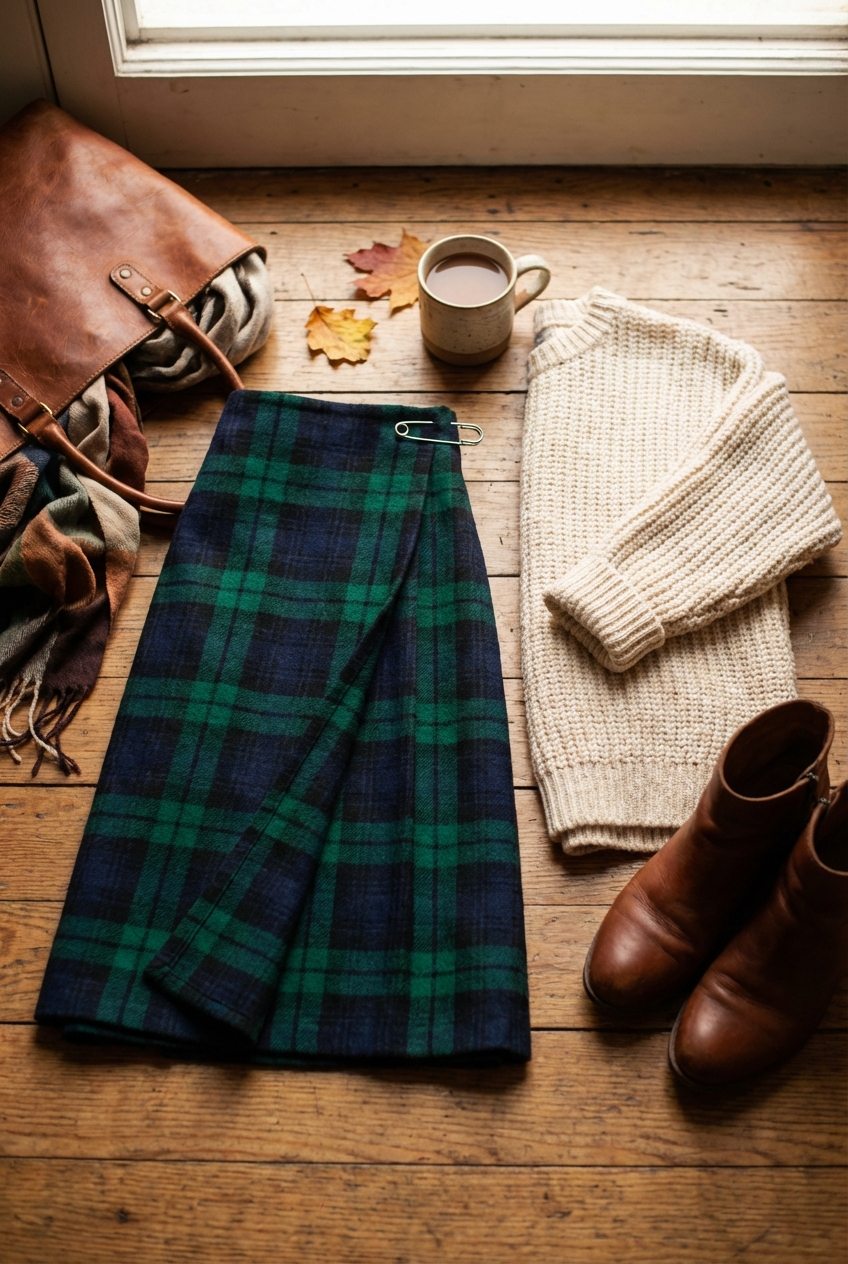
Wrap Skirt Outfits: How to Style a Tartan Wrap Skirt
- Words by
- Julio Arco
- Published
- Reading
- 4 min
The simplest tartan wrap skirt outfit is a fitted, solid-color top in one of the skirt's quieter colors, plus boots or loafers and opaque tights. Keep the pattern on the bottom half and the rest plain, and the skirt reads as polished rather than costume-like.
Below: how to choose a wrap that stays closed, which tops and shoes suit each length, and a short checklist before you leave the house.
What top goes best with a wrap skirt?
A top that is plain and close to the body is the safest answer. A wrap skirt already has volume at the hip from the overlap, so a fitted knit, a turtleneck or a bodysuit keeps the waist clear and the proportions balanced.
- A fitted turtleneck in a color pulled from the tartan (navy, olive, cream).
- A crisp white button-down, tucked in or in a French tuck (front only).
- A bodysuit, which removes the bulk at the waistband entirely.
- An oversized sweater, if the skirt is short and you want balance.
Through the lens of evidence-based design, I'd pick the top first by texture. A matte, fine knit lets the pattern be the only busy surface, while a chunky cable knit competes with it and makes the whole outfit read heavier.
How to style a wrap skirt by length
Mini
The rule is simple: if the legs are showing, keep the top covered and relaxed. An oversized cashmere or wool sweater, or a high-neck blouse, looks deliberate. Skip tight cropped tops, which push the look younger than most people want from tartan.
For shoes, knee-high leather riding boots work well, and so do chunky loafers with a sock showing. Opaque black tights, 60 denier or heavier, ground the look. Sheer hose tend to look thin next to wool.
Midi and maxi
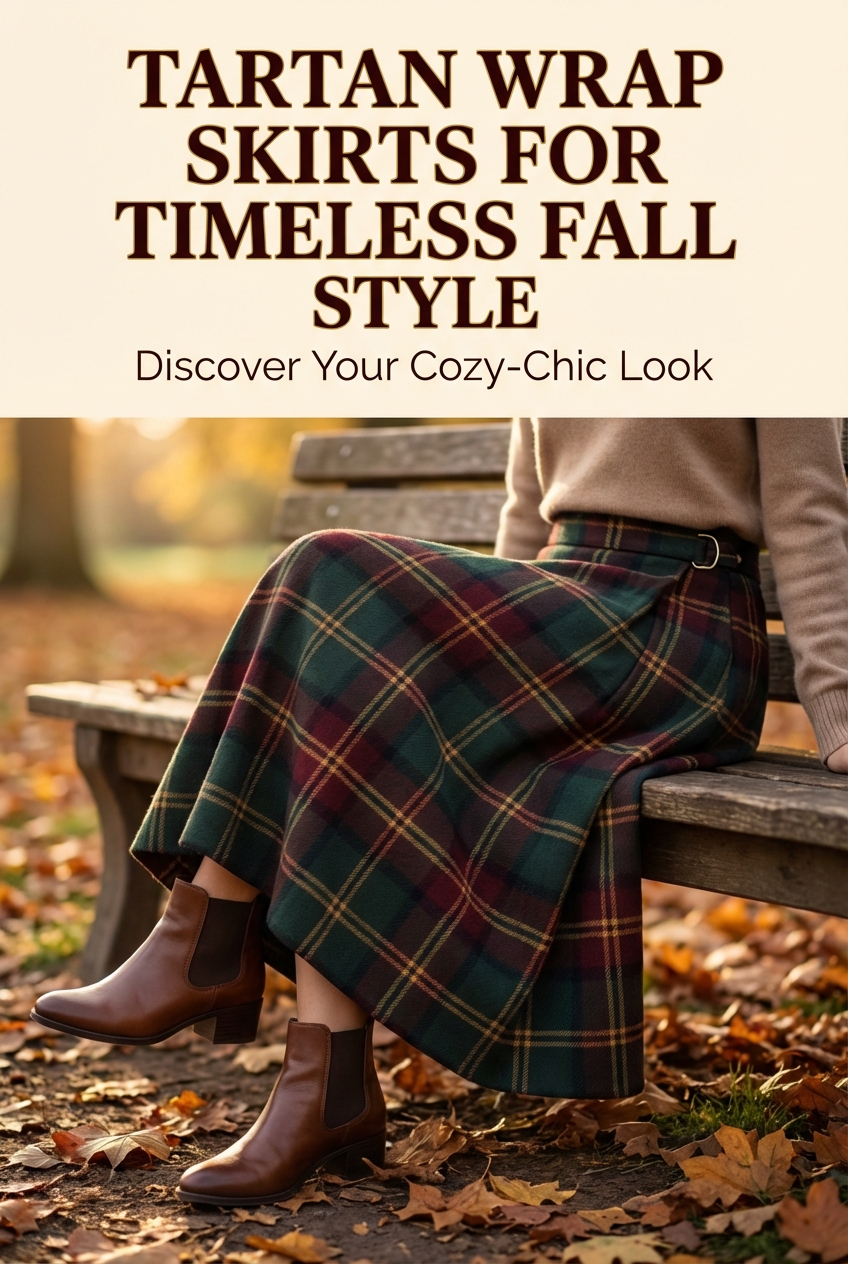
Longer tartan takes up a lot of visual space, so keep everything else one color. A navy and green tartan pairs with a fitted navy turtleneck or a white shirt. Pattern mixing is possible, but it is easy to get wrong.
A wrap skirt with a bodysuit outfit works especially well here: a black bodysuit, a muted hunting tartan maxi, a cropped leather jacket and pointed-toe boots. The sharp toe peeking from the hem lengthens the leg line. For more shapes, see simple wrap skirts for versatile styling and asymmetrical wrap skirts.
Which tartan colors and check sizes are easiest?
Bright red tartans such as Royal Stewart are classic but read festive fast. Quieter palettes are easier to wear day to day.
- Grey and navy behave like neutrals and sit well with cream, camel and black knitwear.
- Brown and olive suit high autumn, with denim shirts or cream cable knits.
- Yellow and cream are bolder, so keep the accessories simple.
Scale matters too. A large check shows its full repeat best on a maxi or on a taller frame. A small check reads almost like a solid from a distance and tends to be easier on petite frames.
What makes a good wrap skirt?
Enough overlap
A shallow overlap looks fine standing still and opens when you walk or sit. Look for an inner button or tie on the opposite side of the waist, in addition to the outer buckle or tie. If yours lacks one, a tailor can usually add a small button and loop.
Do the sit test in the fitting room: sit, cross your legs and see whether the skirt stays closed above the knee. A garment you have to hold shut will not get worn.
Fabric and lining
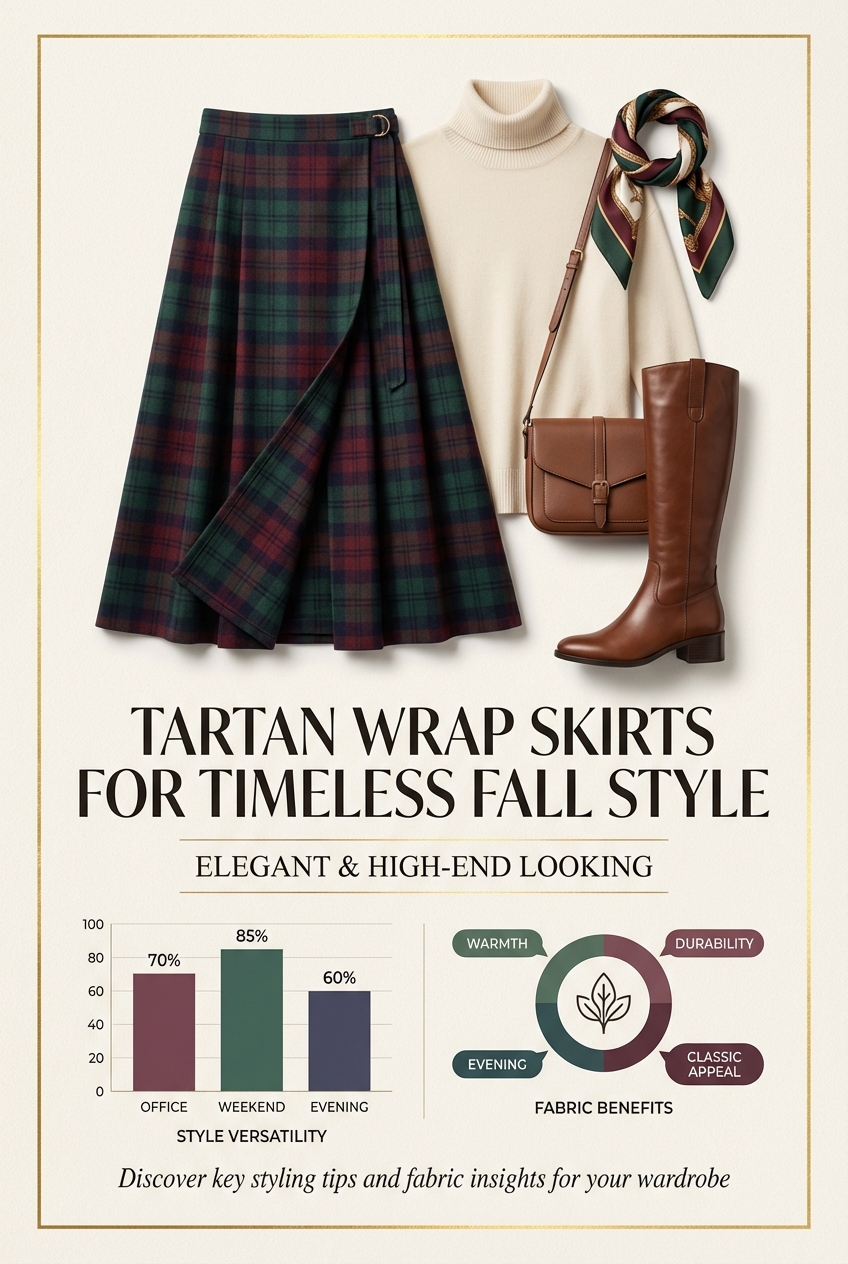
Wool holds a crisp pleat and resists wrinkling, and worsted wool gives a smoother finish for the office. Flannel or tweed weights feel more rustic. Synthetic blends often do not hold a pleat as sharply and can puff at the hips.
A lining of viscose, cupro or silk helps wool glide over tights instead of clinging. If a vintage piece is unlined, a half-slip does the same job.
Hardware
Plastic buckles can cheapen the look. Metal buckles in brass or silver look better, and it helps if your bag hardware and jewelry roughly match the tone. A kilt pin near the hem adds a little weight against wind. Pin the top layer only, so the layers can still move.
Quick checklist before you go
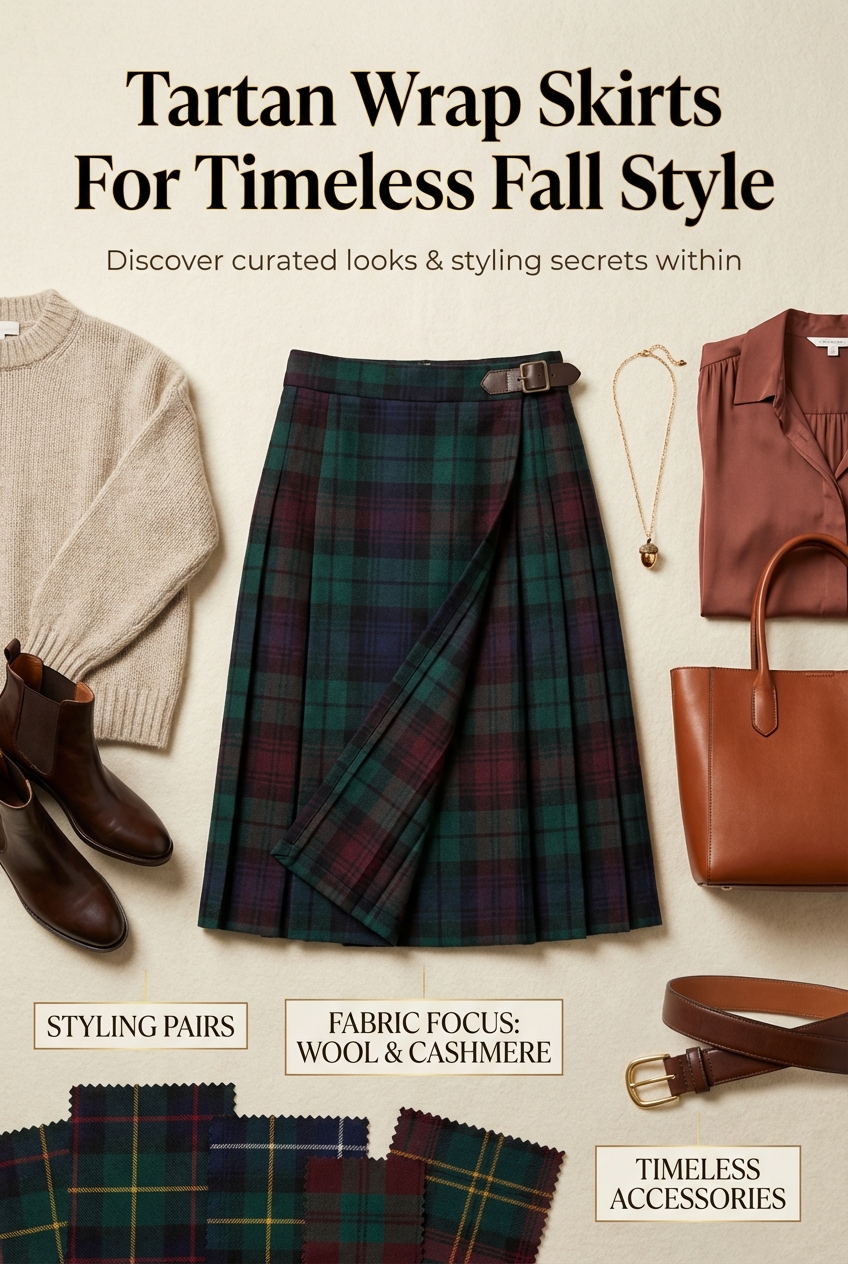
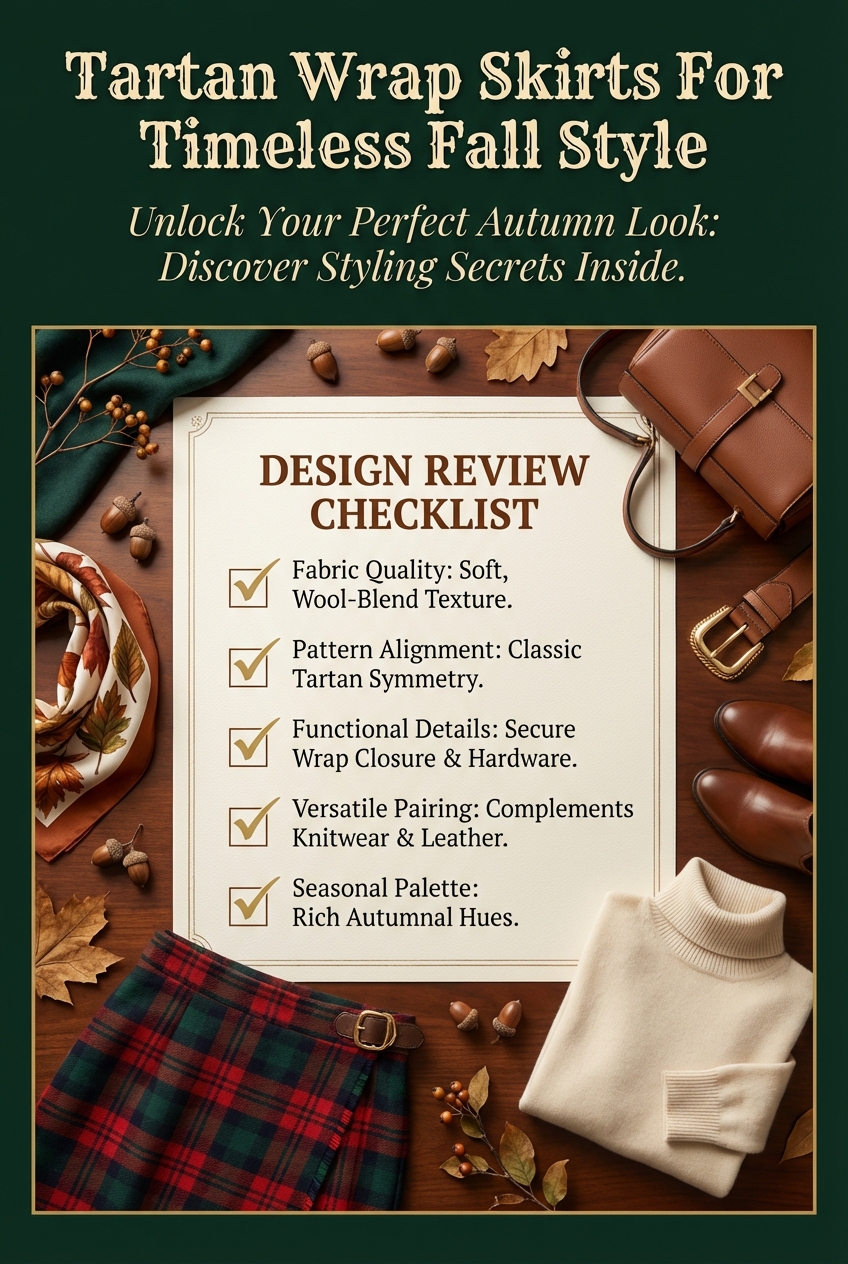
- The waistband sits at your natural waist, so the pleats do not splay open.
- The top is fitted or tucked at the front to define the waist.
- Tights are opaque, and an anti-static spray handles any cling.
- With a midi, the boot shaft goes under the hem or leaves a clear gap, rather than meeting the hem exactly at the boot top.
- Metals (buckle, earrings, bag hardware) agree with each other.
If you like wrap shapes in other pieces, wrap midi dresses and flattering-fit wrap skirts follow the same logic. Tartan also pairs well with a neutral trench on top.
Frequently asked questions
How do I style a wrap skirt?
Pair it with a fitted top in a solid color, then choose shoes by length: boots or loafers with opaque tights for a mini, pointed boots for a midi or maxi. Keep pattern and volume on one half of the outfit.
Can I wash a wool tartan wrap skirt at home?
Pleated wool is usually best dry cleaned, since water can felt the fibers and soften the pleats. Check the care label, and between cleanings hang the skirt to air or steam it lightly.
Is a tartan wrap skirt appropriate for the office?
Yes, if the length is knee or midi and the colors are muted, such as navy or grey. A silk blouse and blazer finish it. Very short or neon-bright tartans are harder to make work in formal settings.
How do I keep a wrap skirt from blowing open?
Choose one with an inner button or tie, and add a kilt pin on the front layer near the hem for weight. Shorts or a slip underneath give extra peace of mind on windy days.
Filed under Seasonal Trends