
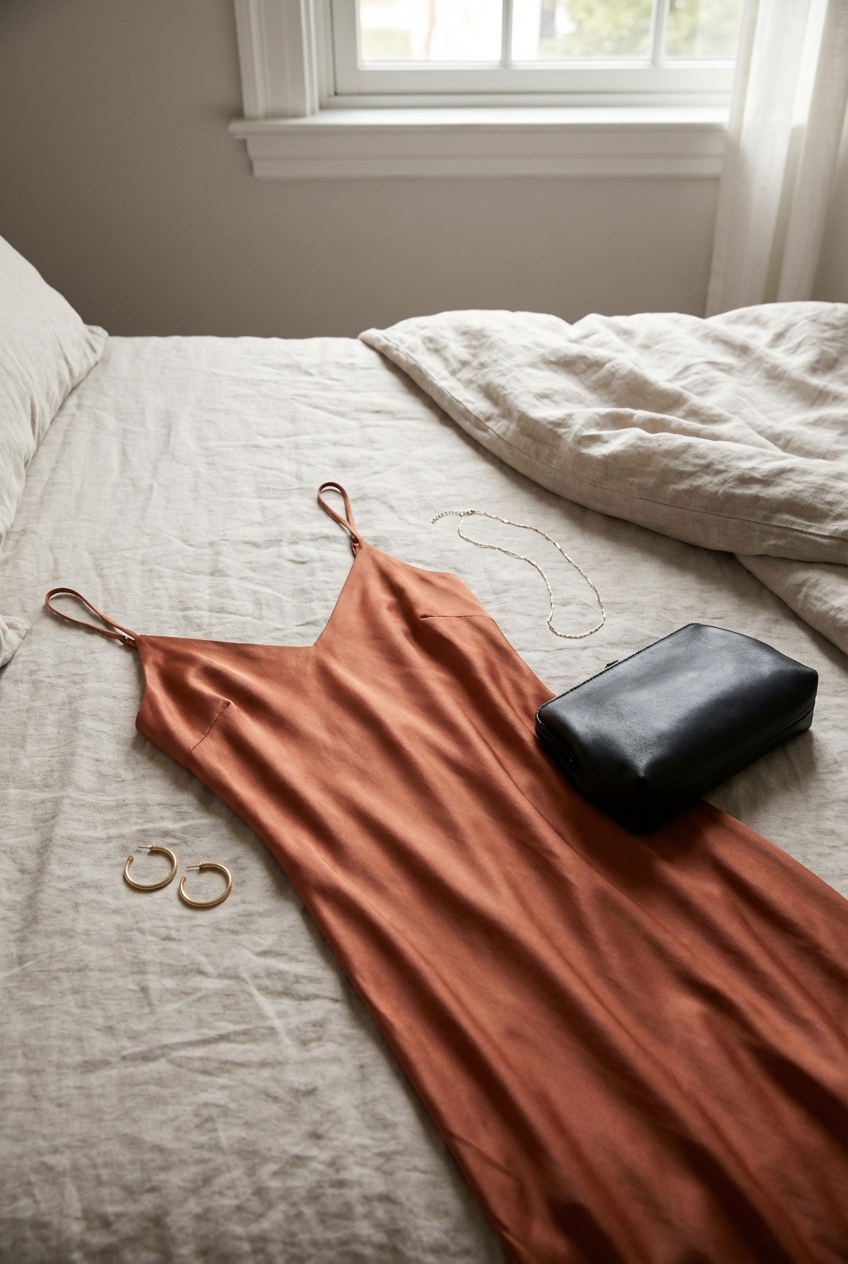
The Alluring Slip Dress For Minimalist Evening Style
There is something inherently confident about a woman who walks into a room wearing a slip dress. It signals a mastery of restraint. While other evening wear relies on heavy beading, structured corsetry, or voluminous tulle to make a statement, the slip dress relies entirely on the silhouette and the fabric. It is the sartorial equivalent of a minimalist home: there is nowhere to hide, so every detail must be perfect.
I remember my first time styling a high-profile client for a gallery opening in Chelsea. We tried on elaborate gowns, but they felt like costumes. When we finally landed on a bias-cut, champagne-colored silk slip dress, the mood shifted instantly. She didn’t look like she was trying to prove anything; she just looked effortlessly expensive. That is the power of this garment. It is not about revealing the body, but rather skimming it in a way that feels fluid and personal.
However, the simplicity of the slip dress is deceptive. Because it lacks structure, it requires a high level of technical understanding regarding fit, fabric weight, and undergarments to pull off successfully. It walks a fine line between “elegant evening wear” and “forgot to get dressed.” If you want immediate visual inspiration, feel free to scroll to the Picture Gallery at the end of this blog post.
Understanding the Bias Cut Mechanics
The vast majority of high-end slip dresses are cut on the “bias.” This means the fabric is cut at a 45-degree angle against the weave. This technique allows woven fabric, which typically doesn’t stretch, to drape and contour over the body’s curves like a fluid liquid.
Understanding this mechanical property is the first step to styling it correctly. A bias-cut dress will naturally become narrower as it stretches downward. This is why you often see slip dresses that look wide on the hanger but hug the hips tightly once worn.
The Fit Rule of Thumb
When selecting your size, you must ignore your standard sizing. Bias cut fabric clings. If you buy it too true-to-size, you risk the fabric bunching horizontally across the hips or stomach, which creates unflattering shadow lines.
Stylist’s Note: Always size up if you are between sizes. It is far chicer to have a slip dress that skims the body with a hint of movement than one that grips. A tailor can easily take in the waist or shorten straps, but we cannot add fabric to a hip area that is pulling.
The Strap Adjustment
The neckline is crucial for keeping the look elevated. Most off-the-rack slip dresses have adjustable slides, but high-end versions often have fixed straps. In my experience, straps are almost always too long for the average torso.
If the neckline sits too low, the dress looks like lingerie. If you take the dress to a tailor, ask them to shorten the straps from the back attachment point. This raises the neckline to a more sophisticated position, covering the “underarm bits” that many women feel self-conscious about, and ensures the dress hangs properly from the bust apex.
Fabric Matters: Weight and Sheen
Not all satins are created equal. In the world of minimalist evening style, the fabric composition dictates the event formality. For a truly high-end look, you are generally choosing between silk charmeuse, sandwashed silk, and high-quality Japanese triacetate.
Silk Charmeuse vs. Sandwashed Silk
Silk charmeuse has a high-shine finish (the “liquid gold” look). It reflects light beautifully, making it ideal for dimly lit dinners or evening galas. However, that shine also acts like a highlighter for any texture on the body.
Sandwashed silk has a matte, suede-like texture. It is arguably more modern and “cool girl” in its aesthetic. It is less unforgiving than charmeuse and transitions better from day to evening.
The Gram Weight Test
When shopping, you need to assess the weight of the silk, measured in “momme.”
- Low quality (12–16 momme): This is lingerie weight. It is too thin for evening wear, will show every outline, and is prone to static cling.
- High quality (19–22+ momme): This is the sweet spot. The fabric is heavy enough to drape under its own weight, smoothing over the body rather than clinging to it.
Common Mistake: Choosing thin polyester satin to save money.
The Fix: Polyester does not breathe. Under evening lights or on a dance floor, it traps heat and moisture. If you are on a budget, look for Cupro or Viscose blends, which are plant-based and mimic the breathability of silk better than poly.
The Foundation: Undergarments and Shapewear
This is the number one question I get from clients: “What do I wear underneath?” The slip dress is unforgiving of “VPL” (Visible Panty Lines) and bulky bra hardware. The minimalist aesthetic is ruined the moment you see the ridge of a lace thong through the silk.
The Seamless Solution
You need laser-cut, seamless edges. Even a sewn hem on a standard cotton thong will show through bias-cut silk. Look for “raw cut” edges in a technical fabric that grips the skin slightly so it doesn’t roll.
To Shape or Not to Shape?
Traditional heavy-duty shapewear often creates more problems than it solves with slip dresses. The thick seams of a compression short will be visible on the thighs.
What I do in real projects:
- Smoothing Shorts: I use lightweight, non-compression smoothing shorts purely to prevent static and provide a smooth layer between skin and silk.
- Nipple Covers: For the bust, stick-on silicone covers are often better than a strapless bra. The back band of a strapless bra almost always cuts into the back, creating a bulge that ruins the rear view of the dress.
- Boob Tape: If you need lift, use high-quality breast tape. Apply it vertically, stopping just below the collarbone.
Minimalist Layering for Evening
The slip dress really shines when you play with textures. Because the dress itself is so sleek, it acts as a perfect canvas for contrasting materials. This is how you take the look from “bedroom” to “boardroom” or “ballroom.”
The Oversized Blazer
This is the modern uniform. Pair a delicate, ankle-length slip dress with a structured, slightly oversized menswear blazer. The contrast between the masculine shoulders of the jacket and the feminine drape of the dress is visually arresting.
Scale Rule: The blazer should hit below the hip. If it creates a horizontal line right at the widest part of your hip, it can distort your proportions. A longer “boyfriend” cut lengthens the silhouette.
Texture Play with Knits
For a less formal evening event, layer a chunky cashmere sweater over the dress. This effectively turns the dress into a silk maxi skirt.
Stylist’s Note: Do not just pull the sweater down. Use a small belt around your waist (under the sweater), and tuck the hem of the sweater up into the belt to create a “cropped” effect without bulk. This defines the waist while keeping the cozy aesthetic.
Footwear: Balancing the Hemline
Your choice of shoe dictates the era you are channeling. A slip dress is a chameleon; it changes entirely based on what is on your feet.
The 90s Minimalist (Strappy Sandals)
For a pure evening look, a “barely there” heeled sandal is the go-to. The goal is to extend the leg line. If your dress is midi-length (hitting mid-calf), a heel is almost mandatory to prevent looking shorter.
The Modern Edge (Boots)
To toughen up the look, I love pairing a slip dress with knee-high leather boots. The hem of the dress should cover the top of the boot. This eliminates any break in the visual line and adds a heavy, grounding element to the light fabric.
Hemline Measurements
- Midi Length: Should hit the narrowest part of your shin or just above the ankle bone.
- Maxi Length: For evening, it should hover 0.5 to 1 inch off the floor with your shoes on. You do not want it dragging (which looks messy), but “floating” ankles can look awkward with formal gowns.
Accessorizing Without Overpowering
The title of this style is “Minimalist,” so we must exercise restraint. The accessories should look like curated artifacts, not clutter.
Jewelry Styling
Avoid heavy statement necklaces that compete with the neckline. If you have a cowl neck slip dress, the neckline is the jewelry.
I prefer to focus on the ears and wrists. A pair of sculptural gold hoops or a tennis bracelet adds just enough sparkle. If the dress has a deep V-neck, a very fine gold chain or a singular pendant allows the skin to breathe.
The Bag Selection
Never wear a crossbody bag with a slip dress. The strap cuts across the bias fabric, ruining the drape and causing the dress to bunch up.
You need a clutch or a top-handle mini bag. A structured geometric clutch provides a nice counterpoint to the organic flow of the silk. Look for materials like metal, acrylic, or structured leather to add a hard edge to the soft look.
Styling Checklist
Before you walk out the door, run through this mental checklist. These are the final touches that separate a professional stylist’s work from an amateur attempt.
The Static Check
Silk generates static, especially in winter or with dry skin.
- Spray the inside of the dress with static guard.
- Rub a dryer sheet over your legs.
- Put a layer of moisturizer on your body 20 minutes before dressing (let it absorb fully so it doesn’t stain).
The Steaming Ritual
Never iron a bias-cut dress. The heat and pressure can stretch the fibers and distort the shape permanently. Always use a vertical steamer. Steam from the inside out to avoid water spots on the sheen of the fabric.
The Sit Test
Sit down in front of a mirror. Does the fabric pull dangerously tight across the thighs? If so, you may need better shapewear (smoothing shorts allow the fabric to glide) or you may need to reconsider the fit. When sitting in a slip dress, always smooth the fabric under you to prevent deep creases from forming on the back panel.
Frequently Asked Questions
Can I wear a slip dress to a black-tie wedding?
Yes, but the fabric quality is non-negotiable. It must be high-momme silk or heavy crepe. You must also elevate it with fine jewelry and heels. A cotton or low-grade satin slip dress will read too casual. Darker colors like midnight blue, emerald, or black generally read more formal than pastels.
How do I hide a tummy in a slip dress?
The bias cut is naturally clingy, which scares many women. The secret is sizing up. A dress that skims rather than hugs is universally flattering. Also, look for darker colors or busy micro-prints if you are very self-conscious, as they disguise shadows. A blazer worn over the shoulders is also a chic shield.
How do I clean my silk slip dress?
Read the label, but generally, dry cleaning is safest for evening wear to maintain the sheen. If you must hand wash, use cold water and a silk-specific detergent. Never wring it out. Roll it in a towel to press out water, then lay it flat to dry. Hanging wet silk will stretch the straps and the length.
Is a cowl neck or a straight neck better?
This depends on your bust size. A cowl neck adds volume and draws the eye, which is great for smaller busts. A straight or slightly curved neckline offers more containment and support for larger busts and allows for a more standard bra strap configuration if the straps are thick enough.
Conclusion
The slip dress is not a trend; it is a discipline. It teaches us that elegance does not require excess. By focusing on the quality of the material, the precision of the cut, and the thoughtfulness of the layering, you create an evening look that is timeless.
Remember that the goal of minimalist style is to let the woman shine, not the garment. When you get the fit and the foundation right, the slip dress becomes a second skin—one that makes you feel alluring, comfortable, and utterly sophisticated.
Picture Gallery


