Satin and Tulle Dresses: How to Wear the Romantic Pair
- Words by
- Julio Arco
- Published
- Reading
- 4 min
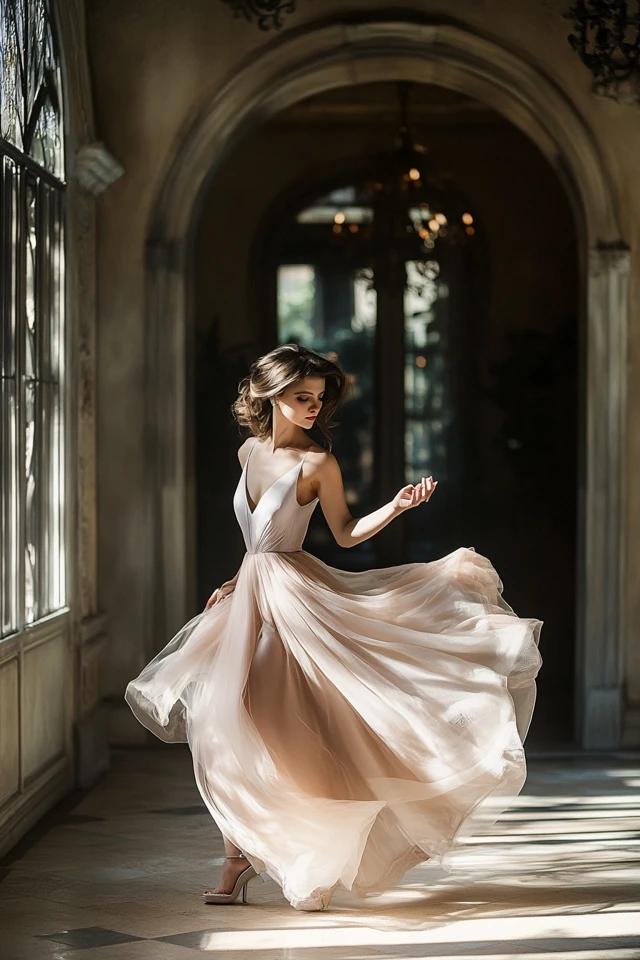
Satin and tulle work together because they do opposite jobs. Satin gives a dress a smooth, light-catching surface and a clean line. Tulle adds volume and softness without weight. Put satin where you want shape (the bodice, the slip layer) and tulle where you want movement (the skirt, the sleeves).
That one rule covers most satin and tulle dresses, from bridal gowns to date-night looks. The rest is choosing color, silhouette and finishing details that suit you.
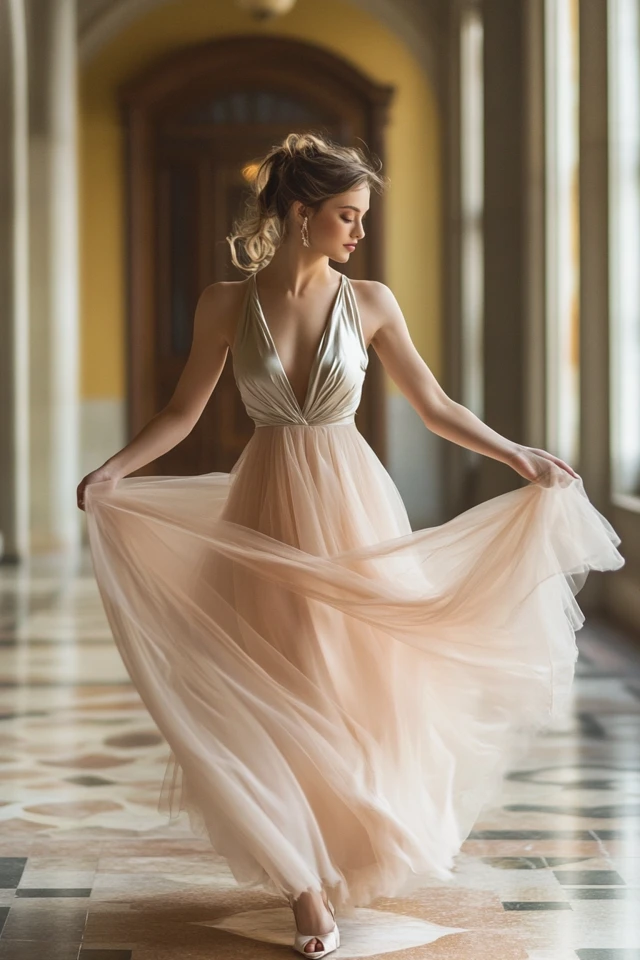
What does each fabric do in a dress?
Satin: the smooth, reflective layer
Satin is a weave, not a fiber, so it can be made from silk or polyester. Its long surface threads reflect light in broad strips, which is why it looks glossy and drapes with a liquid fall. It also shows every bump, so a seam, a wrinkle or an underwear line is easy to spot.
Through the lens of evidence-based design, I'd say the sheen is the first thing the eye reads on a satin dress. A fitted satin bodice reads as sleek and formal. A loose satin slip reads as relaxed, even in the same color.
Tulle: the airy, matte layer
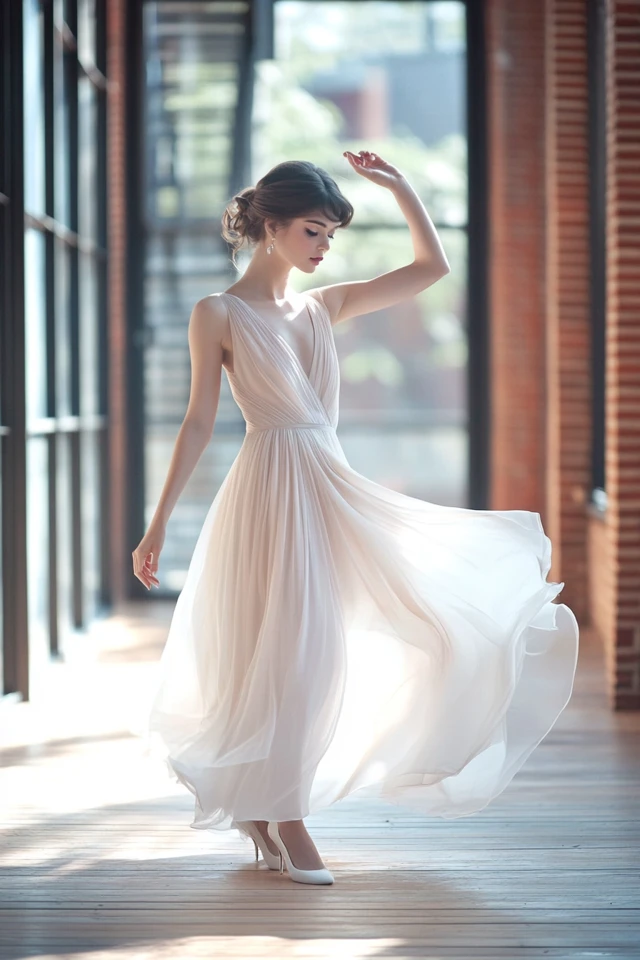
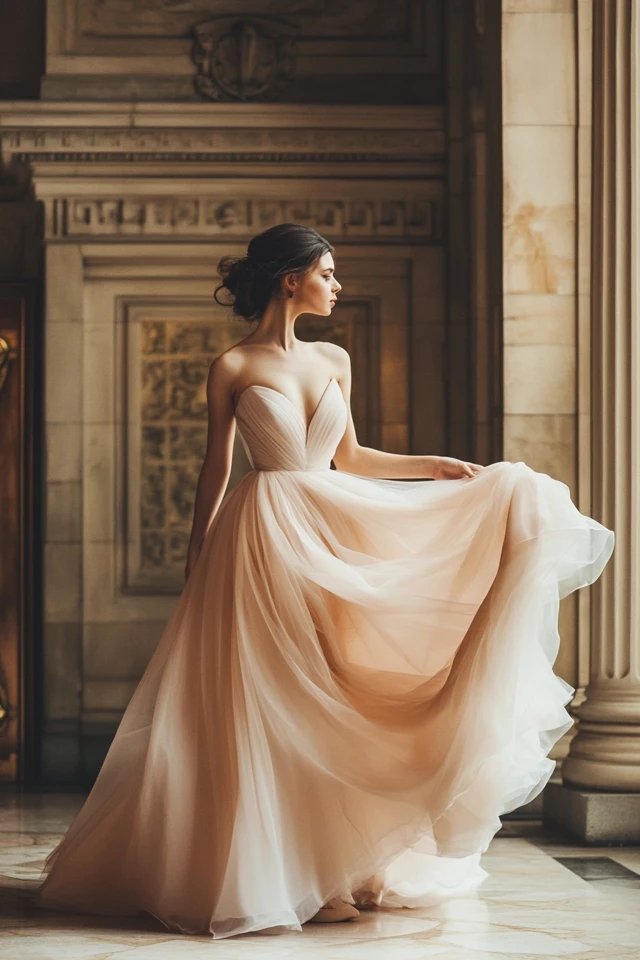
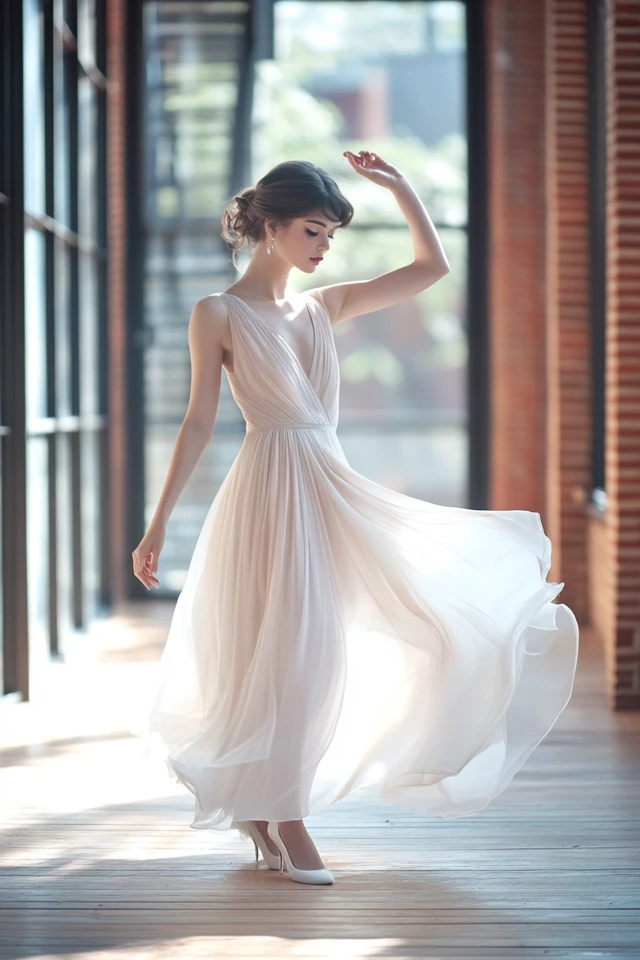
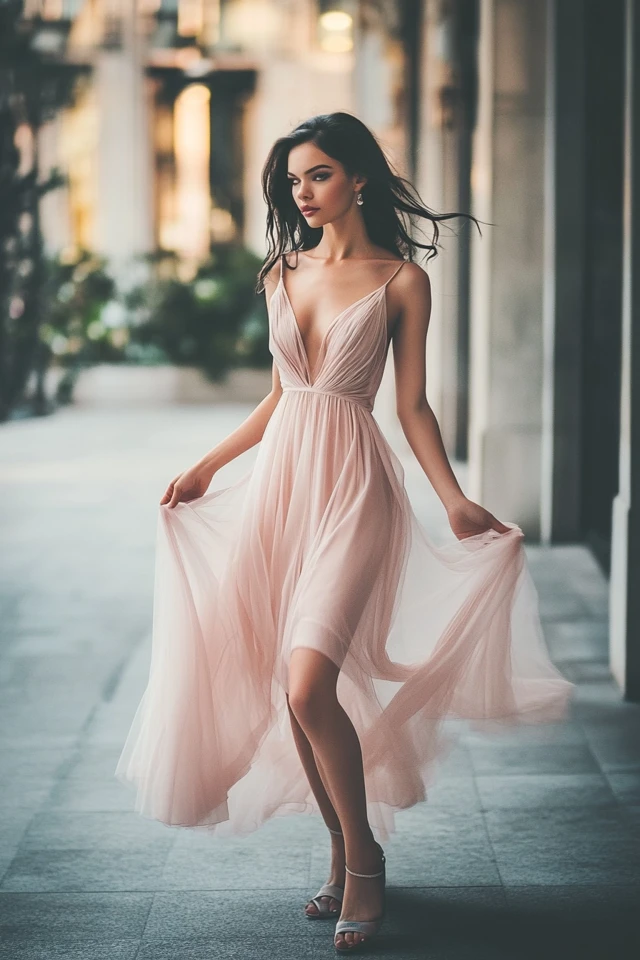
Tulle is a fine net. It is slightly sheer, light and a little stiff, so it holds volume instead of clinging. Because it is matte, it softens whatever sits under it. A tulle overlay on satin turns the shine into a gentle glow.
One layer gives a hazy, subtle effect. Several layers give the full ballgown shape. Check how the tulle feels before buying: it should be soft against the skin at the neckline and arms, not scratchy.
Which colors work best?
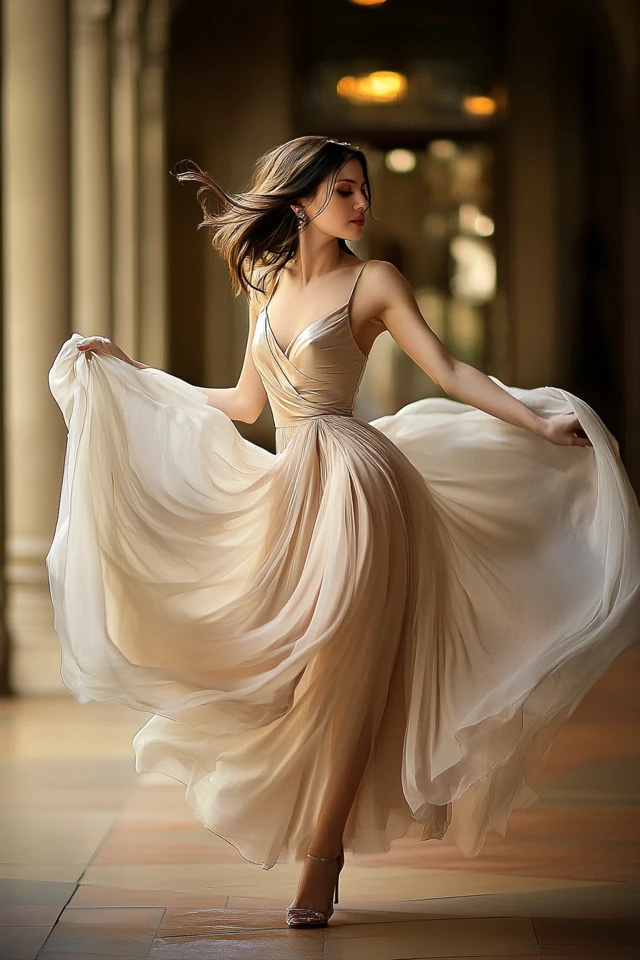
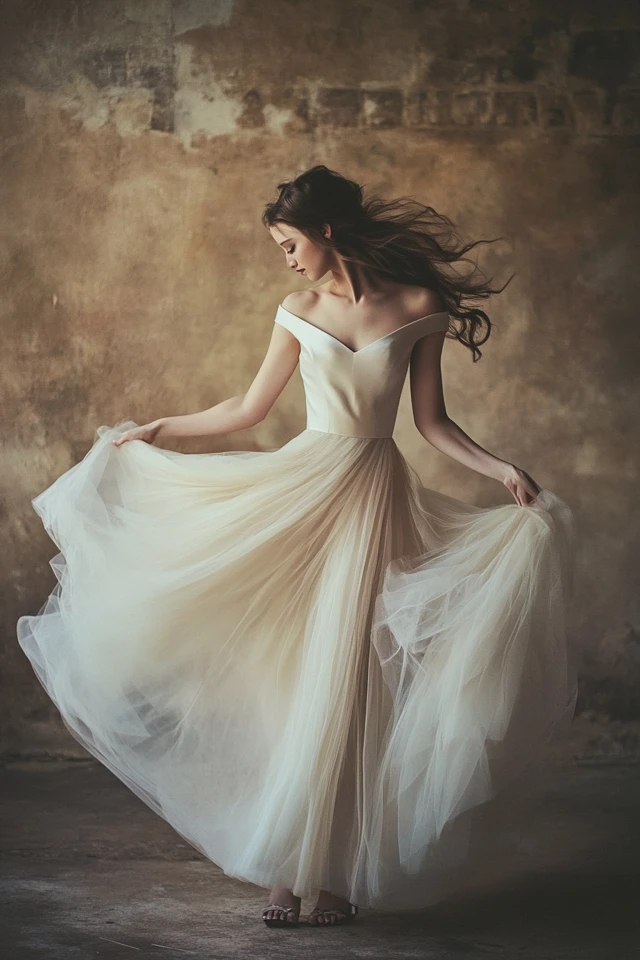
White and ivory are the classic bridal choices. Satin in these shades looks crisp, and tulle on top looks softer and slightly lighter. Ivory is usually kinder next to many skin tones than stark white, so hold both up to your face in daylight if you can.
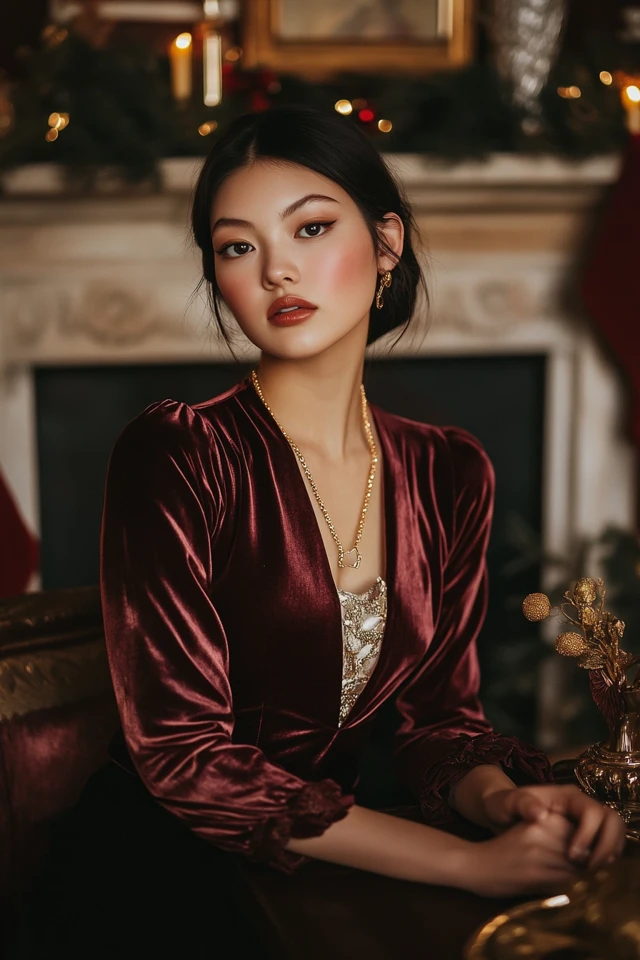
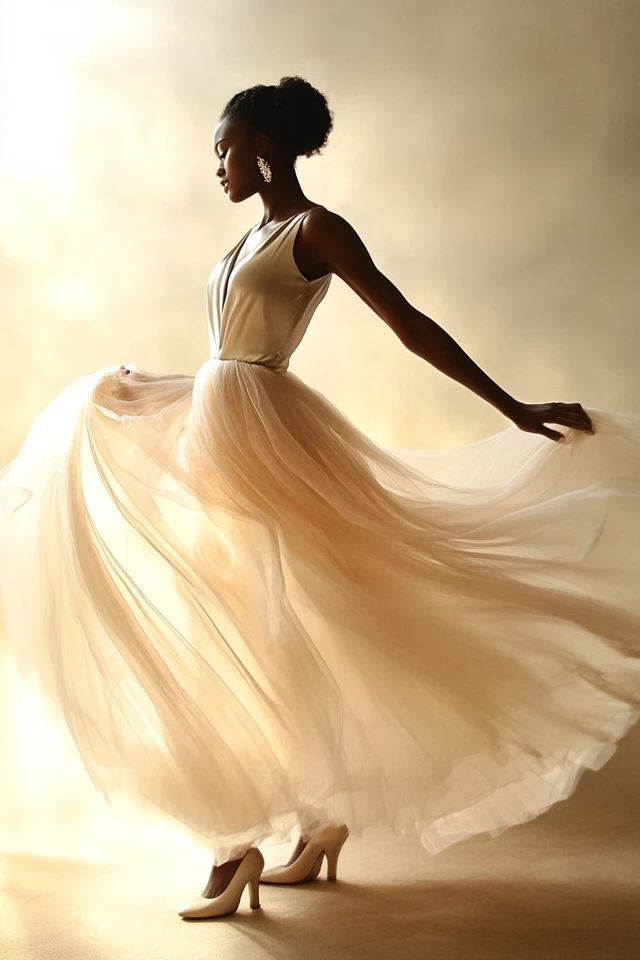
Blush and pastels such as lavender, baby blue and mint look gentler in tulle than in satin alone. Jewel tones like emerald, royal blue and burgundy look deep in satin because the sheen intensifies them. Tulle over a jewel tone mutes it slightly, which keeps a dark dress from feeling heavy.

How do you choose a silhouette for your frame?
These are starting points, not rules. Try on more than one shape.
- If you are petite, an A-line with a satin bodice and a light tulle skirt keeps the volume in proportion. Too many tulle layers can overwhelm a short frame.
- If you have curves, a fit-and-flare with structured satin on top and a tulle skirt gives definition at the waist and room below it.
- If you are tall, a long flowing satin gown with a layered tulle train can carry a lot of length and drama.
For balance, use satin to define the shape and tulle to add volume only where you want the eye to go. A voluminous skirt pairs well with a plain bodice. Big tulle sleeves pair well with a simple skirt.
What about lace instead of tulle?
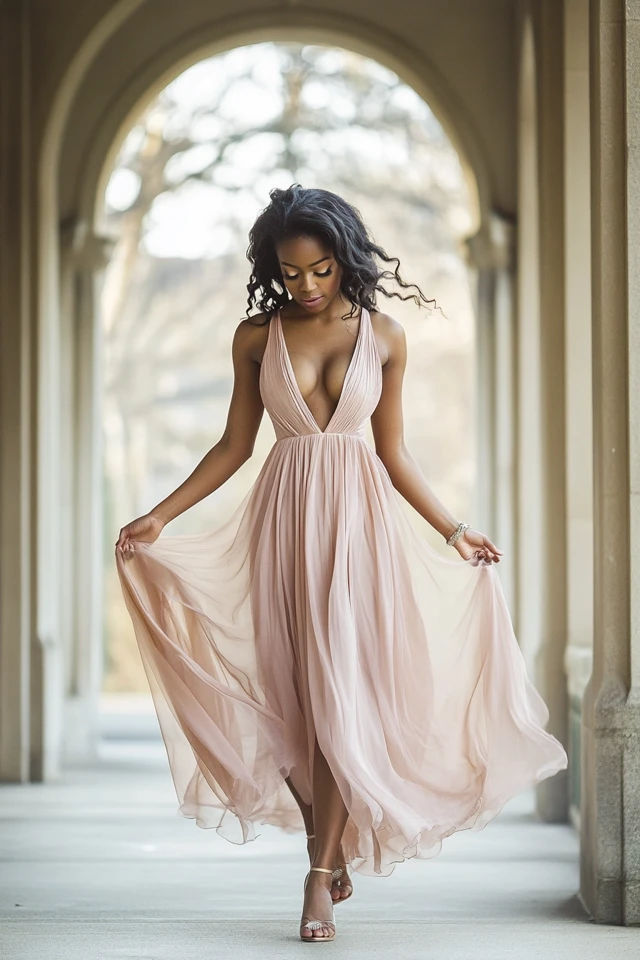
Lace is the other fabric people weigh against tulle for romantic dresses. A lace dress with sleeves gives you pattern and coverage, while tulle sleeves give you softness and a sheer, floaty edge. A lace overlay dress with sleeves usually looks more structured, and a floral lace dress with sleeves puts the pattern in front of the sheen.
If you want lace and tulle in one dress, see combining tulle and lace for princess-inspired dresses. For a closer look at the satin and tulle pairing in a formal setting, pairing tulle with satin for effortlessly elegant gowns goes deeper.
Current shapes and lasting classics
Oversized tulle puff sleeves on a satin dress feel modern. So do high-low hemlines, with a satin underskirt and tulle cascading over it. A satin crop top with a layered tulle skirt is a two-piece take on formalwear.
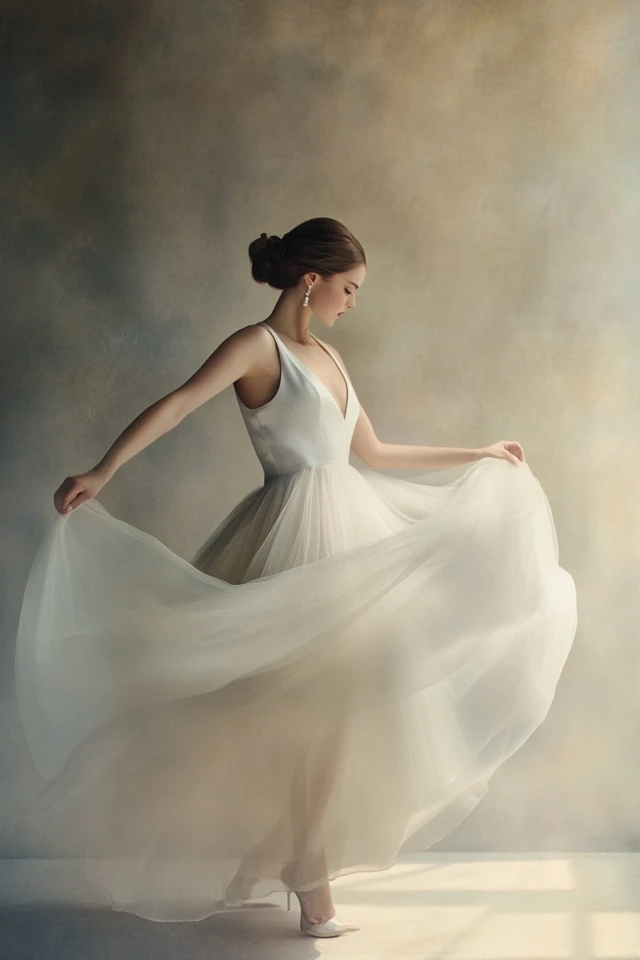
The lasting versions are a satin bodice with a full tulle skirt, and a sleek satin sheath with a tulle overlay or train. A tulle veil or satin gloves finish a bridal look.
How to shop for them
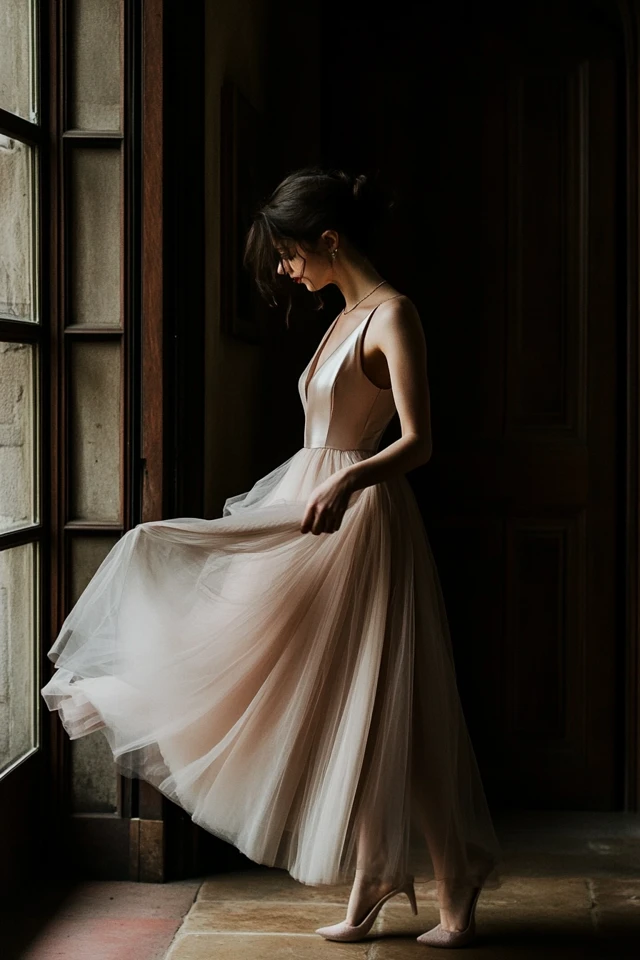
- Feel the satin. Good satin is smooth and has weight; thin satin looks shiny but clings and wrinkles.
- Check the tulle for softness, especially anywhere it touches skin.
- Hold the fabric to the light to see how much sheen it has in daylight and indoors.
- Try one layer of tulle versus several to see which volume you like.
Styling and accessories
Keep jewelry minimal with satin so the fabric stays the focus. With tulle-heavy designs, simple accessories or an updo balance the volume. A satin clutch or statement earrings add a single pop of color. Satin heels or tulle-covered pumps tie the look together.
For an evening idea in satin alone, try romantic date night dresses with satin slip styles. For wedding parties, combining satin and tulle for romantic bridesmaid dresses shows how to mix the two across a group. If you want a lighter, more casual shape, look at casual tulle maxi dresses.
Frequently asked questions
Can satin and tulle dresses work for casual events?
Yes. Pick simpler designs with less volume, such as a satin slip dress with a light tulle overlay, and dress it down with flat sandals or a denim jacket.
How do I care for satin and tulle?
Follow the care label first, since silk satin and polyester satin are treated differently. Store satin flat or on a padded hanger, and steam tulle gently from a distance. For stains, use a method suited to the fiber and check with a dry cleaner for delicate or bridal pieces.
Are satin and tulle dresses flattering on all body types?
The pairing is flexible because you can place each fabric where you want structure or volume. Try a few silhouettes and choose the one that sits well at the shoulders and waist.
Can I wear satin and tulle year-round?
Yes. Satin is comfortable in most seasons with the right layers, and a single tulle layer stays light for warmer weather.
Filed under Fabrics & Textures