
The Best Footwear Options For A Capsule Wardrobe Timeless Versatile And Functional
Building a wardrobe is very similar to designing a home. You need a solid foundation before you can start decorating with the fun, frivolous accents. In my years styling high-end clients, the most common issue I see isn’t a lack of options, but a lack of functionality. We have all stood in a closet full of shoes, yet felt we had nothing to wear because the foundations were missing.
A capsule shoe wardrobe is not about minimalism for the sake of deprivation. It is about curating a lineup where every single pair pulls its weight. It reduces decision fatigue and ensures that whether you are heading to a board meeting or the farmers market, your footwear elevates your outfit rather than detracts from it.
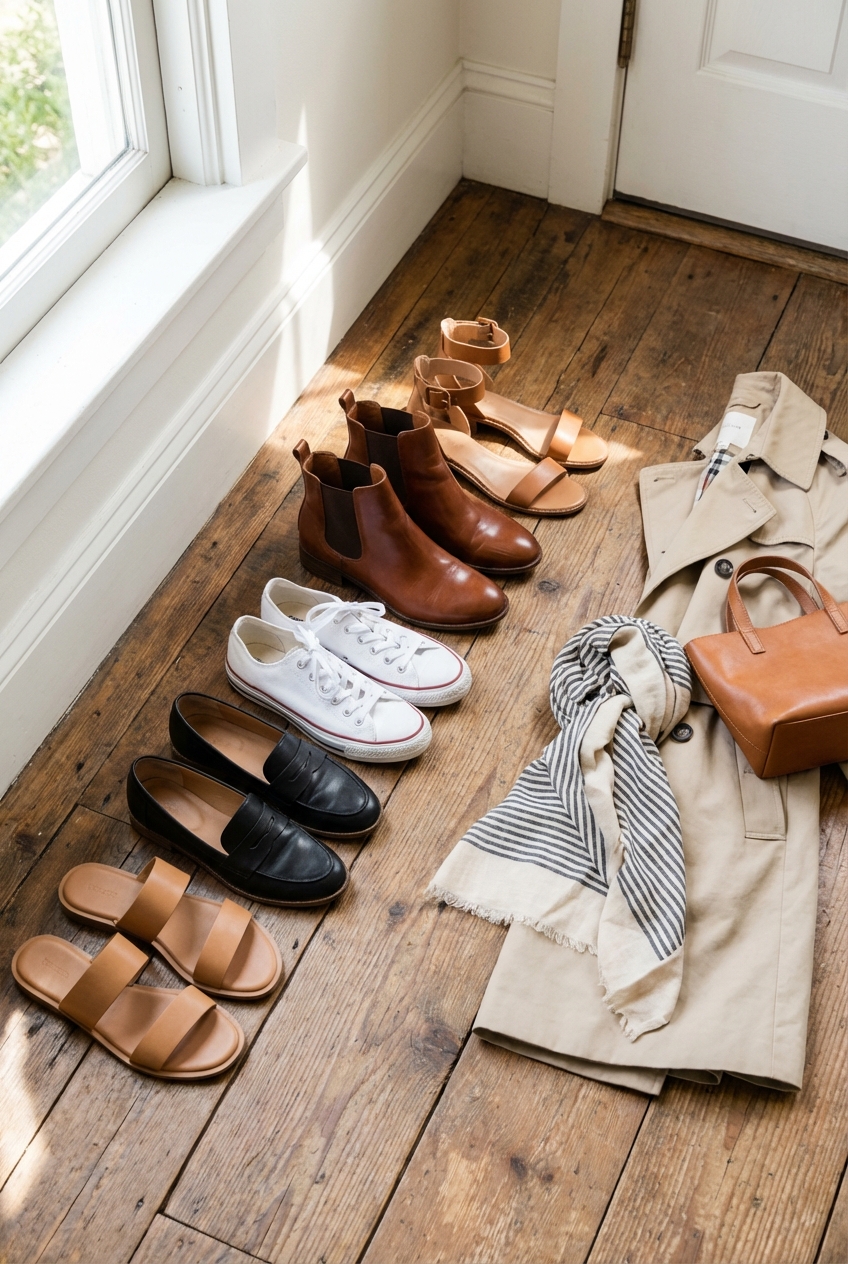
When you strip away the trends that last only a season, you are left with silhouettes that have stood the test of time for decades. These are the shoes that bridge the gap between comfort and style. For a curated look at these essential styles, make sure to browse the Picture Gallery at the end of this blog post.
The Clean White Sneaker
The white sneaker is the modern woman’s loafer. It has transcended gym culture to become a legitimate piece of fashion hardware. In a capsule wardrobe, this is your daily driver, capable of dressing down a suit or polishing up a pair of joggers.
Material Matters
When selecting a white sneaker for a capsule collection, steer clear of canvas. While canvas is breathable, it absorbs dirt instantly and degrades quickly. Instead, opt for a smooth, high-quality leather. Leather can be wiped down, polished, and generally ages better with wear. It also adds a weight and texture that looks more expensive and intentional than cloth.
Silhouette and Sole
The profile of the sneaker dictates its versatility. Avoid overly chunky “dad” sneakers or specialized running shoes with heavy arch supports if you want maximum wearability. Look for a low-top silhouette with a sleek, flat sole. The sole should be between 1 and 1.5 inches thick. This provides enough cushion for a day of walking but remains streamlined enough to wear with a midi skirt.
Stylist’s Note:
The biggest mistake clients make is wearing their “beater” gym sneakers as fashion items. The difference is in the condition. A capsule sneaker must be kept pristine. I recommend keeping a pack of sneaker wipes or a magic eraser in your entryway. A quick wipe after every wear keeps the rubber soles bright white, which is the key to making this look chic rather than sloppy.
Styling Combinations
- The Commuter: Wide-leg trousers, a fitted cashmere tee, and a trench coat.
- Weekend Brunch: Straight-leg denim (light wash), an oversized button-down, and a sweater draped over the shoulders.
- Summer Transition: A floral midi dress and a denim jacket.
The Black Leather Ankle Boot
If the sneaker is the hero of spring and summer, the black ankle boot is the workhorse of fall and winter. This shoe anchors your wardrobe, providing a sleek line that elongates the leg and adds a touch of edge to softer fabrics.
The Shaft Height Rule
The most critical technical detail of an ankle boot is the shaft height. To work with modern denim cuts (which are often cropped or straight-leg), the boot needs to come up slightly higher on the ankle. You want the boot to tuck under the hem of your jeans or meet the hem exactly. If there is a gap of skin showing between the boot and the pant, it visually chops your leg in half.
Heel Height and Shape
For a capsule wardrobe, functionality is paramount. A block heel is non-negotiable here. It provides stability on city grates and uneven pavement. Aim for a heel height between 1.5 and 2.5 inches. This gives you a lift without compromising your lower back during a full day of wear.
Common Mistakes + Fixes:
- Mistake: Buying a boot with a wide opening at the ankle. This causes your pants to bunch up awkwardly on top of the boot.
- Fix: Look for a “sock boot” style or a Chelsea boot with elastic gussets that hug the ankle tightly. This creates a seamless line from leg to foot.
Material Selection
Stick to smooth calfskin leather rather than suede for your primary black boot. Suede is beautiful but impractical for a daily shoe if you live in a climate with rain or snow. Smooth leather can be waterproofed and buffed. If you have the budget, look for a Goodyear welt construction. This means the sole can be replaced by a cobbler, extending the life of the boot by years.
The Classic Loafer
The loafer brings a masculine energy that balances out feminine separates. It is the perfect shoe for when a sneaker feels too casual, but a heel feels too ambitious. It implies you mean business but prioritize comfort.
Hardware vs. Minimalist
There are two main camps for loafers: the penny loafer (clean, no hardware) and the horsebit loafer (metal hardware). For a capsule, consider your jewelry. If you strictly wear gold, a gold horsebit loafer is a stunning accessory. If you mix metals or prefer silver, a clean penny loafer might be more versatile.
The Break-In Period
Loafers are notorious for being stiff initially. When trying them on, pay attention to the “vamp” (the top part of the shoe that covers your foot). If it digs into your arch or feels tight across the widest part of your foot, do not assume it will stretch enough.
What I’d Do in a Real Project:
I always advise clients to wear thick socks with new loafers around the house for three distinct 30-minute sessions before wearing them outside. This warms up the leather and molds it to your heel without risking blisters on a long commute.
Styling The Loafer
- Office Ready: Cigarette pants (ankle length), a silk blouse, and a blazer.
- Academic Chic: A plaid mini skirt, black opaque tights, and a turtleneck.
- Casual Friday: Raw-hem jeans, a white t-shirt, and a leather moto jacket.
The Nude or Metallic Strappy Sandal
Every woman needs a shoe for weddings, galas, date nights, and upscale dinners. The mistake is buying a specific shoe for every specific dress. The solution is a “barely there” sandal that disappears on the foot.
Why Metallic Acts as a Neutral
While “nude” is a great option, finding a nude that perfectly matches your skin tone can be difficult as seasons change and you gain or lose a tan. A muted gold or silver metallic sandal is actually the ultimate neutral. It reflects the colors around it and works with jewel tones, pastels, and black evening wear equally well.
Comfort Constraints
Since this is a shoe you might stand in for hours at a cocktail party, support is vital. Look for a strap that goes across the toes and, crucially, a strap that secures the ankle. Slides or mules can be difficult to keep on your feet when dancing or walking fast.
Expert Rule of Thumb:
Check the placement of the toe strap. It should sit behind the nail bed of your pinky toe. If the strap cuts right across the pinky toe, it will cause agonizing friction within twenty minutes.
Heel Geometry
A stiletto is classic, but a slightly flared heel offers more surface area on the ground without looking chunky. Aim for 3 inches or lower. Anything higher alters your center of gravity significantly and limits the shoe’s versatility.
The Pointed Toe Flat or Slingback
This is the power shoe of the capsule wardrobe. It replaces the uncomfortable 4-inch work pump of the past. A pointed toe is a visual trick; it extends the line of the leg, making you look taller and leaner, even if the shoe is completely flat.
The Power of the Point
Round-toe ballet flats can sometimes look a bit juvenile or overly casual. A pointed toe immediately reads as sharp and sophisticated. It commands respect in a boardroom just as well as a high heel, but allows you to run for a taxi.
Material and Color
This is an excellent place to introduce a second neutral, such as a deep cognac, navy, or a texture like snakeskin or croc-embossed leather. These textures hide scuffs better than smooth leather and add visual interest to monochrome outfits.
Stylist’s Note:
If you have wide feet, pointed shoes can be torture. Look for brands that offer “wide” sizing or choose a shoe with a “deep V” cut on the vamp. This exposes more of the foot and prevents the leather from squeezing the sides of your feet too tightly.
Versatility Checklist
- Can you wear it with a suit? Yes.
- Can you wear it with cuffed boyfriend jeans? Yes.
- Can you wear it to a dinner where you have to walk a few blocks? Yes.
The Knee-High Boot
To round out the capsule, you need a heavy hitter for deep winter and transitional weather. The knee-high boot offers warmth and coverage that an ankle boot cannot. It allows you to continue wearing skirts and dresses well into the colder months.
Fit and Circumference
The fit of the shaft is everything. A boot that gaps significantly at the calf looks ill-fitting, like a child wearing a parent’s shoes. Conversely, a boot that squeezes the calf creates an unflattering bulge. Measure your calf at its widest point while seated. Compare this measurement to the “shaft circumference” listed on product descriptions.
Heel and Sole
A riding boot style (flat or 1-inch heel) is timeless. Avoid excessive buckles, studs, or fringe. A clean, smooth leather shaft is the most versatile. If you prefer a heel, a stacked wooden heel adds a beautiful contrast to black leather.
Common Mistakes + Fixes:
- Mistake: Buying boots that are too short.
- Fix: The boot should hit just below the knee cap (about 1 inch below). Mid-calf boots are very difficult to style because they hit the leg at its widest point, which can be unflattering.
Styling The Tall Boot
- The Equestrian Look: Skinny jeans tucked in (the only time skinny jeans are essential), a chunky cable knit sweater, and a blazer.
- Boho Winter: A flowing floral maxi dress with thermal leggings underneath (hidden), and the boots.
- Modern Mod: A wool mini skirt, tights, and a fitted turtleneck.
Finish & Styling Checklist
Once you have acquired these six pillars of footwear, maintaining them is what keeps your wardrobe feeling “high-end.” Even a $500 pair of boots looks cheap if the heels are worn down to the metal nail or the leather is salt-stained.
The Maintenance Routine:
- Waterproof immediately: Spray every new pair of suede or leather shoes with a high-quality protectant before the first wear.
- Heel caps: Check the little plastic caps at the bottom of your heels. When they wear down, take them to a cobbler. It costs about $20 and saves the heel structure.
- Storage: Store boots with rolled-up magazines or boot shapers inside to prevent the ankles from creasing and collapsing.
- Rotation: Never wear the same pair of leather shoes two days in a row. Leather needs 24 hours to dry out from the natural moisture of your feet. This prevents odors and cracking.
FAQs
How much should I spend on capsule footwear?
I recommend spending more on your “daily drivers.” If you wear black boots 4 days a week, spend $200-$400 on a high-quality pair that will last 5 years. For the strappy sandal you wear once a month, you can budget less ($100 or under). Calculate the “Cost Per Wear” (Price / Number of times worn). A $300 boot worn 100 times costs $3 per wear. A $50 trend shoe worn once costs $50 per wear.
Can I have a capsule wardrobe if I love color?
Absolutely. “Neutral” doesn’t have to mean black and beige. If your wardrobe is mostly earth tones, your “black boot” might actually be a dark olive green. If you wear a lot of navy blue, a burgundy loafer acts as a beautiful neutral. The key is that the shoe must match at least 70% of the clothes in your closet.
What about rain or snow boots?
True utilitarian gear (heavy snow boots, rubber rain boots) are considered “gear,” not fashion staples. Keep them in your closet for severe weather, but don’t count them as one of your core fashion items. However, a sleek waterproof Chelsea boot can often double as your daily black boot.
Conclusion
Curating a footwear capsule is an exercise in restraint and realism. It requires being honest about your lifestyle. If you walk three miles a day, a 4-inch stiletto has no place in your core rotation, no matter how beautiful it looks on the shelf.
By focusing on these six silhouettes—the sneaker, the ankle boot, the loafer, the sandal, the pointed flat, and the tall boot—you cover every possible social and professional scenario. You free yourself from the clutter of “maybe” shoes and step into the confidence of always having the right thing to wear.
Picture Gallery


