
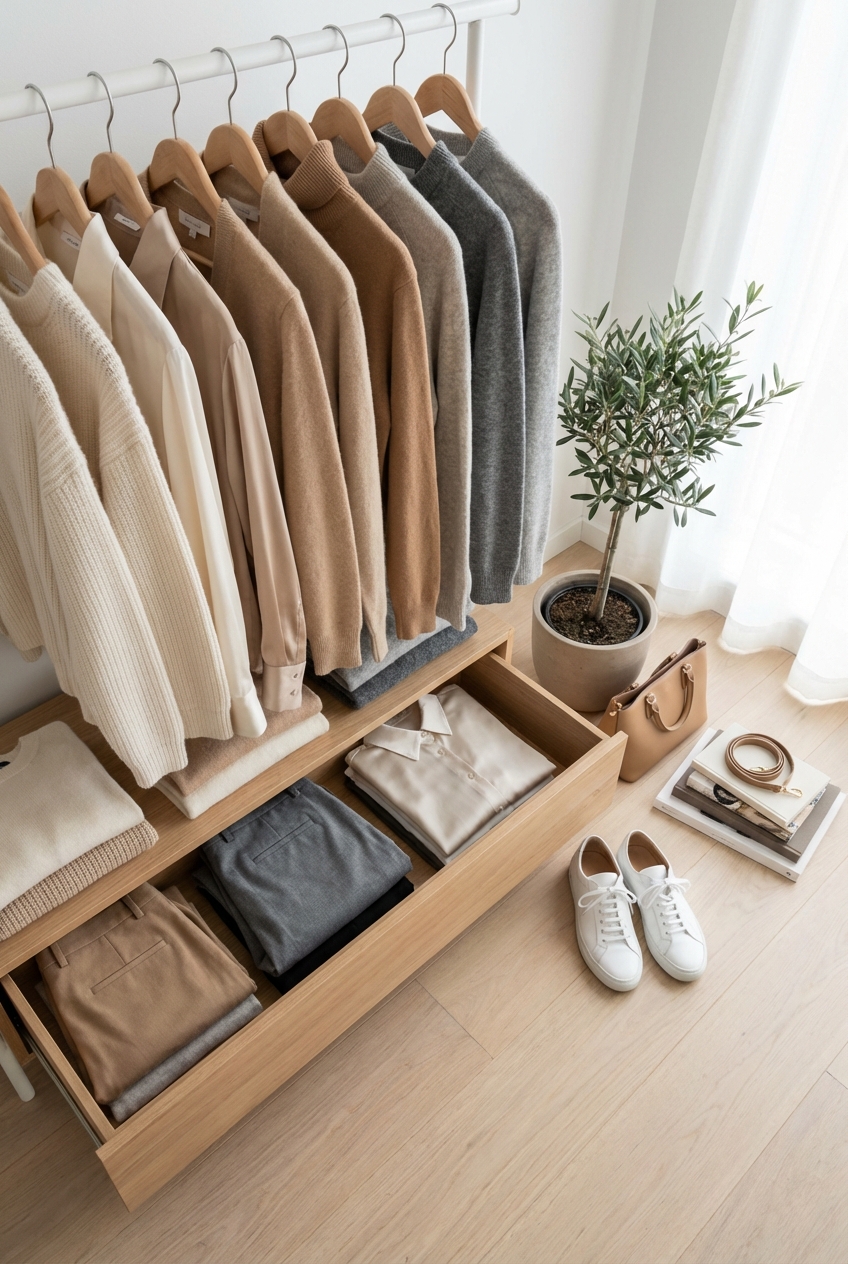
The Best Neutral Pieces For A Perfect Capsule Wardrobe
I distinctly remember a client consultation early in my career where we stood before a massive walk-in closet packed with clothes. Despite the sheer volume of fabric in that room, my client looked at me with genuine frustration and said, “I have absolutely nothing to wear.” This is the paradox of the modern wardrobe. We often buy for fantasy versions of our lives rather than the reality of our daily routines.
The solution isn’t to buy more trending items; it is to strip back to a foundation of high-quality neutrals. A capsule wardrobe allows you to do more with less. It quiets the noise in your closet and makes getting dressed in the morning a creative joy rather than a stressful chore.
In this guide, I am breaking down the non-negotiable neutral pieces that form the backbone of a high-end wardrobe. If you want visual inspiration on how these pieces come together, make sure to check out the Picture Gallery at the end of the blog post.
1. The Architecture of the Closet: The Classic Button-Down
The white button-down is the arguably the most hardworking item in any closet. However, not all shirts are created equal. In high-end fashion, we look for “architecture” in a shirt—meaning the fabric has enough weight to hold its shape and doesn’t collapse against the body.
For a true capsule piece, look for 100% cotton poplin. Poplin has a tight weave that offers a crisp finish and feels cool against the skin. If you prefer a more relaxed drape, a silk crepe de chine is a luxurious alternative, though it requires more delicate care.
Pay close attention to the fit of the shoulders. The seam should sit exactly at the edge of your shoulder bone. If it sits closer to your neck, the shirt is too small; if it drops down your arm (unless it is intentionally oversized), it will look sloppy under a blazer.
Stylist’s Note: The Collar Test
When selecting a button-down, test the collar stiffness. A flimsy collar that flattens under a jacket ruins the look. I always look for shirts with removable collar stays or fused interfacing that keeps the collar standing tall.
Common Mistakes + Fixes
- The Mistake: Buying a shirt that pulls at the bust line.
- The Fix: Always buy to fit your largest measurement (usually the bust or shoulders) and have the waist tailored in. It is inexpensive to add darts to the back of a shirt, but impossible to add fabric where it doesn’t exist.
2. The Lower Framework: Tailored Wool Trousers
Denim is essential, but tailored wool trousers elevate your style quotient instantly. A neutral trouser in black, charcoal, or camel serves as the bridge between casual and formal. You want a “seasonless wool”—usually a tropical weight wool or a wool-gabardine blend—that breathes in summer but insulates in cooler months.
Let’s talk about rise. For the vast majority of body types, a mid-to-high rise (approximately 10 to 12 inches) is the most flattering. It elongates the leg line and holds the midsection comfortably. Low-rise trousers can disrupt visual proportions and make tucking in shirts difficult.
The hem is where most people get it wrong. For a straight-leg trouser, the hem should just graze the top of your shoe—this is called a “slight break.” If the fabric puddles around your ankles, it looks messy and ruins the hem. If it is too short without being intentionally cropped, it looks like it shrank in the wash.
What I’d Do in a Client Fit
I always bring the three pairs of shoes the client wears most frequently to the tailoring appointment. We pin the trousers based on the heel height they wear 80% of the time. If you alternate between flats and 4-inch heels, you cannot use the same pair of trousers for both without compromising the silhouette.
3. The Third Piece: An Oversized Blazer
In the fashion industry, we use the “Third Piece Rule.” A top and pants are clothes; adding a third piece (a blazer) makes it an outfit. The modern neutral blazer should not look like a corporate suit jacket from 2005. You want a slightly relaxed, “borrowed from the boys” silhouette.
Look for navy, black, or a heritage check pattern. The material should be substantial. A flimsy synthetic blend will shine under lights and pill quickly. Opt for wool, tweed, or a heavy linen for warmer climates. The buttons are a tell-tale sign of quality. If a blazer has cheap plastic buttons, swap them out for horn or brass buttons to instantly make a $100 jacket look like a $500 investment.
The length is crucial here. A modern blazer should hit below the hip bone. Anything cropped higher can look dated unless it is a specific Chanel-style jacket. The longer line creates a lean vertical column that is universally flattering.
Stylist’s Note: The Sleeve Lining
Check the lining of the sleeves. High-quality blazers use cupro or viscose lining, which allows your arms to slide through easily. Polyester linings trap heat and can make you sweat comfortably. If the lining creates friction against your shirt, skip it.
4. The Everyday luxury: Cashmere Knitwear
A neutral capsule wardrobe requires texture to prevent boredom. Cashmere provides that necessary softness and depth. A crewneck sweater in oatmeal, gray, or navy is non-negotiable. It works layered over the white button-down, under the blazer, or draped over the shoulders.
When shopping for cashmere, perform the “stretch test.” Gently stretch a section of the knit and let go. It should snap back into shape immediately. If it sluggishly returns or stays stretched, the fiber is low quality or the knit is too loose. Two-ply cashmere is the minimum standard I recommend for durability.
Pilling is a natural occurrence in natural fibers and isn’t necessarily a sign of bad quality. However, you must maintain it. A fabric shaver or a cashmere comb is an essential tool for your wardrobe kit.
Common Mistakes + Fixes
- The Mistake: Hanging sweaters on wire hangers.
- The Fix: Gravity is the enemy of knitwear. Hanging causes “shoulder bumps” and stretches the garment length. Always fold your knits and stack them on a shelf. If space is tight, use the “fold-over” hanger method.
5. The Outer Shell: The Classic Trench Coat
The trench coat is the ultimate trans-seasonal hero. It protects your outfit from the elements while looking polished. The classic color is beige or khaki, but do not underestimate the chic factor of a black or navy trench if you live in a city with grittier weather.
Scale is everything with a trench coat. Ensure the coat is large enough to fit over your blazer or a chunky knit without restricting arm movement. If the sleeves are tight, you will never reach for it. I typically suggest sizing up one size in outerwear to accommodate layers.
Length-wise, aim for knee-length or midi-length. A coat that ends at the widest part of the hip is generally unflattering. A longer coat creates a dramatic, sweeping silhouette that protects more of your clothing from rain and wind.
What I’d Do in a Real Project
I always check the hardware. The buckles on the cuffs and belt should be leather-wrapped or substantial metal. Cheap plastic buckles are the first thing to break. I also teach clients to tie the belt in a knot at the back when wearing it open, rather than letting the belt dangle, which looks unkempt.
6. The Foundation of Movement: Dark Denim
While wool trousers are for polish, dark denim is for durability and ease. A dark indigo wash without whiskering or distressing is the most versatile. It can be worn on casual Fridays or to a weekend brunch.
Currently, a straight-leg cut is the most timeless option. Skinny jeans date an outfit, and extreme wide-legs can be difficult to style with certain coats. A straight leg that follows the line of your hip and thigh without clinging is the goal.
Pay attention to fabric composition. You want denim with at least 98% cotton and no more than 2% elastane. Jeans with too much stretch (jeggings) lose their shape after two hours of wear, resulting in a saggy rear view. High cotton content requires a “break-in” period, but they will mold to your body beautifully over time.
Stylist’s Note: The Wash Logic
To keep dark denim dark, wash it as little as possible. When you do wash, turn them inside out and use cold water. Never put your good denim in the dryer; heat breaks down the elastic fibers and fades the indigo dye. Line dry them always.
Finish & Styling Checklist
Now that you have the pieces, the magic is in the assembly. Here is how I verify a client’s capsule is ready for the real world:
- The Color Harmony Check: Can you blindly pull a top and a bottom from this rack and wear them together? If the answer is no, the colors are not truly neutral. Stick to black, white, gray, navy, camel, and cream.
- The Texture Mix: Do you have a mix of matte and shine? Pairing a matte wool sweater with a silk skirt creates interest. Pairing cotton with cotton can look flat.
- The Shoe Edit: You need a white leather sneaker, a black loafer or ankle boot, and a nude or black pump. These three cover 90% of life’s occasions.
- Proportion Play: If you are wearing a voluminous top (like the oversized blazer), keep the bottom slimmer (straight-leg denim). If you are wearing wide-leg trousers, keep the top fitted (tucked-in turtleneck).
FAQs
How much should I spend on these pieces?
Invest the most in outerwear and shoes. A cheap coat looks cheap instantly, and cheap shoes hurt your feet. You can find excellent cotton t-shirts and button-downs at mid-tier price points. Save on trends; splurge on the items you will wear three times a week.
What if neutrals make me feel washed out?
This is a common concern. The key is finding the right neutral for your skin tone. If pure white drains you, opt for cream or ivory. If black is too harsh, try charcoal or navy. Camel comes in varying shades from cool beige to warm toffee; hold the fabric up to your face in natural light to see which makes your skin glow.
Can I add patterns to a neutral capsule?
Absolutely. Stick to classic, geometric patterns that act as neutrals. Breton stripes (navy and white), leopard print (used sparingly as an accessory), and Prince of Wales check are all considered neutrals in the fashion world because they mix easily with solid colors.
How do I handle maintenance for these fabrics?
Read the care label before you buy. If you are not a person who goes to the dry cleaner, do not buy dry-clean-only silk or structured wool. Look for “washable wool” or high-quality cottons that can be laundered at home on a delicate cycle.
Conclusion
Building a perfect capsule wardrobe is not about deprivation; it is about curation. It is about opening your closet doors and feeling a sense of calm rather than panic. By investing in these architectural, high-quality neutral pieces, you are building a sartorial identity that withstands the trend cycle.
Remember that fit is paramount. A $50 thrifted blazer that has been tailored to your body will always look more expensive than a $500 designer jacket that doesn’t fit properly. Take your time finding these pieces. This is a collection you build over seasons, not a haul you complete in an afternoon. Prioritize fabric feel, seam construction, and how the garment makes you carry yourself.
Picture Gallery


