
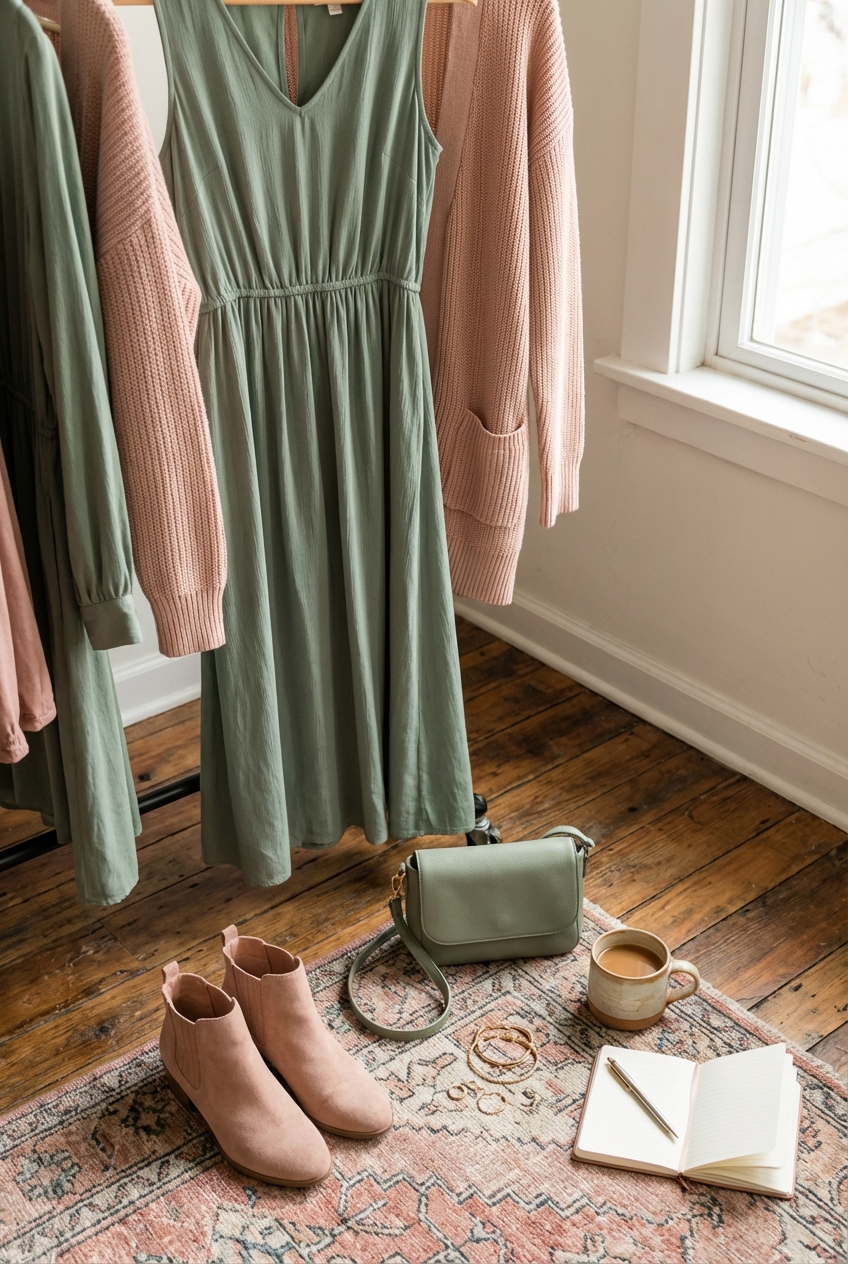
The Best Sage Green And Blush Palettes For Everyday Dresses
There is a quiet sophistication in the pairing of sage green and blush pink. While high-contrast pairings like black and white often demand attention, this soft, earthy combination whispers luxury. In my years of styling clients for everything from casual brunches to high-stakes board meetings, I have found this duo to be a secret weapon for looking polished without trying too hard.
The magic lies in the balance of temperature. Sage acts as a grounded, calming neutral that sits just on the edge of cool, while blush offers a warm, inviting cosmetic tone that illuminates the complexion. When you translate this palette into everyday dresses, you create a wardrobe that feels fresh, feminine, and surprisingly utilitarian.
Whether you are looking for a breezy linen midi for weekend errands or a structured silk shift for the office, mastering this color story is about understanding texture and tone. If you are looking for visual inspiration on how to style these pieces, be sure to scroll down to the Picture Gallery at the end of the blog post.
Understanding The Color Theory: Why It Works
Many women hesitate to mix green and pink because they fear looking like a festive holiday decoration or a watermelon. The key difference here is saturation. Sage and blush are desaturated versions of their primary parents, meaning they contain enough gray or white to soften their impact.
Sage is essentially a green that has been “dusted” with gray. This lowers the intensity and turns it into a pseudo-neutral, much like olive or khaki. It anchors the outfit.
Blush, on the other hand, acts as a “nude” for many skin tones. It provides lightness and airiness. When you pair a sage dress with blush accessories, or vice versa, you are balancing an earth tone with a skin tone. This is the foundation of organic, effortless style.
Designer’s Note: The “Temperature” Test
When I am pulling looks for a client, I always check the “temperature” of the sage fabric against natural light. Some sage greens lean yellow (warmer), while others lean blue (cooler, almost seafoam).
If you have cool undertones in your skin (veins look blue), opt for a blue-leaning sage. If you have warm undertones (veins look green), a yellow-based sage or “dried herb” color will make your skin glow.
Fabric Selection For Daily Wear
The success of an everyday dress relies entirely on the fabric. Since sage and blush are light colors, cheap synthetic fabrics can look shiny or sheer, which ruins the “high-end” aesthetic we are aiming for.
For everyday wear, I prioritize natural fibers. Linen is my top choice for this color palette. The natural slubs and texture of linen give sage green a depth that flatters the figure, whereas flat cotton might look like medical scrubs.
Silk or Cupro blends are excellent for blush tones. These fabrics have a matte luster that mimics the glow of skin. If you are choosing a blush dress, ensure it is lined. A blush dress that shows the outline of pockets or undergarments instantly loses its elegance.
Common Mistakes + Fixes
- Mistake: Buying 100% polyester sage dresses.
- Fix: Polyester often holds dye poorly, making sage look like murky gray. Look for Viscose, Rayon, or Tencel blends if you want drape.
- Mistake: Wearing blush near the face if you have redness in your skin.
- Fix: If you have rosacea or flush easily, wear the sage color as the dress and use blush for your shoes or bag. The green cancels out redness.
Silhouette Guide: Lengths and Cuts
Everyday dresses need to function for real life. This means you need to be able to walk, sit, and reach without constant adjustment. The silhouette you choose should dictate how you incorporate the color palette.
For a sage green dress, I love a utilitarian shirt-dress cut. The structure of a collar and buttons plays into the “military-lite” vibe of the green. Look for a hemline that hits two inches below the knee (midi length) for the most versatile look.
For blush dresses, softer silhouettes work best. Think wrap dresses or slip dresses layered with cardigans. The color is inherently romantic, so a silhouette with movement complements the hue.
What I’d Do For A Client (Real Project Logic)
If I were building a capsule wardrobe for a client, here is exactly what I would buy:
- The Hero Piece: A sage green linen wrap dress. It breathes in summer and layers over a turtleneck in fall.
- The Secondary Piece: A blush midi slip skirt or slip dress.
- The Third Piece: A knit cardigan in oatmeal or cream to bridge the two colors.
- The Shoe: A darker sage suede loafer or a blush leather block heel.
Integrating Prints and Patterns
Solids are safe, but patterns add personality. The sage and blush combination is frequently found in floral prints, but there are more modern ways to wear it.
Gingham checks in sage and white are incredibly chic for spring and summer. When styled with a blush trench coat or blush sneakers, the look feels intentional and preppy. This is a great entry point if you are afraid of bold florals.
Abstract watercolors are another high-end option. Look for dresses where the colors bleed into one another. This softens the transition between the green and pink, creating a dreamlike quality that looks expensive.
If you choose a printed dress, keep your accessories solid. A busy print with a complex shoe or bag can look cluttered. Let the print be the focal point.
Accessorizing: The Metal and Leather Rules
Hardware and leather goods can make or break this color palette. Because sage and blush are soft, harsh black leather often creates too much contrast. It visually cuts the outfit in half.
Instead of black, reach for cognac, tan, or deep espresso browns. These warm leather tones harmonize with the earthy nature of sage. A cognac belt over a sage dress is a classic pairing that defines the waist without looking severe.
For jewelry, the metal you choose changes the vibe. Gold warms up the sage and makes the blush look peaches-and-cream. Silver cools everything down, giving the look a modern, Scandinavian feel.
Rose gold is the “wild card” that works beautifully here. Since rose gold is essentially a metallic blush, it blends seamlessly with the palette while adding a bit of shine.
Layering For Season Transitions
One of the best qualities of sage and blush is that they are seasonless. They are not strictly pastels for Easter, nor are they strictly jewel tones for Christmas. They live in the middle.
In the spring, a blush dress looks perfect with a sage utility jacket. The jacket adds a “tough” element to the sweet dress. Roll the sleeves and cinch the waist to keep the proportions right.
In the autumn, take your sage dress and layer a chunky blush knit sweater over it. Treat the dress like a skirt. Add suede boots in a neutral taupe, and you have a cozy, texture-rich outfit.
Pro-Level Styling Tip: The Third Color
If you feel like sage and blush are too sweet together, introduce a third “grounding” color. My go-to is Navy Blue.
Navy acts as a sharp contrast that makes the sage look greener and the blush look pinker. A navy blazer thrown over this palette adds immediate authority and makes the look appropriate for corporate environments.
Finish & Styling Checklist
Before you walk out the door, run through this quick mental checklist to ensure your look is cohesive and polished.
- Check the Hem: Does the dress length work with your shoe height? Midi dresses should not hit the widest part of your calf.
- Check Opacity: If wearing blush, did you check the transparency in bright natural light?
- Hardware Harmony: Are your zippers, jewelry, and bag hardware clashing, or do they tell a cohesive story (e.g., all gold)?
- The “Third Piece”: Have you added a belt, a jacket, or a structured bag to finish the look?
- Wrinkle Check: If wearing linen or rayon, have you steamed the garment? These fabrics look expensive when smooth but sloppy when crushed.
FAQs
Can I wear sage and blush in the winter?
Absolutely. The key is fabric weight. Switch from linen and silk to wool, cashmere, and heavy cotton twill. A sage wool coat over a blush sweater dress is a stunning winter combination.
What shoe color is best for a sage dress?
Nude or skin-tone shoes are the most flattering as they elongate the leg. For a bolder look, try a monochromatic sage shoe or a contrasting cognac leather boot. Avoid bright white pumps, as they can look dated.
Is this palette appropriate for a wedding guest dress?
Yes, but be careful with the shade of blush. Some very pale blush tones can photograph as white, which is a major faux pas at a wedding. Opt for a deeper “dusty rose” or stick to a sage green dress to be safe.
How do I stop my linen sage dress from wrinkling immediately?
You can’t stop it entirely—that is the nature of linen. However, using spray starch when ironing can help hold the shape longer. Embracing the “lived-in” luxury look of linen is also part of the style.
Conclusion
Adopting a sage green and blush palette for your everyday dresses is a choice that signals confidence and calm. It moves away from the safety of all-black wardrobes and embraces color in a way that is wearable and timeless.
By focusing on natural fabrics, understanding your skin’s undertones, and accessorizing with warm leathers, you can elevate these soft hues into a powerful style statement. Fashion is ultimately about how you feel in what you wear, and this combination creates a mood that is both grounded and uplifting.
Picture Gallery


