
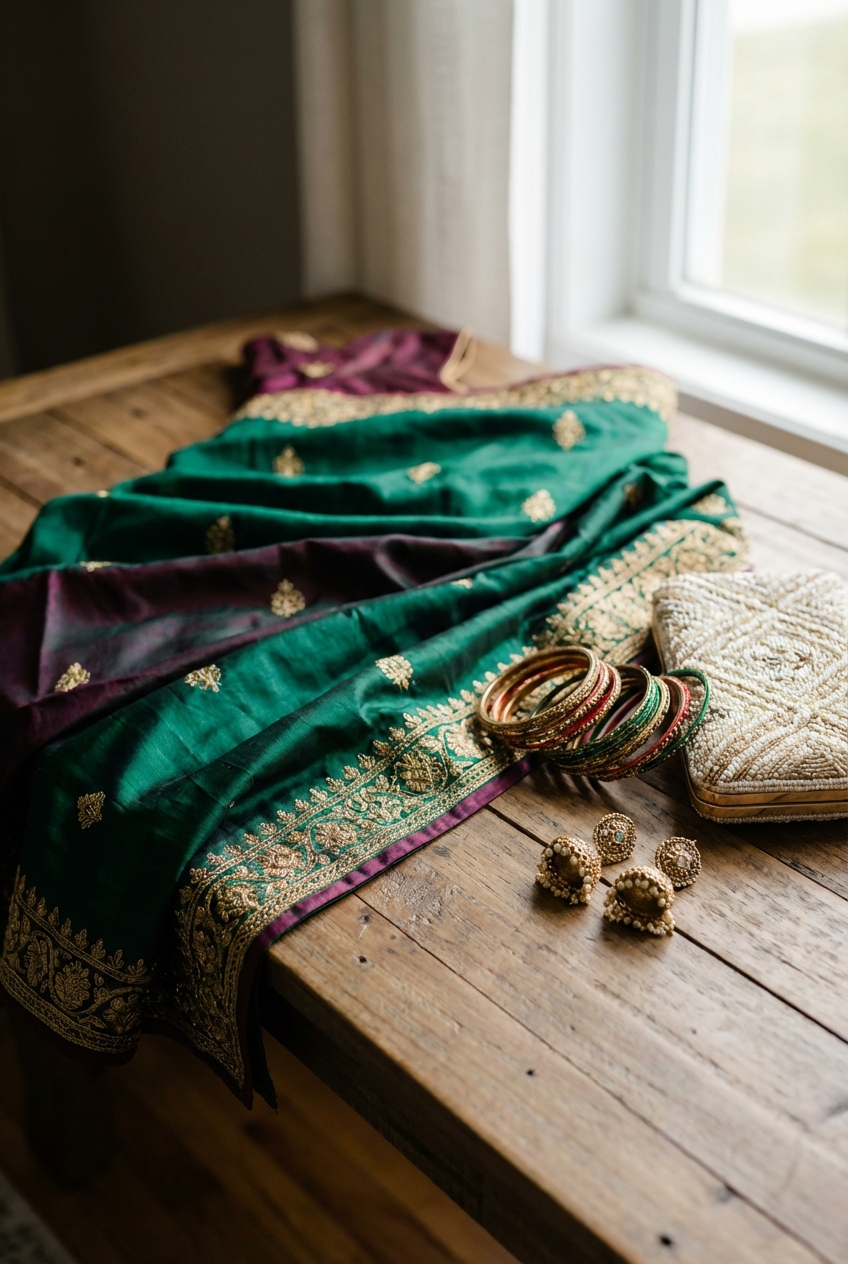
The Best Sarees For Indian Wedding Receptions
Introduction
There is a distinct shift in energy that happens between the wedding ceremony and the reception. The morning or afternoon rituals are steeped in tradition, often requiring heavy silks, modest cuts, and heirloom jewelry. The reception, however, is the after-party. It is where the formality loosens just enough to allow for high glamour, easier movement, and personal style statements that don’t necessarily have to adhere to religious customs.
I remember styling a client for her own reception who was adamant about wearing a traditional red Banarasi weave because she felt she “had to.” We pivoted at the last minute to a structural, metallic concept saree with a corseted bodice. The moment she put it on, her posture changed. She wasn’t just a bride carrying the weight of tradition; she was the hostess of the most glamorous party of her life. That is the feeling we are chasing when hunting for the perfect reception saree.
Whether you are the bride looking for a second look or a guest aiming for the “best dressed” list, the reception saree requires a different set of rules than the wedding saree. It is about fabrics that catch the artificial evening lights, silhouettes that allow for dancing, and colors that pop against a darkened ballroom. If you are looking for visual inspiration to go along with this advice, keep reading because I have curated a stunning Picture Gallery at the end of the blog post.
1. The Evolution of Reception Glamour: Fabrics That Shine
When the sun goes down and the chandeliers turn on, matte fabrics can sometimes look flat. The best reception sarees utilize materials that interact with light. We are moving away from the stiff starched cottons of the morning and embracing fluidity.
The Power of Sequin and Swarovski
For the last few seasons, the “shimmer saree” has dominated luxury runways. However, there is a fine line between expensive glamour and looking like a craft project. High-end sequin sarees use “self-on-self” embroidery, where the sequin color matches the fabric exactly. This creates a liquid metal effect rather than a polka-dot sparkle.
Organza and Tissue Silk
If you prefer structure over drape, organza is the fabric of the moment. It holds its shape, making it excellent for wider, fan-like pleats. However, pure organza can be voluminous. If you are curvy, look for “silk organza” which has a softer hand-feel than polyester variants, or choose a saree where the pleats are pre-stitched in a softer fabric like crepe while only the pallu (the loose end) is organza.
Designer’s Note:
One common issue with heavy sequin sarees is the “snag factor.” If your saree is heavily embellished, it will catch on your open hair, your bangles, and even the groom’s sherwani.
The Fix: If wearing a heavy sequin saree, spray the embellished areas with a clear anti-static spray or hairspray to reduce friction. More importantly, ensure the inner side of the arm (where it rubs against the waist) has a patch of plain satin or net to prevent chafing.
2. Modern Silhouettes: Draping for the Dance Floor
The reception is usually where the DJ takes over. A traditional Nivi drape (the standard over-the-shoulder style) is timeless, but it can be restrictive if you plan on dancing until 2 AM. Modern reception sarees often incorporate structural elements that keep everything in place.
The Pre-Stitched or “Concept” Saree
High-fashion purists used to scoff at pre-stitched sarees, but they are a savior for evening events. These sarees come with the pleats permanently sewn into a waistband. This eliminates the bulk at the navel and ensures your pleats remain perfectly fanned out regardless of how much you move.
The Belted Drape
Adding a belt is the easiest way to modernize a saree for a reception. It cinches the waist, keeps the pallu from sliding off your shoulder during greetings, and adds a piece of jewelry to the midriff. You can use a fabric belt that matches the saree (often provided by designers) or a contrasting leather or metal Sabyasachi-style belt.
Common Mistakes + Fixes:
Mistake: Using large, visible silver safety pins on a dark or metallic saree.
Fix: Invest in double-sided fashion tape for the shoulder and borders. For structural pinning, use small brass or black safety pins that disappear into the fabric. Never pin the front pleats too low; it shortens your legs.
3. Color Theory for Evening Artificial Lighting
Natural light is forgiving; ballroom lighting is dramatic. The pastels that looked ethereal in the morning sunlight can look washed out under yellow halogen reception lights. For the evening, you need saturation and depth.
Jewel Tones
Emerald green, sapphire blue, and deep ruby are fail-safe options. These colors absorb light and look rich in flash photography. They also provide a high contrast background for diamond or polki jewelry, which is the standard for receptions.
Metallics and Champagnes
The “naked dress” trend has translated into the “champagne saree.” Shades of gold, silver, copper, and rose gold are incredibly popular. The key here is to match the undertone of the metal to your skin tone. If you have cool undertones, opt for silver or icy champagne. If you have warm undertones, antique gold or copper will make you glow.
The New Black
For years, black was considered inauspicious for Indian weddings. That rule has largely vanished for receptions. A jet-black saree with silver zardosi work is the epitome of chic. It is slimming, modern, and photographs beautifully.
What I’d do in a real consultation:
If a client wants to wear black but the family objects for superstitious reasons, I suggest “Midnight Blue.” In low light, it reads as black and offers the same slimming silhouette, but technically it satisfies the “no black” rule.
4. The Blouse: The Hero of the Reception Look
In a reception saree, the blouse is often more important than the saree itself. Since you are likely to be standing, mingling, and being photographed from the waist up, the blouse design dictates the entire vibe of the outfit.
The Corset Blouse
Borrowing from Victorian fashion, the corset blouse provides structure and support. It eliminates the need for a bra and cinches the torso. This pairs beautifully with flowy fabrics like chiffon or georgette, creating a nice contrast between the structured top and fluid bottom.
The Jacket or Cape Style
For winter receptions or for those who prefer more coverage, a floor-length jacket worn over the saree or a cape attached to the blouse adds immense drama. This adds vertical lines to your frame, making you look taller.
Necklines and Sleeves
For evening wear, you can push the envelope. Plunging V-necks, off-shoulder cuts, or halter necks work well. If you are going sleeveless, ensure the armhole is cut high enough to hide any side spillage.
Rule of Thumb for Proportions:
If the saree is heavy (full sequins or heavy embroidery), keep the blouse relatively simple or solid. If the saree is plain (solid satin or chiffon), go heavy on the blouse with crystal work or intricate embroidery. Balance is key.
5. The Foundation: Petticoats and Shapewear
You cannot build a luxury look on a poor foundation. The traditional cotton petticoat adds unnecessary bulk at the waist and does not provide the smooth shape required for modern fabrics like satin or organza.
The Shapewear Skirt (Saree Shaper)
Swap the drawstring petticoat for a lycra or spandex saree shaper. These look like mermaid skirts and have a strong elastic waistband. They smooth out the hip dips and thighs, allowing the saree to glide over your curves rather than bunching up.
The Satin Underskirt
If you are wearing a sheer saree (net or organza), the texture of the petticoat matters. A cotton petticoat will stick to the saree. A satin petticoat allows the outer fabric to move freely. Ensure the petticoat color is one shade darker than your skin tone if the saree is nude, or exactly matching the saree color for other shades.
Designer’s Note:
When fitting the petticoat or shaper, always wear the exact heels you plan to wear to the reception. The hem of the petticoat should be 1 inch shorter than the saree, so it never peeks out when you walk.
6. Navigating Trends vs. Timelessness
It is easy to get swept up in the latest Instagram trends—feathers, fringes, and neon colors. While these are fun, a reception outfit is often an investment piece. You want to look back at photos in ten years and still love what you wore.
The Feathers and Fringes Trend
Feather detailing on the pallu or the blouse sleeves is very “Gatsby” and fits the reception mood. If you choose this, keep the jewelry minimal. The feathers are the accessory.
Heirloom Revival
A massive trend in luxury fashion right now is upcycling. Taking a vintage Kanjeevaram from your mother’s collection and pairing it with a modern, sleeveless velvet blouse and a leather belt is incredibly chic. It tells a story and stands out in a sea of store-bought designer wear.
What I’d do in a real project:
I often tell clients to follow the “80/20 rule.” 80% of the outfit should be classic (the saree fabric and color), and 20% should be trendy (the blouse cut or the accessories). This way, you can easily update the look in a few years by just changing the blouse.
Finish & Styling Checklist
Once the saree is chosen, the execution is what elevates the look from “nice” to “high fashion.” Here is the checklist I run through with clients before they step out the door.
- The Heel Height: Your saree hem should graze the floor. It should not sweep the floor (trip hazard) and it should not show your ankles (looks ill-fitted). Measure the hem with your heels on.
- The Pallu Length: For a reception, a longer pallu is more elegant. It should fall to the back of your knee or even lower. Short pallus look casual.
- Jewelry Balance: If the saree has silver work, stick to diamond or platinum/white gold jewelry. If it has gold zardosi, use antique gold or Polki. Mixing metals is risky unless you are very experienced.
- Hair Considerations: If your blouse has a detailed back, wear your hair up. If you want to wear your hair down, ensure the saree fabric isn’t one that will cause static or tangling.
- The Clutch: You need a bag. A small, embellished minaudière is essential for holding lipstick and your phone. Do not carry a large shoulder bag with a formal saree.
FAQs
Q: Can I wear a white saree to a reception?
A: Yes. While white is traditionally associated with mourning in some cultures, it has become a major trend for receptions, especially when embellished with pearls, crystals, or silver work. It looks incredibly sophisticated.
Q: How do I manage a heavy saree while dancing?
A: Pin the pallu securely to your shoulder with at least two pins. You can also pleat the pallu rather than leaving it floating. Alternatively, tuck the tip of your pallu into your waist on the other side or hold it in your hand/wrist loop if the saree has one.
Q: What is the best fabric for a winter reception?
A: Velvet is the undisputed queen of winter weddings. A velvet saree in wine, navy, or bottle green is warm and looks regal. Silk blends and heavy brocades are also excellent choices to keep the chill away.
Q: Should the petticoat match the saree or the blouse?
A: The petticoat must match the background color of the saree fabric. It has no relation to the blouse color. If you have a dual-tone saree, match the petticoat to the darker shade to prevent it from showing through.
Conclusion
Selecting the best saree for an Indian wedding reception is about balancing tradition with personal expression. Unlike the main ceremony, which is governed by rituals, the reception is your runway. It is the moment to embrace sheer fabrics, daring blouse cuts, and Western-influenced silhouettes like the gown-saree.
Remember that confidence comes from comfort. If you are constantly tugging at a slipping strap or tripping over too-long pleats, you won’t enjoy the night. Invest in good tailoring, choose a silhouette that flatters your body type, and prioritize fabrics that make you feel radiant. Whether you choose a classic silk with a modern twist or a high-shine sequin drape, the goal is to light up the room the moment you walk in.
Picture Gallery


