
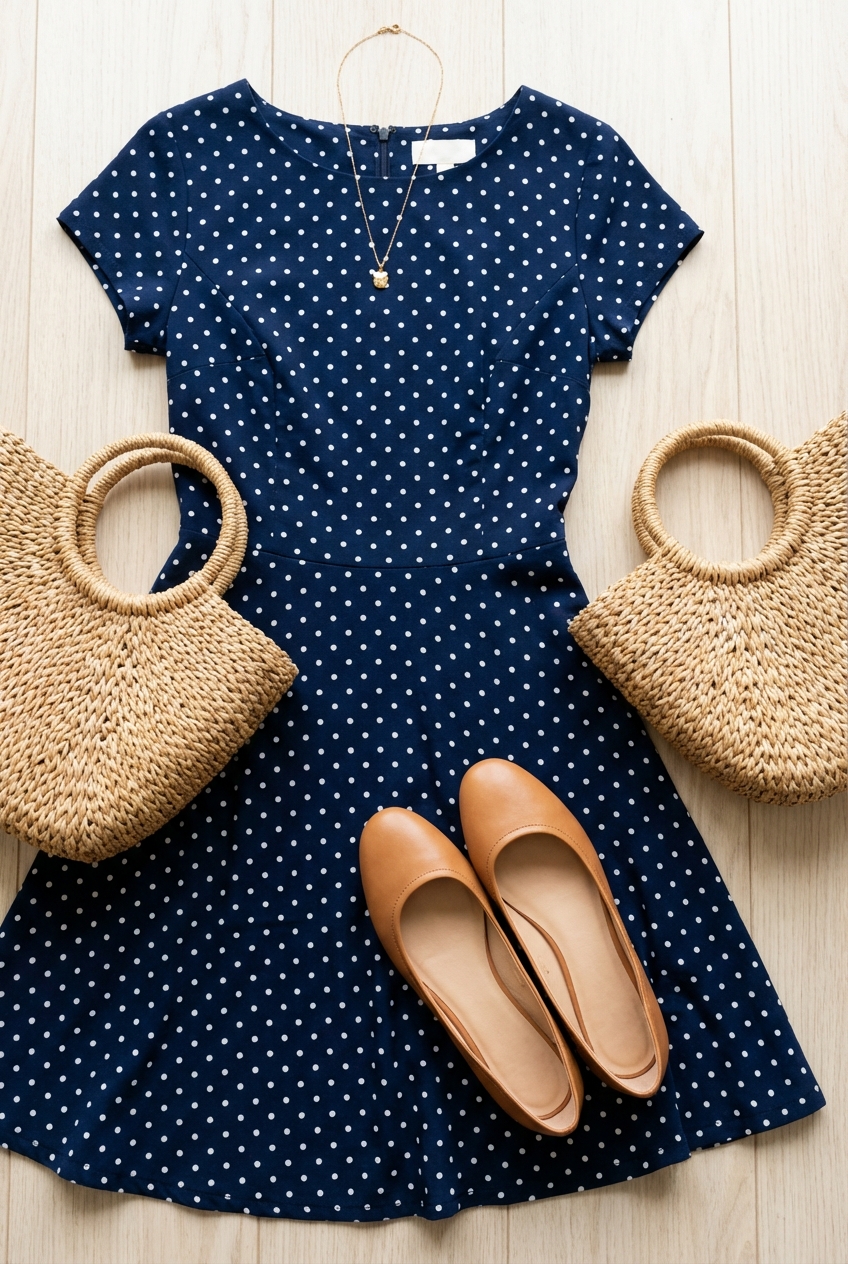
The Classic Fit And Flare Dress For Flattering Elegance
There are very few silhouettes in fashion history that can claim universal adoration, but the fit and flare dress is undoubtedly at the top of that list. I often refer to this cut as the “architectural miracle” of a wardrobe because it doesn’t just drape over the body; it actively constructs a shape. Whether I am styling a CEO for a board meeting or a debutante for a garden party, this is the silhouette I reach for when a client needs to feel instantly polished and secure.
The magic lies in the engineering of the garment. By cinching at the natural waist—the narrowest point of the torso—and expanding outward over the hips and thighs, it creates visual balance regardless of your natural body type. It mimics the classic hourglass figure, balancing the shoulder width with the hem width, which tricks the eye into perceiving symmetry. This isn’t just a dress; it is a tool for confidence that requires zero effort to wear once you find the right fit.
In my years of consulting, I have seen women completely change their posture the moment they zip up a well-tailored fit and flare. It encourages you to stand taller and move with a specific kind of grace that modern oversized trends often obscure. You can find a curated collection of my favorite looks in the picture gallery at the end of this blog post.
The Anatomy of the Silhouette
To master this look, you must understand exactly what you are buying. A true fit and flare is distinct from an A-line dress, though the terms are often used interchangeably in lower-end retail. An A-line typically widens gradually from the shoulders or the bust, creating a tent-like or triangular shape. A fit and flare, conversely, must be fitted through the bodice and release explicitly at the waist.
The bodice construction is where the quality shows. In high-end design, we look for princess seams—long, curved seams that run down the front of the bust—or strategic darting. These tailoring elements are what allow the fabric to contour closely to the ribcage without pulling or puckering. If a dress relies solely on stretch fabric to hug your torso, it will lack the formal elegance of a constructed bodice.
The “flare” component also varies significantly. You might encounter a circle skirt, which provides maximum volume and twirl, or a pleated skirt, which offers a preppy, structured look. For a more modern, streamlined aesthetic, I often recommend a paneled skirt, which flares gently without adding excessive bulk to the hip area.
Designer’s Note: The Waistline Trap
The most common issue I see with off-the-rack fit and flare dresses is the placement of the waist seam. Manufacturers often cut the torso too long to accommodate taller women.
If the waist seam hits you at the top of your hip bone rather than your natural waist (the soft spot between your lowest rib and hip), you lose the flattering effect. The dress will make you look boxy. Always ensure the seam sits at your narrowest point.
Fabric Selection: Structure vs. Drape
The fabric you choose dictates the personality of the dress. When I am building a capsule wardrobe for a client, I usually insist on having one “structured” fit and flare and one “fluid” version. The behavior of the textile changes how the skirt falls and how forgiving the dress is around the midsection.
For structure, look for fabrics with a tight weave and some weight. Jacquard, brocade, heavy cotton sateen, and scuba (neoprene) are excellent choices. These fabrics hold their own shape, meaning the “flare” of the skirt stands away from the body. This is incredibly effective for concealing the lower stomach or hips if that is an area of concern for you. These fabrics create a dramatic, high-fashion silhouette.
For fluidity, turn to silk blends, rayon, high-quality jersey, or chiffon. These fabrics do not stand away from the body; they ripple and flow. A fluid fit and flare is more romantic and comfortable for all-day wear, but it requires more attention to undergarments. Because the fabric collapses against the skin, it can reveal lines, so seamless shapewear becomes non-negotiable.
Common Mistakes + Fixes
- Mistake: Buying thin, unlined cotton or jersey.
Fix: Hold the fabric up to the light. If you can see your hand through it, it will show every lump and bump. Always opt for lined dresses or fabrics with a GSM (grams per square meter) over 200 for opacity and smoothness. - Mistake: Ignoring the lining composition.
Fix: A polyester lining in a summer dress traps heat. Look for breathable linings like acetate, rayon, or cotton voile to ensure you stay cool.
Proportion Play for Different Body Types
While the fit and flare is universally flattering, tweaking the proportions takes it from “good” to “custom-made” territory. The goal is to manipulate the eye to see length and balance. This involves looking closely at where the bodice ends and where the hem begins.
For petite frames (under 5’4″), the biggest risk is being swallowed by the skirt volume. I recommend a “modified” flare—less fabric in the skirt—and a hemline that hits one or two inches above the knee. This exposes more leg, creating a vertical line. Additionally, avoid high necklines; a V-neck or scoop neck opens up the chest area and elongates the neck.
For taller women or those with long torsos, the challenge is ensuring the waist fits correctly. You can pull off the dramatic “midi” length (hitting mid-calf) beautifully. A tea-length fit and flare is incredibly chic on a tall frame. However, ensure the bodice is long enough; if the waist seam sits on your ribs, it will look like the dress shrank in the wash.
For curvy or full-busted figures, strap width is key. Spaghetti straps offer no support and throw off the visual balance of a fuller skirt. Look for wider straps or cap sleeves. This balances the visual weight of the flared skirt and allows for proper undergarments.
The Hemline Debate: Mini, Midi, or Knee?
In the world of high-end styling, the hemline is the primary indicator of formality. The fit and flare silhouette can skew very young (think “prom dress”) if the hem is too short and too poofy. To keep the look sophisticated and expensive, we have to be precise about length.
The Knee-Length Standard: This is the most versatile length. It hits right at the middle of the knee or just at the top. It is office-appropriate, wedding-guest appropriate, and works with both flats and heels. If you are building a foundational wardrobe, start here.
The Midi Elegance: A midi hem hits below the knee, usually around the swell of the calf. This is currently very fashionable and evokes a vintage 1950s Dior “New Look” aesthetic. However, it is high-risk. The hem must not cut across the widest part of your calf, or it will make your legs look thick. Have a tailor hem it to the narrowest part of the lower leg, just above the ankle or just below the calf muscle.
The Mini: A fit and flare that ends mid-thigh is playful and casual. I generally reserve this for weekend wear, vacation looks, or parties. It is rarely appropriate for corporate environments or formal events unless paired with opaque tights.
Styling for Occasions: From Desk to Dinner
The versatility of this dress lies in how you layer it. Because the skirt has volume, your layering pieces need to be cropped or tailored. You cannot throw a long, baggy cardigan over a fit and flare dress without looking frumpy. The volume of the jacket fights with the volume of the skirt.
For the Office: Pair the dress with a cropped blazer that hits at the waist. This preserves the hourglass silhouette. Alternatively, layer a crisp button-down shirt under a sleeveless fit and flare dress (pinafore style) for a preppy, professional vibe. Stick to closed-toe pumps or structured loafers.
For Evening Events: The transition to evening is all about the neckline and jewelry. An off-the-shoulder fit and flare is stunning for galas. Since the dress has a lot of fabric, you can go bold with earrings. Avoid long pendant necklaces that get lost in the bodice; choose a choker or collar necklace that sits on the skin.
Casual Weekend: Dress down a structured dress with a denim jacket and clean white sneakers. The denim jacket should ideally be cropped or fitted. This mixes the feminine shape of the dress with utilitarian texture, a combination that always looks effortless.
The Foundation: Undergarments and Tailoring
You cannot discuss high-end fashion without discussing what goes underneath. The fit and flare is generally forgiving on the hips, meaning you rarely need heavy-duty thigh shapers. However, the bodice is critical. Because the top is fitted, your bra must be perfectly smooth.
I recommend a T-shirt bra or a seamless molded cup bra. Lace bras often create texture that shows through the bodice fabric, ruining the clean lines. If the dress has a low back or unique straps, invest in a convertible bustier rather than relying on stick-on bras, which rarely provide the lift needed to balance the heavy skirt.
regarding tailoring, the most common alteration I commission for this silhouette is “taking up the shoulders.” If the straps are too long, the waist seam hangs too low, and the armholes gape. Shortening the straps by even half an inch can lift the entire dress, putting the bust darts in the right place and making the garment look custom-made.
Real-World Project Checklist: What I’d Do
If I were fitting you for a major event today, this is the exact checklist we would run through before cutting the tags off:
- The Sit Test: Sit down in a chair. Does the waist dig in uncomfortably? Does the skirt poof up into your face? The skirt should drape gracefully over the chair legs.
- The Arm Raise: Lift your arms. Does the entire dress ride up? If the waist seam moves more than an inch, the bodice is too tight or the armholes are cut too high.
- The Zipper Inspection: Is the zipper flat, or does it ripple? Rippling zippers indicate poor construction or a torso that is too short for your body.
- The Hem Allowance: Check the inside of the hem. A high-quality dress will have a deep hem (1-2 inches), which adds weight and helps the skirt swing properly.
Finish & Styling Checklist
Before you head out the door, run through this final styling audit to ensure your look is polished and cohesive.
- Waist Definition: If the dress feels slightly loose, add a belt. A thin belt is best for short torsos; a wide belt works for long torsos.
- Shoe Balance: If the skirt is heavy and full, avoid delicate, strappy sandals that disappear. Wear a shoe with some visual weight, like a block heel or a pump.
- Bag Selection: Avoid cross-body bags that cut across the bodice and ruin the line. Carry a top-handle bag, a clutch, or a shoulder bag.
- Outerwear: Ensure your coat is either shorter than the dress (waist length) or longer than the dress (trench coat). A coat that ends two inches above the dress hem looks messy.
- Static check: If wearing tights with a synthetic skirt, use an anti-static spray to prevent the skirt from clinging to your legs.
FAQs
Can I wear a fit and flare dress to a black-tie wedding?
Yes, absolutely. Look for floor-length or tea-length options in elevated fabrics like silk, satin, or velvet. Avoid cotton or jersey. A structured bodice with a full skirt is a classic formal silhouette.
How do I wash a fit and flare dress to keep its shape?
If the dress has structure (lining, boning, or heavy fabric), dry cleaning is safest. If you wash it at home, never hang it to dry by the shoulders, as the weight of the wet skirt will stretch the bodice. Lay it flat to dry.
Is this silhouette suitable for maternity wear?
It is one of the best. Look for “empire waist” variations where the seam sits right under the bust rather than at the natural waist. The flared skirt provides ample room for a growing bump without sacrificing style.
Does a fit and flare make you look wider?
No, quite the opposite. By highlighting the waist and floating over the hips, it creates a slimming effect. However, if the skirt is pleated and made of very thick fabric, it can add bulk. Stick to A-line flares rather than gathered flares if you want a slimmer profile.
Conclusion
The fit and flare dress is not just a passing trend; it is a foundational pillar of feminine style. Its staying power comes from its ability to marry comfort with high-impact aesthetics. It respects the female form by following the natural lines of the body before releasing into a silhouette that allows for movement and ease.
Investing in a high-quality version of this dress is one of the smartest fashion decisions you can make. Whether you opt for a structured brocade for winter events or a breezy linen for summer afternoons, the principles of fit remain the same. Focus on the waist, watch the hemline, and choose fabrics that serve your lifestyle.
When you find the one that fits perfectly, you will understand why this cut has remained a favorite of designers for decades. It simplifies the act of getting dressed while maximizing the impact of your presence. It is, quite simply, flattering elegance defined.
Picture Gallery


