
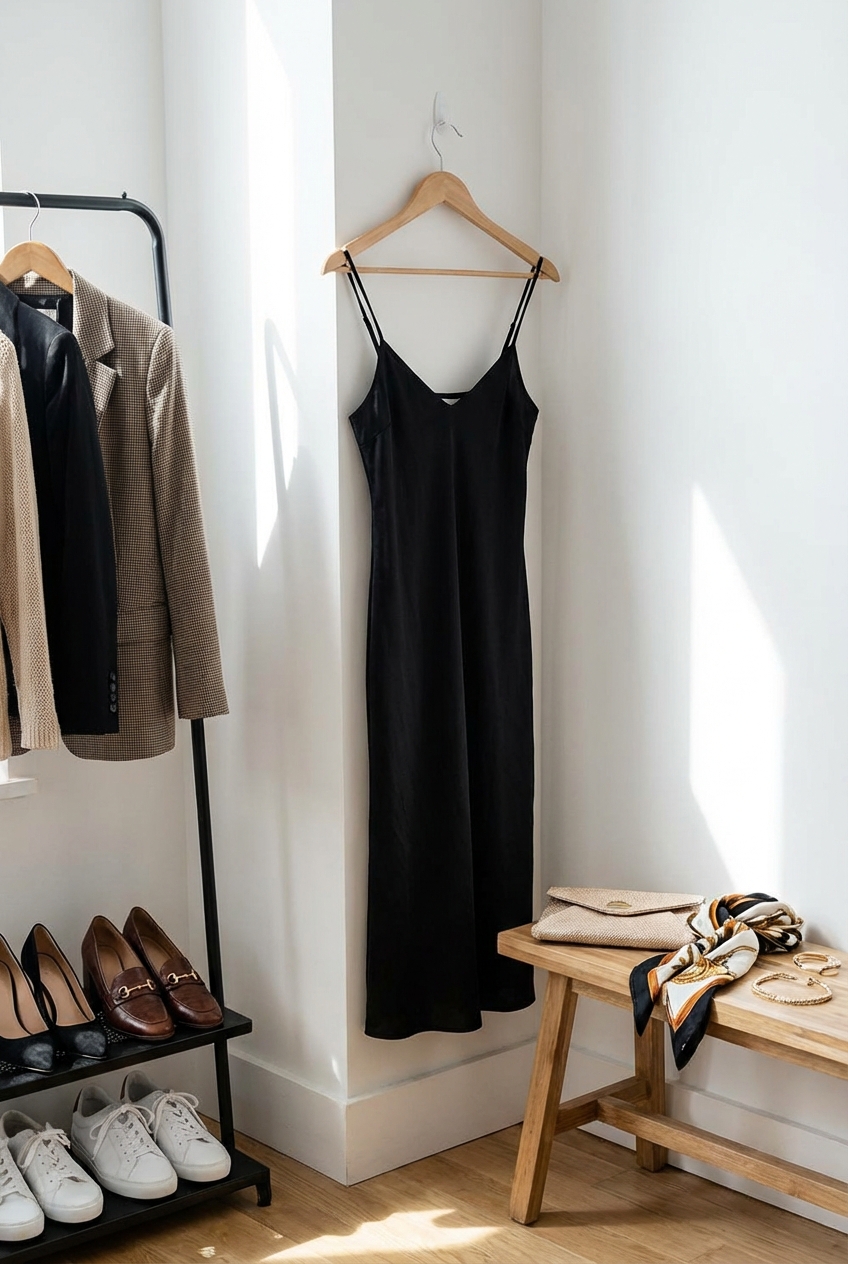
The Little Black Dress For All Events
There is a precise moment of panic that every woman knows. It happens about forty-five minutes before you need to leave the house, usually when the stakes are high. You are staring into a closet full of clothes, yet you are completely convinced you have absolutely nothing to wear.
The antidote to this paralysis is not more clothes, but the right clothes. Specifically, it is the Little Black Dress (LBD). However, as a stylist who has dressed hundreds of women for high-stakes board meetings and black-tie galas alike, I can tell you that not all black dresses are created equal. The goal is to find the one architectural piece that serves as a blank canvas for your entire life.
In this guide, I am going to break down exactly how to select, fit, and style the ultimate LBD. We will move past the generic advice and get into the technical details of fabric weight, tailoring measurements, and proportion. For visual inspiration on how to execute these looks, be sure to check out the Picture Gallery at the end of the blog post.
1. The fabric Foundation: Material Matters
The biggest mistake I see clients make is prioritizing cut over fabric quality. A beautiful silhouette cut from cheap, thin polyester will never hang correctly. It will cling to static, shine under flash photography, and degrade after three washes.
For a dress intended to span seasons and events, you need a “three-season” fabric. My top recommendation is always a tropical weight wool crepe. It breathes in the summer, insulates in the cooler months, and has a matte finish that absorbs light rather than reflecting it. This matte quality is what makes the dress look expensive.
If wool isn’t your preference, look for a heavy-weight viscose blend or a triacetate. You want a fabric with “guts”—something that feels substantial between your fingers. When you hold the fabric up to the light, you should not be able to see your hand through it.
Designer’s Note:
Avoid 100% linen or 100% cotton for your primary LBD. While natural, they wrinkle the moment you sit down. By the time you arrive at your dinner reservation, the elegance of the look is compromised. Look for blends with 2-5% elastane for comfort and shape retention.
2. The Architecture of the Silhouette
Trends come and go, but for an investment piece, we need architectural stability. The most universally flattering and versatile shape is the modified A-line or a structured sheath dress. These shapes skim the body without clinging, allowing for fluctuation in weight and comfort during long events.
Pay close attention to the neckline. A jewel neck (high and round) or a boat neck offers the most versatility. These necklines are appropriate for conservative office environments and somber occasions like funerals. However, they provide a perfect backdrop for statement jewelry when you need to transition to a cocktail party.
Avoid extreme details. Deep plunging V-necks, high thigh slits, or exaggerated ruffles limit where the dress can go. You want the dress to be the whisper, not the shout. Let your accessories do the talking.
Common Mistakes + Fixes:
- Mistake: Buying a dress with built-in hardware or embellishments (like a gold zipper or sewn-on beads).
- Fix: Choose a dress with invisible zippers and no permanent decoration. Hardware dictates the metal of your jewelry and limits the dress’s formality. Keep it clean.
3. The Non-Negotiable Rules of Tailoring
Off-the-rack clothing is designed for a statistical average, not your specific body. To make a $200 dress look like a $2,000 dress, you must budget for a tailor. This is the secret weapon of every stylish woman you admire.
First, look at the shoulder seams. The seam where the sleeve attaches should sit exactly at the corner of your shoulder bone. If it droops down your arm, the dress looks too big. If it sits toward your neck, it will pinch and make you look broader than you are. This is the one area that is difficult and expensive to alter, so buy the size that fits your shoulders perfectly.
Next, consider the hemline. For maximum versatility, the hem should hit exactly at the knee or just graze the top of the kneecap. This length is safe for corporate environments but still shows enough leg to be feminine for date night. A midi length (mid-calf) can also work, but it requires higher heels to maintain proportion.
What I’d do in a real project:
When fitting a client, I always have them sit down in the dress before approving the purchase. A dress that fits perfectly while standing may pull tight across the hips or ride up uncomfortably when seated. If you see horizontal whiskers (straining fabric) across the lap, size up and take the waist in.
4. Corporate Styling: The 9-to-5 Transformation
Taking an LBD into a professional setting requires managing “skin exposure ratios.” Since the dress might expose arms or legs, your layers need to provide coverage to balance the look. This is about signaling competence and polish.
Start with a tailored blazer. A structured blazer in a check pattern, camel, or charcoal grey instantly neutralizes the “evening” feel of a black dress. Ensure the blazer length doesn’t cut you off at the widest part of your hips; it should hit either at the waist or below the hip.
Footwear is critical here. Avoid strappy sandals or open-toed shoes in conservative fields. Opt for a pointed-toe pump or a sleek loafer. If you are wearing a sleeveless sheath dress, keep a fine-gauge cashmere cardigan in your tote bag to cover your shoulders during meetings.
Designer’s Note:
Opaque tights are your best friend for winter office styling. Look for 50 to 80 denier tights. They create a seamless, elongated vertical line that makes you look taller and more put-together than sheer hose.
5. Evening Elevation: Cocktail to Gala
When the sun goes down, the matte fabric of your LBD becomes a canvas for light. This is where you play with texture and shine. Since the dress absorbs light, you need accessories that reflect it to create visual interest.
Swap your leather work tote for a clutch. This simple change in scale signals that you are “off the clock.” A clutch forces you to carry less, which changes your posture and demeanor to something more relaxed and elegant. Look for materials like velvet, satin, or metallic finishes.
Jewelry should be intentional. If you are wearing a high-neck dress, skip the necklace and opt for statement drop earrings or a bold cocktail ring. If you have a V-neck or scoop neck, a delicate pendant or a classic tennis necklace works beautifully.
Common Mistakes + Fixes:
- Mistake: Wearing “day” fabric shoes (like cork or heavy matte leather) to an evening event.
- Fix: Change into shoes with a refined texture. Patent leather, satin, or suede heels immediately elevate the formality of the outfit.
6. The Weekend Edit: Casual Styling
Yes, your investment LBD can be worn on the weekend. The key to dressing down a structured piece is “friction”—mixing the refined nature of the dress with rugged or casual elements. This contrast creates a chic, effortless vibe.
Pair the dress with a denim jacket or a leather moto jacket. The roughness of denim or leather breaks up the formality of the wool crepe. Roll the sleeves of the jacket to expose the wrists, which lightens the visual weight of the outfit.
For footwear, clean white leather sneakers are a modern classic. They make the dress feel sporty and approachable. Alternatively, a flat leather slide or a combat boot can change the entire attitude of the look.
What I’d do in a real project:
To define the waist without the structure of a belt, I often tie a chambray shirt or a lightweight sweater around the waist of the dress. It hides the tummy area and adds a relaxed, “cool girl” layer.
Finish & Styling Checklist
Before you head out the door, run through this quick stylist check. These are the final touches that separate a good outfit from a great one.
- Lint Check: Black fabric attracts dust and pet hair. Keep a travel lint roller in your bag.
- The Sit Test: Sit down for 60 seconds. Does the dress wrinkle excessively? If so, steam it before leaving.
- Undergarments: Check for Visible Panty Lines (VPL). Seamless, laser-cut undergarments in your skin tone are mandatory.
- Hem Check: Ensure the hem is even all the way around. A dropped hem looks sloppy.
- Shoe Condition: Scuffed heels ruin the illusion of luxury. Use a marker or polish to touch up scuffs on black shoes.
- Deodorant Marks: Check the sides of the dress. A damp sponge can remove white marks instantly.
FAQs
How much should I spend on a high-quality LBD?
You do not need to spend a fortune, but you should expect to pay for quality fabric. A budget of $200 to $400 usually allows for better natural fiber blends and lining. However, a $100 dress with $60 of tailoring will always look better than a $500 dress that doesn’t fit.
Can I wear a black dress to a wedding?
Absolutely. The old rule forbidding black at weddings is outdated. The key is to make it look festive, not mournful. Add colorful accessories, sparkling jewelry, and a fun pair of shoes. Avoid looking too severe or covered up.
How do I clean my investment dress?
Read the care label religiously. If it is wool or silk, dry clean it sparingly. Over-dry cleaning damages fibers. Between wears, hang the dress outside the closet to air out, or use a steamer to kill bacteria and refresh the shape. Spot clean small stains when possible.
Is a wrap dress a good option for an LBD?
A wrap dress is universally flattering, but it leans more casual. It is perfect for work, dinner, and dates, but it may struggle to reach the formality required for black-tie events. If you want one dress for everything, a sheath or A-line is safer.
Conclusion
The Little Black Dress is not just a piece of clothing; it is a safety net. It is the garment that allows you to accept a last-minute invitation with confidence. It allows you to walk into a boardroom or a ballroom and focus entirely on the conversation, not on your hemline.
By investing in the right fabric, prioritizing fit over trends, and mastering the art of accessories, you build a wardrobe that works for you. Fashion should be a tool that makes your life easier and more beautiful. Once you find that perfect LBD, you will wonder how you ever lived without it.
Picture Gallery


