
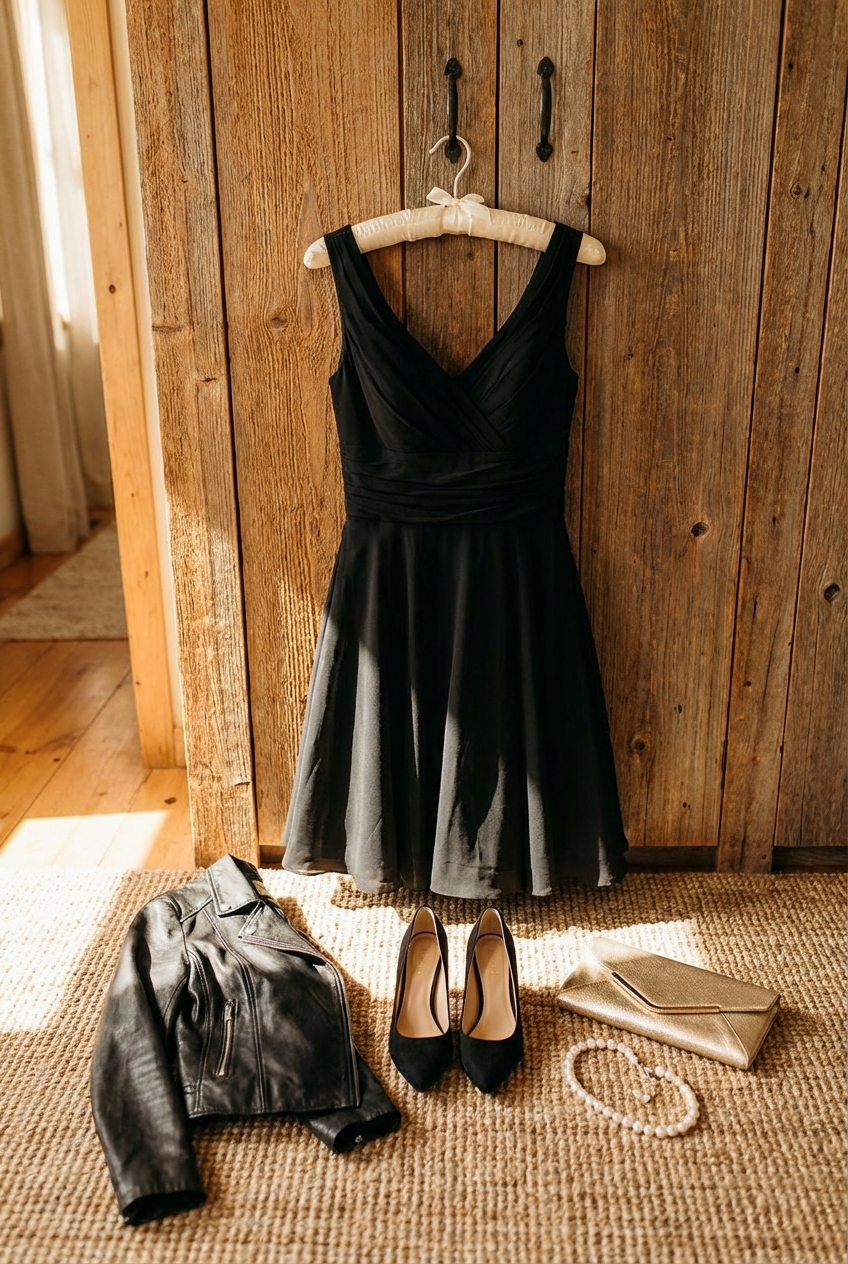
The Little Black Dress For Every Occasion
I still remember my first high-stakes styling job in New York. A client called in a panic because her luggage was lost hours before a major gala, and all she had in her carry-on was a simple, mid-length black sheath dress. With forty-five minutes on the clock, we didn’t have time to shop for a gown. Instead, we raided a vintage jewelry archive, added a structural belt, and swapped her travel flats for architectural heels. She ended up making the “Best Dressed” list that night, proving that the right foundation is everything.
The Little Black Dress (LBD) is not just a garment; it is a tactical tool in your wardrobe arsenal. However, the phrase is often thrown around without practical instruction. Many women own five black dresses but still feel they have nothing to wear because they bought the wrong fabrics or cuts for their lifestyle. A jersey knit dress will never work for a black-tie wedding, just as a satin slip dress rarely survives a corporate boardroom.
In this guide, I am going to break down exactly how to select, style, and tailor the LBD so it works as hard as you do. We will cover fabric composition, hemline mathematics, and the specific accessories that shift the tone of your look instantly. You can find the Picture Gallery with visual examples at the end of this blog post.
The Physics of Fabric: Choosing the Right Material
The versatility of your black dress is dictated 90% by the fabric and 10% by the cut. If you want a dress that truly transitions from day to night, you must understand fiber content. The biggest mistake I see is clients buying cheap synthetic blends that shine under office fluorescent lighting or pill after three wears.
For a true “workhorse” dress, look for wool crepe or a high-quality triacetate blend. Wool crepe (often found in vintage high-end pieces) has a matte finish that absorbs light, making it look expensive and appropriate for somber occasions like funerals or serious board meetings. It also breathes well, meaning you won’t overheat during a presentation.
If you travel frequently, look for “techno” fabrics or premium ponte knits. These are double-knit fabrics that offer structure and hold you in, unlike thin jersey which clings to every undergarment line. A good ponte LBD should be heavy; when you pick it up on the hanger, it should have significant weight.
Designer’s Note: The Scrunch Test
Before buying, grab a handful of the fabric and squeeze it tightly for ten seconds. If it stays wrinkled when you let go, put it back. A versatile LBD needs to survive a car ride or a seated dinner without looking disheveled when you stand up.
The Golden Ratio: Hemlines and Necklines
Proportions make or break the sophistication of a black dress. As a general rule of thumb in high-end styling, we follow the “Rule of One.” You should only reveal one major zone of skin at a time. If the hem is short, the neckline should be high or long-sleeved. If the dress is backless or low-cut, the hem should fall below the knee.
For a dress that needs to serve every occasion, the “Midi” length is your safest bet. This typically hits at the mid-calf, roughly 26 to 28 inches from the natural waist for a woman of average height (5’6″). This length is conservative enough for conservative offices but elegant enough for cocktail parties.
If you are Petite (under 5’4″), a true midi can dwarf you. In my styling sessions, I instruct tailors to bring the hem up to just below the kneecap. This elongates the leg line while maintaining modesty. Never let a hem cut across the widest part of your calf, as this visually thickens the leg.
Common Mistake + Fix:
The Mistake: Buying a dress that fits the hips but gaps at the waist, or fits the bust but pulls at the hips.
The Fix: Always buy for the largest part of your body. It costs roughly $25–$45 to have a tailor take in the waist of a dress, but it is impossible to let out a dress where there is no seam allowance. Size up and budget for tailoring.
Corporate Chameleon: Styling for the Office
Wearing an LBD to the office requires suppressing the “evening” vibes of the color black. To do this, we focus on matte textures and layers. Your goal is to break up the vertical block of black so you don’t look like you are going to a funeral.
Start with a blazer in a heritage fabric, such as a gray glen plaid or a camel wool. The contrast between the black dress and the textured jacket instantly makes the look professional. Ensure the blazer length doesn’t compete with the dress; a cropped jacket works well with fit-and-flare styles, while a longer “boyfriend” blazer suits sheath dresses.
Footwear is the second critical indicator. Swap stilettos for a block heel or a pointed-toe flat. In colder months, an opaque black tight (at least 60 denier) is non-negotiable for professionalism. It creates a seamless column of color that is slimming and office-appropriate.
What I’d do in a real project:
For my corporate clients, I add a silk scarf knotted tightly at the neck or a structural leather tote bag. These accessories signal “business” rather than “party.” Avoid dangling earrings; opt for simple gold studs or pearls.
Cocktail Hour: Elevating the Look
The transition from desk to dinner is where the LBD shines. You can leave the office, remove your blazer, and change the narrative entirely with three specific swaps: shoes, jewelry, and lip color.
First, expose some skin. If your dress has sleeves, push them up to the elbow. Showing the forearm and wrist bone adds a surprising amount of visual lightness and femininity. This is also the prime real estate for a statement cuff or a stack of bangles.
Swap the matte leather work bag for a clutch. A clutch forces a change in posture; you hold it in your hand or under your arm, which looks more posed and elegant than a strap digging into your shoulder. Look for textures like velvet, metallic hardware, or even lucite to catch the dim lighting of a restaurant.
Designer’s Note: The Shoe Pivot
If you are wearing a simple black sheath, your shoes must be the main character. This is the time for a metallic sandal, a jewel-toned pump, or a shoe with embellishment. A plain black pump with a plain black dress reads as “uniform” unless the dress has an architectural shape.
Weekend Casual: The Off-Duty Edit
Many women “save” their black dresses for events, which drives the cost-per-wear up significantly. To get your money’s worth, you must learn to dress the LBD down for Saturday brunch or errands.
The secret here is “friction”—mixing the elegant nature of the dress with rugged, casual elements. A denim jacket is the classic partner for an LBD. The rough texture of the denim creates an immediate visual break that says “casual.” For a more modern, edgy look, swap denim for a leather moto jacket or an oversized utility shacket in army green.
Footwear should be flat and functional. A crisp white leather sneaker creates a sporty, intentional contrast. If you prefer boots, a combat boot or Chelsea boot adds weight to the bottom of the outfit, grounding the look. Avoid ballet flats here, as they can sometimes look a bit too twee or juvenile combined with a dress; go for something with a thicker sole.
Seasonal Shifts: Winterizing and Summerizing
A great LBD should serve you all year, but the styling mechanics change with the temperature. In the summer, the challenge is heat management and preventing the color black from looking too heavy.
For summer, choose natural fibers like linen blends, cotton poplin, or silk. Accessories should be made of organic materials: raffia bags, leather sandals, and wooden or shell jewelry. These elements lighten the visual weight of the black fabric. A slicked-back bun and oversized sunglasses complete the “Italian widow on vacation” aesthetic, which is timelessly chic.
In winter, layering is key. A thin, fitted turtleneck layered under a sleeveless sheath dress is a stylist’s favorite trick. It transforms a cocktail dress into a jumper (pinafore) style that is warm and mod. Finish with knee-high leather boots. If the dress is short, the boots should be tall; we want to minimize the gap of exposed tight/leg to keep the line long.
Finish & Styling Checklist
Before you walk out the door, run through this quick mental checklist to ensure your LBD is optimized for the occasion. This is the exact process I use backstage at shows and with private clients.
- The Sit Test: Sit down on a chair. Does the hem rise dangerously high? If it goes more than 3 inches above the knee when seated, it is not office-appropriate without tights.
- Lint Check: Black fabric is a magnet for dust and pet hair. Keep a mini lint roller in your bag or desk drawer. There is nothing less chic than a fuzzy black dress.
- Undergarment Audit: Check your look in bright lighting. Is your bra visible through the fabric? Black fabric can often be sheerer than expected under flash photography or harsh sun.
- The Third Piece: If the outfit feels boring, add a “third piece.” You have the dress (1) and shoes (2). Add a belt, a jacket, or a statement necklace (3) to finish the look.
- Shoe Condition: Since black draws the eye to the silhouette, scuffed shoes are very noticeable. Ensure heels are polished and tips are not worn down.
FAQs
Should I dry clean my LBD every time I wear it?
Absolutely not. Over-cleaning degrades the fibers and fades the deep black color. Unless you spilled something on it or sweat profusely, simply air it out overnight. Spot clean stains and steam it to kill bacteria and remove wrinkles. I recommend dry cleaning only once every 4–5 wears.
Can I wear a black dress to a wedding?
Yes, this old etiquette rule has largely expired. The key is to make it look festive, not mournful. Avoid heavy veils or hats. Accessorize with color—gold shoes, colorful earrings, or a bright clutch. If the wedding is a daytime garden party, however, a heavy black dress might feel out of place; opt for a floral or lighter color instead.
What is the best type of black dress for a curvy figure?
A wrap dress or a fit-and-flare silhouette is universally flattering. The V-neck elongates the torso, and the tie waist allows you to adjust the fit as your body fluctuates. Look for fabrics with a bit of stretch, like a high-quality matte jersey, which skims over curves rather than clinging to them.
Conclusion
Finding the perfect Little Black Dress is less about following a trend and more about understanding the architecture of your own life. When you find a piece that fits your budget, your body, and your daily requirements, buy it and tailor it immediately. That small investment in tailoring turns a store-bought garment into a custom piece.
Remember that the dress is just the canvas. You are the artist. Whether you pair it with pearls for a board meeting or combat boots for a concert, the LBD is the most reliable partner in your closet. Treat it well, keep it lint-free, and it will ensure you are never underdressed or overdressed, but simply well-dressed.
Picture Gallery


