
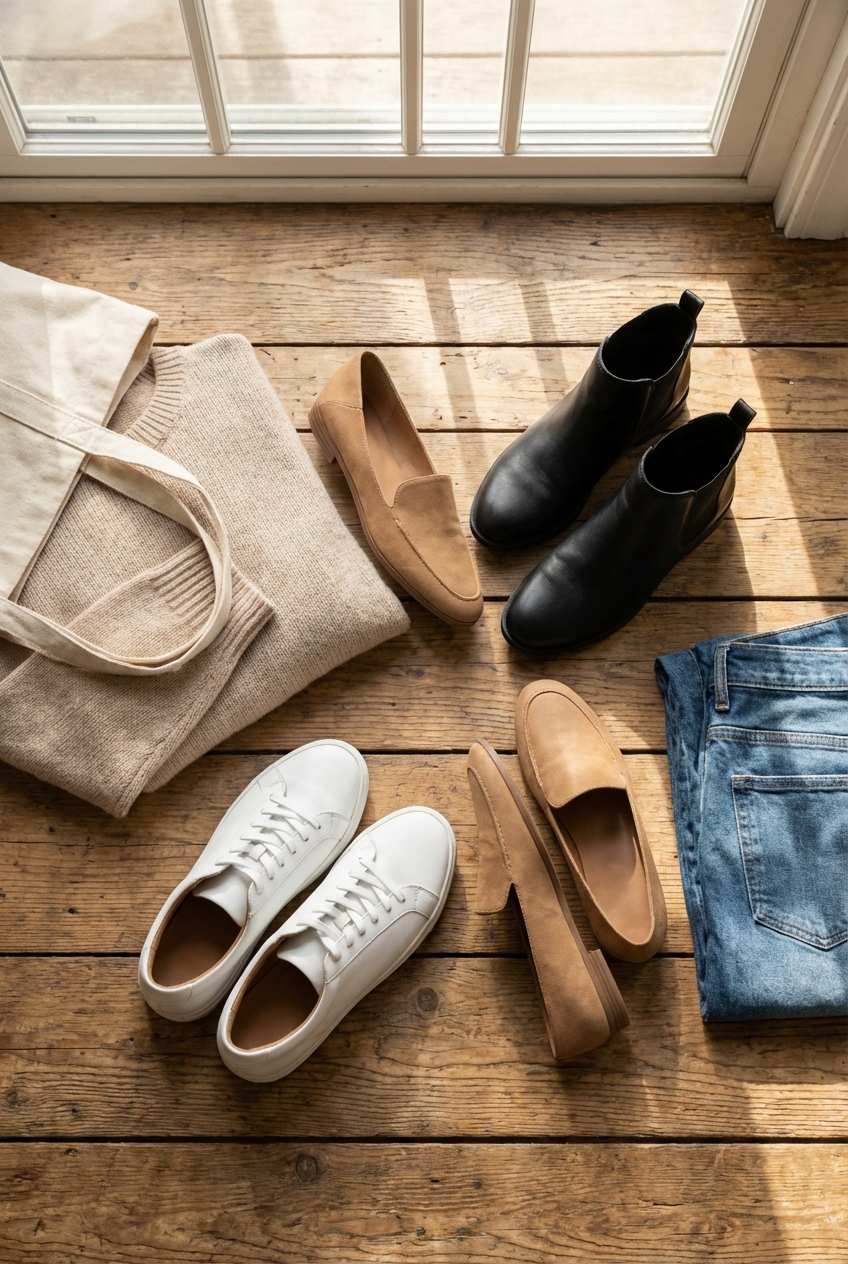
The Most Comfortable Shoes For A Capsule Wardrobe
I still remember my first major buying trip to Paris early in my styling career. I wanted to look the part, so I packed a suitcase full of architectural stilettos and rigid, pointed-toe flats that looked stunning on the shelf.
By day two, I was limping between showroom appointments. I ended up buying a pair of overpriced, plush sneakers from a boutique just to survive the rest of the week. It was a painful, expensive lesson in the difference between “editorial fashion” and “functional style.”
A true capsule wardrobe isn’t just about minimalism; it is about relying on pieces that serve you. If your shoes hurt, you won’t wear them, and they become clutter rather than assets. For a complete visual guide to these styles, be sure to check out the Picture Gallery at the end of the blog post.
1. The Foundation: Understanding Quality Construction
Before we look at specific styles, we need to address what actually makes a shoe comfortable for the long haul. In my experience with high-end clients, the biggest source of discomfort is poor material quality.
Synthetic materials trap heat and moisture, causing swelling. For a capsule wardrobe, you want natural materials like calfskin or goat leather. These mold to your unique foot shape over time, essentially creating a custom fit.
Pay attention to the sole. A leather sole is classic, but it offers zero shock absorption. Look for shoes that incorporate a rubber island on the sole or have a stacked leather heel with a rubber cap.
Designer’s Note: The “Flex” Test
When shopping for clients, I always perform the flex test. Hold the shoe by the heel and toe and gently bend it. It should flex at the ball of the foot (where your foot naturally bends). If it bends in the middle of the arch, it lacks support. If it doesn’t bend at all, it will cause blisters.
Common Mistakes + Fixes
- Mistake: Buying shoes that fit “just right” in the morning.
- Fix: Always try on shoes in the late afternoon. Your feet naturally swell throughout the day. A shoe that feels snug at 10 AM will be unbearable by 5 PM.
2. The Elevated White Sneaker
The white sneaker is no longer just for the gym; it is the anchor of the modern casual wardrobe. However, for a capsule collection, we aren’t talking about athletic running shoes with heavy branding.
You need a low-profile, leather sneaker with clean lines. The silhouette should be slim enough to wear with tailored trousers but substantial enough to pair with denim.
Leather is superior to canvas here because it is easier to wipe clean and doesn’t stain as quickly. I recommend looking for styles with a slightly thicker rubber sole (about 1 inch) for cushion against city pavements.
What I’d Do in a Real Project
For a client who travels frequently, I look for a “cupsole” construction. This means the rubber outsole is stitched to the upper, not just glued. It is much more durable. I also swap standard cotton laces for waxed cotton laces; they stay tied better and look sharper.
3. The Everyday Loafer
If you want to look polished without wearing a heel, the loafer is your best friend. It bridges the gap between casual and corporate effortlessly.
For comfort, avoid the stiff, patent leather “school shoe” styles. Look for soft, tumbled leather or suede. The penny loafer is the most versatile shape, while a horsebit detail adds a touch of jewelry to your outfit.
Fit is critical here. Loafers rely on the heel cup to stay on. If the heel is too wide, you will grip with your toes to keep the shoe on, leading to cramps.
Pro Rules of Thumb
- The Finger Test: You should be able to fit a pinky finger snugly behind your heel. If you can fit a whole thumb, go down a half size.
- Break-in Period: Expect a rigid loafer to take 3 to 5 wears to break in. Wear thick socks around the house for an hour a day before taking them outside.
4. The Walkable Ankle Boot
When the temperature drops, the ankle boot becomes the daily driver. The key to versatility here is the shaft height and the heel type.
I advise clients to look for a “glove” fit around the ankle or a classic Chelsea boot with elastic side panels. This ensures the boot fits neatly under straight-leg jeans without creating a bulky bulge.
Stick to a block heel between 1.5 and 2.5 inches. This gives you a height boost and elongates the leg line but remains stable enough for running errands.
Designer’s Note: The Shaft Height Rule
The most flattering boot shaft hits about 2 inches above the ankle bone. If it cuts right across the ankle bone, it can rub and be painful. If it is too high, it shortens the leg visually.
Common Mistakes + Fixes
- Mistake: Ignoring the outsole traction.
- Fix: Smooth soles are dangerous on wet autumn leaves or icy sidewalks. Have a cobbler add a “Topy” (a thin rubber protective sole) immediately after purchase. It adds grip and extends the life of the boot by years.
5. The Modern Ballet Flat
Ballet flats have made a massive resurgence, but traditional flats offer zero arch support. Walking in them all day is essentially walking barefoot on concrete, which can lead to plantar fasciitis.
The solution is the “structured” flat. Look for styles that have a distinct left and right shape (avoid the shapeless tubes) and a tiny, 0.5-inch heel. Even a minimal lift is better for your back than being perfectly flat.
I also love the Mary Jane variation for capsule wardrobes. The strap across the instep secures the foot, meaning you don’t have to clench your toes to keep the shoe on.
What I’d Do in a Real Project
I often suggest a higher “vamp” (the front part of the shoe) for clients with bunions or wide feet. A high vamp covers the joint and prevents the edge of the shoe from cutting into sensitive areas. Square toes are also trending and offer much more room for toes to spread naturally than pointed styles.
6. The Block Heel Slingback
Every capsule wardrobe needs a shoe for dinners, events, or important meetings. The stiletto pump is classic, but rarely comfortable. The block heel slingback is the superior choice for the modern woman.
The strap at the back allows for airflow, making it more comfortable in warmer months. The block heel provides a wider surface area for balance, reducing fatigue on the ball of the foot.
Aim for a “cap toe” design if possible. A contrasting black toe on a beige shoe not only looks Chanel-inspired but also hides scuffs on the most vulnerable part of the shoe.
Designer’s Note: Strap Placement
Ensure the back strap has an elastic insert or an adjustable buckle. If it is fixed leather, it will inevitably slide off your heel or dig in. The strap should sit just above the heel bone, not on the tendon.
Common Mistakes + Fixes
- Mistake: Wearing heels that are too high for the arch length.
- Fix: When standing in the heels, try to lift yourself on your tiptoes. If you can’t lift the heel at least an inch off the ground, the pitch is too steep for your foot flexibility.
Finish & Styling Checklist
Curating the shoes is step one; maintaining them and styling them is step two. Here is how I manage this for clients to ensure their investment lasts.
Maintenance Checklist
- Waterproofing: Spray all suede and leather shoes with a high-quality water repellent before the first wear. Repeat every season.
- Storage: Store shoes in dust bags or clear boxes. Never throw them in a pile; this crushes the structure and causes permanent creases.
- Rotation: Never wear the same pair of leather shoes two days in a row. They need 24 hours to dry out from natural foot moisture.
- Heel Tips: Check the plastic tips on your heels monthly. Once the metal is exposed, it creates a slip hazard and ruins the heel structure.
Styling Rules of Thumb
- Hemlines: With ankle boots, your jeans should either hit 1 inch above the boot or cover the shaft completely. Avoid bunching fabric inside the boot.
- Proportions: Pair chunky loafers with lighter fabrics (like a silk skirt) to create contrast. Pair slim flats with voluminous trousers to balance the silhouette.
- Color Coordination: For a capsule, match your shoes to your hair color or your trousers to create a continuous vertical line. This elongates the body.
FAQs
How many pairs of shoes do I really need for a capsule wardrobe?
For a functional wardrobe, five pairs usually cover all bases: one sneaker, one loafer, one boot, one flat/sandal, and one heel. If you live in a four-season climate, you may need to add a dedicated winter weather boot.
Is it worth spending money on expensive shoes?
Yes, but focus on construction over brand names. A $300 pair of shoes with a stitched sole and full-grain leather will last 5-10 years with care, giving you a cost-per-wear of pennies. A $50 synthetic pair may last six months before peeling or smelling.
How do I fix shoes that are too tight?
A cobbler can stretch leather shoes (width-wise) by about a half size. However, you cannot stretch length or synthetic materials. If your toes are hitting the front, the shoe is simply too small.
Can I wear sneakers to the office?
In most modern creative or business-casual environments, yes. The key is condition. The sneakers must be pristine, white, and leather. Dirty canvas runners are never office-appropriate.
Conclusion
Building a shoe capsule is about shifting your mindset from “buying specifically for an outfit” to “investing in your daily life.” When your feet are comfortable, you carry yourself differently. You stand taller, walk with more confidence, and focus on your day rather than the blister forming on your heel.
Start with the one category you wear most often—likely the sneaker or the boot—and upgrade that single piece to the highest quality your budget allows. Prioritize natural leathers, check the flex of the sole, and ensure the fit is perfect for your specific foot shape.
Comfort and style are not mutually exclusive; in fact, true style requires comfort. You cannot look chic if you are in pain. By selecting these five core styles, you ensure that you are ready for any occasion, from a client meeting to a weekend getaway, without ever sacrificing your well-being.
Picture Gallery


