
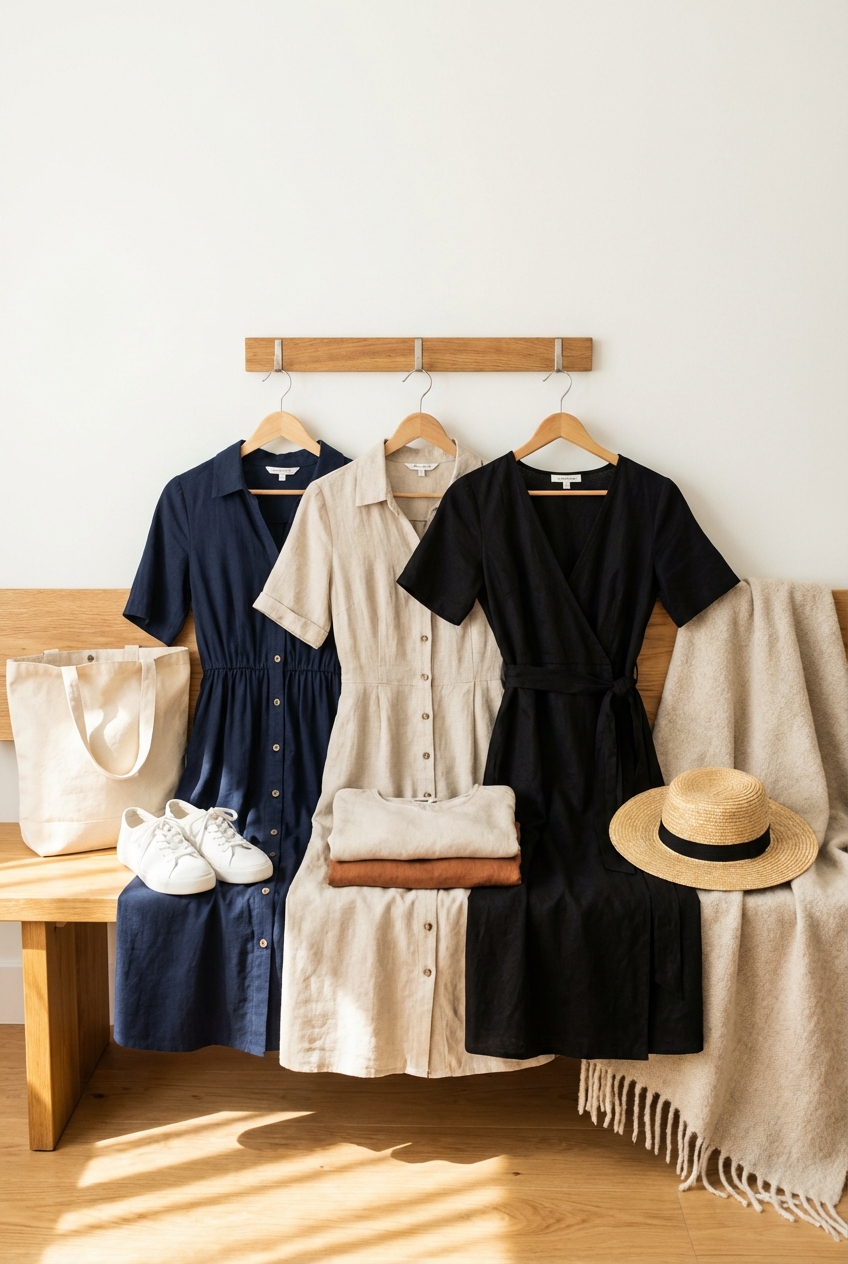
The Most Versatile Dresses For Your Capsule Wardrobe
I recently audited a high-profile client’s closet in Manhattan. She possessed over forty dresses, yet she called me in a panic because she felt she had “nothing to wear” for a last-minute business trip to Milan. The problem wasn’t a lack of inventory; it was a lack of versatility. She had bought specific dresses for specific events—a gala gown, a beach cover-up, a stiff boardroom suit—but nothing that could bridge the gap between a morning meeting and an evening aperitivo.
Building a capsule wardrobe isn’t about restricting yourself to a life of monochrome boredom. It is the strategic curation of high-quality garments that offer maximum return on investment regarding wearability. In my years of styling, I have found that a well-chosen dress is the most efficient garment a woman can own. It solves the outfit equation in one zip or button.
The following guide outlines the specific cuts, fabrics, and details I look for when building a client’s core wardrobe. We will move beyond trends and focus on architecture, fabric weight, and silhouette. If you are looking for visual inspiration on how to style these pieces, you can find our curated Picture Gallery at the end of the blog post.
1. The Bias-Cut Slip Dress
The slip dress is often misunderstood as solely evening wear or sleepwear, but in the hands of a skilled stylist, it is the ultimate layering foundation. The key lies in the cut. A true bias-cut dress is cut at a 45-degree angle against the weave of the fabric, allowing it to glide over curves rather than cling to them.
When selecting this piece, I prioritize a matte silk crepe de chine or a high-quality cupro over shiny satin. A matte finish makes the garment appropriate for daytime wear, whereas high-shine fabrics almost always read as formal or lingerie. The weight of the fabric is crucial here; you want a silk weight of at least 19 momme to ensure opacity and durability.
Designer’s Note: The 2-Inch Rule
A common issue with slip dresses is the strap length. In my studio, we almost always alter the straps to raise the neckline by one to two inches. This small adjustment hides the “armpit cleavage” area and makes the dress office-appropriate when worn under a blazer.
How to Style It
- Daytime: Layer a fine-gauge merino turtleneck underneath or throw a chunky cashmere sweater over the top. Pair with combat boots to toughen the look.
- Office: Wear an oversized blazer in a structured wool fabric. The contrast between the fluid dress and the rigid jacket creates a professional yet feminine silhouette.
- Evening: Remove the layers, add sculptural gold earrings, and switch to a strappy sandal.
Common Mistakes + Fixes
- Mistake: Buying a slip dress in a thin synthetic polyester. This creates static cling and traps heat.
- Fix: Invest in natural fibers like silk or viscose blends that breathe. If static is an issue, a safety pin attached to the inner seam can help ground the charge, or use a classic anti-static spray.
2. The Structured Shirt Dress
If the slip dress is the fluid foundation, the shirt dress is the architectural workhorse. This piece borrows from menswear tailoring but is adapted for the female form. It projects authority without sacrificing comfort. For a capsule wardrobe, I recommend a midi length with a functional button placket that runs from collar to hem.
The fabric choice here dictates the dress’s longevity. Crisp cotton poplin is classic, but it requires steaming. For clients who travel frequently, I recommend a Tencel or lyocell twill. These fabrics have a similar weight to cotton but drape more heavily and resist wrinkling, making them ideal for packing.
What I’d Do in a Real Project
When fitting a client for a shirt dress, I check the “sit test.” We ensure the buttons around the hip and thigh area do not pull or gape when she sits down. If there is even a millimeter of pulling, we size up and tailor the shoulders and waist. A shirt dress must look effortless, not strained.
Styling the Silhouette
- The Belt Swap: Most shirt dresses come with a flimsy self-fabric belt. discard it. Replace it with a structured leather belt to elevate the price point of the look instantly.
- The “Third Piece” Trick: Because the buttons go all the way down, you can unbutton the dress entirely and wear it as a lightweight duster coat over jeans and a tee.
3. The Merino Wool Knit Dress
Texture is a vital component of a capsule wardrobe that prevents your outfits from looking flat. A knit dress serves as your transitional hero piece, bridging the gap between autumn and spring. Unlike a summer cotton dress, a knit dress offers thermal regulation and ease of movement.
I steer clients toward a midi length with a mock neck or a crew neck. Avoid deep V-necks for this specific category, as they limit layering potential in colder months. The knit structure should be tight—look for a “milano stitch” or a dense rib. Loose, open weaves snag easily and lose their shape after a few wears.
Fabric & Maintenance Logic
Cashmere is luxurious, but high-quality merino wool is often more durable for daily wear. It resists pilling better than softer cashmere grades. When assessing the fit, ensure the dress skims the body rather than hugging it like a bandage dress. There should be about an inch of ease at the waist and hips.
Designer’s Note: Storage Solutions
Never hang a knit dress. Gravity will stretch the shoulders and lengthen the hem over time, distorting the silhouette. Always fold these pieces with tissue paper to prevent creasing and store them in cedar-lined drawers to deter moths.
Common Mistakes + Fixes
- Mistake: Buying a knit dress that is too short. Knitwear has a tendency to ride up as you walk.
- Fix: Aim for a hemline that hits at least three inches below the knee. This accounts for movement and looks more elegant with knee-high boots.
4. The Wrap Dress
The wrap dress is the chameleon of the capsule wardrobe. It is one of the few garments that can accommodate weight fluctuations—a realistic constraint for many women—while maintaining a tailored appearance. The adjustable waist tie allows you to customize the fit daily.
However, not all wrap dresses are created equal. Avoid the flimsy jersey fabrics often found in fast fashion. Look for a silk jersey or a heavy crepe. The fabric needs enough weight to hang straight down when tied; otherwise, the skirt will blow open with the slightest breeze.
Securing the Fit
The most common complaint I hear about wrap dresses is the neckline becoming too revealing. In a professional setting, we often add a tiny, invisible snap button at the crossover point. This ensures modesty without altering the design.
What I’d Do in a Real Project
I look for wrap dresses with sleeves that hit just below the elbow (three-quarter length). This specific sleeve length is universally flattering as it highlights the wrist—the thinnest part of the arm—and allows for bracelet stacking. It also transitions better across seasons than a sleeveless or cap-sleeve cut.
5. The Black A-Line Midi
You likely expected the “Little Black Dress” on this list, but for a capsule wardrobe, we need to be more specific. The sheath dress is too corporate; the mini is too casual. The A-Line Midi is the sweet spot. This silhouette is fitted through the bodice and gently flares out from the waist, creating a shape that works with flats, heels, and boots.
Fabric selection is paramount here. I prefer a “tropical wool” or a tri-acetate blend. These fabrics can be worn in four seasons. They are breathable enough for summer evenings but substantial enough to pair with tights in winter. Avoid linen (too seasonal) or velvet (too festive).
Designer’s Note: The Hemline Calculus
The hemline makes or breaks this look. The most flattering length typically hits the part of the leg where the calf muscle begins to taper into the ankle. If the dress cuts across the widest part of the calf, it can make legs look shorter. We usually measure 2 to 3 inches above the ankle bone for the perfect modern midi length.
Styling Versatility
- Professional: Pair with a pointed-toe pump and a structured tote. The A-line skirt allows for comfortable movement during a commute.
- Social: Add a statement belt and a leather jacket. The volume of the skirt balances the toughness of the leather.
- Travel: This is your go-to flight dress if made from tri-acetate. It doesn’t wrinkle, and the flared skirt is comfortable for long periods of sitting.
6. The Tiered or Voluminous Maxi
A capsule wardrobe should not be devoid of drama or comfort. A tiered maxi dress offers a silhouette that stands away from the body, providing a necessary break from the tailored fits of the previous options. This is your “one-and-done” outfit for days when you want to look polished but feel like you are wearing pajamas.
When selecting this dress, scale is everything. If you are petite, ensure the tiers are not too wide, or they will swallow your frame. Look for vertical detailing, such as a button front or a print that draws the eye upward. For taller clients, large-scale floral prints or bold color blocks work beautifully.
Material Matters
Cotton voile or lawn is excellent for this style. It captures air and creates movement. I often style this dress for clients who entertain at home. It is elegant enough for hosting a dinner party but comfortable enough for cooking and moving around the kitchen.
Common Mistakes + Fixes
- Mistake: Wearing the wrong outerwear. A mid-length coat over a voluminous maxi cuts the body in an unflattering way.
- Fix: Apply the “Rule of Thirds.” Wear a cropped jacket that hits at the waist (creating a 1/3 to 2/3 ratio) or a long coat that matches the hemline of the dress.
Finish & Styling Checklist
Once you have secured these core dresses, the success of your capsule wardrobe depends on the supporting players. Here is the checklist I give my clients to ensure they can maximize these six garments:
- Seamless Skin-Tone Undergarments: Essential for the slip dress and unlined shirt dresses. Laser-cut edges prevent visible panty lines (VPL).
- Slip Skirt/Dress: A separate nude slip is necessary for wrap dresses or tiered maxis that might be slightly sheer in direct sunlight.
- The Tailor’s Budget: Set aside 15% of your budget for alterations. Hemming a dress to your specific height or shortening straps makes a $200 dress look like a $2,000 dress.
- Footwear Anchors: You need one knee-high boot (for the knit and A-line), one white leather sneaker (for the shirt dress and maxi), and one strappy heel (for the slip and wrap dress).
- Belt Variety: Have one thin belt for delicate fabrics and one wide belt for structured pieces. This changes the silhouette of the same dress instantly.
FAQs
How many dresses do I really need in a capsule wardrobe?
While there is no magic number, I find that five to seven high-quality dresses cover 95% of a woman’s lifestyle needs. The goal is to cover the categories: professional, casual, evening, and transitional. The six styles listed above cover all these bases.
Should I stick to neutral colors?
Neutrals (black, navy, camel, cream) maximize mix-and-match potential, especially with jackets and shoes. However, I always encourage clients to choose one “signature color” for their capsule—perhaps a deep burgundy or forest green—to add personality without sacrificing versatility.
How do I care for silk and wool dresses without dry cleaning?
You can hand wash most silks and wools using a pH-neutral detergent and cool water. Do not wring them out. Roll them in a clean towel to absorb excess water, then lay them flat to dry. Steaming is generally safer and more effective than ironing for these delicate fibers.
What if I am petite? Can I wear a maxi dress?
Absolutely. The key for petite frames is to ensure the dress is fitted through the shoulders and bust before it flares out. Avoid overwhelming prints. Monochromatic looks create a long, vertical line that elongates the frame.
Conclusion
Curating a capsule wardrobe is an exercise in intentionality. It is about clearing the noise of fast fashion to make room for pieces that truly serve you. By focusing on these versatile dress shapes—the slip, the shirt, the knit, the wrap, the A-line, and the maxi—you build a foundation that is resilient to trends.
Remember that the most sustainable garment is the one you already own and wear repeatedly. When you invest in the right cuts and fabrics, you stop buying dresses for “events” and start buying dresses for your life. These pieces will travel with you, age with you, and adapt to the changing seasons of your personal style.
Picture Gallery


