
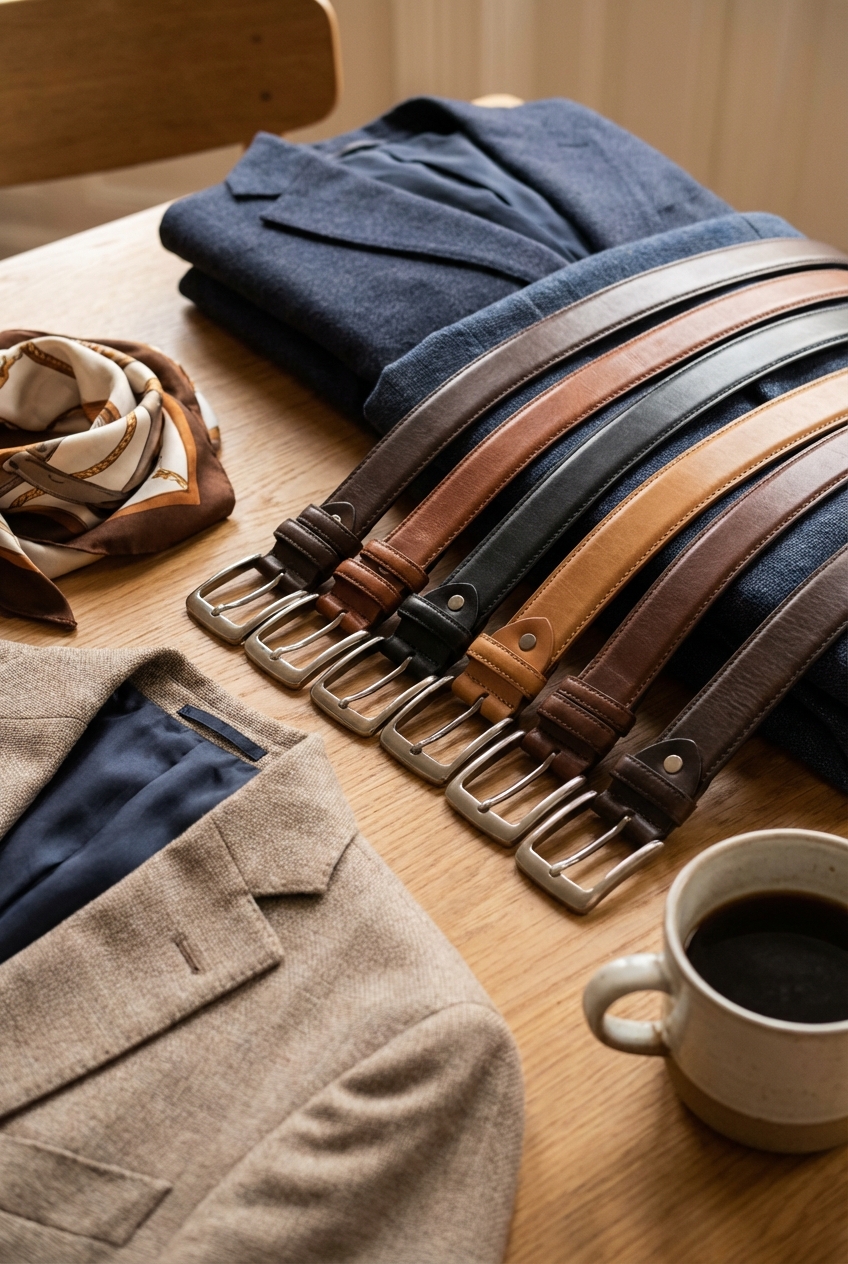
The Perfect Leather Belts For Polished Details
Accessories are the unsung heroes of a wardrobe, often doing the heavy lifting to transform a basic ensemble into a curated look. In my years of styling clients for everything from boardroom meetings to casual weekends, I have found that a high-quality leather belt is the single most effective tool for defining a silhouette. It acts as visual punctuation, separating the upper and lower body while adding a layer of texture and intentionality.
Many women view belts strictly as functional items designed to hold up trousers, but this mindset misses their stylistic potential. A great belt bridges the gap between different fabrics, elevates denim, and can completely restructure a shapeless dress. When you invest in the right leather and hardware, you are buying versatility that will last for decades.
In this guide, I will walk you through exactly how to select, size, and style leather belts to achieve that effortless, polished aesthetic. If you are looking for specific visual inspiration on how to style these pieces, make sure to check out the Picture Gallery at the end of the blog post.
1. Decoding Leather Quality and Grades
The fashion industry is rife with misleading terminology regarding leather goods. To the untrained eye, a shiny belt stamped “Genuine Leather” looks like a steal, but in the world of high-end manufacturing, this is often a red flag. “Genuine Leather” is essentially an industry catch-all term for the lowest quality of real leather, often made from bonded scraps painted to look uniform.
For a belt that develops a beautiful patina and does not crack after a few months of wear, you need to look for “Full-Grain” or “Top-Grain” leather. Full-grain includes the entire outer hide, meaning it retains the natural grain and immense strength of the skin. It absorbs oils and scratches in a way that looks better with age, rather than looking worn out.
Top-grain is slightly thinner and has had the very top layer sanded off to remove imperfections, making it more pliable and uniform. Both are excellent choices for a polished look. If you are building a long-term wardrobe, avoid “bonded” leather entirely, as it will eventually peel apart at the holes.
Stylist’s Note: The Bend Test
When shopping in person, I always perform the bend test. Take the belt and bend it back on itself as if you are threading it through a buckle. If you see tiny spiderweb cracks appear immediately on the surface, put it back. High-quality vegetable-tanned leather will curve smoothly without the surface finish breaking.
2. Mastering Proportion and Width
One of the most common mistakes I see in client fittings is the mismatching of belt width to the outfit’s proportions. The width of your belt dictates the formality and the visual weight of your waistline. A millimeter difference can change the vibe from “refined corporate” to “bohemian casual.”
For a standard pair of denim jeans, the loops are generally designed to accommodate a width of 1.5 inches (approx. 3.8 cm). This is your workhorse width. It feels substantial enough to hold up heavy denim fabric but isn’t so wide that it looks costumey. If you try to thread a skinny belt through wide jeans loops, the belt will slide around and look accidental.
For trousers, suit pants, and cinching dresses, I recommend a width between 0.75 inches and 1.25 inches. This narrower scale is inherently more elegant and less utilitarian. It sits lighter on the body and acts more like jewelry than hardware. If you have a shorter torso, leaning toward these narrower widths prevents the belt from visually “eating” your midsection.
Common Mistake: The Loop Gap
A frequent error is wearing a belt that is significantly smaller than the pant loops. This creates a sloppy “floating” effect. Always aim to fill the belt loop by at least 80%. If the pants have wide loops but you want to wear a skinny belt, skip the loops entirely and wear the belt over a blazer or sweater instead.
3. The Hardware Equation: Buckles and Metals
The buckle is the focal point of the accessory and dictates the level of polish. For a timeless, high-end look, simplicity is your best friend. I advise clients to invest in solid brass or stainless steel hardware rather than plated zinc alloys. Solid metals have a heavy hand-feel and will not chip to reveal a cheap pink or grey base metal underneath.
When selecting a style, consider the “jewelry rule.” If you wear primarily gold jewelry, a brass or gold-tone buckle will integrate seamlessly into your daily uniform. If you favor silver or platinum, stick to nickel or polished steel buckles. Mixing metals can be chic, but matching them creates an immediate sense of harmony and order.
Avoid excessive branding or massive logos unless they are specific statement pieces you love. A discreet, geometric buckle—square, rounded square, or horseshoe shape—is far more versatile. It transitions from office wear to evening drinks without screaming a brand name, which is the hallmark of “quiet luxury.”
What I’d Do in a Real Fitting:
I check the “prong” of the buckle. It should sit flat against the frame when closed. If the prong is curved or bulky, it will create an unsightly bulge under your top if you decide to wear a shirt untucked over the belt. I look for sleek, flat hardware that keeps the profile slim.
4. Sizing for Waist vs. Hips
Sizing is where most online purchases go wrong. We are used to buying pants based on waist size, but belts require a different calculation because they add circumference on top of the fabric. Additionally, you likely need different sizes depending on where you wear the belt.
For a hip belt (worn with low or mid-rise jeans), you generally need a size that is 2 to 3 inches larger than your natural waist belt. A good rule of thumb is to measure your waist (or where you want the belt to sit) with a tape measure over your clothes, not on bare skin. Then, add two inches to that number. This is your ideal belt size.
Most high-quality belts have five holes. The goal is to buckle the belt on the middle (third) hole. This leaves enough tail to tuck securely through the first loop without wrapping halfway around your body, and it gives you room for adjustment in either direction. If you are on the last hole, the belt is too small; if you are on the first hole, the tail will flap awkwardly.
Stylist’s Note: Customizing the Fit
If you find a vintage belt you love that is too big, do not use a kitchen knife or scissors to make a new hole. It ruins the leather’s structural integrity. Take it to a cobbler. They have professional rotary punches that create a clean, sealed edge. If you must do it at home, buy a $15 leather hole punch tool online to ensure a professional finish.
5. The Essential Color Palette and Textures
You do not need a dozen belts to have a complete wardrobe. In fact, a curated rotation of three to four high-quality pieces will serve you better than a drawer full of cheap options. I always start my clients with the “Holy Trinity” of leather tones: Black, Chocolate/Cognac, and a texture.
A black leather belt with a semi-matte finish is non-negotiable. It anchors black trousers, dark denim, and grey suiting. Avoid high-gloss patent leather for daily wear, as it tends to look too formal or synthetic. A subtle satin sheen is the sweet spot for versatility.
For the brown family, look at your shoe collection. If you wear warm camel boots, go for a cognac belt. If you prefer dark brown loafers, opt for a deep espresso or chocolate belt. The shades do not need to match perfectly, but they should share the same undertone (warm vs. cool).
Adding Texture:
Once you have the basics, add a textured belt. Mock-croc (embossed crocodile) or suede adds incredible depth to an outfit. A black croc-embossed belt adds visual interest to a monochrome black outfit without introducing a new color. It is a subtle detail that reads as very expensive and thoughtful.
6. Advanced Styling: Layering and Knotting
Once you have the right belt, styling it is about placement. One of my favorite styling tricks for cooler months is belting the outer layer. Cinching an oversized blazer or a bulky cardigan creates a “peplum” effect that highlights the waist and adds structure to comfortable clothes.
When belting a blazer, ensure the fabric is smoothed down underneath before tightening. You want the folds to be uniform, not bunched. I recommend a slightly wider belt (1.5 to 2 inches) for this, as it needs to hold its own against the weight of the wool or knitwear.
For softer leather belts or thinner straps, you can utilize the “stylist’s knot.” Instead of just tucking the tail through the loop, pull the tail up behind the belt, down through the loop you just created, and pull tight. This knot keeps a long tail secure without a keeper loop and adds a casual, artisanal vibe to dresses and skirts.
What I’d Do in a Real Project:
When styling a client in a flowy maxi dress, I often avoid using the belt loops attached to the dress. They are rarely at the correct height for the individual’s actual waist. I snip off the thread loops and place the belt at the client’s true waist (usually higher than the dress manufacturer placed the loops). This instantly elongates the legs.
Finish & Styling Checklist
Use this checklist before you walk out the door to ensure your accessory game is on point:
- Check the Hardware: Does your buckle metal clash with your earrings or bag chain? If yes, is it intentional?
- Mind the Tail: Is the end of the belt flapping loose? Secure it with the keeper loop or use double-sided fashion tape if the tail is too short to reach the loop.
- Verify the Rise: Are you wearing a waist belt on your hips? Ensure the belt isn’t digging in or creating a “muffin top” effect; if so, loosen it by one hole.
- Leather Condition: Is the leather cracked or scuffed? A quick buff with leather conditioner can make a 5-year-old belt look brand new.
- Center Alignment: Is your buckle actually centered? It often shifts to the side when we walk or sit. Re-center it for a sharp line.
FAQs
Should I match my belt to my shoes exactly?
In traditional menswear, yes. In modern womenswear, no. They should “go” together, meaning they should be in the same color family or have similar intensity, but an exact color match can look a bit dated. Mixing textures (e.g., suede shoes with a smooth leather belt) is a modern way to coordinate.
Can I wear a belt if I don’t have belt loops?
Absolutely. Belting over dresses, cardigans, and blazers is a high-fashion move. To keep it in place, look for belts that have a textured back (like raw suede) rather than smooth leather, as the friction helps it grip the fabric.
How do I store leather belts to keep their shape?
Never hang them by the buckle for long periods if the leather is heavy, as it can warp the strap. The best way is to roll them loosely and place them in a drawer divider. This prevents creases and keeps the leather supple.
Are reversible belts worth it?
Generally, no. The mechanism required to flip the buckle is a weak point that often breaks. Furthermore, because two strips of leather are glued back-to-back, they tend to separate and bubble faster than a solid strip of leather. Buy two separate, high-quality belts instead.
Conclusion
A perfect leather belt is more than a utility item; it is a foundational piece of a polished wardrobe. By shifting your focus from “holding up pants” to “architecting a silhouette,” you unlock a new level of style confidence. Whether you are cinching a vintage blazer or adding texture to a monochromatic denim look, the details of grain, width, and hardware speak volumes.
Remember that leather is an organic material. It requires respect and care. Invest in full-grain options, condition them once a season, and punch holes professionally. When you treat your accessories with this level of consideration, they return the favor by making every outfit you wear look significantly more expensive and put-together.
Picture Gallery


