
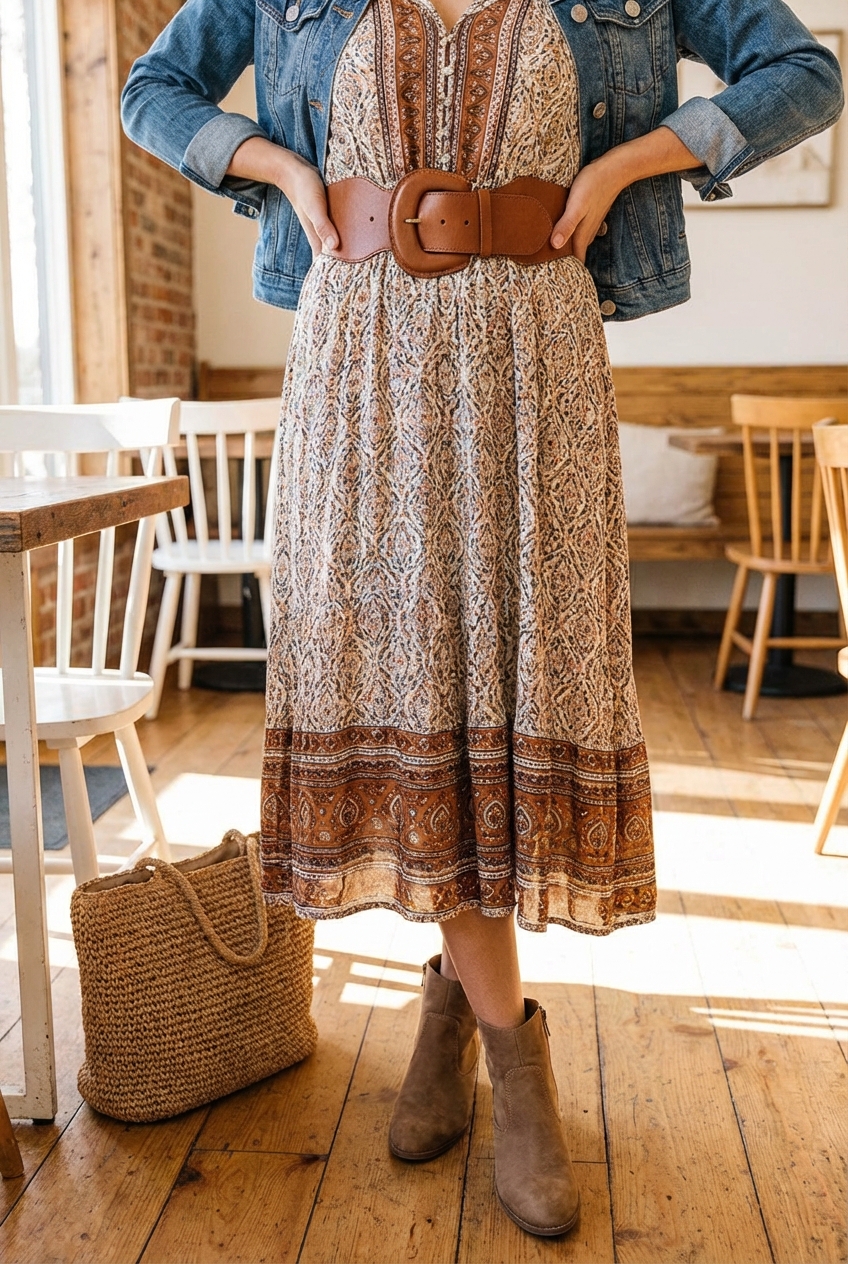
The Return Of Statement Belts How To Wear Them Effortlessly
Fashion is cyclical, and if you have been watching the runways or street style lately, you have likely noticed a familiar accessory reclaiming the spotlight. After years of minimalism and logo-mania fading into the background, the statement belt is back. However, this is not a repeat of the mid-2000s where giant, slung-low discs dominated every outfit.
The modern iteration of the statement belt is architectural, refined, and purposeful. It is less about adding unnecessary bulk and more about creating a silhouette. As a stylist, I view belts as the punctuation of an outfit; they dictate where the eye stops and how the proportions are read.
Whether you are cinching an oversized blazer or adding structure to a floating maxi dress, the rules have evolved. We are prioritizing quality materials, interesting hardware, and strategic placement that honors your specific body type. For a visual guide on how to execute these looks, be sure to check out the Picture Gallery at the end of the blog post.
Understanding Scale and Proportion
The most critical element of wearing a statement belt is understanding scale. In interior design, we talk about furniture scale relative to a room; in fashion, we look at accessory scale relative to your frame. If you have a petite frame (under 5’4″), a belt that is four inches wide will swallow your torso. It visually eliminates your waist rather than accentuating it.
For petite or short-torso body types, I recommend sticking to belts that are between 1.5 and 2 inches in width. This provides the “statement” effect without dominating your entire midsection. You get the visual break, but you maintain the vertical line of your outfit.
Conversely, if you have a long torso or are tall, you have the real estate to handle wider architectural pieces. A 3-to-4-inch corset style or a wide leather sash works beautifully to break up the length of the body. It acts as a focal point that brings coherence to your upper and lower halves.
Designer’s Note: The “Third Piece” Rule
In my years of styling clients, the most common issue I see is an outfit that feels “unfinished.” We often use the “Third Piece Rule” to fix this. Your top is the first piece, your bottom is the second, and the belt becomes the third element that ties them together.
However, a common mistake is adding a belt as an afterthought. A statement belt should be chosen with the same intention as your shoes. If the belt has heavy gold hardware, it dictates the rest of your jewelry. Do not fight the belt. If you are wearing a piece with a massive, sculptural buckle, keep your necklace minimal or non-existent. Let the waist be the star.
Mastering the “Blouson” Technique
Wearing a belt over a dress or a light blouse requires managing the fabric. Simply tightening a belt over a silk dress often results in unsightly bunching or pulling at the seams. You need to create a deliberate “blouson” effect.
First, secure the belt at your natural waist. This is usually the narrowest part of your torso, typically two inches above the belly button. Once the belt is secured, gently pull the fabric of your top or dress upward about half an inch to one inch.
Smooth this fabric down over the top edge of the belt. This hides the tension line where the belt grips the fabric and creates a soft, elegant drape. This technique is essential for thicker fabrics like wool or cashmere, where bunching can add imaginary pounds to your frame.
Common Mistakes + Fixes
Mistake: Wearing a belt that is too loose.
Fix: A statement belt that slides around looks messy and requires constant adjusting. It should be snug enough to stay parallel to the floor but not so tight that it creates a “muffin top” effect above or below the leather. If you are between sizes, take the belt to a cobbler to add an extra hole. Do not try to punch it yourself with scissors; it ruins the structural integrity of the leather.
Mistake: The “Tail” Flap.
Fix: When you wear a high-quality leather belt, the excess strap (the tail) should not flap around loosely. If the keeper loop is missing or broken, use a hidden double-sided fashion tape to secure the tail against the belt. For a more stylized look, if the leather is soft enough, loop the tail behind the belt and pull it down to create a knot.
Belting Outerwear: The Modern Power Move
One of the chicest ways to wear a statement belt right now is over outerwear. This works particularly well with boxy blazers, trench coats, and even wool overcoats. It transforms a shapeless winter layer into a tailored dress coat.
When belting a blazer, the density of the fabric matters. A thin, single-ply leather belt will get lost on a heavy tweed jacket. You need a belt with some weight—think thick calfskin or stamped crocodile texture. The hardware needs to be substantial enough to stand up to the coat’s buttons.
Placement is key here. Do not use the coat’s existing belt loops if they do not align with your natural waist. Coat loops are often placed lower to accommodate various heights, which can make you look boxy. Ignore the loops and place your statement belt at your true waist to maximize the hourglass silhouette.
Material Matters: Mixing Textures
Monochromatic dressing is a high-end styling trick that always looks expensive, but it falls flat without texture. If you are wearing a black knit dress with a black cotton jacket, a black leather belt adds the necessary gloss and friction to make the outfit pop.
Here is a rule of thumb for mixing materials:
- Leather on Knitwear: The smooth, structured surface of leather contrasts beautifully with the soft, fuzzy texture of wool or cashmere. This is perfect for fall and winter.
- Metal on Silk: Chain belts are making a huge comeback. They act as jewelry for the body. The cold, hard metal looks incredible against the fluidity of silk or satin.
- Suede on Denim: Suede absorbs light while denim reflects it slightly. A wide suede belt breaks up a “Canadian tuxedo” (denim on denim) and adds a rich, tactile element.
The Practical Checklist: What I’d Do in a Real Project
If I were styling you for a photoshoot or a wardrobe refresh, here is exactly how we would select your statement belts.
1. The Hardware Audit
Look at your current shoe and bag collection. do you wear mostly gold, silver, or brass? Buy a high-quality black belt and a brown/tan belt with hardware that matches your most-worn metals. Mixing metals is fine, but matching them creates a cohesive, “quiet luxury” look.
2. The Sit Test
This is the most overlooked step. Put the belt on and sit down in a hard chair. Does the buckle dig into your ribcage? Does the bottom of the belt push into your hips comfortably? A statement belt that is torture to wear will stay in your closet. Wide belts need to be contoured (curved slightly) rather than cut straight to accommodate the hips when sitting.
3. The Width Measurement
Measure the distance between your bottom rib and the top of your hip bone. This is your “waist real estate.” Your belt should occupy no more than two-thirds of this space. If it takes up the whole space, you will look stiff and feel uncomfortable.
Navigating Trends: The Chain Belt
The chain belt requires a different approach than the leather belt. It offers zero structural support; it is purely decorative. Because it does not cinch you in, it relies on drape.
Wear chain belts slightly lower than your natural waist—resting on the top of the hip bones is ideal. This gives a relaxed, 1990s supermodel vibe. If you pull a chain belt too tight at the high waist, it tends to look dated.
Look for chains with adjustable clasps so you can vary the placement. I often layer a thin gold chain belt over a wider leather belt for clients who want a maximalist, runway-ready look.
Styling for Different Occasions
The Corporate Environment
In a professional setting, the statement belt should be anchored. Avoid loud, jangling hardware. Opt for a wide belt in a matte finish (glossy patent leather can sometimes read too “evening”). A belt in a deep espresso, navy, or burgundy is often more sophisticated than stark black for office wear.
Weekend/Casual
This is where you can experiment with canvas, woven leather, or western-inspired buckles. A woven leather belt is fantastic because it is infinitely adjustable—you can put the prong through any part of the weave. This is ideal for fluctuating comfort levels after brunch.
Evening/Date Night
Here, the belt can act as the centerpiece. A crystal-encrusted buckle or a metallic leather sash elevates a simple Little Black Dress. For evening, I love a belt with a velvet backing; it grips the fabric of formal gowns better than smooth leather, ensuring it stays in place while you dance.
Care and Maintenance of Leather Belts
A good statement belt is an investment, often costing as much as a good pair of shoes. To ensure longevity, never store your belts rolled up tightly. Rolling causes the leather to crack and the lining to separate over time.
Storage Solution: Hang your belts by the buckle. If you do not have a dedicated belt rack, use a tie hanger. Gravity helps straighten out any curves that form from daily wear.
Leather Care: If you buy a natural leather belt, condition it once every six months with a clear leather conditioner. This prevents the area around the holes from drying out and tearing. For hardware, a quick wipe with a jewelry cloth removes fingerprints and keeps the buckle gleaming.
Finish & Styling Checklist
Before you walk out the door, run through this quick mental checklist to ensure the look is polished:
- Loop Check: Is the tail of the belt secured, or is it flapping? Use a keeper loop or fashion tape.
- Center Alignment: Is the buckle perfectly centered on your zipper line? (Unless it is an asymmetrical style).
- Fabric Smoothness: Have you bloused the fabric above the belt so it doesn’t look like it’s pulling?
- Hardware Harmony: Does the buckle clash aggressively with your earrings or bag chain?
- Comfort Check: Can you slip two fingers between the belt and your waist? If not, it is too tight for a full day of wear.
FAQs
Can I wear a statement belt if I am short-waisted?
Absolutely. The key is to match the color of the belt to your top or dress. This defines the waist without creating a harsh horizontal line that cuts your torso in half. Keep the width under 2 inches.
How do I stop my belt from riding up?
This usually happens because the belt is worn over a fabric that is too slippery (like silk) or the belt is too tight, causing it to seek the narrowest part of the torso as you move. Loosen it one notch and try using a belt with a suede or raw leather backing for better grip.
Are logos “out”?
Massive, screaming logos are trending down in favor of “quiet luxury.” However, a classic brand insignia (like a simple gold buckle) is timeless. If the logo is the size of a dinner plate, it might look dated. If it is integrated into the hardware design, it is classic.
Can I wear a belt over a cardigan?
Yes, but choose a chunky knit. Belting a thin, flimsy cardigan can look messy. A thick cable knit cardigan with a leather belt is a classic texture combination that looks cozy and chic.
Conclusion
The return of the statement belt is an invitation to play with silhouette and structure. It is the single most effective tool in your wardrobe for changing the shape of a garment. A boxy dress becomes an hourglass; an oversized blazer becomes a tailored coat; a simple jeans-and-tee combo becomes a deliberate outfit.
Remember that confidence is the ultimate accessory. The belt is there to support you, not to restrict you. Start with one high-quality piece in a neutral tone with hardware that you love, and experiment with placement. You will find that it breathes new life into pieces you have had in your closet for years.
Picture Gallery


