
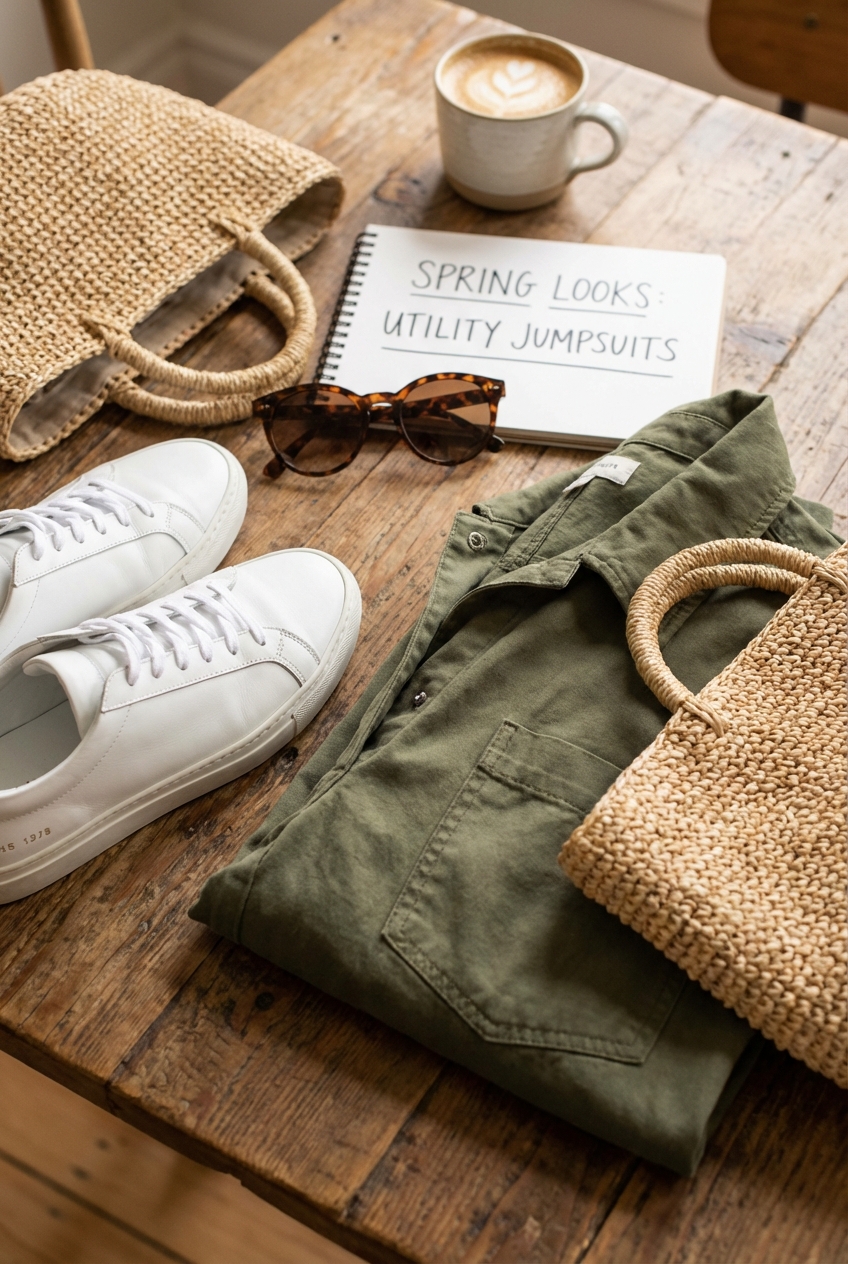
The Rise Of Utility Jumpsuits For Spring Looks
Spring fashion is notoriously tricky to navigate. The weather fluctuates wildly between chilly mornings and humid afternoons, often leaving us stranded between our heavy winter coats and premature summer dresses. For years, I struggled to find a solution for my clients that balanced practicality with a polished, high-end aesthetic during this transitional season. I recall a specific fitting with a client who manages an art gallery; she needed something that allowed her to climb ladders and hang frames but still looked chic enough to greet high-net-worth collectors five minutes later.
That was the moment I fully embraced the utility jumpsuit as the ultimate spring staple. It is the sartorial equivalent of a Swiss Army knife: functional, structured, and capable of making a significant statement with minimal effort. The utility jumpsuit—historically rooted in factory work and aviation—has shed its strictly industrial reputation. It has evolved into a sophisticated silhouette that graces the runways of Paris and the streets of New York alike.
In this guide, I will walk you through exactly how to select, fit, and style a utility jumpsuit so it looks intentional and expensive, rather than like a costume. We will cover fabric choices, crucial alteration rules, and the accessory swaps that take the look from school drop-off to a dinner reservation. If you are looking for visual inspiration on how to execute these combinations, make sure to check out the Picture Gallery at the end of the blog post.
Understanding the Architecture: Fabric and Hardware
The difference between a jumpsuit that looks like luxury streetwear and one that looks like a literal painter’s uniform lies entirely in the fabric weight and hardware quality. When I am shopping for clients, I immediately check the “hand” of the fabric. For spring, you want a mid-weight cotton drill or a Tencel-cotton blend.
Pure stiff denim or heavy canvas can be too restrictive and often bunches unflatteringly around the midsection when you sit down. Conversely, flimsy rayon or thin polyester lacks the structure required to pull off the utility look; it will cling to undergarments and look cheap under direct sunlight.
Pay close attention to the hardware. Zippers, snaps, and D-rings are the “jewelry” of the garment before you even add accessories.
- The Zipper Test: Look for heavy-duty metal zippers (brass or silver tones) rather than hidden plastic ones. An exposed metal zipper elongates the torso and adds a vertical line that breaks up the solid block of color.
- Button Placement: Ensure buttons are reinforced. In high-end jumpsuits, buttons often have a backing button on the inside to prevent the fabric from tearing.
- Pocket Volume: Utility implies pockets, but pocket placement changes the silhouette. Chest pockets add volume to the bust, which balances pear shapes but can overpower larger busts. Hip pockets should sit flat; if they gape while you are standing, the fit is too small.
The Crucial Fit: Torso Length and Rise
The number one reason women return jumpsuits is “camel toe” or the opposite problem, a “saggy diaper” effect. This is rarely about width and almost always about vertical length. In the fashion industry, we call this the “torso measurement,” which is the distance from the high point of your shoulder, down through the crotch, and up the back to the shoulder.
If you have a long torso, standard sizing will likely pull uncomfortably at the crotch. If you are petite or short-waisted, you will have excess fabric pooling at the hips. When trying on a jumpsuit, you must perform the “Sit Test.” Sit down on a hard chair and lean forward slightly.
Designer’s Note: If the fabric digs into your crotch or pulls tightly across the shoulders when you sit, you need to size up. It is much easier to have a tailor take in the waist or hem the legs than it is to add length to a torso. I always advise clients to buy for their vertical length first, and their horizontal width second.
Standard Measurement Guidelines
- Shoulder Seam: Should sit squarely on the edge of your shoulder bone. If it drops down the arm, the whole look becomes slouchy (unless it is a specific oversized design).
- Crotch Drop: For a non-stretch utility fabric, you want the crotch seam to sit about 1 to 1.5 inches below your actual body. This allows for movement without the fabric riding up.
- Waist Hit: The waistband or drawstring should hit at your natural waist (the smallest part). If it hits at the hips, it will shorten your legs visually.
Styling For Day: The “Off-Duty” Aesthetic
Wearing a utility jumpsuit during the day requires a delicate balance. You want to lean into the sporty vibe without looking unkempt. The goal is “effortless polish.”
For daytime looks, I usually recommend keeping the neckline open. Unzip the front past the collarbone or unbutton the top two buttons. This reveals a sliver of skin which breaks up the monotony of the fabric. If it is a chilly spring morning, layer a fitted white crewneck tee or a thin ribbed turtleneck underneath. This adds dimension and prevents the look from feeling too bare.
Footwear and Cuffs
The interaction between the hem of your pant and your shoe is critical. For daytime, you are likely wearing sneakers, loafers, or flat slides.
- The Roll: If you are wearing sneakers, roll the hem of the jumpsuit twice to expose the ankle bone. This is a non-negotiable styling trick in my book. Showing the ankle creates a break between the heavy fabric of the suit and the shoe, making your legs look slimmer and longer.
- Sock Choice: With loafers, opt for a sheer sock or a no-show sock. Heavy athletic socks can make the utility look feel too literal and clunky.
Transitioning to Night: Elevating the Silhouette
Taking a boiler suit from day to night is one of my favorite styling challenges because the transformation is always dramatic. The objective here is to replace “function” with “form.”
First, ditch the self-fabric belt that came with the jumpsuit. Most utility suits come with a matching sash. While fine for day, it reads casual. Swap this out for a structured leather belt with a metal buckle, or a wide corset belt. This immediately cinches the waist harder and introduces a new texture that elevates the cotton or denim fabric.
Jewelry and Hardware Coordination
Since the jumpsuit covers 90% of your body, your accessories need to be bold enough to stand out, but not so busy that they clash with the garment’s zippers and pockets.
- Earrings: Go big. Gold hoops or architectural statement earrings draw the eye up to your face and away from the volume of the body.
- Necklaces: If the jumpsuit has a collar, skip the necklace and focus on earrings. If you unzip it deep for the evening, a delicate lariat necklace mimics the vertical line of the zipper.
- Bag: Swap the tote for a clutch. A structured, handheld bag signals “evening” and contrasts beautifully with the slouchy nature of the jumpsuit.
Color Palettes: Moving Beyond Khaki
When we think of utility wear, we default to army green, khaki, and navy. While these are classics for a reason, Spring is the time to experiment with lighter, fresher hues.
In my recent consultations, I have been pushing clients toward “soft utility.” Think sage green instead of olive, buttercream instead of khaki, and slate blue instead of navy. A cream or white utility jumpsuit is incredibly chic and looks very expensive, provided the fabric is thick enough to be opaque.
Common Mistakes with Light Colors
- Transparency: Always check the opacity of white or cream jumpsuits in natural daylight. Nude undergarments are a must.
- Stains: If you are a mom or work in a messy environment, keep the light colors for dinner dates. For daily wear, charcoal grey or a washed indigo are forgiving alternatives that hide coffee spills and playground dust.
Layering Strategies for Variable Weather
Spring weather is unpredictable. You might leave the house in 50-degree weather and return in 70-degree sun. The utility jumpsuit is an excellent base layer, but you need an exit strategy for your outerwear.
Do not wear a blazer over a utility jumpsuit. The double collars (jumpsuit collar + blazer lapel) create too much bulk around the neck, and the shoulders will feel restricted.
The Best Outerwear Pairings
- The Trench Coat: A classic beige trench coat draped over the shoulders works perfectly because the fabric weights are similar.
- The Leather Biker Jacket: This adds edge. The cropped cut of a biker jacket usually hits exactly at the waist of the jumpsuit, preserving your proportions.
- The Oversized Cardigan: For a softer, more texture-rich look, a chunky knit cardigan contrasts nicely with the crisp cotton of the jumpsuit.
Designer’s Note: Common Mistakes + Fixes
I have seen many great outfits ruined by small oversight. Here is a quick troubleshooting guide based on real issues I fix for clients.
Mistake: The “Mechanic” Effect.
You put on the jumpsuit and suddenly feel like you should be changing tires.
The Fix: This happens when the fit is too boxy and the styling is too masculine. Roll the sleeves to the elbow, pop the collar, and add a feminine shoe (like a strappy sandal or a pointed-toe mule). Lipstick also helps shift the vibe instantly.
Mistake: Loss of Waist.
The jumpsuit swallows your figure, making you look rectangular.
The Fix: This is a lack of definition. If a belt isn’t working, visit a tailor. Having them add two “darts” in the back of the jumpsuit (just above the bum) will pull the fabric in and define your waist without making the front tight. It costs about $20-$30 and changes the garment entirely.
Mistake: Static Cling.
This happens with synthetic blends (polyester/rayon) in dry spring air.
The Fix: Stick to natural fibers like cotton, linen, or Tencel. If you must wear synthetic, carry a travel-size static spray or run a wire hanger over the inside of the legs before putting it on (an old stylist trick to discharge electricity).
Finish & Styling Checklist
Before you head out the door or make a purchase, run through this mental checklist. This is the exact process I use when finalizing a look for a client.
The Fit Check
- Sit Test: Can you sit without the neck choking you or the crotch cutting in?
- Arm Lift: Raise your arms above your head. Does the hem rise to your knees? If so, the torso is too short.
- Back View: Check the rear view in a mirror. pockets should sit on the glutes, not below them.
The Style Check
- Ankles/Wrists: Are you showing skin? Roll hems and cuffs if the fabric feels too heavy.
- Balance: If the jumpsuit is baggy, the bag and shoes should be sleek. If the jumpsuit is fitted, you can get away with chunkier accessories.
- Third Piece: Have you added a “third piece” (belt, bold earring, or jacket) to make it an outfit rather than just a garment?
FAQs
How do I handle the restroom situation in a jumpsuit?
This is the most common objection! Practicality is key. Look for jumpsuits with a front zipper rather than buttons—it speeds up the process significantly. Also, test the flexibility of the arms; you need to be able to reach the back zipper easily if there is one. When in a public stall, the “roll and tuck” method works: roll the top half down and tuck it firmly into the knees of the pants so it doesn’t touch the floor.
Can petite women wear wide-leg utility jumpsuits?
Absolutely, but scale is everything. Avoid oversized chest pockets that weigh down your frame. Opt for a cropped wide-leg that hits just above the ankle bone to show you have legs under there. A monochrome look (matching shoes to the jumpsuit color) creates an unbroken vertical line that adds height.
Is this trend appropriate for the office?
It depends on your dress code. For creative or casual offices, yes. Choose a jumpsuit in a neutral color (black, navy, camel) with minimal hardware. Avoid distressed fabrics or excessive zippers. Pair it with a pointed-toe pump and a structured blazer (if the jumpsuit collar is minimal) or a trench coat to professionalize the look.
How do I wash a cotton drill jumpsuit?
Cotton drill can stiffen after washing. Wash it inside out in cold water to preserve the color, especially for dark dyes. Tumble dry low for 10 minutes to de-wrinkle, then hang dry the rest of the way. Steaming is better than ironing for utility fabrics, as it relaxes the fibers without creating sharp, military-style creases that can look too severe.
Conclusion
The utility jumpsuit is more than just a passing trend for Spring; it is a solution for the modern woman who values her time as much as her appearance. It simplifies the act of getting dressed down to a single zip, yet offers endless versatility through accessories and layering.
By focusing on the architecture of the garment—the rise, the fabric weight, and the hardware—you can find a piece that flatters your body rather than hiding it. Remember that clothes are meant to serve you, not the other way around. A great utility suit allows you to move freely, sit comfortably, and navigate your day with confidence.
Whether you pair it with battered Converse for a coffee run or gold stiletto sandals for a gallery opening, the utility jumpsuit is a canvas waiting for your personal touch. It is the ultimate blend of high-fashion structure and real-world function.
Picture Gallery


