
The Role Of Denim In A Year Round Capsule Wardrobe
Introduction
I still vividly remember the first time I spent “real money” on a pair of jeans. For years, I had cycled through fast-fashion denim that lost its shape by noon and faded into a dull gray within three washes. When I finally invested in high-quality, rigid Japanese denim, it completely shifted my perspective on what a wardrobe foundation should be.
Denim is often mistaken as purely casual wear, relegated to weekends or “Jeans Fridays.” However, in the eyes of a stylist, denim is the ultimate neutral. It is the architectural grounding force that allows luxury items like cashmere sweaters and silk blouses to feel approachable and modern. Building a capsule wardrobe without denim is like building a house without a foundation; you might have beautiful decorations, but the structure won’t hold up to daily life.
In this guide, we are going to break down exactly how to curate a denim collection that works 365 days a year. We will move beyond trends and focus on fit, fabric weight, and wash. If you are looking for visual examples of these silhouettes in action, please check out the curated Picture Gallery at the end of the blog post.
1. The Architecture of the Leg: Selecting Your Core Silhouettes
The biggest mistake I see clients make is buying denim based on what looks good on a mannequin. A capsule wardrobe requires silhouettes that flatter your specific body architecture and work with your existing shoe collection. You do not need ten pairs of jeans; you need three distinct shapes that cover all social bases.
The Classic Straight Leg
This is the non-negotiable anchor of your closet. A straight-leg jean, ideally with a high rise (11 to 12 inches), creates a vertical line that elongates the frame. It glides over the hip and thigh without clinging, releasing at the knee into a clean column.
Stylist’s Note: For a true capsule piece, aim for a hem that hits right at the ankle bone. This length allows you to wear the jean with loafers, ankle boots, and heels without bunching or dragging.
The Tailored Wide Leg
For days when you need comfort but want drama, the wide leg is essential. This is not the slouchy skater jean of the 90s; think of it more like a denim trouser. It should fit snugly through the waist and hips before flaring out. This silhouette balances out chunkier knitwear in the winter and pairs beautifully with fitted tanks in the summer.
The Slim-Taper (Not Skinny)
While the “spray-on” skinny jean has exited the high-fashion conversation, a slim-taper remains timeless. This cut follows the leg line but leaves about an inch of fabric pinch-able at the calf. It is essential for tucking into knee-high riding boots in the autumn or wearing with oversized blazers.
2. Decoding Fabric: Weight and Composition
If you want denim that lasts for years, you have to look at the tag. The “recipe” of the fabric dictates how it will drape and how long it will hold its shape. In a capsule wardrobe, durability is paramount.
The Case for 100% Cotton
Rigid denim, usually made from 100% cotton, is the gold standard for longevity. Initially, it may feel stiff and unforgiving. However, over time, the cotton fibers mold to your body heat and movement, creating a custom fit that synthetic blends cannot replicate. Rigid denim holds you in and provides visual texture that looks expensive.
The Acceptable Stretch Ratio
I understand that rigid denim isn’t practical for everyone, especially if you spend all day sitting at a desk or chasing children. If you need stretch, look for a blend that contains no more than 2% elastane (spandex).
Common Mistake: Buying jeans with 4% or more elastane. These are essentially leggings disguised as denim. They will bag out at the knees and waist within hours of wear, forcing you to wash them constantly to “snap” them back into shape, which degrades the fabric.
Understanding Ounce Weight
Denim weight is measured in ounces per square yard. For a year-round capsule, you want a “mid-weight” denim, usually between 11 oz and 13 oz. Anything under 10 oz will feel too thin for winter; anything over 14 oz will be too hot for summer and difficult to break in.
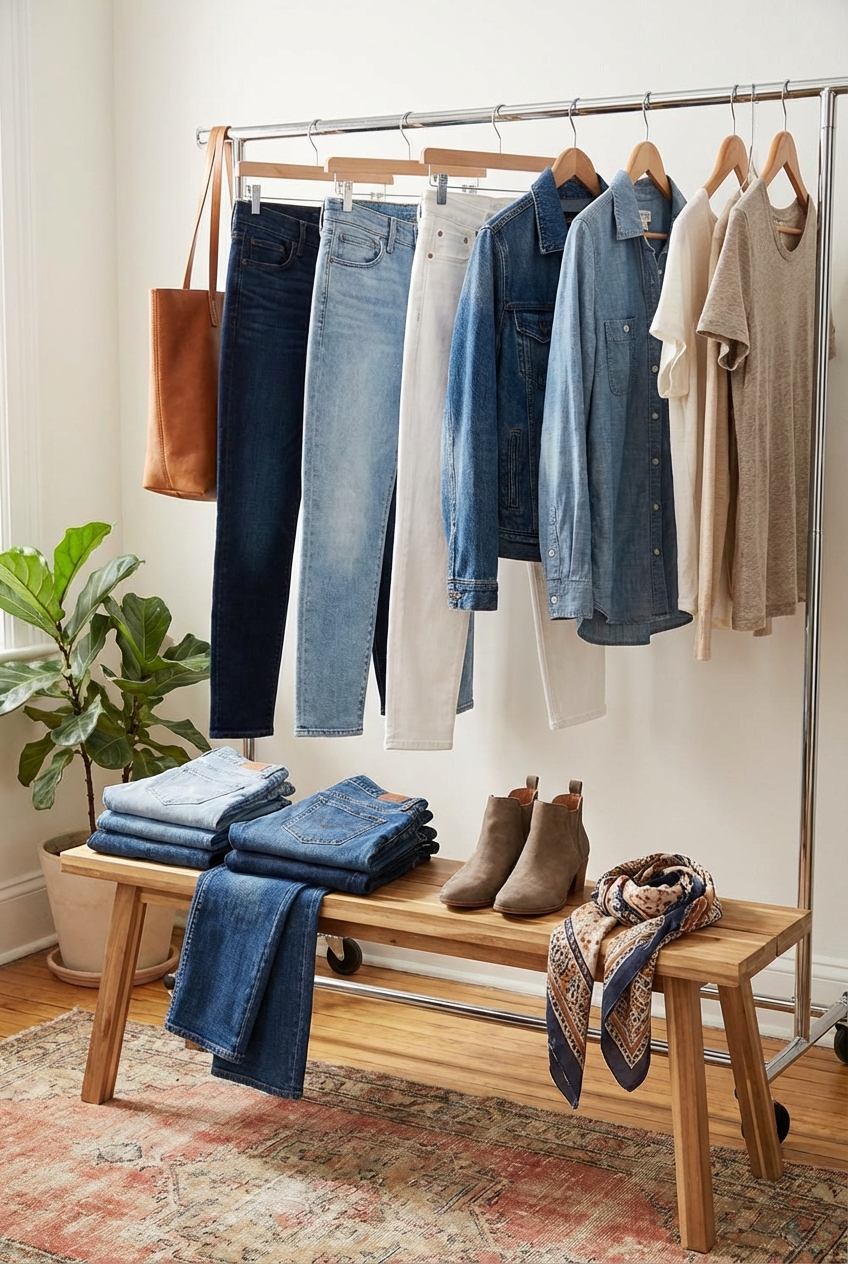
3. The Color Palette: The Rule of Three Washes
A capsule wardrobe relies on cohesiveness. You need washes that act as neutrals, allowing you to mix and match with every top you own. I always advise my clients to secure these three specific washes before buying anything trendy like acid wash or colored denim.
Deep Indigo or Raw Denim
This is your “formal” jean. A dark, uniform indigo wash with no distressing or whiskering reads almost like a navy trouser. It is polished enough for many workplaces and perfect for date nights.
Stylist’s Tip: To keep dark denim from transferring dye onto your light furniture or handbags, soak them in a cold water and vinegar bath before the first wear to set the color.
Vintage Mid-Blue
This is the quintessential “blue jean.” It should look like it has lived a life. Look for a medium blue with soft fading down the center of the thigh. This wash screams Americana and pairs perfectly with a crisp white shirt or a beige trench coat. It brings a relaxed energy to structured blazers.
Ecru or Off-White
White denim is not just for summer. In fact, an ecru or natural cotton jean looks incredibly chic in the winter paired with oatmeal knits and brown leather boots. Unlike stark bright white, ecru has a warmth to it that blends better with a neutral capsule palette. It softens the look and feels less clinical.
4. The Third Piece: Denim Jackets and Shirts
Denim in a capsule wardrobe isn’t limited to trousers. The concept of the “Canadian Tuxedo” (denim on denim) has been elevated to a high-fashion staple, provided the proportions are correct.
The Chambray Shirt
A western-style denim or chambray shirt is one of the most versatile layering pieces you can own. In the summer, wear it open over a slip dress. In the winter, button it all the way up and wear it under a wool sweater, letting the collar and cuffs peek out for texture.
The Oversized Denim Jacket
Swap the cropped, tight denim jackets of the early 2000s for a boyfriend or trucker fit. The jacket should be loose enough to fit a hoodie underneath. This piece acts as the perfect transitional outerwear for spring and autumn.
Stylist’s Note: When doing denim-on-denim, vary the washes. Pair a light chambray shirt with dark indigo jeans, or a vintage-wash jacket with black denim jeans. This creates contrast and prevents the outfit from looking like a costume.
5. Seasonal Transitions: Adapting Your Denim
One of the primary requirements of a capsule wardrobe is year-round functionality. Denim is arguably the only fabric that crosses seasonal boundaries seamlessly, but how you style it changes.
Spring/Summer Styling
In warmer months, the focus is on breathability and showing a bit of skin to lighten the visual weight of the denim.
- The Ankle Gap: Roll the hem of your straight-leg jeans twice to expose the ankle. This small adjustment creates airflow and looks fresher with sandals.
- Fabric Choice: This is when your lighter vintage washes shine. They reflect sunlight rather than absorbing it.
- Pairings: Offset the weight of denim with light fabrics like linen or cotton poplin.
Fall/Winter Styling
In the cold, denim acts as a shield against the elements.
- Thermal Layering: Because mid-weight denim is structured, it hides thermal leggings underneath perfectly. This is a secret weapon for staying warm without bulky snow pants.
- The Tuck: Slim-taper jeans tuck effortlessly into knee-high boots, creating a sealed barrier against wind and rain.
- Texture Play: Denim loves texture. Pair it with chunky cable knits, shearling coats, and suede boots. The roughness of the denim complements these soft, fuzzy textures.
6. The Tailor: The Secret to High-End Denim
If there is one thing I want you to take away from this guide, it is this: almost no one fits perfectly into off-the-rack jeans. In high-end fashion, we tailor everything. Treating your $100 jeans like a $1,000 suit will make them look infinitely more expensive.
Waist Gaping
If you have a curvy figure with a smaller waist and wider hips, you are likely familiar with the annoying gap at the back of the waistband. A tailor can take the waist in via the back seam or add darts. This simple alteration eliminates the need for a belt and creates a smooth silhouette.
Hemming with the Original Hem
When shortening jeans, ask your tailor to “keep the original hem.” They will cut off the bottom, shorten the leg, and then reattach the original distressed hem. This maintains the designer look of the wash. A standard folded hem looks too clean and homemade on distressed denim.
Pocket Placement
This is a detail most people miss. If you are significantly shortening a pair of pants, the proportions of the back pockets might look “off” or too low. While moving pockets is difficult and expensive, it is worth noting when you are trying them on. Ensure the pockets hit the center of your glutes for the most flattering rear view.
7. Care and Maintenance: Longevity Rules
A capsule wardrobe is built on the premise of buying less and wearing more. To make your denim last a decade, you must care for it properly. Over-washing is the enemy of denim.
The Freezer Myth vs. Reality
You may have heard that freezing your jeans kills bacteria. This is largely a myth; it just puts the bacteria to sleep. However, the sentiment is correct: wash your jeans as little as possible. Spot clean stains with a damp cloth and mild soap.
Washing Protocol
When you must wash them (ideally after 10-15 wears), turn them inside out. This protects the indigo dye from fading against the machine drum. Use cold water and a gentle cycle.
Important: Never, ever put your good denim in the dryer. The heat destroys the elastane fibers (causing stretch jeans to lose their snap) and shrinks cotton fibers unpredictably. Hang them by the back belt loop or lay them flat to dry.
8. Finish & Styling Checklist
Before you consider your denim capsule complete, run through this “Stylist’s Reality Check.” These are the mental steps I take when finalizing a wardrobe for a client.
The Fit Test
- Sit Down: Does the waistband dig in so hard you can’t breathe? If yes, size up. Denim should be snug but not painful.
- The Squat: Can you squat down without the rear rise dipping dangerously low? High-rise denim should stay put.
- The Pinch: Can you pinch about an inch of fabric at the thigh? If the fabric is pulling horizontally across the crotch (whiskering), the fit is too tight.
The Shoe Coordination
- Straight Leg: Does the hem kiss the top of your loafers?
- Wide Leg: Is the hem 1/2 inch off the ground when wearing your preferred heel height?
- Skinny/Slim: Is the ankle opening tight enough to not bunch up inside your boots?
The Versatility Check
- Can you wear the dark wash pair with a silk blazer to a dinner reservation?
- Can you wear the mid-wash pair with a hoodie to the grocery store?
- Can you wear the ecru pair with a trench coat in the rain (and are you brave enough)?
9. FAQs
Q: Should I size down in 100% cotton jeans?
A: Generally, yes. Rigid denim will stretch out about half a size to a full size after the first few weeks of wear. If they are comfortably loose in the fitting room, they will be falling off you in a month. They should feel uncomfortably tight (but buttonable) when you first buy them.
Q: Are skinny jeans actually “out”?
A: In fashion, nothing is ever truly “out” if it suits your body type perfectly. However, the skin-tight, painted-on look is currently dated. If you love a slim silhouette, opt for a “cigarette” cut or a straight leg that runs slim. It feels more modern and elegant.
Q: Can I wear denim on denim?
A: Absolutely. It is a classic look. The trick is contrast. Pair a light blue shirt with black jeans, or a white denim jacket with dark indigo trousers. If you wear the same wash on top and bottom, break it up with a high-quality leather belt and a distinct t-shirt underneath.
Q: How do I stop my black jeans from turning grey?
A: Dye loss is inevitable with cotton, but you can slow it down. Only wash in cold water using a detergent formulated for dark colors (like Woolite Dark). Turn them inside out. And critically, dry them out of direct sunlight, as UV rays bleach the fabric.
Conclusion
Denim is the great equalizer of the wardrobe. It is democratic, durable, and when chosen correctly, undeniably chic. Integrating denim into a year-round capsule wardrobe is not about settling for the mundane; it is about finding the perfect blend of utility and luxury.
By focusing on the “Holy Trinity” of washes—dark indigo, vintage blue, and ecru—and respecting the architecture of the leg, you build a rotation that supports every other item in your closet. The right pair of jeans will travel with you, age with you, and tell the story of your life through every fade and whisker.
Remember, the goal is not to have a stack of twenty mediocre jeans that you feel ambivalent about. The goal is to have three or four pairs that make you feel invincible the moment you zip them up. Invest in quality, tailor for precision, and wear them with confidence.
Picture Gallery


