
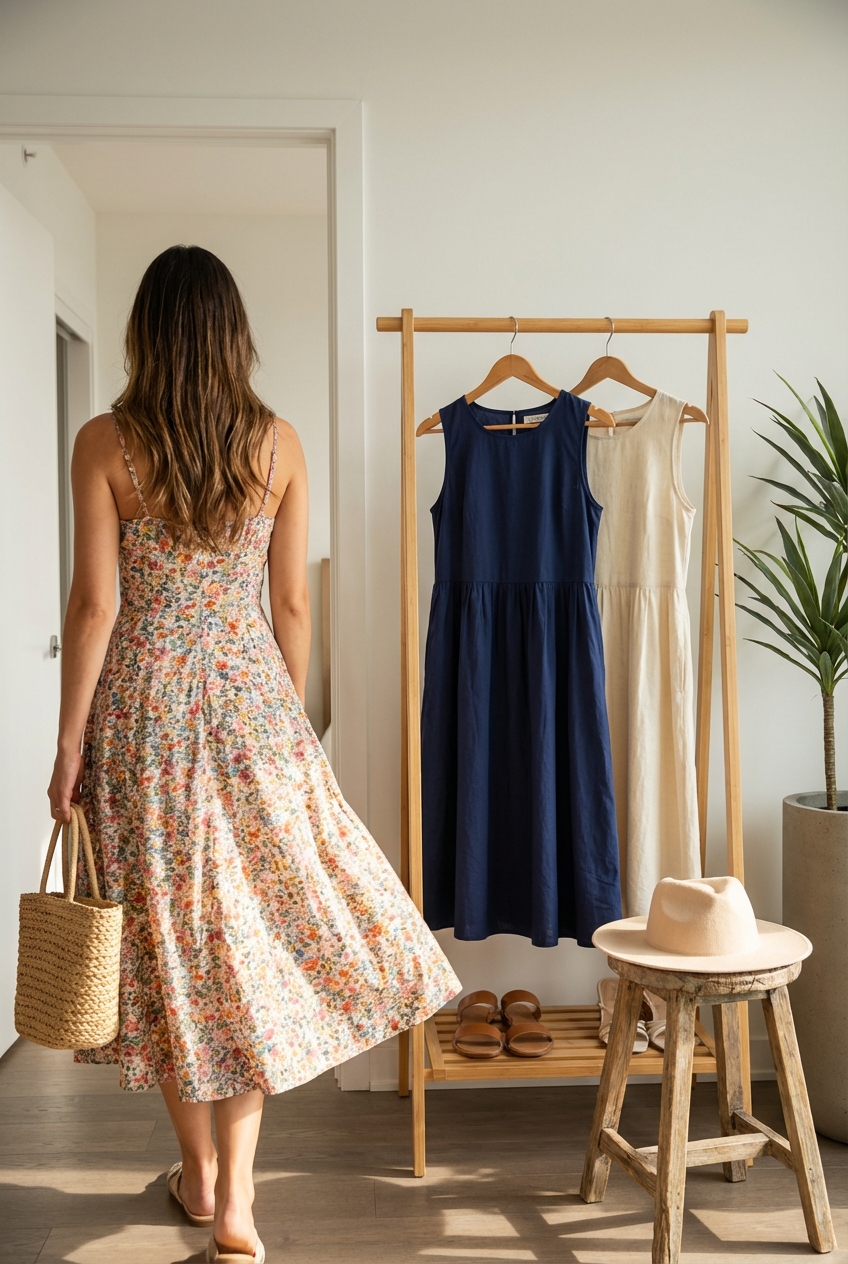
Timeless A Line Dresses For Every Occasion Your Go To Guide For Effortless Style
There is a reason the A-line silhouette has remained a staple in women’s fashion since Christian Dior popularized the “New Look” in the late 1940s. It is fundamentally an architectural marvel of garment construction, balancing proportion and movement in a way few other cuts can achieve. In my years styling high-end clients, from CEOs needing boardroom confidence to brides looking for rehearsal dinner elegance, the A-line dress is the one piece that rarely fails to impress.
I recall a specific fitting with a client who was convinced she couldn’t wear dresses because she felt restricted by sheath cuts and overwhelmed by ballgowns. When we slipped her into a structured, midi-length A-line in a heavy silk wool, her posture immediately changed. The dress did the heavy lifting for her, defining her waist and skimming over the hips without clinging, allowing her to move freely and comfortably.
That sense of effortless polish is what we are aiming for in this guide. We will break down exactly how to select the right fabric for the occasion, where your hem should hit based on your height, and how to accessorize without disrupting the clean lines of the dress. For those looking for visual inspiration on how to style these looks, I have curated a stunning Picture Gallery at the end of this blog post to spark your creativity.
The Architecture of the Silhouette: Why It Works
The “A-line” is exactly what it sounds like: a garment that is fitted at the top and gradually widens towards the bottom, resembling the capital letter A. This geometry creates a visual trick that is universally effective. By cinching the narrowest part of the torso and flaring out, it creates the illusion of an hourglass shape regardless of your natural body type.
However, not all A-lines are created equal. The “grade” of the flare matters immensely. A subtle A-line (often called a skirted shift) offers a streamlined look suitable for professional environments. A dramatic A-line with a full circle skirt provides a romantic, vintage-inspired aesthetic perfect for events.
Designer’s Note: The “Pinch” Test
When sourcing an A-line dress, I always perform the “pinch test” at the waist seam. The structural integrity of this dress relies entirely on the waistband or the waist seam. If the fabric at the waist is flimsy or lacks interfacing, the dress will collapse under the weight of the skirt. Look for a waistband that feels slightly thicker or stiffer than the skirt fabric; this ensures the A-shape holds its form throughout the day.
Fabric Physics: Choosing Weight and Drape
The fabric you choose dictates where you can wear the dress. In interior design, we talk about “hand” and “drape” regarding curtains; the same logic applies here. The fabric must support the silhouette you are trying to achieve.
Structured Fabrics
If you want to hide lines and create a sharp, modern silhouette, opt for structured fabrics. These materials stand away from the body, creating that crisp “A” shape.
- Wool Crepe: Excellent for office wear. It resists wrinkling and holds deep, saturated colors well.
- Brocade or Jacquard: Ideal for evening wear or winter weddings. These fabrics have a stiffness that supports a wider skirt without needing a petticoat.
- Heavy Cotton Poplin: Perfect for summer day dresses. It gives a crisp, clean look but breathes well.
Fluid Fabrics
For a softer, more romantic look, choose fabrics with fluid drape. These will not hold a rigid “A” shape but will flow over the body as you walk.
- Silk Charmeuse or Satin: Best for formal evening events. These fabrics require precise tailoring, as they can show every bump, but the movement is unparalleled.
- Rayon or Viscose: Great for casual, everyday wear. They have a heavy drape that swings beautifully but lacks the formality of silk.
- Chiffon layers: Often used in weddings or summer parties. Ensure there is a quality lining, or the static cling will ruin the A-line effect.
Mastering the Hemline: The Rule of Thirds
One of the most common mistakes I see clients make is ignoring the hemline. The length of your A-line dress drastically changes the visual proportion of your legs. Because the skirt is wider at the bottom, a hem that hits at the wrong spot can make you look shorter or wider than you are.
The Mini A-Line
This typically hits mid-thigh. It creates a youthful, “Mod” 60s vibe. This works best with flats or low block heels. High stilettos with a mini A-line can sometimes throw off the balance, making the top half look heavy.
The Midi Sweet Spot
The midi is the most versatile but the hardest to get right.
- The Rule: The hem should never cut across the widest part of your calf. This visually thickens the leg.
- The Fix: Aim for the hem to hit either just below the knee (the narrow part of the leg) or about two inches above the ankle bone.
- Tailoring Tip: If buying off the rack, budget $25–$40 for a hem adjustment. It is the single most impactful alteration you can make.
The Maxi/Floor Length
A floor-length A-line is dramatic and elegant. For this length, the fabric must graze the top of your shoes. If it drags, it looks sloppy (and ruins the hem); if it’s too short (showing the ankle), it looks like the dress shrank.
Styling for the Occasion: A Protocol
Versatility is the hallmark of the A-line, but styling determines the destination. Here is how I categorize these dresses for real-world scenarios.
The Professional Environment
In a corporate setting, you want structure. Look for a dress with sleeves (cap or three-quarter) to avoid the need for a cardigan, which can interrupt the A-line silhouette.
- Neckline: Boat neck or jewel neck works best to balance the flared skirt.
- Fabric: Matte finishes only. Wool blends or gabardine.
- Shoes: Pointed-toe pumps are essential here. The pointed toe extends the line of the leg, which is necessary when wearing a fuller skirt.
Wedding Guest & Cocktail
This is where you can play with texture and volume. A sleeveless A-line in a raw silk or lace is a timeless choice.
- Detailing: Look for dresses with pockets. It adds a modern, relaxed elegance that allows you to pose comfortably in photos.
- Accessories: Since the dress has volume, keep bags small. A clutch or a chain-strap mini bag is proportional. A large tote will clash with the triangle silhouette of the dress.
Casual Weekend
For brunch or errands, comfort is key. Jersey knits or linen blends work well here.
- Layering: Throw a denim jacket over a casual A-line. The key is the jacket length—it must be cropped to hit at the waist. A long jacket over a flared skirt creates a frumpy, tent-like shape.
- Footwear: White leather sneakers or slide sandals keep the look grounded and practical.
Common Mistakes + Fixes
Even with such a forgiving silhouette, styling errors happen. Here is how to troubleshoot them.
Mistake 1: The “Tent” Effect
The Issue: Wearing an A-line dress that is too loose in the bodice. If the dress is loose from the shoulders down, you lose the definition that makes the style flattering.
The Fix: Ensure the dress is fitted through the ribs. If you have a larger bust, look for A-lines with darts or princess seams in the bodice. If the dress is loose, add a belt. A belt mimics the structural waist that the dress is missing.
Mistake 2: Wrong Outerwear Length
The Issue: Wearing a coat that ends at mid-thigh over a midi A-line skirt. The hem of the coat fights with the volume of the skirt, causing bunching.
The Fix: Follow the “Crop or Cover” rule. Wear a jacket cropped at the waist, or a long coat that covers the entire length of the dress.
Mistake 3: Over-Accessorizing the Neck
The Issue: A-line dresses often feature higher necklines to balance the skirt. Adding a chunky necklace can make the top half look cluttered.
The Fix: Focus on earrings. A statement earring draws the eye up and elongates the neck, balancing the width of the skirt hem.
What I’d Do in a Real Project: A Shopping Checklist
If I were building a capsule wardrobe for a client today, here is exactly what I would look for to ensure longevity and style.
- The Little Black Dress (LBD): A sleeveless, knee-length A-line in black crepe. This can be worn with a blazer for work or pearls for dinner.
- The Summer Staple: A linen A-line in a neutral tone (oatmeal or sage). Look for button-front detailing to add vertical lines.
- The Statement Piece: A midi A-line in a bold print (floral or geometric). This is your “one-and-done” outfit for events where you need to look polished with zero effort.
- The Fit Check: When trying it on, I sit down. A-lines are usually hip-forgiving, but if the fabric has no stretch, ensure the waist doesn’t dig in when seated.
Finish & Styling Checklist
Before you head out the door, run through this quick mental check to ensure your proportions are on point.
- Waist Definition: Is the narrowest part of the dress hitting your natural waist (usually 1-2 inches above the belly button)?
- Hemline Clearance: Does the hem hit a narrow part of your leg (knee or ankle)?
- Shoe Pairing: If the skirt is full/heavy, is the shoe visually light (e.g., a pump or sandal) to balance it?
- Outerwear Logic: Is your jacket cropped at the waist or long enough to cover the dress?
- Undergarments: Are lines invisible? A-line skirts are forgiving, but the bodice requires smooth undergarments, especially in jersey or silk.
FAQs
Can petite women wear midi A-line dresses?
Absolutely. The key for petites is to ensure the waistline of the dress sits slightly higher than your natural waist to elongate the legs. Also, avoid heavy, stiff fabrics that can overwhelm a small frame. Opt for fluid fabrics like rayon or silk, and always pair with a heel—even a low kitten heel helps.
How do I style an A-line dress in winter?
Layering is essential. A thin, fitted turtleneck worn underneath a sleeveless A-line dress is a chic, warm option (often called the “pinafore” look). Pair this with opaque tights and knee-high leather boots. The boots should disappear under the hem of the dress for a seamless, elongating vertical line.
Are pockets common in A-line dresses?
They are more common in A-line dresses than any other style because the flared skirt hides the pocket bags easily. However, be careful with jersey or thin knit A-lines; pockets in these fabrics can sometimes bunch up and create unwanted bulk at the hips. Always check that the pockets lie flat.
What is the best underwear for unlined A-line dresses?
If the skirt is full, you might not need shapewear for the hips, but you need a slip. A simple half-slip prevents the dress from getting stuck between your legs when you walk (a static issue) and ensures the dress hangs properly. For the top, a T-shirt bra is usually best to keep the bodice silhouette smooth.
Conclusion
The A-line dress is not just a garment; it is a reliable tool in your style arsenal. It solves the “I have nothing to wear” dilemma by offering a shape that is inherently polished and universally flattering. Whether you are navigating a high-stakes presentation or enjoying a relaxed weekend brunch, this silhouette does the work of balancing your proportions so you don’t have to.
By focusing on the architecture of the fit, investing in quality fabrics that hold their shape, and adhering to the rules of proportion regarding hemlines and footwear, you can curate a collection of dresses that will serve you for years. Fashion trends may come and go, but the classic geometry of the A-line is truly timeless.
Picture Gallery


