
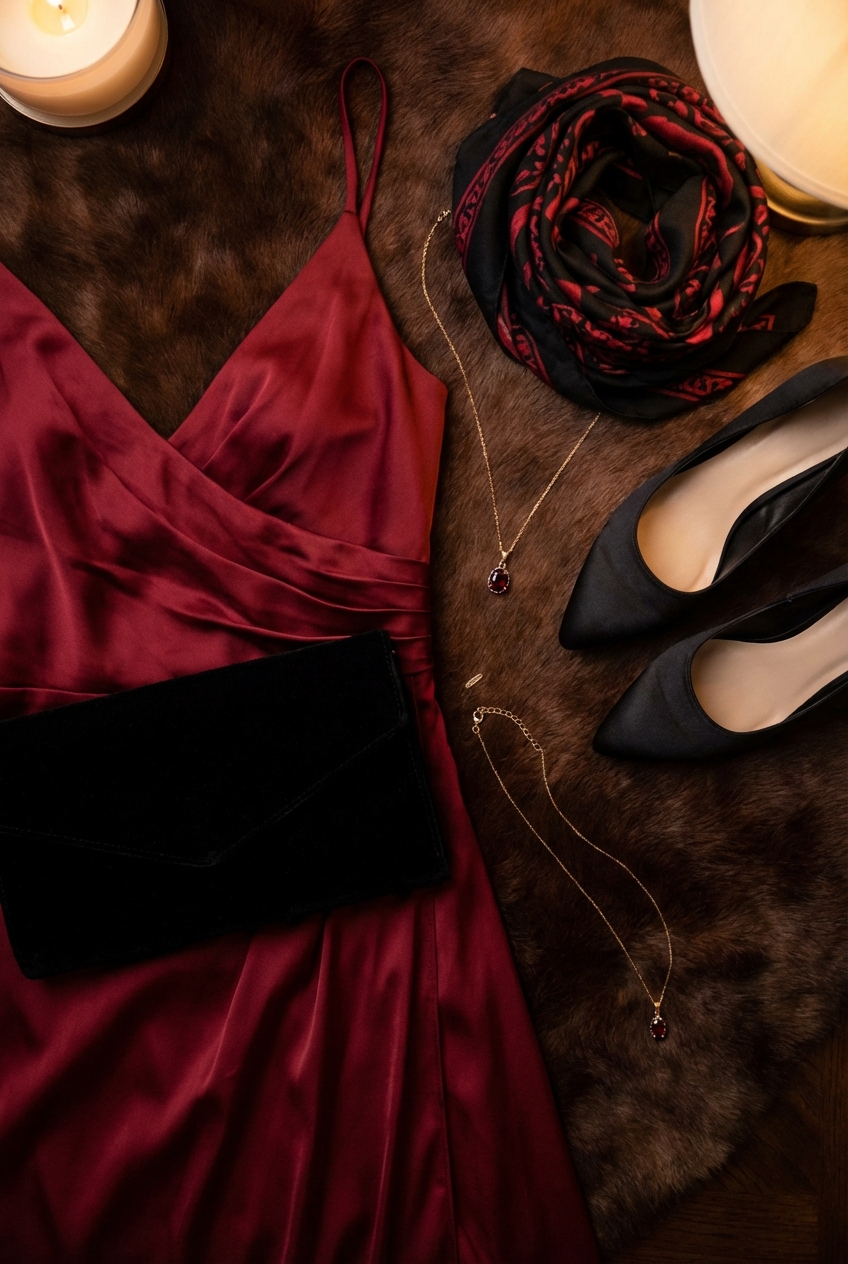
Timeless Black And Red Color Palettes For Evening Dresses
The combination of black and red is perhaps the most visceral, commanding duo in the history of fashion. It is a pairing that speaks of power, romance, and an undeniable sense of drama. While a little black dress is a safety net, introducing red into the equation transforms the look into a statement.
I remember my first time styling a client for a major metropolitan opera premiere. she was terrified of wearing color, clinging to her safety zone of monochrome black. We compromised on a structured gown featuring a black velvet bodice and a sweeping, architectural crimson skirt. The moment she stepped in front of the mirror, her posture changed; she didn’t just look elegant, she looked formidable.
That is the power of this palette. It allows you to retain the slimming, chic properties of black while harnessing the energy and passion of red. If you need visual inspiration immediately, you can find our curated Picture Gallery at the end of this blog post.
The Psychology and Balance of the Dual Palette
Understanding why black and red work together is the first step to wearing them successfully. Black acts as the anchor. It absorbs light, creates boundaries, and provides a resting place for the eye. Red, conversely, is an activator. It advances visually, demanding attention and elevating the heart rate of the viewer.
When selecting an evening dress, you must decide on the dominant emotion. A dress that is 90% black with red accents suggests mystery with a hint of danger. A dress that is primarily red with black detailing suggests boldness grounded in sophistication.
The key is to avoid a perfect 50/50 split. In design, equal splitting often creates visual confusion. I always recommend a 70/30 or 80/20 split. Let one color tell the main story, while the other acts as the punctuation mark.
Designer’s Note:
The most common mistake I see is “costume territory.” When black and red are mixed with cheap fabrics or overly theatrical cuts, it can look like a vampire Halloween costume. To prevent this, ensure the silhouette is modern and the fabric is high quality. Avoid corset-style laces or excessive tulle unless it is couture-level construction.
Strategic Color Blocking for Body Contouring
Color blocking is not just an aesthetic choice; it is a tool for optical illusion. Because black recedes (makes things look smaller) and red advances (makes things look larger), you can use this palette to sculpt your silhouette. This is architectural design for the body.
If you are pear-shaped and wish to balance your proportions, look for a gown with a red bodice and a black skirt. The red draws the eye upward and expands the chest and shoulders, while the black skirt streamlines the hips.
Conversely, for those with a broader upper body or a larger bust who want to emphasize their legs, a black bodice with a red skirt works wonders. The transition line—where the colors meet—is critical. It should hit at the smallest part of your natural waist to create an hourglass effect.
What I’d do in a real project:
1. Identify the client’s favorite feature (e.g., shoulders, waist, or legs).
2. Place the “Red” element on that feature to act as a highlighter.
3. Use “Black” on areas the client feels less confident about to provide coverage and visual reduction.
Fabric Texture and Light Absorption
The success of a black and red palette depends heavily on how the materials interact with light. Flat cottons or cheap polyesters can make black look dusty and red look orange. For evening wear, we want depth and richness.
Velvet is an exceptional choice for the black component. It absorbs light so profoundly that it creates an “infinite” black, which contrasts beautifully against the sheen of red silk or satin. This texture clash adds a layer of luxury that flat fabrics cannot achieve.
If you are choosing a dress with sequins or beading, be mindful of the red tone. Red sequins can sometimes reflect light in a way that looks cheap if the bead quality isn’t high. Matte red crepe paired with glossy black satin is a sophisticated, understated alternative that photographs beautifully.
Common Mistakes + Fixes:
Mistake: Mixing two shiny fabrics (like cheap red satin and black PVC). This looks dated and chaotic.
Fix: Use the “One Shine Rule.” If the red is satin (shiny), make the black matte (crepe or velvet). If the black is sequins, keep the red matte (chiffon or wool).
Selecting the Right Red for Your Undertone
Not all reds are created equal, and placing the wrong red near your face can wash you out. The black element of the dress is generally universal, but the red requires color theory analysis.
If you have cool undertones (veins appear blue, you burn easily in the sun), you need a blue-based red. Think ruby, cranberry, cherry, or deep burgundy. These cool reds will make your skin look porcelain and your teeth look whiter.
If you have warm undertones (veins appear green, you tan easily), opt for orange-based reds. Think tomato, vermilion, or rust. These shades will enhance the golden glow in your skin.
If the dress has a high neck, the color closest to your face is the most important. If the dress is strapless or has a deep V-neck, you have more flexibility because the color is further from your complexion.
Prints, Patterns, and Ombré Effects
Solid blocks of color are not the only way to wear this palette. Prints can offer a softer, more romantic interpretation of the black and red theme. However, the scale of the print is vital.
Large, sweeping floral prints in black and red can be incredibly dramatic. They work best on floor-length gowns where the pattern has room to repeat fully. Be careful with small, busy patterns, as they can sometimes read as casual “daywear” rather than evening elegance.
Ombré or gradient dyeing is another stunning option. A gown that fades from a deep, inky black at the hem up to a vibrant red at the bodice creates a flame-like effect. This is visually lifting, drawing the viewer’s eye up toward your face.
Pro Tip on Scale:
Petite Frames: Avoid massive red flowers on a black background. The print will swallow you. Opt for a micro-print or a solid color block.
Tall/Curvy Frames: You can carry large-scale prints. A massive abstract rose print can look like wearable art on a taller figure.
Accessories: Metals and Shoes
When accessorizing a black and red gown, the instinct is often to match the shoes to the red. I generally advise against this. Matching your shoes exactly to the red of your dress can look like a uniform.
Instead, opt for a black shoe for a seamless look, or a metallic shoe (gold or silver) to break up the palette. A “naked” or nude sandal is also an excellent choice if you want the dress to be the sole focus. It elongates the leg without competing with the bold colors.
Regarding jewelry, gold tends to warm up the red, making it feel regal and opulent. Silver or platinum cools the look down, making it feel sharper and more modern. Black diamonds or onyx jewelry are the ultimate power move with this palette, creating a tonal bridge between the dress and the accessories.
Measurements and Hardware:
Clutch Size: Keep it proportional. A massive tote kills the evening vibe. A standard evening clutch should be no larger than 10 inches wide.
Heel Height: For floor-length gowns, the hem should skim 0.5 to 1 inch off the floor with your shoes on. Bring your shoes to the tailor!
Finish & Styling Checklist
Before you head out the door, run through this “Red Carpet Ready” checklist to ensure your look is cohesive and polished.
Hemline Check: Put on your shoes. Does the dress graze the floor without buckling? If it’s bunching, it’s too long. If your ankles are fully visible on a floor-length gown, it’s too short.
Undergarment Audit: Flash photography can turn black fabric transparent. Check your dress in bright light. Ensure you are wearing seamless, nude undergarments, or black if the fabric is dense enough.
The “Sit Test”: Sit down in a chair for 5 minutes. Does the fabric wrinkle excessively? If so, have a steamer ready right before you leave.
Skin Finish: Since black and red are high-contrast, your skin is a major part of the palette. A little bit of body shimmer on the shoulders or décolletage adds dimension.
* Lipstick Coordination: If you wear red lipstick, try to match the undertone of the dress (blue-red vs. orange-red), but it doesn’t need to be an exact color match. A slightly darker lip often looks more sophisticated.
FAQs
Q: Can I wear a black and red dress to a wedding?
A: This is tricky. In Western cultures, red can sometimes be seen as “stealing attention,” and black was traditionally for mourning, though that has changed. A dress that is mostly black with deep burgundy accents is usually safe for a black-tie wedding. Avoid bright fire-engine red combined with black lace, as it can look a bit too racy for a nuptial ceremony.
Q: What coat should I wear over a black and red gown?
A: Do not ruin the line of the dress with a puffer coat. A tailored black wool coat is the standard. For a more glamorous look, a faux fur stole in black or charcoal gray works beautifully. Avoid a red coat; it is too difficult to match the reds, and a clash looks messy.
Q: Is this color palette seasonal?
A: Black and red is generally considered an Autumn/Winter palette, especially when using heavy fabrics like velvet or wool. However, a red silk slip dress with black lace detailing is perfectly appropriate for summer evening events. It comes down to fabric weight more than color.
Q: How do I handle makeup with such a bold dress?
A: Balance is everything. If you do a bold red lip to match the dress, keep the eye makeup clean and minimal (mascara and a sharp liner). If you want a smokey black eye, go for a nude or soft rose lip. Doing a heavy black eye AND a heavy red lip can look severe.
Conclusion
Embracing a black and red color palette for evening wear is a declaration of confidence. It moves beyond the safety of the standard “LBD” and enters the realm of high fashion. Whether you opt for a structured architectural gown or a flowing romantic silk, the interaction between these two colors creates a visual tension that is undeniably captivating.
Remember the rules of ratio, respect the undertones of your skin, and pay attention to the texture of your fabrics. When executed correctly, this combination is not just a dress; it is a presence. It is timeless, elegant, and unapologetically bold—just like the woman wearing it.
Picture Gallery


