
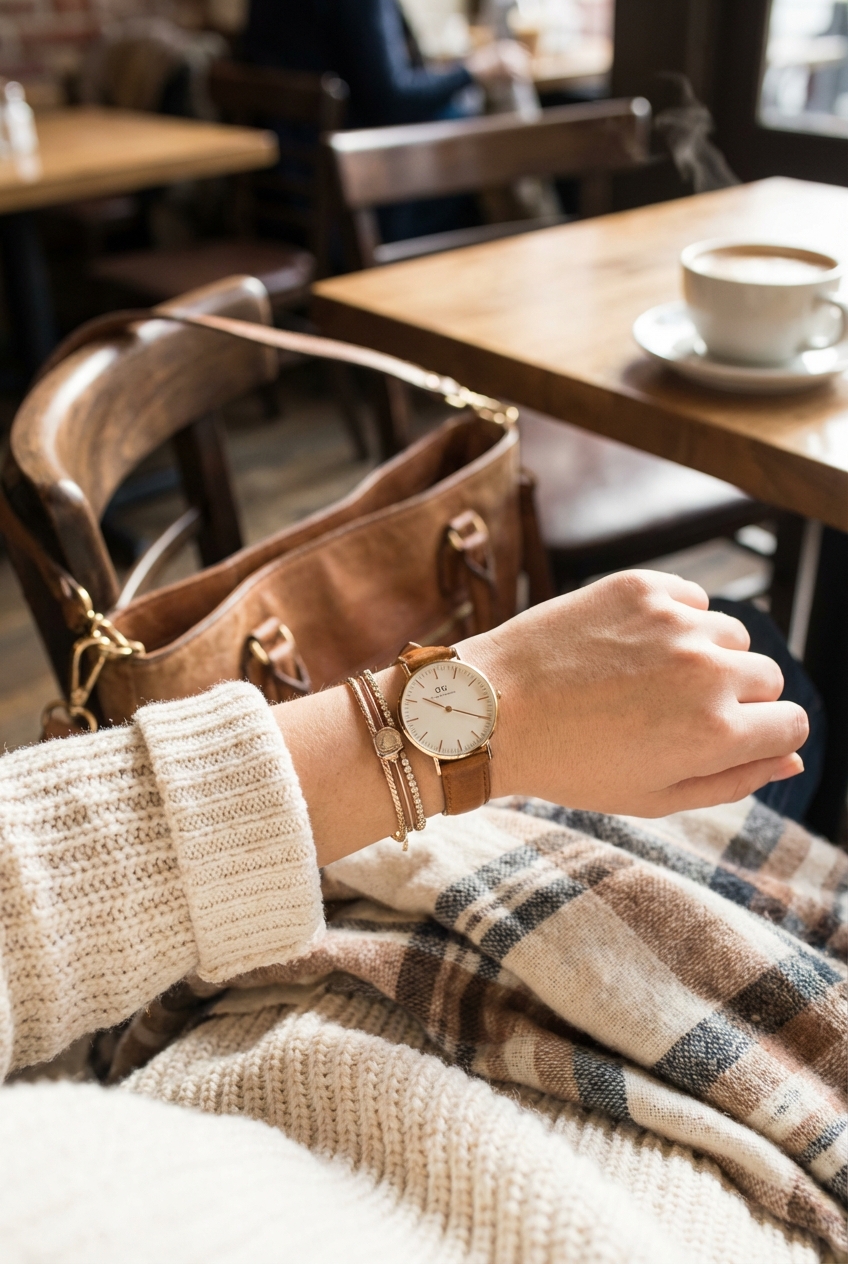
Timeless Wristwatch Combining Function And Fashion
Introduction
In the fast-paced world of high-end fashion, trends cycle through with dizzying speed. Yet, the wristwatch remains the singular accessory that anchors a wardrobe, conveying authority, elegance, and respect for time itself. I often tell my clients that while a handbag holds your essentials, a watch holds your history.
I remember investing in my first serious timepiece—a mid-size stainless steel model with a simple white dial. Two decades later, that watch has survived countless fashion weeks, client meetings, and travels. It taught me that true style isn’t about wearing the loudest piece in the room; it is about wearing the piece that speaks the most clearly about who you are.
Finding that perfect balance between mechanical function and aesthetic beauty can be daunting given the thousands of options on the market. For visual inspiration on how to style these pieces, be sure to check out the Picture Gallery at the end of the blog post.
Understanding Scale and Wrist Proportion
The most common mistake I see women make is ignoring the geometry of their own wrist. Just as a rug must be sized correctly for a room, a watch case must carry the correct millimeter diameter for your arm.
If a watch is too large, it looks like you are wearing a piece of borrowed equipment. If it is too small, it can look dated or get lost among other jewelry.
The Golden Rules of Watch Sizing:
Measure your wrist circumference: Use a soft tape measure. If your wrist is under 6 inches, look for case sizes between 26mm and 34mm.
The 6-inch to 7-inch sweet spot: This is the average wrist size. You can comfortably wear anything from 34mm to 38mm.
The Lug-to-Lug Rule: The “lugs” are the metal protrusions that hold the strap. They should never extend beyond the width of your wrist. If they hang over the edge, the watch is too big.
Designer’s Note
I once had a client insist on a massive 42mm chronograph because it was “trending.” Within a month, she stopped wearing it because the crown dug into her hand every time she bent her wrist. Comfort is the ultimate luxury. Stick to a size that sits flat and flush against your skin.
Material Selection: Durability Meets Design
When selecting a timeless piece, you are choosing a material that must withstand daily friction, moisture, and impact. In interior design, we talk about “performance fabrics.” In horology, we talk about case metals and crystals.
For a daily driver, stainless steel is the gold standard. It resists corrosion, handles scratches with grace, and matches cooler jewelry tones like platinum and white gold.
Material Breakdown:
Stainless Steel: Highly durable, hypoallergenic, and versatile. It transitions from the gym to the boardroom seamlessly.
18k Gold (Yellow or Rose): Softer than steel. It will scratch over time, developing a “patina” that many collectors love. Ideally suited for dress watches, not daily beaters.
Two-Tone: The bridge between jewelry worlds. If you wear both gold and silver rings, a two-tone watch ties your entire look together.
Ceramic: Modern and virtually scratch-proof, but brittle. If you drop it on a tile floor, it may shatter.
Common Mistakes + Fixes
Mistake: Buying a gold-plated watch for daily wear.
Fix: Plating eventually rubs off, exposing the base metal. If solid gold is out of budget, opt for high-quality stainless steel rather than plating. It will look better in five years.
The Movement: Quartz vs. Mechanical
This is the debate that divides the enthusiast community. However, as a fashion expert, I look at this through the lens of lifestyle and practicality.
A mechanical (automatic) watch is a piece of art. It runs on the kinetic energy of your movement. It has a sweeping second hand and implies a certain level of connoisseurship. However, if you don’t wear it for 48 hours, it stops. You must reset the time and date.
A quartz watch runs on a battery. It “ticks” once per second. It is relentlessly accurate and requires zero attention until the battery dies every 3 to 5 years.
What I’d Do in a Real Project:
If this is your “one and done” watch that you wear every single day: Go Automatic. Your daily movement keeps it charged, and you rarely have to reset it.
If this is an occasion watch you only wear to cocktail parties or dinners: Go Quartz. You want to be able to grab it from your jewelry box and run out the door without fiddling with the crown.
The Strap Strategy: Changing the Look
The easiest way to refresh a timepiece is to change the strap. It is the equivalent of repainting the walls in a room—minimal effort, maximum impact.
Many women stick with the bracelet the watch came with, but this limits versatility. A metal bracelet is sporty and durable, perfect for summer when leather might get sweaty.
Strap options to keep on hand:
Black Alligator/Croc: Instantly formalizes a watch. Perfect for black-tie events or serious business meetings.
Tan or Cognac Leather: Ideal for weekend wear. It looks beautiful with denim and white linens.
Mesh (Milanese): A middle ground between a strap and a bracelet. It feels like fabric but looks like metal.
Pro-Tip on Hardware
Ensure the buckle on your aftermarket strap matches the case of your watch. A silver buckle on a gold watch is a detail disruption that ruins the aesthetic.
Styling and Stacking
The “wrist stack”—wearing a watch alongside bracelets—is a popular look, but it requires a strategic approach to avoid damaging your investment.
Metal-on-metal contact will scratch your watch case. If you wear a diamond tennis bracelet next to a gold watch, the diamonds will act like sandpaper against the soft gold.
How to Stack Safely:
The Buffer Zone: Place a soft material, like a leather or cord bracelet, between your watch and your metal bangles.
Wear it Lower: Wear your watch closest to your hand (below the wrist bone) and your bracelets further up the arm. Gravity usually keeps them separated.
The Solo Statement: For larger, more masculine watches, skip the bracelets entirely. Let the timepiece stand alone.
Maintenance and Longevity
A timeless watch is only timeless if it keeps running. Unlike a handbag that can be stuffed in a closet, a watch has gaskets and oils that degrade.
Water resistance is the most misunderstood metric in the industry. A watch stamped “30 meters” is not suitable for swimming. It is splash-proof (rain, hand washing).
Real-World Care Checklist:
30m – 50m: Rain and splashes only. No showers.
100m+: Safe for swimming and snorkeling.
Rinse it off: If you swim in the ocean or a chlorinated pool with a metal watch, rinse it with fresh water immediately. Salt and chlorine corrode gaskets.
Service intervals: Mechanical watches need a full service (cleaning and oiling) every 5 to 7 years. Factor this $300–$800 cost into your purchase.
Designer’s Note
Avoid keeping your watch in the bathroom. The humidity from daily showers can penetrate older seals over time, causing rust on the movement and dial. Store it in a dry, room-temperature environment.
Finish & Styling Checklist
Before you make the investment, run through this final checklist to ensure the piece fits your life and your wardrobe.
Check the sizing: Does the case sit inside the edges of your wrist?
Test the weight: Is it too heavy for all-day wear?
Review the clasp: Can you open and close it easily with one hand? (Crucial for manicures).
Assess the dial: Is it legible? High contrast (black hands on white dial) is best for quick reading.
Material check: If you have nickel allergies, stick to high-grade steel, platinum, or 18k gold.
Wardrobe Audit: Does the metal tone match the hardware on your favorite handbag and belt buckle?
Lifestyle Match: If you work with magnets or computers all day, look for “anti-magnetic” properties in the movement.
FAQs
Can I wear a gold watch with silver rings?
Absolutely. Mixing metals is a sign of sophisticated styling. The key is intent. If you mix metals, try to have one other piece (like a two-tone necklace or bag chain) that ties the two colors together.
Is a vintage watch a good idea for a beginner?
Vintage watches offer incredible style and value, but they are fragile. They lack water resistance and shock protection. I usually recommend a modern watch as your first “investment” piece, and vintage for your second or third.
Should I buy a watch with diamonds?
From a fashion perspective, diamonds limit versatility. A diamond-encrusted bezel is difficult to dress down for a casual brunch or a gym run. A plain metal bezel is truly timeless and works in every scenario.
What is the difference between sapphire and mineral crystal?
Sapphire crystal is synthetically grown and is almost as hard as a diamond. It is virtually scratch-proof. Mineral crystal is essentially glass and will scratch easily. Always prioritize sapphire for a luxury watch.
Conclusion
Selecting a timeless wristwatch is about more than just telling time; it is about curating a signature. It is a declaration that you value quality over quantity and longevity over trends.
When you find that perfect intersection of function and fashion—where the weight feels right on your wrist and the design elevates your daily uniform—you haven’t just bought an accessory. You have acquired a companion for life’s most important moments.
Take your time with the decision. Measure your wrist, consider your daily routine, and choose a piece that you will be proud to look at ten years from now.
Picture Gallery


