
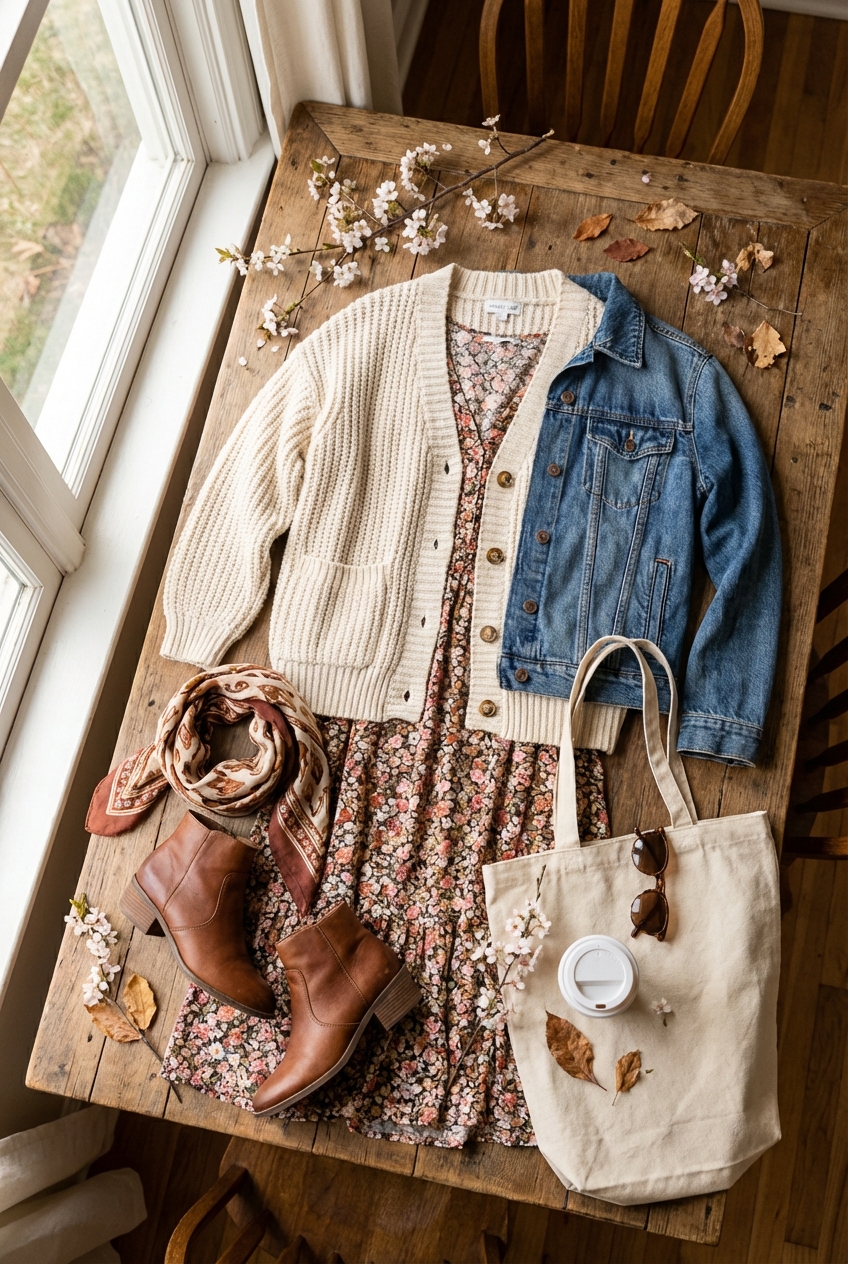
Transitional Dressing Seamless Style Tips For Moving From Winter To Spring
There is a specific, frustrating window of time every year that tests even the most seasoned fashion editor’s patience. It is that awkward four-week stretch where the calendar says spring, but the thermometer is still holding onto winter. You leave the house in a heavy wool coat because it is freezing, but by the time you grab lunch, you are sweating through your cashmere. This is the challenge of the shoulder season, and navigating it requires a strategic shift in how you build your daily look.
Transitional dressing is not just about swapping heavy clothes for light ones; it is about engineering a wardrobe that functions across a twenty-degree temperature variance. In my years styling clients for high-stakes environments, from executive boardrooms to gallery openings, I have found that the secret lies in fabric weight and layering ratios. You cannot simply jump from parkas to sundresses. You need a bridge.
This guide explores the tactical approach to that bridge. We will look at the specific fabric blends that breathe while retaining heat, the exact hem lengths that work for spring boots, and how to repurpose your winter staples so they feel fresh for the new season. For a visual breakdown of these layering techniques and outfit formulas, be sure to scroll down to the Picture Gallery at the end of the blog post.
1. The Foundation: Mastering Fabric Weight and Density
The biggest mistake I see clients make in March and April is focusing on the cut of the garment rather than the textile. A short-sleeved top made of heavy synthetic blends will make you sweat, while a long-sleeved top in a porous linen will leave you freezing. The first step in transitional dressing is auditing your closet for “mid-weight” heroes.
You want to move away from heavy, 12-gauge cable knits and insulating fleece. Instead, shift your focus toward merino wool, cotton-cashmere blends, and silk. Merino wool is a personal favorite for this time of year because it is thermoregulating. It wicks moisture away when you are hot but traps heat when you are cold. A thin merino turtleneck is the ultimate base layer because it fits under blazers without adding bulk.
Denim also plays a massive role here. In deep winter, we often wear flannel-lined pants or heavy rigid denim. Now is the time to switch to mid-weight denim (around 11 to 12 ounces) with a slight stretch. This fabric weight blocks the wind but allows for more movement. If you are dressing for the office, swap your heavy wool trousers for gabardine or a poly-viscose blend. These fabrics drape beautifully and mimic the look of wool but offer much better airflow.
Designer’s Note: The “Pinch Test”
I teach all my clients the “Pinch Test” when selecting transitional tops. Pinch the fabric of your sweater or blouse. If it is thicker than the fabric of the jacket you plan to wear over it, it will not lay flat. For a streamlined silhouette, your inner layers must always be finer and thinner than your outer layers. This prevents that stuffed, uncomfortable feeling in the arms and shoulders.
2. The Art of the “Third Piece” in Spring Layering
In fashion styling, we often refer to the “Third Piece Rule.” Your pants are the first piece, your top is the second, and your third piece is the jacket, cardigan, or vest that completes the look. During the transition from winter to spring, the third piece becomes a functional necessity rather than just a styling trick. It is your temperature control dial.
The classic trench coat is the obvious choice, but let’s look at the mechanics of why it works. A trench is usually made of cotton gabardine, which is tightly woven to repel water and wind, yet it is unlined or lightly lined. This is the perfect shell. However, the modern transitional wardrobe needs more than just a trench. Consider the leather or suede jacket. Leather is an excellent windbreaker. Worn over a floral midi dress, it provides enough warmth for a 50-degree morning while looking seasonally appropriate.
Another underutilized third piece is the longline vest or sleeveless blazer. This garment keeps your core warm—which is the most important factor in body temperature regulation—while letting your arms breathe. It creates a vertical line that elongates the body and looks incredibly chic over a fine-gauge sweater.
Common Mistakes + Fixes
Mistake: Relying on a heavy winter puffer vest.
Fix: Switch to a quilted liner vest or a tailored wool vest. Puffer vests read “ski resort,” while a quilted liner or tailored wool option reads “city chic.”
Mistake: Wearing a jacket that is shorter than your top.
Fix: Ensure your outer layer covers the hem of your base layer. If you are wearing a long tunic sweater, pair it with a coat that falls at least two inches below the sweater hem to maintain clean proportions.
3. Navigating the Footwear Shift: Boots, Loafers, and Hosiery
Footwear is arguably the trickiest part of the winter-to-spring shift. You are tired of your snow boots, but it is too cold (and potentially wet) for open sandals. This is the season of the closed-toe flat and the lighter boot.
Start by retiring the shearling-lined boots. Replace them with unlined leather ankle boots. A chelsea boot or a sleek pointed-toe bootie works perfectly with ankle-length denim. The key measurement here is the “shaft gap.” If you are wearing cropped jeans, you want the top of the boot to disappear under the hem of the jean, or you want a small gap (less than one inch) of skin showing. Anything more cuts off the leg line.
Loafers and mules are your next best friends. A chunky loafer with a lug sole keeps your foot elevated off the cold, wet pavement. If you are brave enough to bare your ankles, this is a great look. If not, styling socks with loafers is very much on-trend. Stick to thin, solid-colored mercerized cotton socks. Avoid athletic socks, which ruin the polish of the outfit.
The Tights Dilemma
The question I get asked most often is: “When do I stop wearing black opaque tights?” My rule of thumb is based on the calendar and the visual weight of the outfit. Once you start wearing lighter colors and fabrics, 80-denier black tights can look too heavy.
Pro-Tip: Switch to sheer black tights (20 to 40 denier) or navy tights to soften the look. If you are wearing a lighter dress, consider “nude” fishnets or barely-there sheers. They provide a barrier against the wind without the visual heaviness of winter hosiery.
4. Color Theory: Lightening the Palette Without Losing Warmth
You do not have to wear bright yellow or pastel pink just because it is March. In fact, wearing pastels when the sky is still grey can sometimes wash you out. The high-end approach to transitional color is “lightening the neutrals.”
Swap your black trousers for charcoal, navy, or chocolate brown. These colors are still grounding and slimming, but they feel less severe than jet black. Replace your stark white shirts with creams, oatmeals, and soft greys. This “soft contrast” palette feels luxurious and expensive.
If you do want to introduce color, do it through accessories or one “hero” piece rather than a head-to-toe look. A sage green cashmere sweater paired with dark denim is a perfect bridge outfit. It acknowledges the season without screaming it.
What I’d Do in a Real Project
If I were styling a client for a week in April, here is the palette progression I would use:
- Monday: Navy monochromatic (Navy trousers + lighter blue blouse).
- Tuesday: Camel and Cream (Camel coat + cream sweater + dark jeans).
- Wednesday: Grey scale (Charcoal skirt + light grey knit).
- Thursday: Texture mix (Leather skirt + cotton poplin shirt).
- Friday: The Pop (Classic denim + white tee + bright green blazer).
5. The Hemline Pivot: Balancing Coverage and Exposure
As the weather warms, we naturally want to show more skin, but doing this too abruptly can leave you freezing. The secret is to balance your coverage. If you are shortening your hemline, you should increase the coverage on your arms or neckline.
For example, if you want to wear a knee-length skirt or a midi skirt with a slit, pair it with a tall boot and a turtleneck. This is the “scale of exposure.” You never want to expose the décolletage, arms, and legs all at once when it is 55 degrees out. It looks unseasonal and feels uncomfortable.
Maxi skirts are particularly useful during this transition. They offer full leg coverage, trapping warmth, but the movement of the fabric feels spring-like. Look for maxi skirts in heavier cottons or satins. Pair them with a fitted blazer to counteract the volume of the skirt.
Specific Measurements to Watch
When wearing a coat over a skirt or dress, pay attention to the lengths. Ideally, your coat should be longer than your skirt by about an inch. If that isn’t possible, the skirt should be significantly longer (at least 4-5 inches) than the coat. The “danger zone” is when the skirt peeks out by just one or two inches, looking like an accidental layering mistake.
6. Accessories that Bridge the Gap
Accessories are the lowest-risk way to transition your style. They allow you to nod to the new season without compromising your warmth. The most important tool here is the scarf.
Pack away the chunky wool mufflers. Replace them with silk-wool blend scarves or large square silk scarves. A silk scarf tied tightly around the neck seals the gap of a trench coat, preventing drafts, but adds a pop of color and print that feels very French and very spring.
For handbags, move away from heavy felts or faux furs. Leather remains standard, but you can lighten the visual load by choosing lighter colors—tans, taupes, and cognacs—or by choosing lighter materials like canvas-leather mixes.
Designer’s Note: Jewelry Temperature
This is subtle, but effective. In winter, we often wear heavy, chunky gold or silver to stand up against thick wools. In spring, as fabrics get lighter, your jewelry should get airier. Swap the heavy chain links for pearls, hammered metals, or colorful stones. It lightens the visual weight around your face.
Finish & Styling Checklist: The Spring Edit
Before you buy anything new, you need to audit what you have. I use this checklist with my private clients to prep their closets for the transition.
1. The Coat Check
Dry clean and store: Puffer coats, heavy parkas, shearling.
Keep accessible: Trench coats, wool wrap coats, leather jackets, denim jackets.
2. The Knitwear Sort
Store: Chunky cable knits, heavy fleece.
Keep: Merino wool, cashmere, cotton blends, cardigans.
Action: De-pill your sweaters now. Winter wear causes friction; clean them up so they look fresh for spring layering.
3. Footwear Swap
Clean and stuff: Snow boots and salt-stained winter boots.
Polish and prep: Loafers, sneakers, ankle boots, rain boots.
Action: Check the heels of your ankle boots. If the winter salt has damaged them, take them to a cobbler now.
4. The “Base Layer” Refresh
Check your t-shirts and camisoles. Are they bright white, or have they yellowed over winter?
Action: Replace any base layers that look dingy. These will be more visible now that you are wearing open jackets.
FAQs
Q: Can I wear white jeans before summer?
A: Absolutely. In fact, “winter white” or ecru denim looks incredibly chic in March. The key is the fabric weight. Ensure the denim is thick enough so it isn’t see-through. Pair it with a grey cashmere sweater and camel boots for a sophisticated, tonal look.
Q: What do I do if I have to commute in the rain?
A: Invest in a strictly utilitarian raincoat that fits over your trench or blazer, or buy a trench with water-resistant properties. Galoshes are fine for the commute, but always change into office shoes upon arrival. Never wear rubber rain boots around the office; it ruins the professionalism of the look.
Q: Is suede okay for spring?
A: Yes, visually, suede is lovely for spring because it softens colors. However, practically, it is risky due to spring showers. Use a high-quality suede protector spray on all your jackets and shoes. If rain is in the forecast, leave the suede at home.
Q: How do I wear a dress without freezing legs?
A: The tall boot is the answer. A knee-high leather boot worn under a midi dress covers the entire leg, providing as much warmth as trousers. If there is a gap, wear knee-high socks or tights underneath.
Conclusion
Transitional dressing is a skill that pays dividends. When you master the art of the fabric shift, the third-piece layer, and the gradual lightening of your palette, you stop fighting the weather and start working with it.
Remember that this is a gradual process. You do not need to wake up on the first day of spring and completely reinvent your look. Start by swapping your boots. Then trade your parka for a trench. Then lighten your knits. By taking a tactical, high-end approach to these weeks of flux, you ensure that you look polished and intentional, no matter how unpredictable the forecast might be.
Picture Gallery


